
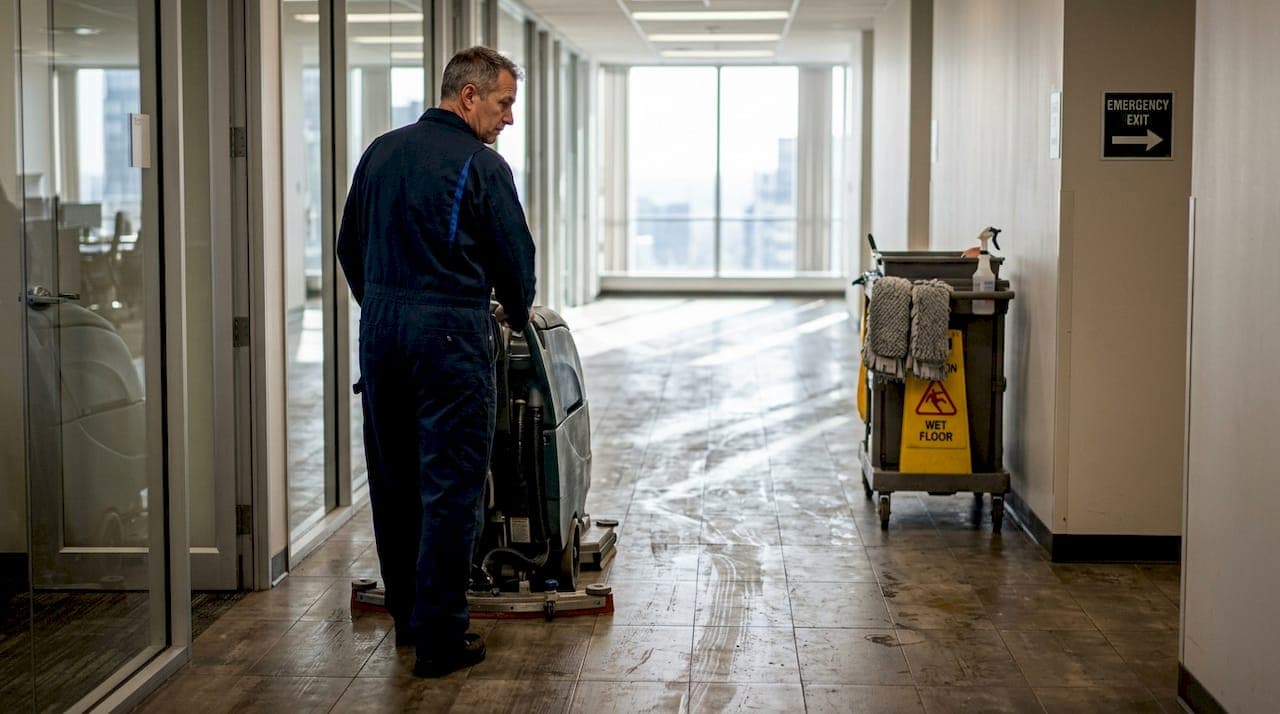
Neglected commercial floors cost property managers far more than most budgets account for. Slip-and-fall incidents alone generate billions in liability claims each year across the United States, and worn or poorly maintained floors can cut a floor's useful life by 30 to 50 percent. Beyond the safety risk, dirty floors signal neglect to tenants, clients, and inspectors. The good news is that a structured, repeatable cleaning process eliminates most of these problems. In this guide, you'll learn how to assess your floor types, select the right tools, execute a proven cleaning sequence, and verify results that hold up to the highest facility standards.
Table of Contents
- Assessing your facility's floor types and needs
- Essential equipment, tools, and supplies checklist
- Step-by-step commercial floor cleaning process
- Verification, quality control, and troubleshooting
- Our approach: Results from years of hands-on facility management
- Take the next step with professional commercial cleaning
- Frequently asked questions
Key Takeaways
| Point | Details |
|---|---|
| Know your floor surface | Accurate floor identification is critical for choosing proper cleaning methods and supplies. |
| Equip for safety and results | The right tools, chemicals, and PPE reduce risks and improve cleaning efficiency. |
| Standardize your process | Clear, repeatable cleaning steps deliver consistent, high-quality outcomes for any facility. |
| Verify and adapt | Routine quality checks and troubleshooting help you catch issues early and keep floors looking their best. |
Assessing your facility's floor types and needs
Before you mop a single square foot, you need to know what you're working with. Different floor materials like vinyl, tile, and concrete each carry unique cleaning requirements that directly affect which products, tools, and frequencies you should use. Applying the wrong cleaner to the wrong surface can void warranties, cause discoloration, or create safety hazards.
Here's a quick breakdown of the most common commercial floor types and their primary challenges:
| Floor type | Primary challenge | Recommended approach |
|---|---|---|
| Vinyl Composition Tile (VCT) | Wax buildup, scuffing | Strip and recoat on schedule; use neutral pH cleaners |
| Polished concrete | Dust accumulation, surface etching | Microfiber dust mops; avoid acidic products |
| Ceramic or porcelain tile | Grout staining | Grout brushes; alkaline cleaners for grease zones |
| Natural stone (marble, granite) | Acid damage, scratching | pH-neutral cleaners only; soft pads |
| Commercial carpet | Embedded debris, odors | High-extraction vacuuming; hot water extraction |
| Hardwood or engineered wood | Moisture damage, warping | Damp mopping only; wood-specific conditioners |
Kitchen and food service areas need degreasers rated for heavy grease, while stone floors in lobbies require pH-neutral solutions to prevent etching. High-traffic zones like entrances, corridors, and elevator banks need more frequent attention than storage rooms or private offices. Map out these zones by foot traffic volume and floor material so your team knows exactly where to focus resources.
The types of floors in commercial buildings vary widely even within a single property. A mixed-use building might have polished concrete in the lobby, VCT in office corridors, and ceramic tile in restrooms. Each zone needs its own care protocol.
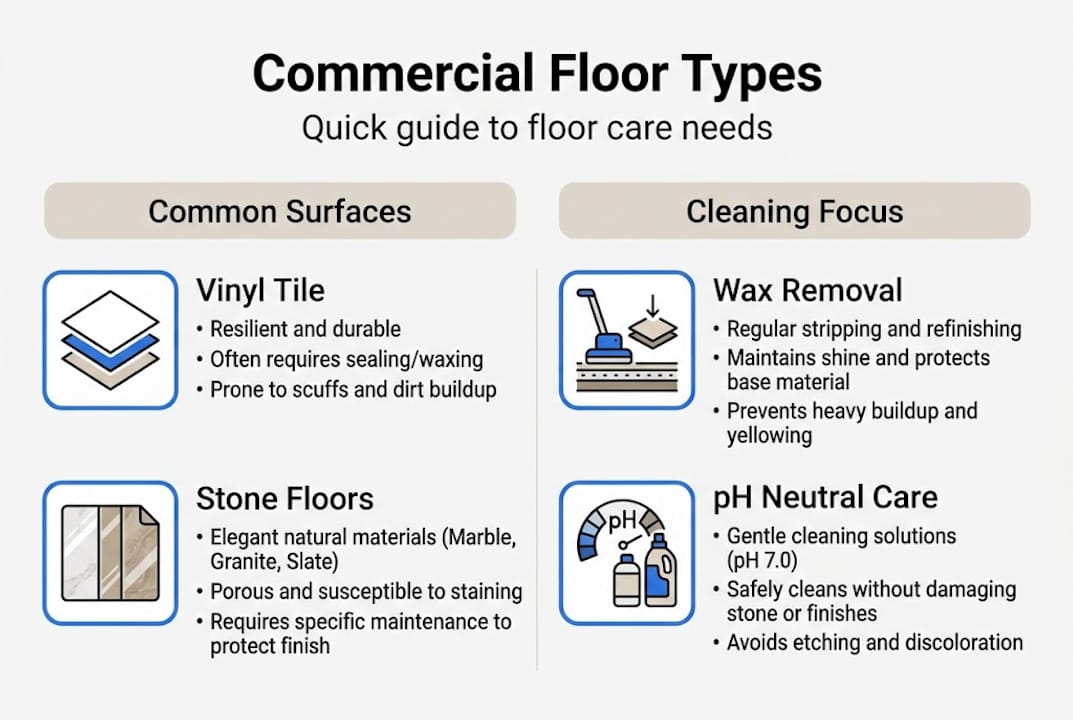
Pro Tip: Build a floor type and care inventory for your facility. List every floor zone, its material, square footage, traffic level, and recommended cleaning product. Update it whenever renovations occur. This single document saves hours of guesswork and prevents costly cleaning mistakes.
Essential equipment, tools, and supplies checklist
Once you know your floor types, the next step is preparing the right tools. Using mismatched or poorly maintained equipment is one of the most common reasons cleaning results fall short, even when the process looks correct on paper.
Here's a practical overview of core equipment categories:
| Equipment category | Examples | Best use case |
|---|---|---|
| Auto-scrubbers | Walk-behind, ride-on models | Large open floor areas |
| Wet/dry vacuums | Industrial canister units | Spill response, grout lines |
| Microfiber mop systems | Flat mops, string mops | Detail work, smaller zones |
| Rotary floor machines | Single-disc scrubbers | Stripping, buffing VCT |
| Pressure washers | Cold or hot water units | Loading docks, concrete |
For chemical selection, prioritize low-VOC (volatile organic compound) and green-certified options wherever possible. Commercial floor cleaning machinery paired with the wrong chemical can damage surfaces and expose workers to unnecessary hazards. The proper machinery and tool selection directly impacts both cleaning efficiency and staff safety.
Personal protective equipment (PPE) is non-negotiable. Staff should wear chemical-resistant gloves, non-slip footwear, and eye protection when handling concentrated cleaners. The CDC provides worker safety tips specifically for cleaning personnel that cover chemical exposure risks in detail.
OSHA warns that improper handling of cleaning chemicals is a leading cause of occupational illness among janitorial workers. Always follow Safety Data Sheet (SDS) guidelines and ensure staff are trained before using any concentrated product.
Store equipment clean and dry. Auto-scrubbers with dirty tanks or worn squeegees leave residue rather than removing it. Schedule monthly maintenance checks on all motorized equipment.
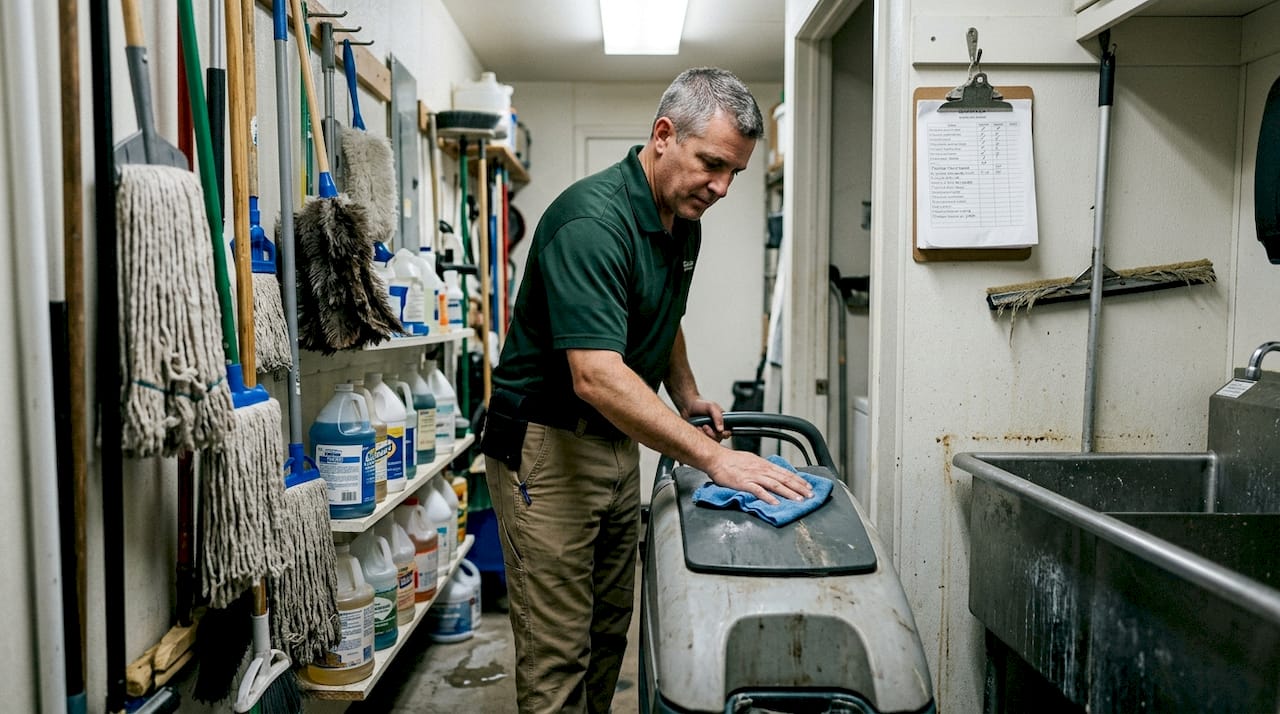
Pro Tip: Invest in formal equipment training for your cleaning staff. A well-trained operator on a basic auto-scrubber outperforms an untrained one on a premium machine every time, and reduces costly breakdowns by up to 40 percent.
Step-by-step commercial floor cleaning process
With tools and materials in hand, you're ready to execute the process. A standardized cleaning process ensures consistent results across different environments and different staff members. Here is the sequence that works:
-
Prepare the area. Remove furniture, floor mats, and obstacles. Post wet floor signs at all entry points. Inspect the surface for hazards like loose tiles, cracks, or standing water that need attention before cleaning begins.
-
Remove dry debris. Use a commercial-grade vacuum or dust mop to pick up loose dirt, dust, and debris. Skipping this step means your wet cleaning phase just pushes grit around, scratching the floor surface.
-
Treat spots and stains. Apply appropriate spot treatments to gum, grease, adhesive, or heavy staining. Let the product dwell for the time specified on the label. Trying to scrub immediately wastes product and effort.
-
Execute the main cleaning pass. For large open areas, run the auto-scrubber in overlapping passes. For smaller zones or detail areas, use a mop with a fresh, properly wrung solution. Change mop water every 400 to 500 square feet to avoid redistributing soil.
-
Rinse thoroughly. Many cleaning products leave a residue that attracts dirt if not rinsed. Use clean water in a second pass with the auto-scrubber or a clean mop to neutralize any remaining chemical.
-
Dry the surface. Use air movers or fans to accelerate drying, especially in enclosed spaces. Wet floors are slip hazards and can trap odors if not dried quickly. Check out EPA Safer Choice cleaning products for low-residue formulas that speed up drying time.
-
Final inspection and touch-ups. Walk the cleaned area under good lighting. Look for missed spots, streaks, or areas where the floor didn't dry evenly. Address these before reopening the space.
For detailed floor cleaning steps tailored to specific building types, your process may need slight adjustments based on the environment.
Pro Tip: Schedule high-traffic area cleaning during off-hours. Cleaning an active corridor wastes time, creates liability, and produces inferior results compared to cleaning the same space when foot traffic is zero.
Verification, quality control, and troubleshooting
Once cleaning is complete, confirm your process meets your standards. Routine inspection helps ensure cleaning standards are consistently met and catches problems before they become expensive repairs.
Use this post-cleaning checklist after every session:
- No visible soil, streaks, or residue under direct lighting
- Grout lines are uniform in color with no dark patches
- Floor surface is completely dry before foot traffic resumes
- No chemical odor remaining in the space
- Slip resistance feels consistent across the entire floor
- All wet floor signs removed after drying is confirmed
Track these commercial cleaning quality control metrics over time. Document results after each cleaning session with a simple log that includes date, staff member, products used, and any issues found. This creates accountability and makes troubleshooting much faster.
Common problems and how to fix them:
| Problem | Likely cause | Solution |
|---|---|---|
| Streaks after mopping | Dirty mop water or too much product | Change water more frequently; dilute correctly |
| Residue buildup | Inadequate rinsing | Add a dedicated rinse pass to your process |
| Recurring stains | Wrong product for the stain type | Match stain chemistry to the correct remover |
| Dull finish on VCT | Wax buildup or worn finish | Strip and recoat; adjust maintenance schedule |
| Persistent odors | Moisture trapped under floor or in grout | Improve ventilation; use enzymatic cleaners |
Studies on floor maintenance programs show that facilities with documented quality control processes extend floor life by 20 to 35 percent compared to those without structured oversight. Review your OSHA safety guidelines compliance during inspections as well, since floor conditions directly affect workplace safety ratings.
Our approach: Results from years of hands-on facility management
Here's something most guides won't tell you: the biggest gap in commercial floor cleaning isn't equipment quality or product selection. It's consistency. Generic cleaning instructions look good on paper but fall apart the moment a new staff member takes over or a facility changes its hours.
What actually works is a customized checklist built around your specific building, your specific floors, and your specific traffic patterns. We've seen facilities spend thousands upgrading to premium auto-scrubbers, only to see results decline because the team wasn't trained to use them correctly. Meanwhile, a well-trained crew with mid-range equipment consistently outperforms.
Troubleshooting experience also reveals something counterintuitive: most recurring floor problems trace back to the rinse step, not the scrubbing step. Facilities that add one dedicated rinse pass to their process see streaking and residue complaints drop dramatically. That single change costs nothing but time.
The facility cleaning insights that matter most come from watching what happens when processes break down, not just when they work. Build your process around failure points, and you'll spend far less time fixing problems.
Take the next step with professional commercial cleaning
If your facility's floors aren't meeting the standards you need, or if you want a more consistent, scalable cleaning program, professional support makes a measurable difference.
Sparklepro Commercial Cleaning provides customized floor cleaning programs for property managers and facility directors across the United States. Whether you manage office towers in New York or retail centers on the West Coast, our regional teams bring local knowledge and national standards to every job. Our California cleaning specialists and New York commercial cleaning teams are ready to assess your facility and build a program that fits your schedule, floor types, and budget. Contact Sparklepro Commercial Cleaning today for a no-obligation consultation.
Frequently asked questions
How often should commercial floors be cleaned?
High-traffic commercial floors should be cleaned daily, with deeper cleaning weekly or monthly depending on use and floor type. Routine cleaning directly impacts facility health, safety ratings, and long-term floor condition.
What cleaning chemicals are safe for all floor types?
Neutral pH cleaners are generally the safest option across most surfaces, but always verify manufacturer recommendations for each specific floor material. Different materials require specific solution types to avoid damage or voiding warranties.
How can I avoid slip hazards during cleaning?
Place clear wet floor signage at all entry points, clean during low-traffic hours, and confirm floors are fully dry before reopening. Proper cleaning procedure significantly minimizes slip-and-fall risks and related liability exposure.
What should I do if cleaning results are inconsistent?
Review your step-by-step process, inspect tool maintenance logs, and consider retraining staff on equipment use and chemical dilution. Staff training is one of the highest-return investments for achieving consistent commercial cleaning results.