
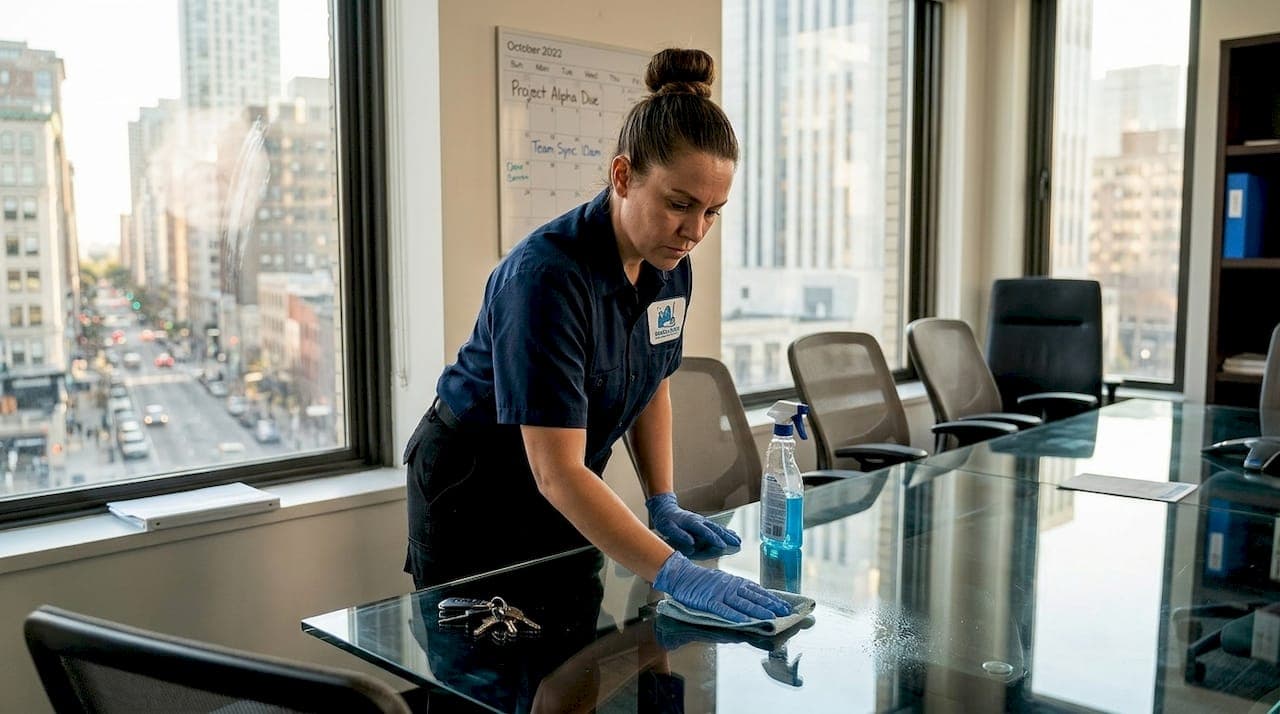
Most property managers assume commercial cleaning is just janitorial work with a fancier name. It isn't. The difference between a custodian mopping floors and a certified commercial cleaning team running infection-control protocols is roughly the same gap between a handyman and a licensed contractor. Commercial cleaning directly affects occupant health, regulatory compliance, facility ratings, and your long-term liability exposure. In this article, you'll learn what defines commercial cleaning, the methods and standards that distinguish quality providers, and how to select the right partner for your office building, retail center, or healthcare facility.
Table of Contents
- Defining commercial cleaning services
- Core processes and protocols in commercial cleaning
- Standards and certifications for quality assurance
- How to choose the right commercial cleaning provider
- The reality: What most guides miss about commercial cleaning
- Connect with Sparklepro for reliable commercial cleaning
- Frequently asked questions
Key Takeaways
| Point | Details |
|---|---|
| Commercial cleaning scope | Professional cleaning covers offices, retail, healthcare, and industrial spaces with specialized protocols and trained staff. |
| Quality assurance matters | Certified providers follow strict standards, use sustainability practices, and offer reliable reporting for peace of mind. |
| Cross-contamination prevention | Color-coded tools and digital checklists are essential for maintaining safe and sanitary environments. |
| Provider selection framework | Evaluate services based on certifications, reporting tools, and fit for your facility type before contracting. |
Defining commercial cleaning services
Commercial cleaning covers professional cleaning performed in business and public environments, including office buildings, retail spaces, healthcare facilities, and industrial properties. It is not the same as residential cleaning or standard janitorial service, and that distinction matters when you're managing a multi-tenant office tower or a medical clinic.
Understanding cleaning industry terms is a good starting point. Janitorial service typically refers to routine, day-to-day upkeep performed by on-site staff: emptying trash, restocking supplies, sweeping hallways. Commercial cleaning, by contrast, involves specialized protocols and trained staff well beyond basic custodial service. Think deep disinfection, floor stripping and refinishing, post-construction cleanouts, and medical-grade sanitation.
Here is a side-by-side comparison to make the difference clear:
| Feature | Janitorial service | Commercial cleaning |
|---|---|---|
| Frequency | Daily or weekly | Scheduled or project-based |
| Staff training | Basic | Specialized certifications |
| Equipment | Standard mops, vacuums | Industrial-grade, task-specific |
| Protocols | General upkeep | Infection control, OSHA compliance |
| Scope | Single building tasks | Multi-zone, multi-facility |
Commercial cleaning also breaks into several distinct types:
- Routine commercial cleaning: Scheduled maintenance cleaning for lobbies, restrooms, and common areas
- Deep cleaning: Periodic intensive cleaning of surfaces, vents, and hard-to-reach zones
- Specialized cleaning: Hazmat remediation, medical-grade disinfection, biohazard cleanup
- Post-construction cleaning: Removing debris, dust, and materials after renovation or build-out
- Move-out and tenant turnover cleaning: Restoring spaces between occupants
Each category requires different staff qualifications, equipment sets, and safety protocols. A provider that excels at routine office cleaning may not be equipped to handle infection-control requirements in a surgical suite.
Pro Tip: Ask potential providers whether they use color-coded cleaning cloths and mop heads. This system assigns specific colors to different zones (for example, red for restrooms, blue for general surfaces) to prevent cross-contamination. It's one of the fastest indicators of professional standards.
Core processes and protocols in commercial cleaning
With service types defined, let's look at the methods and equipment that separate professional commercial cleaning from basic upkeep.
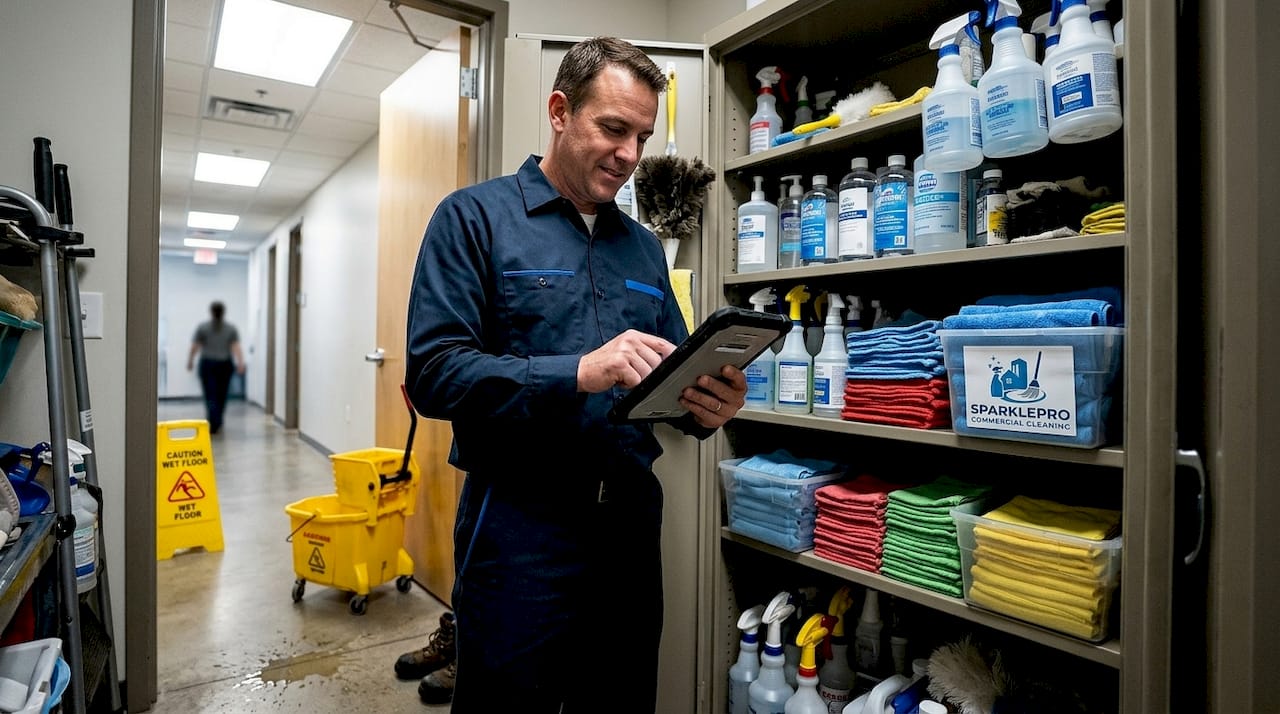
A standard commercial cleaning visit typically covers dusting and surface wiping, restroom disinfection, waste removal, glass cleaning, and floor care. But the process behind each task is what distinguishes a professional operation. The floor cleaning process alone involves multiple steps: sweeping, scrubbing, stripping, and applying appropriate finish coatings based on floor material.
For infection control, most reputable providers follow structured protocols:
- Zone separation using color-coded cloths and mop heads
- Application of EPA-registered disinfectants with required dwell times
- Proper disposal of contaminated materials following OSHA standards
- PPE requirements for staff in high-risk areas
- Post-cleaning inspection and sign-off
Green cleaning products are increasingly standard. These are biodegradable, low-VOC (volatile organic compound) formulas that improve indoor air quality and reduce occupant exposure to harsh chemicals. This matters especially in facilities where sensitive populations are present, such as schools, clinics, and senior care buildings.
Technology plays a growing role. Digital checklists help track progress and support compliance verification at every visit. Real-time reporting dashboards let property managers see exactly what was cleaned, by whom, and when. Some providers integrate QR code scanning at each cleaning station, creating a verifiable digital paper trail.
A well-organized facility maintenance checklist can also help property managers coordinate cleaning schedules with broader maintenance cycles, reducing operational gaps.
"CIMS emphasizes management commitment, customer satisfaction, human resources, health, safety, and environmental stewardship, and green building support as the core pillars of a quality cleaning organization." — Power of Clean Standards, ISSA
Safety compliance is non-negotiable. OSHA regulations govern how hazardous cleaning agents are stored, handled, and disposed of. Providers operating without proper safety training expose your property to regulatory risk.
Standards and certifications for quality assurance
Knowing the protocols, it's critical to understand quality assurance through standards and certifications.
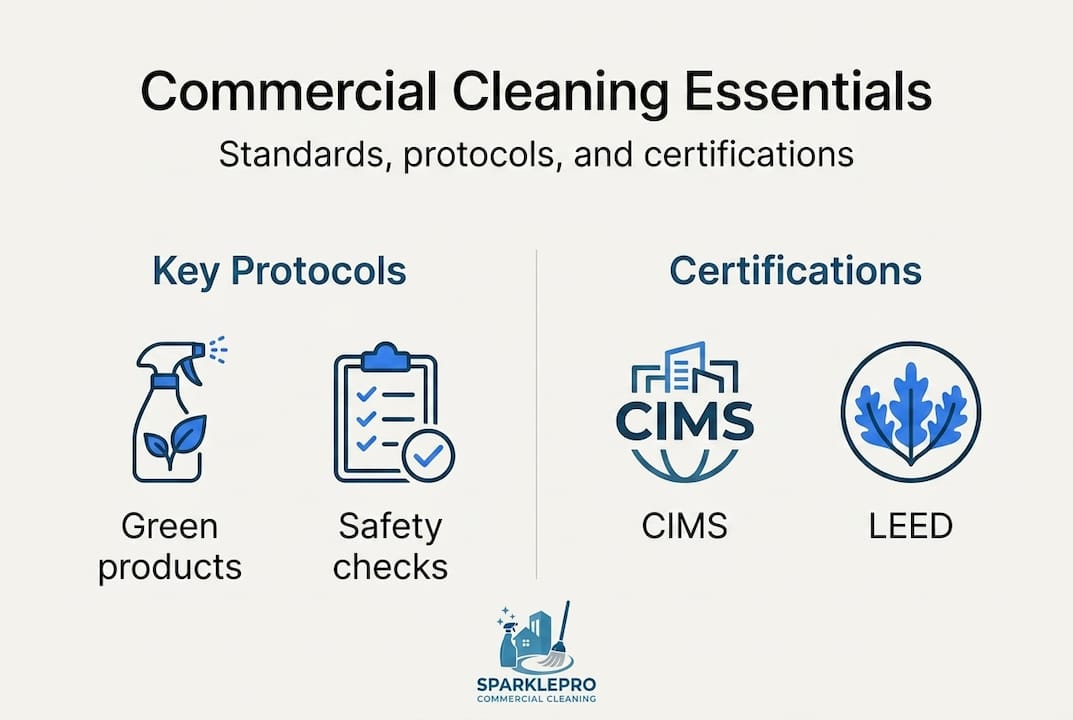
The most recognized benchmark in the U.S. commercial cleaning industry is the ISSA CIMS (Cleaning Industry Management Standard). Unlike individual certifications, CIMS certifies organizations, not individuals, and covers management quality, sustainability credentials, LEED credits, and ESG reporting alignment. It is the industry equivalent of ISO certification in manufacturing.
CIMS is structured around five core areas:
- Quality systems: Documented processes, service delivery consistency
- Service delivery: Inspections, customer satisfaction tracking
- Human resources: Staff training, background checks, retention practices
- Health, safety, and environmental stewardship: OSHA compliance, green product usage
- Management commitment: Leadership accountability and continuous improvement
For facilities pursuing LEED certification or meeting ESG (Environmental, Social, and Governance) reporting requirements, CIMS-GB (Green Building) adds a sustainability layer. Providers carrying CIMS-GB credentials use cleaning practices that support indoor air quality goals, reduced water usage, and responsible chemical management.
Why does this matter for property managers? Certified providers carry lower liability risk. Their documented systems mean fewer service gaps, fewer complaints, and faster resolution when issues arise. Facilities serviced by certified providers also tend to score higher in third-party building quality assessments.
Similar quality thinking applies to exterior asset protection, where certified coatings asset protection follows comparable standards of documentation and accountability.
Pro Tip: When comparing bids, ask specifically for CIMS or CIMS-GB documentation. A provider who can produce these credentials upfront is demonstrating organizational maturity, not just sales confidence.
How to choose the right commercial cleaning provider
With standards in mind, here is a simple framework to help you select the best provider for your property.
The selection process should be structured, not based on price alone. Providers who use checklists, color-coding, and sustainability practices demonstrate a level of professionalism that directly reduces operational and health risks in your facility.
Follow this step-by-step evaluation process:
- Verify certifications: Ask for CIMS, CIMS-GB, or equivalent documentation
- Check references: Request contact information for current clients in similar facility types
- Review equipment lists: Confirm they have the right tools for your specific flooring, square footage, and facility category
- Ask about cross-contamination controls: Color-coded systems and zone separation protocols are non-negotiable
- Evaluate digital reporting capabilities: Can they provide real-time updates and inspection logs?
- Request sustainability documentation: Green product lists, chemical safety data sheets, waste disposal procedures
Matching providers to facility type is equally important. An office building needs consistent scheduled maintenance with minimal disruption during business hours. A retail center requires flexible scheduling around store hours and heavy foot-traffic zones. Healthcare facilities demand medical-grade disinfection, strict PPE protocols, and staff trained in bloodborne pathogen handling.
| Facility type | Key requirements |
|---|---|
| Office building | Schedule flexibility, digital reporting, low disruption |
| Retail center | High-traffic zone focus, after-hours availability |
| Healthcare facility | Medical-grade disinfection, OSHA compliance, staff certification |
| Industrial space | Heavy-duty equipment, hazmat handling, floor restoration |
This guide for managers walks through industry terminology that helps during provider evaluations, so you can cut through sales language and ask the right technical questions.
Pro Tip: Before signing any contract, request a sample digital checklist and a copy of their sustainability documentation. Providers who hesitate on this request are telling you something important about their operational transparency.
The reality: What most guides miss about commercial cleaning
Having explored selection frameworks, here is our honest take on what really separates an average cleaning vendor from a true operational partner.
Most guides stop at certifications. They hand you a checklist and move on. But the property managers who get the best outcomes from their cleaning contracts consistently point to three things that no certification measures: communication clarity, adaptability, and accountability loops.
A provider can hold every credential and still deliver inconsistent results if they don't have a clear process for client feedback. The best commercial cleaning organizations build structured reporting into every service cycle. They tell you what was completed, flag anything unusual, and follow up on issues without you having to chase them.
Adaptability matters more than people realize. Facilities change. Tenant configurations shift. Seasonal traffic spikes in retail. Outbreak protocols activate in healthcare settings. A rigid cleaning provider with a fixed scope of work becomes a liability during those transitions. The ones worth keeping are the ones who adjust without friction.
Familiarity with commercial cleaning terminology gives you a sharper ability to evaluate these qualities during conversations with potential vendors. When a provider talks fluently about dwell times, zone mapping, and inspection cadences, that fluency signals operational depth. When they can't, credentials alone won't save you.
Cultural fit with your facility's pace and expectations is the last overlooked factor. The best contract is the one where your provider feels like an extension of your team, not a vendor you manage at arm's length.
Connect with Sparklepro for reliable commercial cleaning
Ready to experience professional cleaning aligned with your standards? Here is your next step.
At Sparklepro Commercial Cleaning, we back every service with digital reporting, trained and certified staff, and cleaning protocols built for your specific facility type. Whether you manage an office campus in California cleaning services, oversee retail properties in New York cleaning solutions, or need nationwide commercial cleaning coverage across multiple states, we bring consistent, documented, and fully insured service to every location.
Our four-step process makes getting started simple: request a quote, schedule a site visit, approve your cleaning plan, and let our team handle the rest. Reach out today to discuss your facility's needs and get a customized proposal.
Frequently asked questions
What exactly qualifies as commercial cleaning?
Commercial cleaning is professional cleaning for public or business facilities, involving specialized protocols and trained staff for complex, multi-zone environments that go well beyond routine custodial work.
How is cross-contamination prevented in commercial cleaning?
Professional services use color-coded tools and digital checklists to prevent contamination between zones, assigning specific cloth and mop colors to restrooms, common areas, and high-risk spaces.
What certifications should property managers look for?
Look for CIMS-certified organizations from ISSA, which verifies management quality, training standards, and sustainability compliance rather than individual technician credentials.
How do digital tools improve cleaning outcomes?
Digital checklists track progress and support compliance verification, giving property managers real-time visibility into completed tasks, inspection results, and any flagged issues at their facility.