
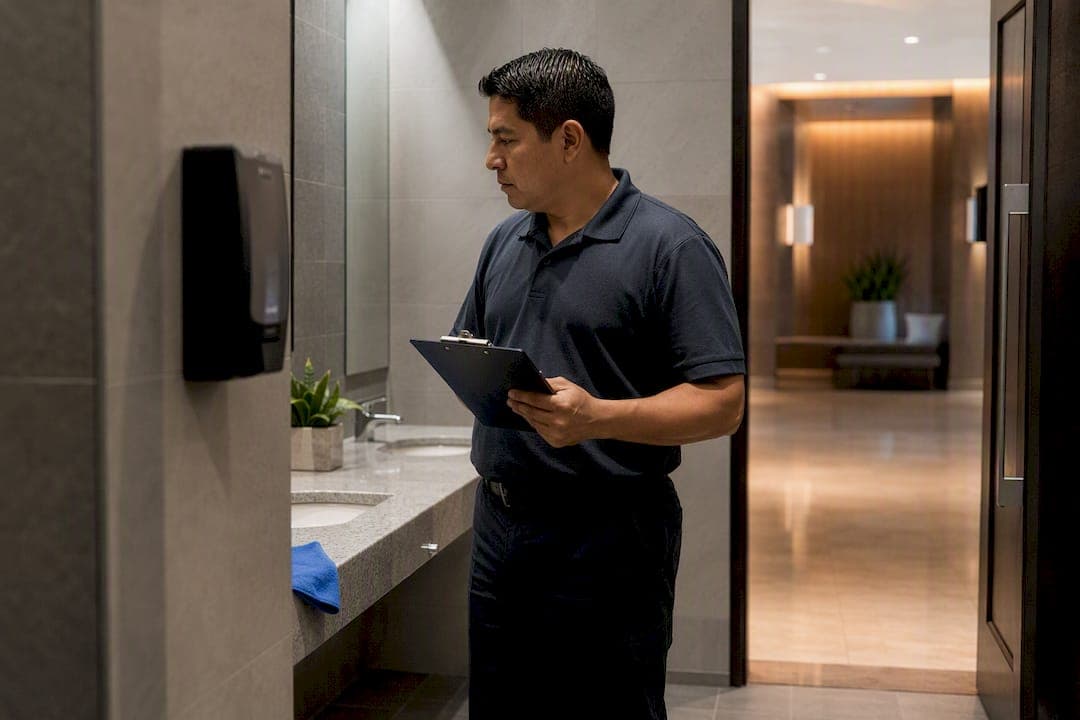
A day porter checklist works when it keeps an occupied building looking presentable throughout business hours. That means restrooms stay stocked, spills are wiped up quickly, trash does not overflow, high-touch surfaces get wiped down regularly, and the lobby always looks attended to. What follows is a printable checklist along with the route templates, job-kit lists, and supervisor KPIs that turn it into something you can actually manage.
TL;DR:
- A pre-shift inspection loop of three to five minutes per zone significantly reduces missed spots and wasted labor during cleaning rounds.
- Restrooms should be checked every two hours in high-traffic buildings, with replenishment of consumables and immediate hazard handling as key performance standards.
- Job kits labeled for specific tasks, along with safety gear like gloves and signs, improve efficiency and compliance with safety regulations.
- Documented logs with timestamps of damage or hazards streamline communication with maintenance and support accountability.
- The cleaning standards and inspection routines must be explicitly incorporated into service agreements with clear response times and completion criteria.
Table of Contents
- What Goes on a Day Porter Daily Checklist
- What "Done" Looks Like In Every Zone
- How to Build a Route and Inspection Loop
- Job Kits and Safety Gear Day Porters Should Carry
- Setting Role Expectations, Training, and KPIs
- Turning the Checklist Into a Contract You Can Enforce
- What Running a Day Porter Program Actually Teaches You
- Get a Day Porter Program Built Around Your Building
- Sources
- FAQ
What Goes on a Day Porter Daily Checklist
A day porter checklist works best as a one-page reference, organized by zone and how often each task needs attention. Print it, laminate it, or load it onto a phone. Either way, the porter should be able to glance at it between rounds and know exactly what's left.
Group tasks by area first:
- Lobby and entrance: clean glass doors, straighten mats, sweep entry floors, check directory signage for smudges or peeling.
- Restrooms: check stock (paper, soap, sanitizer), empty bins, spot-clean sinks and floors, check for odor.
- Breakrooms and kitchens: wipe counters and tables, empty small bins, restock paper towels, check coffee station spills.
- Conference rooms: reset chairs and tables, wipe surfaces, remove trash, check whiteboards and AV equipment for smudges.
- Elevators: wipe buttons and handrails, spot-clean floors and walls, check for trapped odors.
- Exterior: check entry mats for weather debris, clear cigarette receptacles, scan walkways for hazards.
- Trash and recycling: empty bins on schedule, replace liners, consolidate loads for pickup.
Then assign frequency. On arrival, the porter should do a full inspection walk before touching a single surface, which is the habit most facility managers underweight. Hourly, restrooms and lobbies need a quick check, especially in buildings with heavy foot traffic. After lunch, restrooms and breakrooms need a second full pass as this period often sees a peak in consumable use. Everything else, including spills, broken fixtures, or a jammed door, falls under "as needed" and gets handled the moment it's spotted, not on the next scheduled round.
- Walk the zone before cleaning it.
- Handle any spill or hazard immediately, no matter what else is on the list.
- Restock consumables before they run out, not after a tenant complains.
- Empty trash before bins overflow, not when they're already full.
- Log anything abnormal, from a leaking faucet to a burned-out bulb.
A "pass" on this checklist means a visitor could walk through the building at any hour and never guess anyone was cleaning up after them. That's the actual performance bar, not a checked box.
What "Done" Looks Like In Every Zone
A checklist item only works if everyone agrees on the finish standard behind it. Otherwise "clean the lobby" means five different things to five different porters.
In the lobby, done means glass without streaks or fingerprints, mats free of debris, no visible footprints on hard flooring, and signage wiped clear of dust. Restrooms need a same-day standard: no empty dispensers, no wet floors, and no lingering odor. A lingering smell that surfaces even after a wipe-down usually points to a plumbing issue, not a cleaning gap, and should get flagged to maintenance rather than masked with air freshener.
Breakrooms and kitchens call for wiped counters, emptied small bins, and no sticky spots on tables. Conference rooms need a full reset between meetings: chairs squared, trash pulled, surfaces wiped, and any leftover cups or plates removed before the next group walks in.
Elevators and stairwells get spot-checked for handrail grime and floor debris, since these areas see constant contact but rarely get a deep clean during the day. Reserve floor stripping and polishing for the night crew; a day porter's job in mixed-surface lobbies is neutral-cleaner maintenance, not finish work that could damage the surface or disrupt occupants.
- Exterior checks should account for weather: salt residue in winter, pollen in spring, mud after rain.
- Seasonal debris at entrances is one of the most common sources of slip-and-fall complaints.
How to Build a Route and Inspection Loop
Skipping the pre-shift walk is the single most common mistake facility managers make when setting up a day porter routine. A short inspection loop before cleaning starts, roughly three to five minutes per zone, lets the porter spot what actually needs attention instead of guessing. That habit alone cuts wasted labor and missed spots more than any supply upgrade does.
A typical office building route runs in a loop rather than a straight line, so the porter ends up back near supplies when restocking is needed:
- Start at the main entrance and lobby.
- Move through restrooms nearest the lobby.
- Sweep breakrooms and kitchens.
- Check conference rooms between meetings.
- Hit elevators and stairwells.
- Loop back to restrooms and lobby before the next scheduled pass.
Set frequencies around your building's actual traffic. If most tenants arrive between 8 and 9 AM, the first full round should finish before 8. Lunch rushes between noon and 1 PM justify a second restroom and breakroom pass. Afternoon meeting blocks mean conference rooms need checks every hour or two, not just at the end of the day.
Pro Tip: Have porters snap a quick photo of any damage or hazard they log, not just a written note. It turns a vague complaint into a timestamped record you can hand to maintenance or a vendor without any back-and-forth.
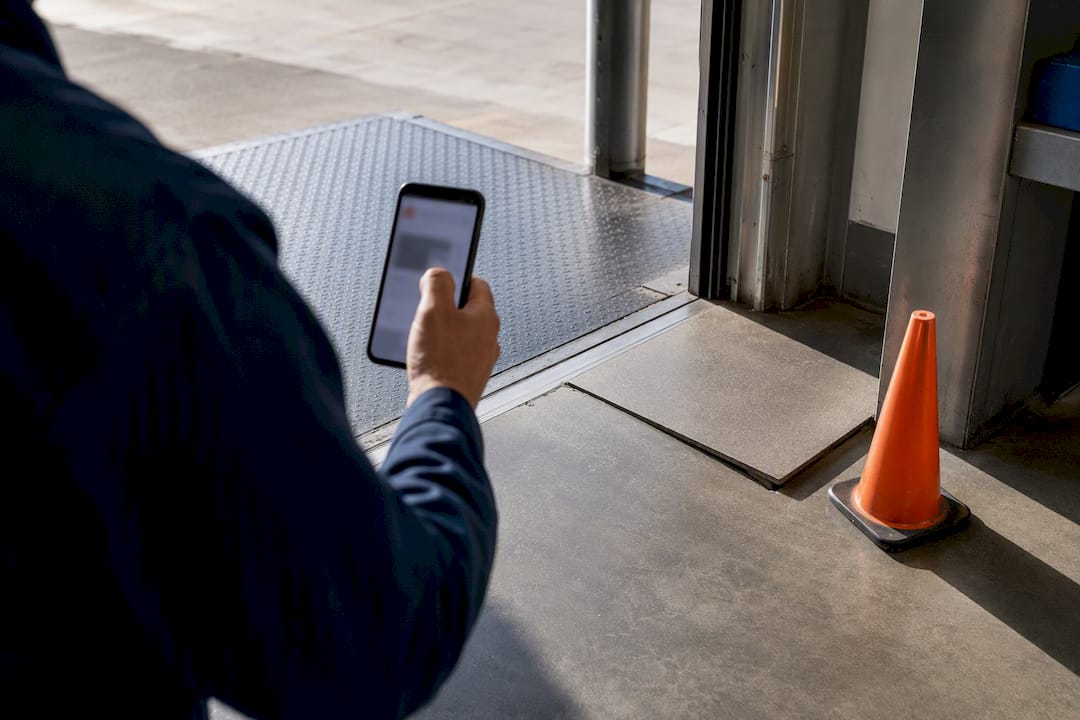
Documentation doesn't need to be complicated. A simple log with timestamps and short notes gives you a record of what happened and when, which matters more than most managers expect until a dispute comes up.
Job Kits and Safety Gear Day Porters Should Carry
Labeled job kits cut travel time and keep the right chemical in hand for the right surface, which matters more in a large building than most managers assume. A restroom kit typically holds disinfectant spray, microfiber cloths, spare consumables, and disposable gloves. A lobby kit carries glass cleaner, a dust mop, and a lint roller for mats. A spill kit needs absorbent pads, a wet-floor sign, and gloves, staged somewhere the porter can grab it without a trip back to the closet.
- Keep a spare battery charged for cordless vacuums so a dead unit never stalls a round.
- Rinse and air-dry microfiber cloths daily; a cloth that's still damp from yesterday spreads bacteria instead of removing it.
- Check dilution ratios on chemical labels rather than eyeballing them, since over-diluting cuts effectiveness and over-concentrating wastes product and irritates skin.
CDC and NIOSH publish cleaning and custodial safety guidance that covers PPE selection and safe chemical handling, and OSHA's hazard communication standards set the baseline for what employers owe custodial staff. A wet-floor sign goes up before mopping starts, not after someone slips. Cords get managed so they don't cross walkways. Gloves come off between tasks that involve different chemicals.
Setting Role Expectations, Training, and KPIs
A day porter's job description should spell out routine cleaning, spot sanitizing, minor repairs, restocking, and incident reporting, plus the soft skills that matter just as much: courtesy toward tenants, discretion, and the ability to prioritize on the fly.
- Onboarding should cover the full checklist, chemical safety, and how to log issues before day one ends.
- Refresh training every quarter keeps standards from drifting.
- Supervisors should run spot checks weekly, not just after a complaint.
Simple KPIs work better than elaborate ones: spill response time, restroom stock-out rate, completed rounds per shift, and tenant satisfaction feedback. A porter who misses the same standard twice needs documented coaching, not a verbal reminder that disappears from memory by the next shift.
Turning the Checklist Into a Contract You Can Enforce
A checklist only protects you if it's written into the agreement, not just handed to a porter on day one. An engagement process typically involves steps such as quote, site visit, scheduled coverage, and client approval, each aligning with checklist deliverables. The site visit is where zone frequencies get set based on your building's actual traffic, not a generic template.
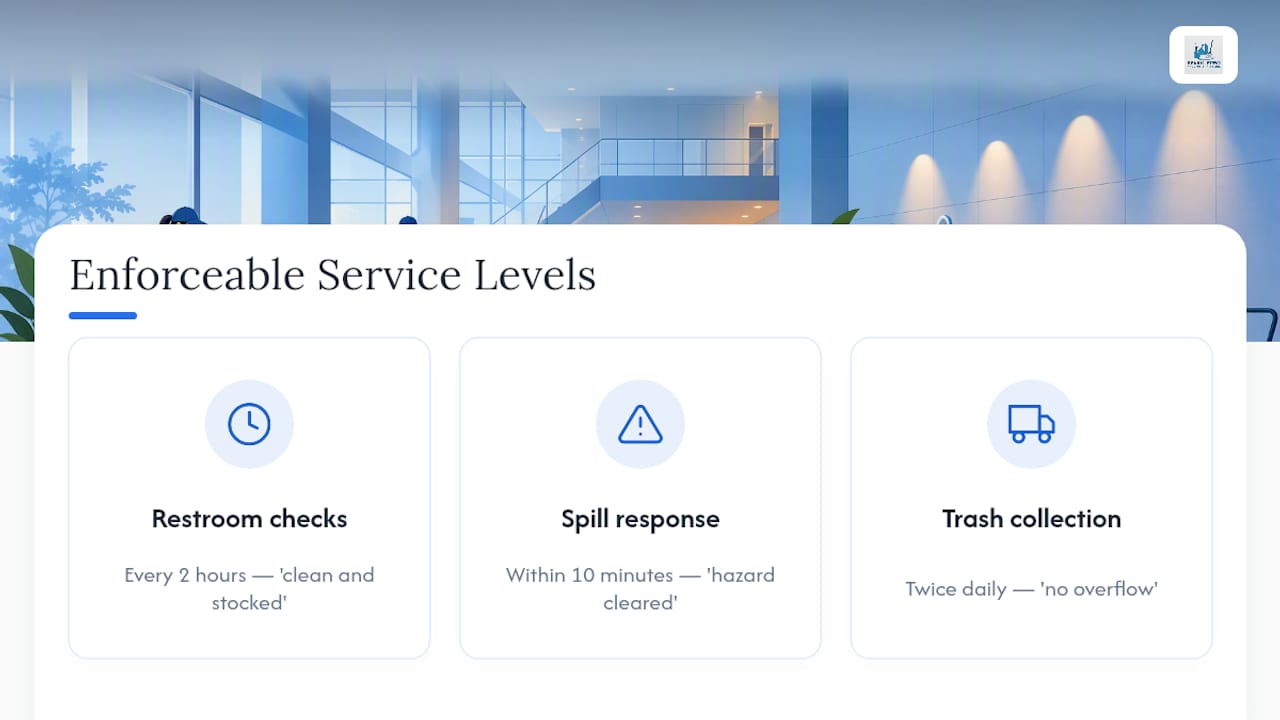
Convert checklist items into SLA language: restroom checks every two hours, spill response within ten minutes, trash collection twice daily. Acceptance criteria should mirror the "done" standards already covered, so there's no ambiguity when you're signing off on an invoice.
Outsourcing makes the most sense when you need coverage that flexes with occupancy, or when hiring and training in-house would eat more time than the role justifies. A pilot period, part-time or full coverage, lets you test the fit before committing to a longer contract.
What Running a Day Porter Program Actually Teaches You
Running porters across a portfolio taught me one thing fast: the inspection loop isn't optional. A porter who walked a floor before cleaning caught a cracked tile before a tenant tripped on it, which saved a liability headache entirely.
Job kits earned their keep too, since fewer trips back to the closet meant faster rounds. And documented timestamps turned invoice disputes into five-minute conversations instead of drawn-out arguments about whether work actually happened.
— Sales
Get a Day Porter Program Built Around Your Building
This checklist can be turned into a working contract, with routes, frequencies, and job kits tailored around a building's actual traffic during a site visit, and these standards then included in the service agreement.
Coverage scales to what you actually need, whether that's part-time lobby and restroom monitoring or full-shift, multi-porter coverage across a large property. After the quote and site visit, scheduled coverage starts on the agreed frequencies, and the checklist becomes the acceptance criteria you sign off on. If waste staging is part of the picture, coordinating with a partner like Sam's Dumpster Rentals can smooth out trash consolidation on high-volume days.
Ready to see what a tailored day porter program looks like for your property? Request a quote and get a site visit scheduled.
Sources
- What Does a Day Porter Do? | Facility Manager's Guide | CleanQuote
- Day porter cleaning routine for high-traffic facilities | TheCleaningBusiness
- Cleaning and custodial services | NIOSH | CDC
- Day Porter job description | InterviewPrep
FAQ
What Are the Main Duties of a Day Porter?
A day porter maintains a building's appearance during business hours by restocking restrooms, cleaning up spills, emptying trash, disinfecting high-touch surfaces, and keeping the lobby and common areas presentable. This differs from night janitorial work, which focuses on deep cleaning after occupants leave. The two roles complement each other rather than overlap.
What Is the Daily Cleaning List a Day Porter Follows?
The daily list covers lobby and entrance upkeep, restroom monitoring, breakroom and kitchen cleaning, conference room resets, elevator and stairwell checks, and trash and recycling collection. Each zone gets checked on arrival, then again at set intervals tied to peak traffic like morning arrival and lunch. Spills and hazards get handled immediately, outside the regular schedule.
How Often Should Restrooms Be Checked During a Shift?
High-traffic restrooms should be checked at least every two hours, with additional passes around lunch when usage peaks. Topping off consumables early in the shift and again at lunch prevents the stock-out shortages that generate the most tenant complaints. A no-stock-out standard works well as a measurable KPI.
What Should I Carry in a Day Porter Job Kit?
A well-stocked kit includes a restroom kit with disinfectant, gloves, and spare consumables, a lobby kit with glass cleaner and a dust mop, and a spill kit with absorbent pads and a wet-floor sign. Labeled kits reduce travel time and make sure the right tool is on hand for each surface. These kits can be incorporated into coverage plans during a site visit.
How Much Does Hiring a Day Porter Service Cost?
Pricing depends on property size, coverage hours, and scope of service, so there's no flat rate that applies across buildings. Pricing is provided after a quote and site visit, where frequencies and staffing levels are matched to a building's traffic. Current details are available by requesting a quote directly.