
Routine cleaning tasks in commercial facilities are defined as scheduled, frequency-based maintenance actions that keep buildings sanitized, safe, and operationally sound. The American Cleaning Institute classifies these tasks into daily, weekly, and monthly categories, each targeting a distinct layer of hygiene and upkeep. Property managers who follow a structured routine cleaning tasks guide reduce contamination risk, extend asset lifespan, and cut reactive maintenance costs. Sparkleprocommercialcleaning works with facility directors across the country who use exactly this framework to maintain consistent building standards.
1. What are the essential daily cleaning tasks for commercial facilities?
Daily cleaning tasks are the foundation of any building maintenance program. They prevent contamination from compounding and keep high-traffic areas presentable between deeper service cycles. The goal is not perfection. The goal is consistent, fast action on the surfaces and spaces that accumulate the most risk.
The core daily tasks for commercial facilities include:
- Disinfecting high-touch surfaces: Door handles, elevator buttons, light switches, and shared equipment. Failing to disinfect these surfaces daily accelerates bacterial and allergen spread. Use EPA-approved disinfectants in food service areas and shared restrooms.
- Trash removal: Empty bins in offices, restrooms, and break rooms. Full bins attract pests and create odor complaints.
- Spot cleaning: Wipe spills, smudges, and visible soiling on counters, glass, and floors as they appear.
- Restroom checks: Restock paper products, wipe fixtures, and confirm soap dispensers are functional.
- Clutter control: Clear common areas of debris, misplaced items, and obstructions to maintain safe walkways.
Daily maintenance tasks should take approximately 20 minutes per zone when staff are properly equipped and organized. Each individual task runs between 60 seconds and 5 minutes. That efficiency is only achievable when supplies are staged correctly and staff follow a fixed sequence.
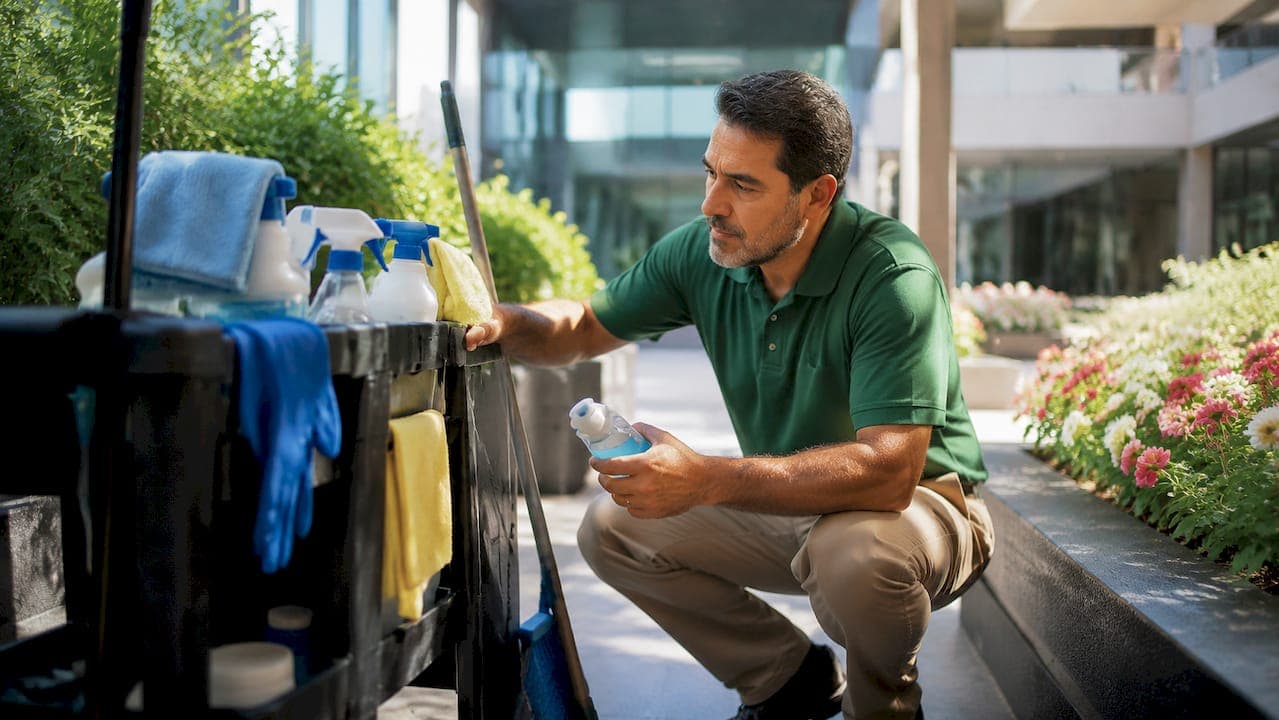
Pro Tip: Deploy portable cleaning caddies stocked with EPA-approved disinfectant, microfiber cloths, and gloves at each floor or zone. Caddies placed at the point of use reduce the friction that causes staff to skip or delay tasks.
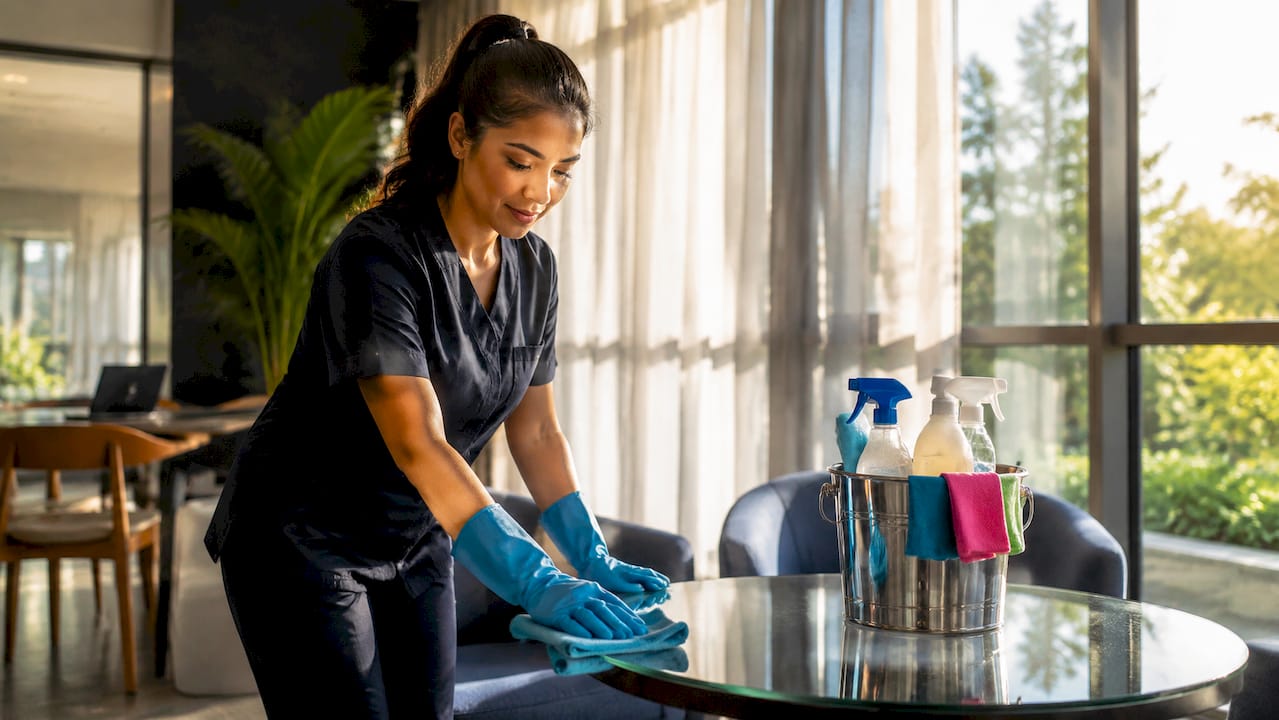
For a detailed breakdown of daily task sequencing in office environments, the daily commercial cleaning routines guide from Sparkleprocommercialcleaning covers zone-by-zone protocols.
2. Which weekly cleaning tasks sustain cleanliness and hygiene in buildings?
Weekly tasks address the buildup that daily spot cleaning cannot catch. Floors accumulate embedded grit. Restrooms need full sanitization beyond a quick wipe. Communal kitchens require attention to appliances and surfaces that see heavy use. Skipping weekly tasks creates a backlog that forces expensive deep cleaning cycles.
The core weekly tasks for commercial facilities include:
- Vacuuming and mopping: All carpeted areas, hard floors, and entryways. Focus on corners and under furniture where debris collects.
- Full restroom sanitization: Scrub toilets, sinks, and tile grout. Disinfect all fixtures and restock supplies.
- Kitchen and break room cleaning: Wipe appliance exteriors, clean microwave interiors, and sanitize counters and sinks.
- Dusting: Horizontal surfaces, window sills, vents, and light fixtures at accessible heights.
- Glass and partition cleaning: Interior windows, glass doors, and cubicle partitions.
- Clutter management: Scheduled decluttering tasks weekly keep shared spaces organized and reduce the time needed for monthly deep work.
Assigning specific tasks to specific days prevents staff from feeling overloaded. A structured weekly schedule that assigns floors on monday, restrooms on tuesday, and kitchens on wednesday distributes the workload evenly and builds predictable habits.
| Day | Focus Area | Key Tasks |
|---|---|---|
| Monday | Floors | Vacuum carpets, mop hard floors, clean entryways |
| Tuesday | Restrooms | Full sanitization, fixture scrubbing, restock |
| Wednesday | Kitchens | Appliance wipe-down, counter sanitization, sink cleaning |
| Thursday | Surfaces and glass | Dust horizontal surfaces, clean partitions and windows |
| Friday | Common areas | Declutter, spot check all zones, restock supplies |
Pro Tip: Assign one staff member per zone rather than rotating the whole team through every area. Zone ownership increases accountability and cuts average task time because staff learn their area's specific problem spots.
The office cleaning checklist from Sparkleprocommercialcleaning provides a ready-to-use weekly task template organized by building area.
3. Which monthly cleaning tasks support deep maintenance and extend facility lifespan?
Monthly tasks address the systems and surfaces that weekly routines cannot reach. These are the tasks that protect equipment, maintain air quality, and prevent the kind of neglect that shortens building asset life. Facility directors who skip monthly cycles consistently face higher repair bills and more frequent tenant complaints.
The core monthly tasks for commercial facilities include:
- HVAC filter inspection and cleaning: Dirty filters reduce air quality and force systems to work harder. Scheduled equipment maintenance like filter cleaning prevents costly failures and maintains sanitization standards.
- Ventilation hood and exhaust cleaning: Critical in kitchen and break room areas where grease accumulates.
- Upholstery and fabric cleaning: Chairs, soft seating, and cubicle panels collect allergens and odors over time.
- Blind and window treatment cleaning: Dust accumulates on horizontal surfaces that weekly dusting misses.
- Light fixture cleaning: Accumulated dust on fixtures reduces light output and creates fire risk in industrial settings.
- Storage area organization: Deep cleaning and storage decluttering monthly prevents pest harborage and keeps emergency egress routes clear.
- Appliance seal and drain cleaning: Dishwasher seals, refrigerator gaskets, and floor drains require monthly attention to prevent mold and odor.
| Task Category | Daily | Weekly | Monthly |
|---|---|---|---|
| High-touch surface disinfection | Required | Reinforced | Audited |
| Floor maintenance | Spot clean | Full clean | Deep scrub or strip |
| Equipment care | Visual check | Wipe exterior | Filter, seal, drain clean |
| Storage and clutter | Clear debris | Organize | Full declutter and audit |
| Air quality | Ventilate | Vent wipe | Filter replacement |
Pro Tip: Build monthly tasks into a rotating calendar rather than a single "deep clean day." Assign two or three monthly tasks per week so staff absorb them into their normal rhythm without disruption.
4. How to organize and schedule routine cleaning tasks efficiently?
Organizing cleaning tasks by frequency and area is the single most effective way to maintain consistency across a multi-floor or multi-building portfolio. Without a clear schedule, tasks get skipped, supplies run out, and staff spend time deciding what to do instead of doing it.
Follow this sequence to build a practical cleaning schedule:
- Map your facility by zone and traffic level. High-traffic zones like lobbies, restrooms, and break rooms need daily attention. Low-traffic zones like storage rooms and conference rooms can follow weekly or monthly cycles.
- Assign tasks by frequency first, then by area. List every task, categorize it as daily, weekly, or monthly, and then assign it to a specific zone and staff member.
- Apply the top-down, back-to-front cleaning sequence. Cleaning from the highest point and furthest corner toward the exit prevents dirt from resettling on already-cleaned surfaces. This single technique reduces total cleaning time without adding staff.
- Stage supplies at the point of use. Portable caddies in each zone eliminate wasted travel time. Staff who do not have to retrieve supplies complete tasks faster and skip fewer steps.
- Use digital scheduling tools. Facility management platforms with task assignment and completion tracking give property managers real-time visibility into schedule adherence. Technology adoption including robotic vacuums and extended-reach tools reduces labor strain on repetitive tasks.
- Review and adjust monthly. Track which tasks are consistently skipped or overrun. Adjust time allocations and staffing before problems compound.
Pro Tip: Run a 30-day pilot with one floor or zone before rolling out a new schedule building-wide. Pilots reveal supply gaps, timing errors, and staff training needs before they affect the whole facility.
5. What common pitfalls do property managers face in routine cleaning?
The most common mistake property managers make is treating cleaning as a single large event rather than a series of small, consistent actions. Small daily routines focused on sanitizing surfaces reduce stress and produce better results than infrequent deep cleaning attempts. The data supports this. Facilities that rely on quarterly deep cleans instead of structured daily and weekly routines accumulate contamination, tenant complaints, and deferred maintenance costs.
The most damaging pitfalls include:
- Neglecting high-touch surfaces: Door handles and shared equipment are the fastest vectors for pathogen spread. Skipping daily disinfection in these areas creates measurable health risk.
- Irregular scheduling: Cleaning that happens "when someone has time" is cleaning that does not happen consistently. Without assigned days and staff, tasks fall through the gaps.
- Poor supply management: Running out of EPA-approved disinfectants or microfiber cloths mid-shift forces staff to skip tasks or use inferior substitutes.
- Ignoring clutter: Clutter is not just an aesthetic problem. It blocks cleaning access, creates trip hazards, and signals to tenants that maintenance standards are slipping.
- Reactive rather than proactive maintenance: Waiting for a complaint before addressing a dirty restroom or a clogged drain costs more time and money than a scheduled check.
"The facilities that perform best are the ones where cleaning is treated as a system, not a chore. Every task has an owner, a frequency, and a standard. When one of those three elements is missing, the whole system degrades."
Staff engagement is a real factor. When team members understand why each task matters and see that schedules are enforced consistently, adherence improves. Posting zone checklists, conducting brief weekly reviews, and recognizing consistent performance all contribute to a culture where cleaning standards hold.
Key Takeaways
A structured routine cleaning program organized by daily, weekly, and monthly task frequency is the most reliable method for maintaining commercial building hygiene and extending facility asset life.
| Point | Details |
|---|---|
| Daily tasks prevent contamination | Disinfect high-touch surfaces every day using EPA-approved products to stop pathogen spread. |
| Weekly schedules distribute workload | Assign specific tasks to specific days to build staff habits and prevent backlog. |
| Monthly tasks protect equipment | Clean filters, seals, and vents on a fixed schedule to avoid costly repairs. |
| Top-down sequencing saves time | Clean from the highest point toward the exit to prevent rework and cut total task time. |
| Staged supplies increase adherence | Place caddies at the point of use so staff complete tasks without delay or detours. |
What I've learned about routine cleaning after years in facility management
Most property managers I work with come to us after a period of reactive cleaning. They had a schedule on paper, but it was not enforced. Staff were rotating through tasks without ownership. Supplies were centralized in one storage room. The result was a facility that looked acceptable on good days and fell apart under pressure.
The shift that makes the biggest difference is not adding more cleaning hours. It is adding structure to the hours you already have. Zone ownership, staged supplies, and a fixed weekly sequence consistently outperform larger cleaning crews with no clear system. I have seen a single well-trained technician maintain a 40,000-square-foot office floor more effectively than a three-person team without a defined schedule.
Technology helps, but it is not the starting point. Robotic vacuums and digital task trackers add value only after the underlying schedule is sound. Deploying technology on top of a broken system just automates the chaos. Fix the sequence first. Then automate.
For multi-facility portfolios, the key is standardization. Every building should run the same task categories on the same frequency cycle. Variations by building size or use type are fine, but the framework must be consistent. That consistency is what makes auditing, staffing, and quality control scalable across a portfolio of any size.
— Sales
Sparkleprocommercialcleaning: professional routine cleaning for your facilities
Property managers who want consistent building standards without managing every detail in-house work with Sparkleprocommercialcleaning.
Sparkleprocommercialcleaning provides fully licensed and insured routine janitorial services for commercial properties across Delaware, Massachusetts, Washington, and South Carolina. The process is straightforward: request a quote, schedule a site visit, confirm your cleaning program, and approve results. Every service plan is built around your facility's specific task frequency requirements, from daily high-touch disinfection to monthly deep maintenance cycles. Facility directors managing multi-tenant buildings, office parks, or healthcare facilities can request a consultation at sparkleprocommercialcleaning.com to get a program matched to their building's needs.
FAQ
What is a routine cleaning tasks guide for commercial buildings?
A routine cleaning tasks guide is a structured framework that organizes janitorial and maintenance tasks by frequency, daily, weekly, and monthly, to keep commercial facilities sanitized and operationally sound. The American Cleaning Institute recommends this frequency-based approach as the standard for maintaining indoor air quality and hygiene.
How often should high-touch surfaces be disinfected in a commercial facility?
High-touch surfaces including door handles, elevator buttons, and shared equipment must be disinfected daily. Failing to do so accelerates bacterial and allergen spread, particularly in food service areas and shared restrooms.
What is the most efficient cleaning sequence for large facilities?
The top-down, back-to-front sequence is the most efficient method. Cleaning from the highest point and furthest corner toward the exit prevents dirt from resettling on cleaned surfaces and reduces total task time.
How do you build a weekly cleaning schedule for a multi-floor building?
Assign specific task categories to specific days and designate zone ownership to individual staff members. A structured weekly schedule that distributes tasks across five days improves consistency and reduces the risk of overload on any single shift.
When should a property manager hire a professional cleaning service?
Property managers should engage a professional service when in-house staff cannot maintain consistent schedule adherence, when specialized disinfection or deep cleaning is required, or when managing a portfolio too large for internal teams to cover reliably.