
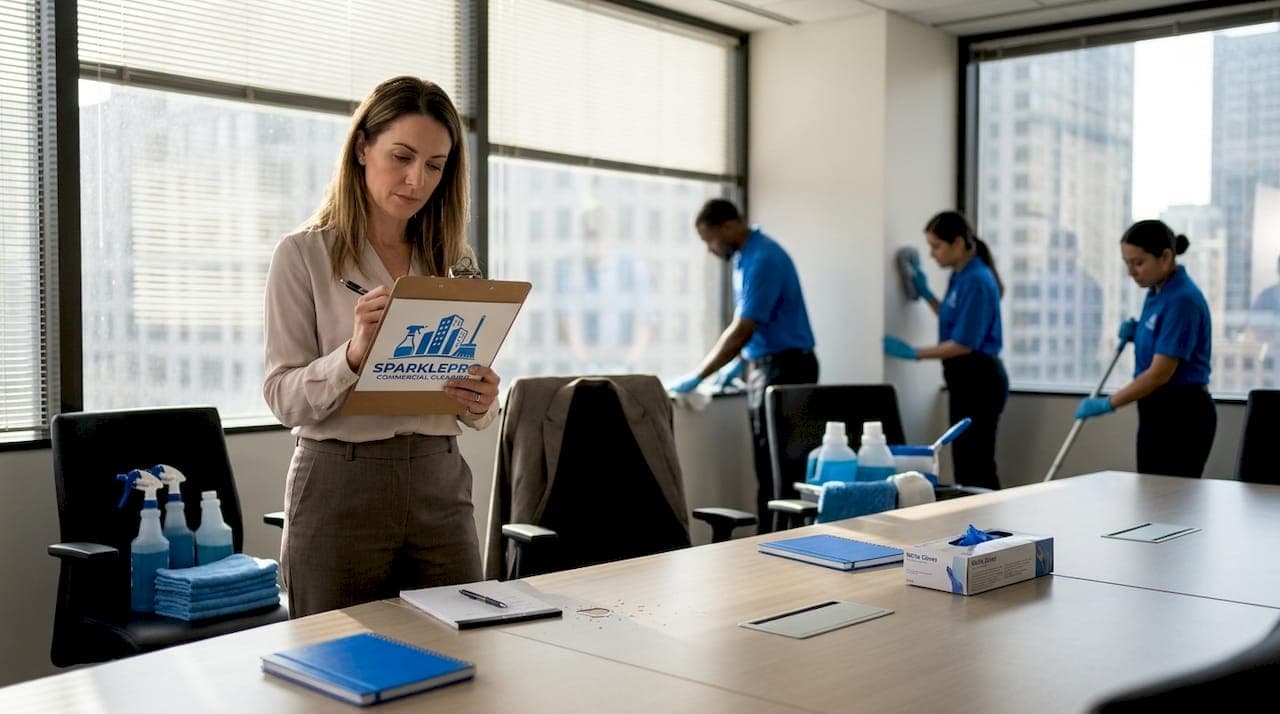
Missed cleaning tasks don't just create messy break rooms. They drive tenant complaints, accelerate surface wear, increase sick day rates, and ultimately hurt your building's reputation. Property managers juggling multiple spaces know the reality: without a clear system, things fall through the cracks. A well-structured office cleaning checklist gives you the framework to assign responsibility, set frequencies, and verify completion across every zone in your building. This guide breaks down exactly what your checklist should include, how to schedule it, and how to measure whether it's actually working.
Table of Contents
- Core criteria: What makes an effective office cleaning checklist?
- The essential daily, weekly, and periodic tasks
- Hybrid cleaning schedules vs. full daily service
- Verification, training, and sustainability best practices
- What most checklists miss: Insights from seasoned managers
- Take the next step: Professional support for spotless offices
- Frequently asked questions
Key Takeaways
| Point | Details |
|---|---|
| Checklist must-haves | A proper office cleaning checklist covers all areas and cleaning frequencies for consistent maintenance. |
| Hybrid schedules | Combining nightly and porter services can offer better efficiency and cost-effectiveness than daily-only cleaning. |
| Deep Cleaning | Monthly or quarterly deep cleans prevent costly damage and preserve facilities. |
| Verification tools | Verification methods like ATP testing and supervisor logs ensure accountability and cleaning quality. |
| Sustainable practices | Implementing green cleaning with low-VOC supplies and microfiber reduces waste and supports health. |
Core criteria: What makes an effective office cleaning checklist?
After seeing the need for structure, let's break down exactly what makes a cleaning checklist effective for offices.
A checklist is only as useful as the system built around it. Too many property managers download a generic template, hand it to a janitorial crew, and assume the work gets done correctly. The result is inconsistent cleaning, overlooked tasks, and mounting issues that become expensive to fix. A truly effective checklist covers five core elements: frequency, accountability, scope, verification, and waste reduction.
Frequency tells your cleaning staff how often each task must be completed. Without it, some tasks get done daily by habit while others get ignored for weeks. Accountability means assigning specific tasks to specific people or shifts so there's no confusion about who owns what. Scope defines which areas are included, which is critical in large buildings where zones can easily be skipped.
Verification is where most checklists fail. Completing a task is not the same as completing it correctly. The Power of Clean Standards from ISSA recommends using SOPs (standard operating procedures) alongside checklists for accountability, with ATP (adenosine triphosphate) testing for verification. ATP testing measures biological residue on a surface to confirm it was actually cleaned to a safe standard, not just wiped down. Training staff on dwell times (how long a disinfectant must stay wet on a surface to work) and proper PPE (personal protective equipment) use rounds out a rigorous program.
If you're new to commercial cleaning terminology, reviewing resources on understanding cleaning industry terms helps you communicate more precisely with contractors and vendors.
Here's what every effective office cleaning checklist should cover:
- Defined task frequency (daily, weekly, monthly, quarterly)
- Named responsible party or shift for each task
- Zone-specific breakdowns (restrooms, lobbies, conference rooms, kitchenettes, server rooms)
- Sign-off fields for completion verification
- Space for notes on issues found
- Escalation protocol for unresolved problems
Pro Tip: Incorporate green cleaning principles from the start. ISSA notes that low-VOC (volatile organic compound) chemicals and microfiber cloths reduce chemical waste, improve indoor air quality, and lower long-term supply costs. Green cleaning isn't just an ethical choice; it's an operational efficiency strategy.
The essential daily, weekly, and periodic tasks
Now that you know what an effective checklist looks like, let's dive into the specific cleaning tasks that should be included and how often they should be performed.
Frequency is everything in office cleaning. Grouping tasks incorrectly, such as deep cleaning carpets weekly or wiping windows daily, wastes budget and labor. Structuring your program by interval keeps costs predictable and ensures nothing important is overlooked.
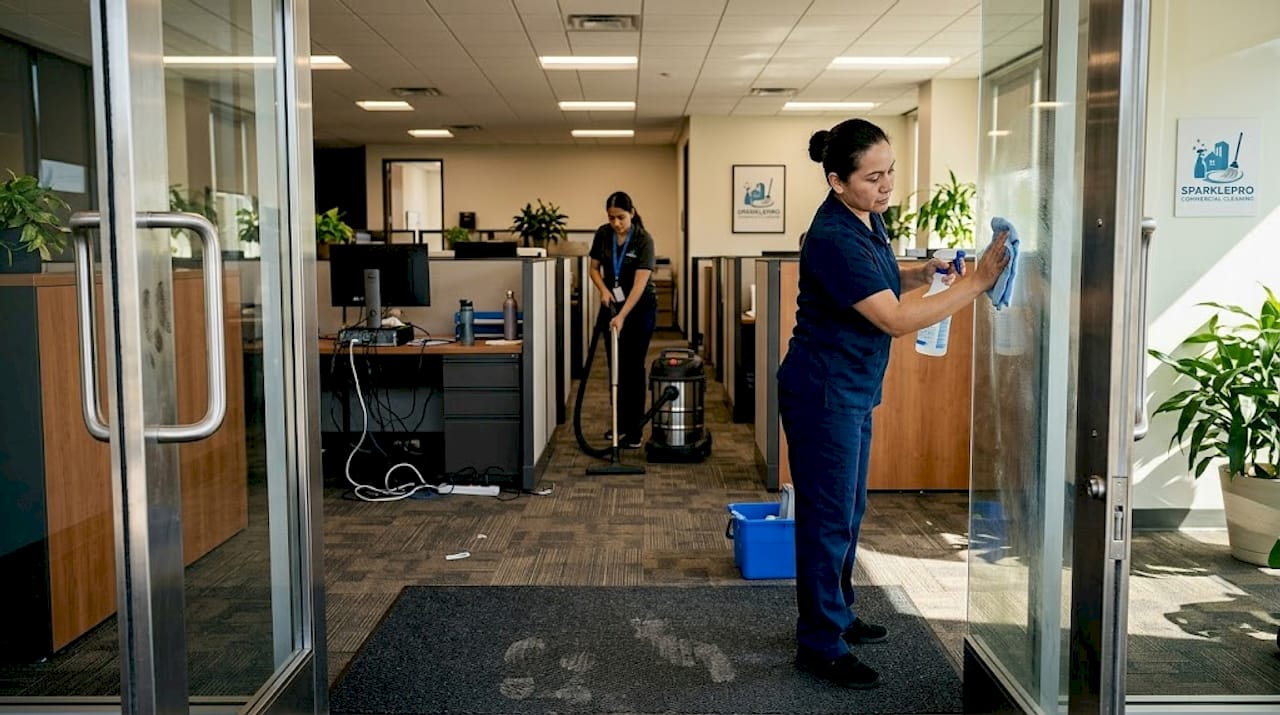
Daily tasks
These are your baseline operations. They keep the office presentable and reduce the spread of germs across high-touch surfaces.
- Empty all waste bins and replace liners
- Wipe down high-touch surfaces: door handles, light switches, elevator buttons, and reception desks
- Clean and disinfect all restrooms including toilets, sinks, mirrors, and replenish supplies
- Vacuum or mop entryways and common area floors
- Wipe down shared kitchen or break room counters and appliances
- Spot clean glass doors and lobby windows
- Remove any visible debris from hallways and stairwells
Weekly tasks
Weekly tasks go deeper than daily maintenance. They address buildup that accumulates over a full work week.
- Deep clean kitchenettes: inside microwaves, sink drains, and refrigerator exteriors
- Dust horizontal surfaces including window sills, baseboards, and office furniture
- Sanitize conference room chairs, table surfaces, and AV equipment
- Clean interior partition glass and spot clean window glass
- Mop hard surface floors with a disinfecting solution rather than just a dry sweep
- Wipe cabinet faces, drawer pulls, and shared storage areas
For a broader view of examples of janitorial tasks organized by facility type, it's worth reviewing how task lists differ between office towers, medical spaces, and retail environments.
Periodic deep cleaning tasks
Monthly and quarterly tasks include HVAC filter replacement, deep carpet extraction, full window washing, floor stripping and refinishing, and high-level dusting of ceiling fixtures, vents, and overhead storage. These tasks prevent degradation of your facility's infrastructure and are often where property managers underinvest.
Skipping periodic deep cleans doesn't save money. It defers cost to a more expensive repair or replacement later. Carpet extraction every quarter costs far less than replacing worn carpet ahead of schedule. HVAC filter neglect leads to higher energy bills, reduced air quality, and potential tenant health complaints that escalate into formal disputes.
Pro Tip: Maintain a completion log for every periodic task. Record the date, the contractor or crew member who completed it, and any issues noted. This protects you legally, keeps your vendor accountable, and gives you a service history when evaluating renewals.
Hybrid cleaning schedules vs. full daily service
With tasks defined, the next decision is how to schedule them. Should you combine services or opt for full daily cleaning?
Not every office building needs the same cleaning intensity every day. Routine versus periodic cleaning research shows that hybrid schedules, which combine nightly janitorial service with a daytime porter (a staff member who handles real-time spills, restroom checks, and lobby touch-ups), often outperform full daily service models for most commercial buildings. Full daily service makes sense for high-risk environments like healthcare facilities or buildings with dense foot traffic, but it comes with significantly higher labor costs.
Hybrid schedule model
How it works: A nightly crew handles all deep cleaning and sanitation after hours. A daytime porter handles reactive issues during business hours.
Best for: Mid-size office buildings, multi-tenant spaces, and buildings with moderate foot traffic.
Advantages:
- Lower overall labor cost than full daily service
- Nightly crew works without disrupting tenants
- Porter provides visible, responsive daytime coverage
- Easier to scale up or down based on occupancy
Disadvantages:
- Requires coordination between two separate crews or shifts
- Daytime porter may not handle full scope tasks
- Less structured oversight during business hours
Full daily service model
How it works: Cleaning staff work throughout the day, handling all tasks during regular business hours.
Best for: High-traffic lobbies, healthcare-adjacent offices, buildings with food service, and any space requiring continuous sanitation standards.
Advantages:
- Real-time response to all cleaning needs
- Consistent visibility and accountability
- Reduced risk of sanitation lapses in critical areas
Disadvantages:
- Highest cost model
- Can disrupt tenants and workflows
- May be excessive for low-traffic spaces
| Schedule type | Best use case | Cost impact | Coverage level |
|---|---|---|---|
| Hybrid (nightly + porter) | Mid-size, multi-tenant offices | Moderate | High |
| Full daily service | High-traffic, healthcare-adjacent | Highest | Maximum |
| Nightly only | Low-traffic, small offices | Lowest | Basic |
| Periodic + nightly | Warehouse or industrial offices | Low to moderate | Targeted |
Achieving lasting floor results depends heavily on which schedule model you're using. Nightly cleaning allows proper floor care without foot traffic interference, which matters enormously for stripping, waxing, or buffing hard surface floors.
Verification, training, and sustainability best practices
Once a plan and schedule are in place, success depends on robust oversight, effective training, and attention to sustainability.
A checklist that no one verifies is decoration. The biggest gap between good intentions and actual cleanliness outcomes is enforcement. Property managers who implement strong verification habits, train their crews to a defined standard, and choose sustainable products see measurably better results over time.
Verification methods
ATP testing is one of the most reliable field methods for verifying surface cleanliness. It uses a small swab and a reader device to detect biological residue in seconds. A positive result tells you the surface wasn't cleaned adequately, even if it looks clean to the eye. This matters most in restrooms, kitchenettes, and conference rooms where cross-contamination risk is highest.
Supervisor sign-off logs are a simpler but essential layer. These require a named supervisor to physically check completed areas and sign off before the shift ends. Digital tools, including facility management apps, allow real-time reporting and photo documentation of completed tasks.
Staff training priorities
Training your cleaning crew or vendor on these three topics directly improves outcomes:
- Dwell time compliance: Disinfectants must remain wet on a surface for a specified period (often 30 seconds to 4 minutes depending on the product) to kill pathogens. Wiping immediately after application defeats the purpose.
- PPE use: Gloves, eye protection, and appropriate footwear are required for chemical handling. Proper PPE reduces injury risk and chemical exposure.
- Product selection: Staff should know which products are approved for which surfaces to avoid damage and ensure efficacy.
Sustainability practices
| Monitoring method | Cost | Effectiveness | Ease of use |
|---|---|---|---|
| ATP testing | Moderate | Very high | Moderate |
| Supervisor sign-off | Low | High | Easy |
| Digital checklist app | Low to moderate | High | Easy |
| Tenant feedback surveys | Very low | Moderate | Easy |
| Third-party audits | High | Very high | Complex |
Green cleaning choices matter beyond optics. Low-VOC chemicals reduce indoor air pollution, which directly affects tenant comfort and productivity. Microfiber cloths capture more particulate than cotton and require fewer chemicals per cleaning cycle, reducing both product consumption and surface residue. Bulk dispensing systems cut down on single-use plastic containers. These choices lower your supply spend over a full fiscal year while improving your building's environmental profile, which increasingly matters to commercial tenants selecting office space.
What most checklists miss: Insights from seasoned managers
Here's the uncomfortable truth about office cleaning checklists: the checklist itself is not the solution. It's the starting point. We've seen well-designed checklists fail completely in buildings where nobody followed up, and we've seen simple one-page task lists perform brilliantly because a committed facilities director did walkthroughs three times a week.
Enforcement and follow-up matter more than the document itself. Checklists create accountability only when someone actually checks. That means building regular audits into your own schedule, not just your cleaning vendor's. It means reviewing the completion logs weekly and asking for corrective action when tasks are skipped or done poorly. If there are no consequences for incomplete work, the checklist becomes a formality.
Another pattern we've noticed consistently: hybrid schedules and structured periodic deep cleans almost always outperform daily-only service in real office environments. Daily cleaning tends to focus on surface-level tidiness, but the deeper buildup in grout lines, HVAC vents, carpet fibers, and behind appliances only gets addressed in periodic cleans. Buildings that skip the quarterly deep clean often look fine until they suddenly don't, and by then, the repair or remediation cost is significant.
Documentation also protects you. When a tenant files a complaint about air quality or a vendor disputes whether certain work was performed, your logs are your evidence. Structured record-keeping isn't bureaucracy. It's risk management.
Finally, sustainability isn't a nice-to-have add-on anymore. In competitive commercial leasing markets, tenants are asking about cleaning protocols, air quality, and chemical use. Low-VOC products and efficient cleaning practices contribute directly to your building's marketability. For anyone brushing up on practical cleaning language, understanding how these terms translate to real specs helps you make better vendor selection decisions.
Take the next step: Professional support for spotless offices
Building a strong checklist and schedule is only half the work. The other half is finding a cleaning partner who can execute it reliably, adapt to your building's specific needs, and document their work to your standard.
Sparkle Pro Commercial Cleaning works with property managers and building owners across the country to develop customizable cleaning programs covering daily janitorial service, periodic deep cleaning, green cleaning options, and floor care. Whether your building is in commercial cleaning California, the commercial cleaning New York metro area, or across the river in commercial cleaning New Jersey, our regional teams bring both national standards and local operational knowledge to every engagement. Contact Sparkle Pro to schedule a consultation or request a customized checklist implementation for your building.
Frequently asked questions
What should an office cleaning checklist always include?
Every checklist should cover daily, weekly, and periodic tasks for floors, restrooms, break areas, windows, and ventilation systems, with HVAC filter replacement and deep carpet extraction scheduled at least quarterly.
How often should deep office cleaning occur?
Deep cleaning should be performed monthly or quarterly depending on foot traffic, with routine daily and weekly cleaning in between to prevent buildup between cycles.
What's the difference between hybrid and daily cleaning schedules?
Hybrid schedules combine nightly janitorial service and a daytime porter, while full daily service covers all tasks throughout the day. Hybrid schedules tend to offer better cost efficiency for most mid-size office buildings.
How do managers verify cleaning was completed properly?
ATP testing, supervisor sign-offs, and digital completion logs provide layered verification that cleaning tasks are performed correctly, not just checked off.
What are green cleaning best practices for offices?
Use low-VOC chemicals and microfiber cloths, adopt SOPs to standardize product use, and implement bulk dispensing systems to reduce plastic waste and improve indoor air quality across all office zones.