
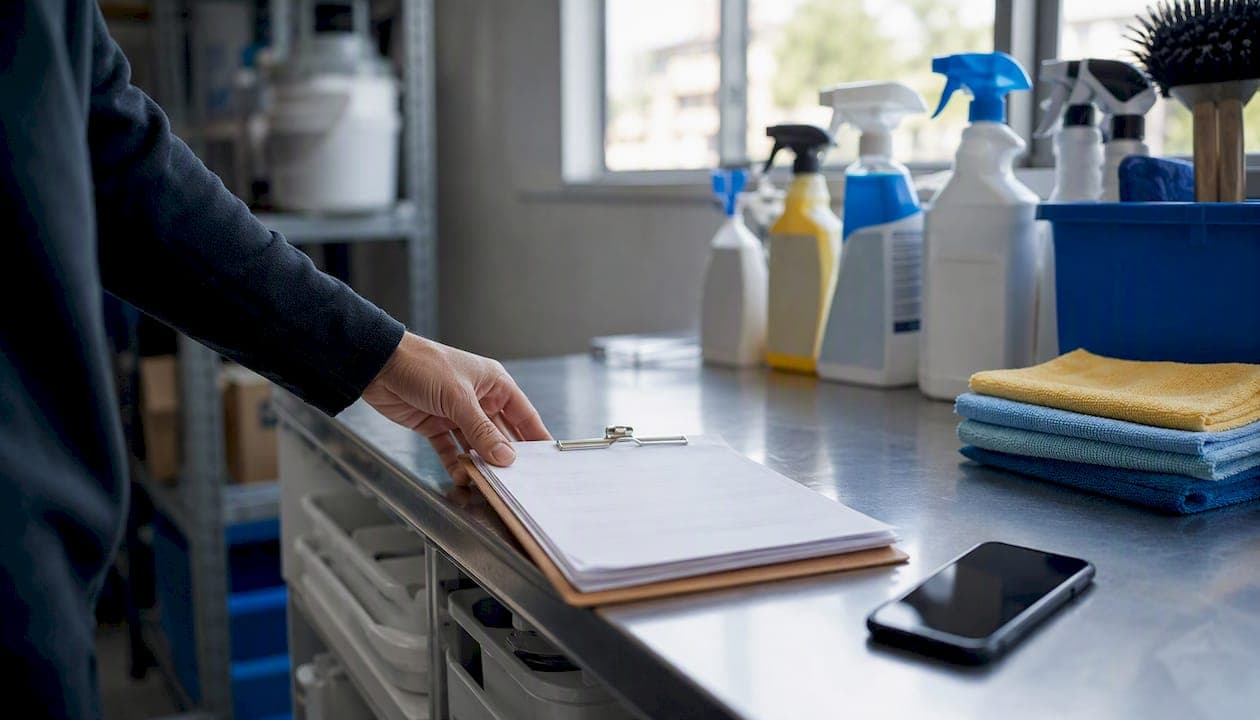
A property manager cleaning checklist is the single operational tool that keeps your teams consistent, your units inspection-ready, and your liability exposure low. Print the one-page rounds sheet below, assign it to your crew with signoff fields, and your highest-priority daily tasks are covered before the first tenant complaint arrives.
Start here — top-priority rounds tasks:
- Empty all trash receptacles in common areas and trash rooms
- Disinfect high-touch surfaces (elevator buttons, door handles, mailbox panels, light switches)
- Sweep and mop main entries, lobbies, and stairwells
- Spot-clean restrooms and restock dispensers
- Walk the exterior for debris, spills, or hazards
Every completed round needs three fields: staff initials, date, and time. Without those, the checklist is a suggestion, not a record.
Key Takeaways
A property manager cleaning checklist works only when it is assigned by zone, signed off by name, and backed by photo documentation at every turnover.
| Point | Details |
|---|---|
| Use the one-page rounds sheet | Print or digitize the rounds table, assign it per shift, and require staff initials and date on every completed round. |
| Sequence turnovers correctly | Inspect and photograph before cleaning, complete repairs first, then clean — this sequence creates defensible deposit records. |
| Schedule periodic vendor tasks | Map monthly, quarterly, and annual deep cleans into your PMS or shared calendar with automated reminders to prevent missed cycles. |
| Maintain SDS and COI on file | Keep a printed SDS binder on-site and collect current COIs from every vendor before their first service visit. |
| Sparkleprocommercialcleaning scales execution | For turnover cleaning, scheduled janitorial, and deep cleans across a portfolio, Sparkleprocommercialcleaning provides documented, insured service nationwide. |
Table of Contents
- What does a property manager cleaning checklist look like in one page?
- Daily and nightly cleaning tasks for tenant areas and common areas
- What should your weekly cleaning tasks cover?
- Step-by-step move-out and turnover cleaning checklist
- Monthly, quarterly, and annual cleaning and inspection duties
- How do you maintain floors across different surface types?
- What supplies, PPE, and chemical documentation do you need?
- How to keep inspection logs and stay aligned with OSHA and NFPA
- How do you roll out this checklist across a portfolio?
- What operators see most often wrong in property cleaning programs
- Sparkleprocommercialcleaning handles the checklist execution for you
- Sources
What does a property manager cleaning checklist look like in one page?
A compact rounds sheet gives your crew a single reference they can carry on shift, photograph, and file. Free editable templates in PDF, Excel, and Google Sheets are a practical starting point — customize them by zone, then add your property-specific areas before printing.
How to use this sheet: Print one copy per shift, attach it to the shift packet or upload it to your property management platform, and require a supervisor counter-signature at the end of each round. Digital versions work equally well in apps like BuildingLink or AppFolio — photograph the completed sheet and attach it to the daily log.
Daily and nightly cleaning tasks for tenant areas and common areas
Daily cleaning is where consistency either holds or falls apart. The goal is a repeatable sequence that prevents buildup, catches hazards early, and keeps tenant-facing areas looking maintained.
By zone, here is what each shift should cover:
Lobbies and entries: Sweep and damp-mop hard floors, disinfect door handles and push plates, empty trash and recycling, wipe down any seating or package shelves, and check for spills or slip hazards. Budget 10–15 minutes.
Elevators: Wipe all button panels with a disinfectant solution, mop or microfiber the cab floor, clean the door tracks, and check for odors. Two to four minutes per cab is realistic on a normal day.
Stairwells: Sweep each flight, spot-mop any spills, wipe handrails with a disinfectant cloth. Stairwells are easy to skip and fast to deteriorate — schedule them into every round, not just when they look dirty.
Restrooms: Full nightly clean includes scrubbing toilets and urinals, disinfecting sinks and counters, mopping floors, restocking paper products and soap, and emptying trash. A quick midday check (wipe, restock, deodorize) takes five minutes and prevents complaints.
Trash and recycling rooms: Empty all containers, wipe down bin exteriors, and deodorize the floor. Odor control here directly affects hallway air quality.
Laundry rooms: Wipe down machine exteriors and control panels, sweep the floor, clear lint from accessible traps, and check for standing water or spills.
Pro Tip: Sequence every round top-to-bottom and dry-to-wet. Dust and debris fall downward, so dusting before mopping eliminates rework. Dry tasks (sweeping, dusting, wiping) before wet tasks (mopping, disinfecting wet surfaces) prevents cross-contamination and speeds up drying time.
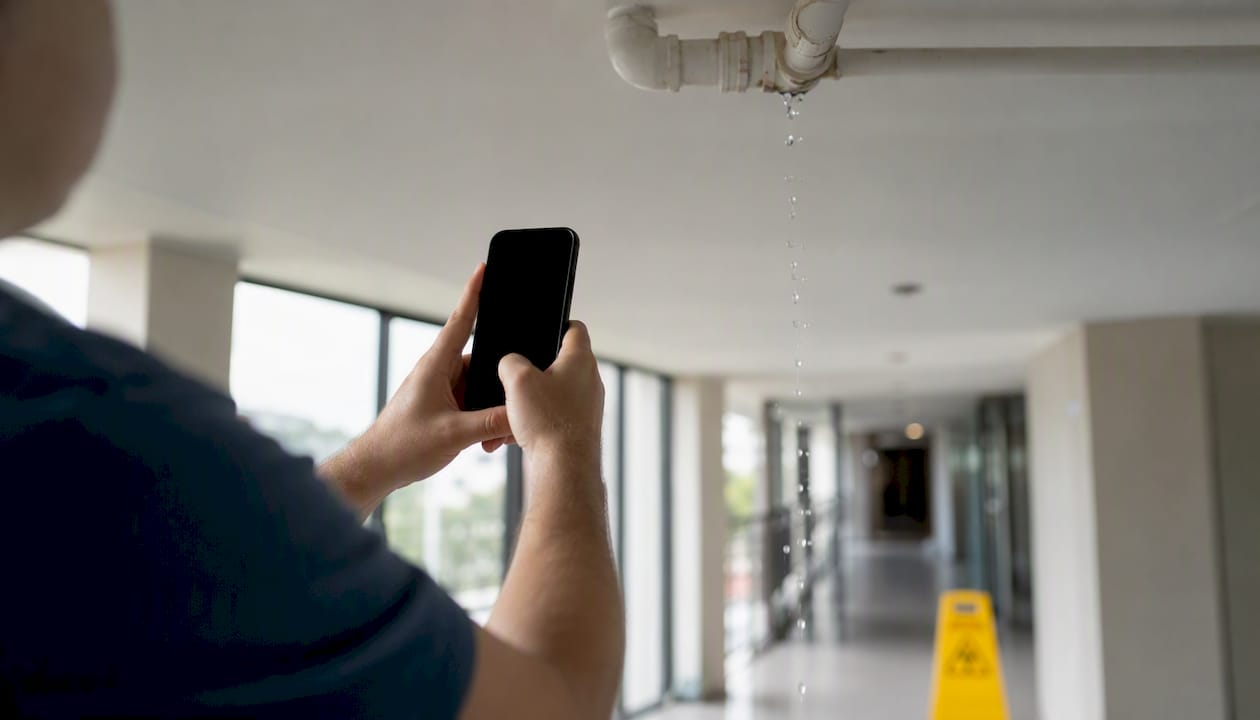
Flagging maintenance issues during cleaning rounds: When a crew member spots a dripping faucet, a broken light fixture, or a damaged floor tile, they need a fast way to report it without stopping the round. A simple photo-plus-ticket workflow works: photograph the issue, note the location and time on the daily log, and submit a maintenance ticket through your PMS before the shift ends. This creates a timestamped record and prevents "I didn't know about it" disputes with tenants.
What should your weekly cleaning tasks cover?
Weekly tasks go deeper than daily maintenance. They address the buildup that daily rounds miss — dust on horizontal surfaces, grease residue in shared kitchens, and grime in grout lines that accumulates faster in high-traffic buildings.
Weekly cleaning in shared kitchens and high-traffic zones should address grease and food residues, dust accumulation, and scheduled deep cleaning to reduce pests and long-term surface damage. That is not optional maintenance — it is asset protection.
| Zone | Weekly Tasks | Suggested Day | Notes |
|---|---|---|---|
| All Common Areas | Full dust of horizontal surfaces, light fixtures, vents | Monday or Tuesday | Use microfiber; avoid feather dusters |
| Shared Kitchen | Degrease stovetop and hood, wipe cabinet fronts, clean microwave interior, mop floor | Mid-week | Check for pest evidence; report immediately |
| Restrooms | Scrub grout lines, descale fixtures, clean behind toilets | Any off-peak day | Use appropriate descaler for fixture type |
| Floors (all areas) | Full vacuum or sweep, then wet mop | End of week | See floor maintenance section for surface-specific guidance |
| Appliances (shared) | Wipe refrigerator seals and shelves, clean dryer lint traps | Weekly | Refrigerator seals harbor mold if neglected |
| Windows / Glass | Full wipe-down of interior glass panels and mirrors | Weekly | Use streak-free glass cleaner |
Scheduling weekly work without disrupting tenants: Off-peak windows vary by property type. For multifamily residential, Tuesday through Thursday mornings are typically lowest-traffic. For mixed-use or commercial properties, early mornings before 7 AM or evenings after 6 PM work better. Post signage 24 hours in advance for any area that will be temporarily inaccessible, and send a brief email or app notification to affected tenants.
For portfolios with multiple properties, triage weekly tasks by tenant-facing impact. A lobby that 200 residents walk through daily gets priority over a seldom-used amenity room. Assign your most experienced crew to the highest-visibility areas and batch lower-priority tasks across properties to reduce travel time.
Step-by-step move-out and turnover cleaning checklist
Turnover cleaning is a full reset, not a touch-up. The correct sequence is inspect and photograph before touching anything, complete repairs, then clean. Reversing that order creates deposit disputes you cannot win.
Ordered turnover sequence:
- Pre-clean inspection and photography: Walk every room, photograph all surfaces, note existing damage, and record the condition in writing. Date-stamp every photo.
- Complete repairs first: Patch walls, fix fixtures, replace broken hardware. Cleaning over unrepaired damage wastes time and obscures the condition record.
- Deep clean the interior: Work top-to-bottom, room by room. Wipe ceiling fans and light fixtures, clean inside all cabinets and drawers, scrub appliance interiors (oven, refrigerator, dishwasher), clean baseboards and door frames, wash windows and tracks, scrub bathroom tile and grout, and clean inside closets.
- Specialty add-ons as needed: Carpet extraction for any carpeted areas, oven degreasing if standard cleaning is insufficient, pet-odor treatment (enzyme-based products applied to subfloor or carpet pad), and grout sealing after deep scrubbing.
- Final touch and deodorize: Replace HVAC filters, deodorize with a neutral product (avoid heavy fragrance masking), and do a final wipe of all high-touch surfaces.
- Post-clean photography and checklist sign-off: Photograph every area cleaned, complete the turnover checklist with crew initials and date, and file both with the move-out inspection record.
Supplies and crew for a standard unit turnover:
- Crew size: a small team appropriate for the unit size.
- Time estimate: several hours depending on unit condition.
- Equipment: Carpet extractor, steam cleaner or scrubber for tile, microfiber mop system, HEPA vacuum
- Supplies: Enzyme odor eliminator, oven degreaser, grout cleaner, glass cleaner, all-purpose disinfectant, fresh HVAC filters
The before-and-after photo record is your deposit documentation. Without it, any deduction is contestable. File it in the tenant's folder alongside the signed move-out inspection form.
Monthly, quarterly, and annual cleaning and inspection duties
Periodic tasks protect the asset and keep you audit-ready. A frequency-based structure — daily through annual — customized by property size and amenities, is the most scalable approach for managing multiple properties.
| Task | Frequency | Owner | Notes |
|---|---|---|---|
| Deep clean common area restrooms (grout, fixtures, walls) | Monthly | In-house or vendor | Align with 35-item common-area checklist |
| HVAC filter inspection and replacement coordination | Monthly / Quarterly | Maintenance team | Log filter change dates |
| Fire extinguisher visibility and accessibility check | Monthly | Property manager | NFPA 10 compliance item |
| Exterior pressure washing (entries, walkways, dumpster pads) | Quarterly | Vendor | Schedule before and after winter |
| Carpet extraction (common area carpets) | Quarterly | Vendor | More frequent in high-traffic buildings |
| Window washing (exterior) | Biannual | Vendor | Spring and fall |
| Floor stripping and refinishing (VCT or sealed concrete) | Annual | Vendor | Coordinate with low-occupancy periods |
| Parking structure deep clean | Annual | Vendor | Check for oil stains, drainage issues |
| Amenity deep clean (gym, pool area, clubroom) | Quarterly | Vendor or in-house | Pool area: coordinate with pool service |
| Grease trap servicing (if applicable) | Per local code | Licensed vendor | Document service records |
Compliance-related periodic checks: NFPA fire-code items managers should verify during periodic rounds include fire extinguisher accessibility, exit sign illumination, and clear egress paths. These are not cleaning tasks, but they belong on the monthly rounds sheet because cleaning crews are in those spaces and can flag issues faster than anyone.
Integrate periodic tasks into your property management platform or a shared Google Calendar with automated reminders set 7 days before each due date. A task that lives only in someone's memory gets skipped.
How do you maintain floors across different surface types?
Floor maintenance is where property managers most often overspend on emergency repairs that preventive care would have avoided. The right frequency depends on foot traffic, surface type, and tenancy.
Carpet: Vacuum high-traffic common area carpets daily. Schedule professional extraction quarterly in buildings with heavy foot traffic, and immediately after any tenant turnover where pets were present or visible staining exists. Waiting until carpets "look dirty" is too late — soil embedded below the fiber surface causes permanent fiber damage.
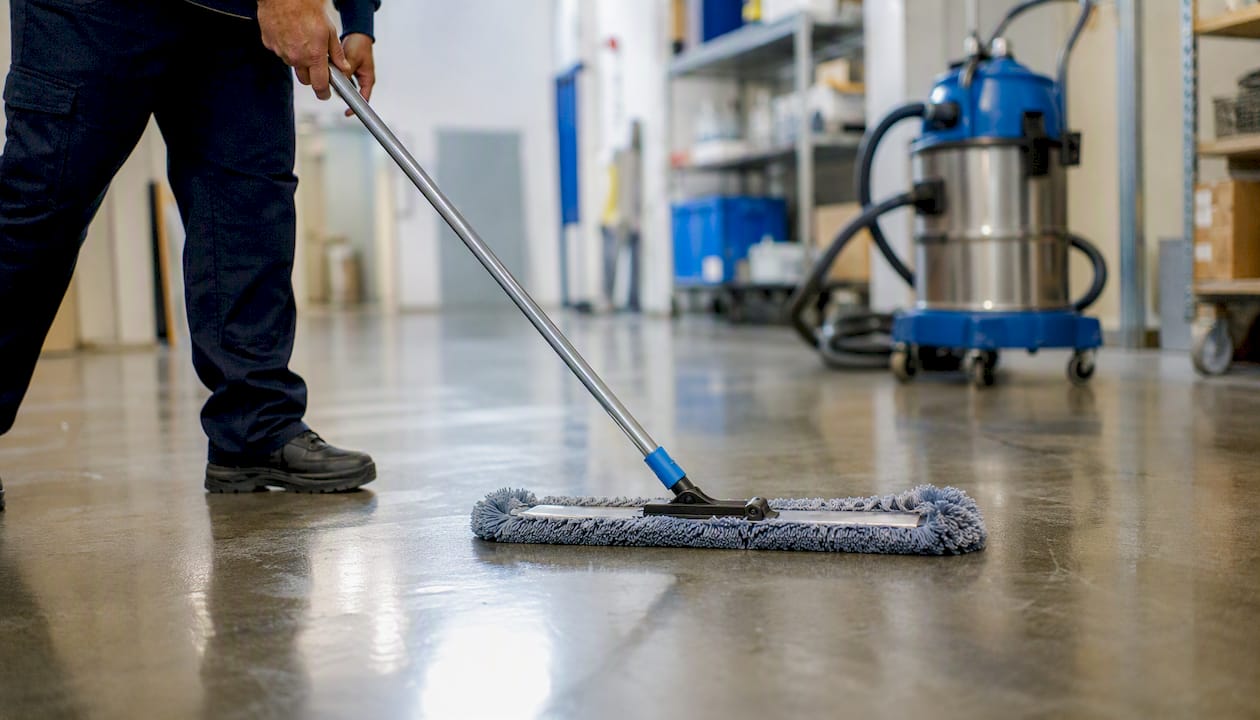
Vinyl composite tile (VCT) and sealed concrete: Microfiber mop daily with a pH-neutral cleaner. Strip and recoat annually, or when the finish shows visible wear or scuffing that mopping no longer removes. Stripping too frequently damages the substrate; skipping it too long means refinishing costs triple because of buildup removal.
Hardwood and engineered wood: Dry microfiber mop daily. Damp mop weekly with a product specifically formulated for the finish type (polyurethane, oil, or wax). Never use steam mops on hardwood — moisture penetrates seams and causes cupping. Refinish every 3–5 years depending on traffic.
Tile and stone: Sweep or vacuum daily, damp mop weekly. Grout lines need quarterly scrubbing with an appropriate alkaline cleaner. Natural stone (marble, travertine) requires pH-neutral products only — acidic cleaners etch the surface permanently.
Pro Tip: Keep a surface-type log for every floor in your portfolio. Note the finish type, the product approved for that surface, and the last deep-service date. When a new crew member or vendor shows up, hand them the log before they touch the floor. One wrong product on a marble lobby floor costs more to fix than a year of routine maintenance.
Condition-based triggers for calling a specialist: visible finish failure, staining that does not respond to standard cleaning, water damage, or any situation where the floor warranty terms require professional service. Check your floor warranty documentation — many require documented professional maintenance at specified intervals to remain valid.
What supplies, PPE, and chemical documentation do you need?
Every property cleaning operation needs a documented inventory of supplies, equipment, and PPE, plus a chemical management system that satisfies OSHA's hazard communication requirements for cleaning staff.
Core supplies inventory:
- Disinfectants (EPA-registered, appropriate for surface type)
- All-purpose cleaners and degreasers
- Glass cleaner, stainless steel cleaner, grout cleaner
- Floor care products (pH-neutral mopping solution, stripper, finish/wax)
- Enzyme-based odor eliminator
- Paper products and soap for restroom restocking
Equipment:
- Upright and backpack HEPA vacuums
- Microfiber mop system (separate mop heads per zone to prevent cross-contamination)
- Auto-scrubber for large hard-floor areas
- Carpet extractor
- Pressure washer (or vendor contract for exterior work)
PPE by task:
- Nitrile gloves: all cleaning tasks
- Eye protection: chemical mixing, spray application, drain cleaning
- Respirator (N95 or higher): mold remediation, heavy chemical use, confined spaces
- Non-slip footwear: wet floor environments
SDS management: Maintain a Safety Data Sheet for every chemical used on the property. Keep both a digital folder (shared with your team) and a printed binder on-site. The printed binder must be accessible to crew members during any shift, not locked in an office. During an OSHA inspection or a chemical incident, the first question is where the SDS is — have a one-line procedure posted: "SDS binder is located at [specific location]. Digital access at [link or shared drive path]."
Chemical storage rule: Never store oxidizers next to flammables, and never mix bleach-based products with ammonia-based cleaners — the reaction produces toxic chloramine gas. Label every container with the product name, dilution ratio, and hazard category. Unlabeled containers are an OSHA violation under 29 CFR 1910.1200.
Schedule equipment maintenance quarterly: inspect vacuum filters and replace as needed, check auto-scrubber squeegees and brushes, and service the carpet extractor annually. Equipment failure mid-shift is a productivity loss that compounds across a portfolio.
How to keep inspection logs and stay aligned with OSHA and NFPA
Audit-ready documentation is not about paperwork for its own sake. It is the difference between a defensible record and an expensive dispute, whether the issue is a deposit deduction, a slip-and-fall claim, or a regulatory inspection.
What to keep and for how long:
- Daily shift signoff logs: minimum 1 year
- Turnover inspection photos and checklists: minimum 3 years (longer if a deposit dispute is pending)
- SDS logs and chemical inventory records: maintain current versions; keep superseded versions for 30 years per OSHA 29 CFR 1910.1020 for any chemical with potential health exposure
- Vendor contracts and certificates of insurance: for the life of the contract plus 3 years
- Incident reports: minimum 5 years, or per your state's statute of limitations for personal injury
OSHA 29 CFR 1910 and NFPA alignment: Cleaning operations in multifamily and commercial properties fall under OSHA's General Industry standards. Key sections include 1910.132 (PPE requirements), 1910.1200 (hazard communication and SDS), and 1910.37 (exit routes — relevant when cleaning crews block egress). NFPA 1 and NFPA 10 govern fire extinguisher placement and inspection intervals. Include a monthly fire extinguisher visibility check on your rounds sheet and document it. A regulatory-aligned common-area checklist covering 35 inspection items across NFPA 1, NFPA 10, and OSHA 29 CFR 1910 is a practical template for monthly compliance rounds.
Vendor onboarding documentation: Before any cleaning contractor sets foot on your property, collect a current certificate of insurance (COI) naming your property as an additional insured, a copy of their business license, and proof of workers' compensation coverage. Review the contractor cleaning compliance checklist to confirm you have every document before the first scheduled service. File these with the vendor contract and set a calendar reminder 60 days before the COI expiration date.
For industry cleaning regulations that go beyond the basics, the regulatory context matters — especially for properties that include healthcare spaces, childcare facilities, or food service areas, where additional standards apply.
How do you roll out this checklist across a portfolio?
Implementation is where most checklists fail. The document exists; the execution does not. A phased rollout with clear role assignments and QA checkpoints fixes that.
Rollout steps:
- Audit your current state: Walk each property and document what is actually being cleaned, by whom, and how often. Compare it against the checklist. The gaps are your implementation priorities.
- Assign ownership by zone: Modularize the checklist by area (tenant unit, common area, exterior) and assign each zone to a specific person or vendor. Shared responsibility means no responsibility.
- Build the schedule: Map in-house crew tasks against contracted vendor tasks. In-house crews handle daily and weekly rounds; vendors typically own quarterly deep cleans, carpet extraction, and specialty services.
- Train and equip: Walk the crew through the checklist on-site. Show them the sequence, the products, and the signoff process. A checklist no one has been trained on is just a PDF.
- Set QA checkpoints: Conduct random audits at least monthly — walk the property unannounced and score it against the checklist. Use a simple 1–5 scale per zone and track scores over time.
Vendor selection questions to ask before signing:
- Do you carry general liability and workers' compensation insurance? (Request the COI.)
- What is your re-clean policy if the work does not meet the agreed standard?
- Will you provide photo documentation of completed work?
- Do you use your own supplies, or do we need to provide them?
- What is your crew consistency policy — will the same team service our property each visit?
Measuring performance: Track task completion rate per shift (completed tasks divided by scheduled tasks), re-clean incidents per month, and tenant complaints related to cleaning per 100 units. These three numbers tell you whether the checklist is working or just filed. For building preparation and coordination before a major scheduled clean, a pre-clean walkthrough with your vendor reduces scope misunderstandings and re-clean requests.
What operators see most often wrong in property cleaning programs
The most common failure is not a dirty building. It is an inconsistent one. Tenants tolerate a lot, but they notice when the lobby is spotless on Monday and neglected by Thursday. That inconsistency almost always traces back to one of three things: no fixed crew assignment, no photo documentation habit, and scheduling that ignores the building's own maintenance calendar.
Crew consistency matters more than most managers realize. When a different person cleans the same space each shift, no one develops ownership of it. The person who cleaned it yesterday does not know what the person before them missed. Assign specific crew members to specific zones and hold them accountable to the signoff sheet.
Photo documentation is the fastest QA tool available. Require crew members to photograph completed work at the end of each round — not every surface, but the three or four areas most likely to generate complaints (lobby, restrooms, elevator cabs). It takes two minutes and creates a timestamped record that resolves most disputes before they escalate.
Schedule cleaning around your HVAC and pest control calendar, not the other way around. If pest control treats the building on a Wednesday and cleaning runs the same morning, you are mopping up product and reducing its effectiveness. If HVAC filters get replaced on the first of the month, schedule the common-area deep clean for the second — after the dust settles, literally.
The communication expectation between property managers and cleaning vendors is also frequently underspecified. Define scope in writing before the first service. "Clean the common areas" means something different to every crew. A one-page checklist handed to the vendor at contract signing removes that ambiguity entirely.
Sparkleprocommercialcleaning handles the checklist execution for you
Property managers who build a solid checklist still need a vendor who can execute it at scale, document the work, and show up consistently. Sparkleprocommercialcleaning provides nationwide commercial cleaning services covering every task on this checklist: scheduled janitorial rounds, tenant turnover and move-out cleaning, periodic deep cleans, post-construction cleanouts, and disinfecting services for multifamily, office, retail, and healthcare properties.
When you request a quote, ask for scope confirmation in writing, proof of general liability and workers' compensation insurance, a sample checklist or photo documentation protocol, and a clear re-clean policy. Sparkleprocommercialcleaning delivers all of that as standard. If you manage properties in Massachusetts, the Massachusetts commercial cleaning services page covers service availability and contract options for your region. For Washington-based portfolios, Washington state cleaning services is the right starting point. Request a quote at Sparkleprocommercialcleaning and get a site visit scheduled within the week.
Sources
These resources belong in your audit-ready property binder or digital compliance folder:
- OSHA guidance on workplace safety for cleaning and maintenance
- Property manager cleaning checklist for multifamily 2026
- Rental Turnover Cleaning for Property Managers 2026: Cost & Vendor Guide
Store these documents in a shared drive folder labeled "Cleaning Compliance" with subfolders by property. During an audit or a deposit dispute, having everything in one place saves hours.