
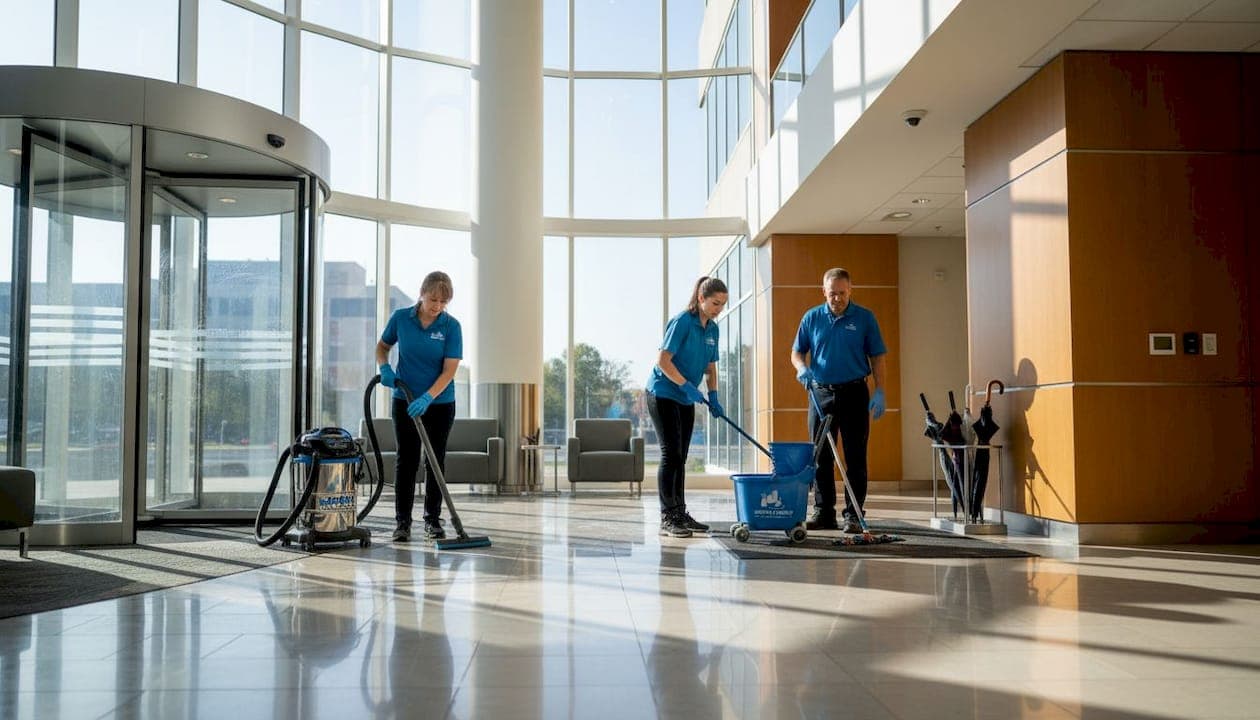
Routine janitorial work keeps a building looking presentable, but it rarely addresses what's hiding beneath the surface. Many commercial facility managers assume their standard cleaning contracts cover everything, yet 41% of tenant complaints are directly tied to cleaning quality. That gap between expectation and reality costs property managers in tenant turnover, compliance risk, and accelerating asset deterioration. This guide breaks down what professional deep cleaning actually involves, why it matters far more than most managers realize, and how to use it as a strategic tool for better facility outcomes.
Table of Contents
- What is deep cleaning in commercial facilities?
- Core steps and methods in a professional deep cleaning
- Benefits of regular deep cleaning for commercial properties
- How to select the right professional deep cleaning provider
- What most facility managers overlook about deep cleaning
- Partnering with a trusted deep cleaning specialist
- Frequently asked questions
Key Takeaways
| Point | Details |
|---|---|
| Deep cleaning defined | Deep cleaning is a periodic, comprehensive service designed to remove hidden contaminants and extend asset life. |
| Compliance and safety | Investing in professional deep cleaning supports OSHA compliance and reduces facility health risks. |
| Asset and tenant benefits | Regular deep cleaning can double asset lifespan and boost satisfaction—41% of tenant complaints relate to cleaning. |
| Service selection tips | Always vet providers for certifications like ISSA CIMS, transparent processes, and rigorous inspections. |
What is deep cleaning in commercial facilities?
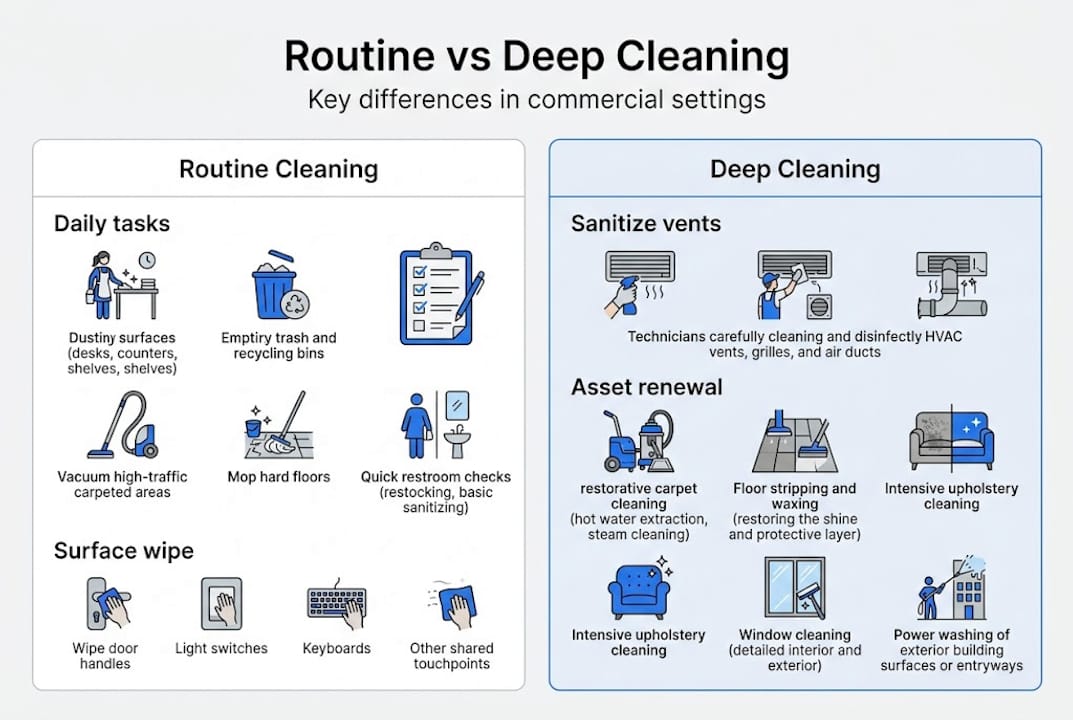
Deep cleaning is a periodic, high-intensity sanitization and restoration process that goes well beyond what daily or weekly janitorial services address. Where routine cleaning maintains surface appearance, deep cleaning targets embedded dirt, biological contaminants, and degraded building assets. Think of it as the difference between wiping a counter and stripping it down to remove grease buildup that's been accumulating for months.
Understanding the terminology matters. If you're not already familiar with the full range of cleaning industry terms, the distinction between "sanitizing," "disinfecting," and "deep cleaning" can blur quickly. Deep cleaning typically combines all three, applied across every surface category in a facility.
Routine cleaning vs. deep cleaning at a glance:
| Factor | Routine cleaning | Deep cleaning |
|---|---|---|
| Frequency | Daily or weekly | Quarterly or semi-annually |
| Equipment | Mops, vacuums, wipes | HEPA vacuums, extractors, sprayers |
| Scope | Surface-level | Floors, walls, HVAC, fixtures |
| Compliance focus | General tidiness | OSHA and health code standards |
| Labor intensity | Low to moderate | High, specialized |
Deep cleaning is essential for OSHA 1910.22 sanitation compliance and directly extends the lifespan of building assets. Carpets, grout, HVAC components, and restroom fixtures all degrade faster when deep cleaning is skipped.
Why do busy facilities overlook it? Scheduling pressure is the main culprit. Managers default to visible cleanliness as a proxy for actual cleanliness. The problem is that biological hazards and structural wear don't announce themselves until they become expensive problems.
Key areas deep cleaning addresses:
- Carpet and upholstery (hot water extraction, stain treatment)
- Hard floor surfaces (stripping, sealing, burnishing)
- Restrooms (grout scrubbing, fixture descaling, disinfection)
- HVAC vents and air returns (dust and allergen removal)
- High-touch surfaces (door handles, light switches, elevator buttons)
- Walls and baseboards (degreasing, spot treatment)
Pro Tip: Schedule deep cleaning during low-occupancy windows, such as holiday closures or weekend shutdowns, to minimize disruption and allow adequate drying and cure times for treated surfaces.
Core steps and methods in a professional deep cleaning
Knowing what deep cleaning covers is one thing. Knowing what the actual service looks like from start to finish helps you set realistic expectations, plan your schedule, and hold providers accountable.
A professional deep cleaning follows a structured sequence:
- Pre-service assessment — The crew surveys the facility, identifies problem zones, and documents baseline conditions. This step protects both parties and sets measurable benchmarks.
- Pre-treatment application — Dwell-time chemicals are applied to heavily soiled surfaces, restrooms, and grease-affected areas before any scrubbing begins.
- Specialty surface cleaning — Carpets are extracted using truck-mounted or portable hot water systems. Hard floors are stripped and refinished. HVAC vents are vacuumed with HEPA-rated equipment to prevent cross-contamination.
- Wall and fixture detailing — Baseboards, walls, light fixtures, and ceiling tiles are wiped down or pressure-cleaned depending on material type. For sensitive flooring like marble, crews follow a marble floor cleaning protocol to avoid surface etching.
- Disinfection sweep — Electrostatic sprayers apply EPA-registered disinfectants across all high-touch and high-risk surfaces for full-surface coverage.
- Post-cleaning inspection — A quality check against the original assessment confirms that all scoped areas meet the agreed standard before the crew leaves.
The commercial floor cleaning process alone can vary significantly by surface type, which is why experienced providers assess first and clean second.
Production rates matter when you're budgeting time and labor. ISSA 612 benchmarks show restrooms clean at roughly 1,000 sq ft per hour, while open office spaces reach 4,200 sq ft per hour. These figures help you estimate service windows and avoid unrealistic timelines.
Industry insight: Facilities that include a formal post-cleaning inspection as part of their service protocol see measurably higher first-pass completion rates and fewer repeat callbacks. Skipping this step is one of the most common ways deep cleaning value gets lost.
Benefits of regular deep cleaning for commercial properties
Deep cleaning isn't just about appearances. The return on investment shows up in compliance records, maintenance budgets, and tenant renewal rates.
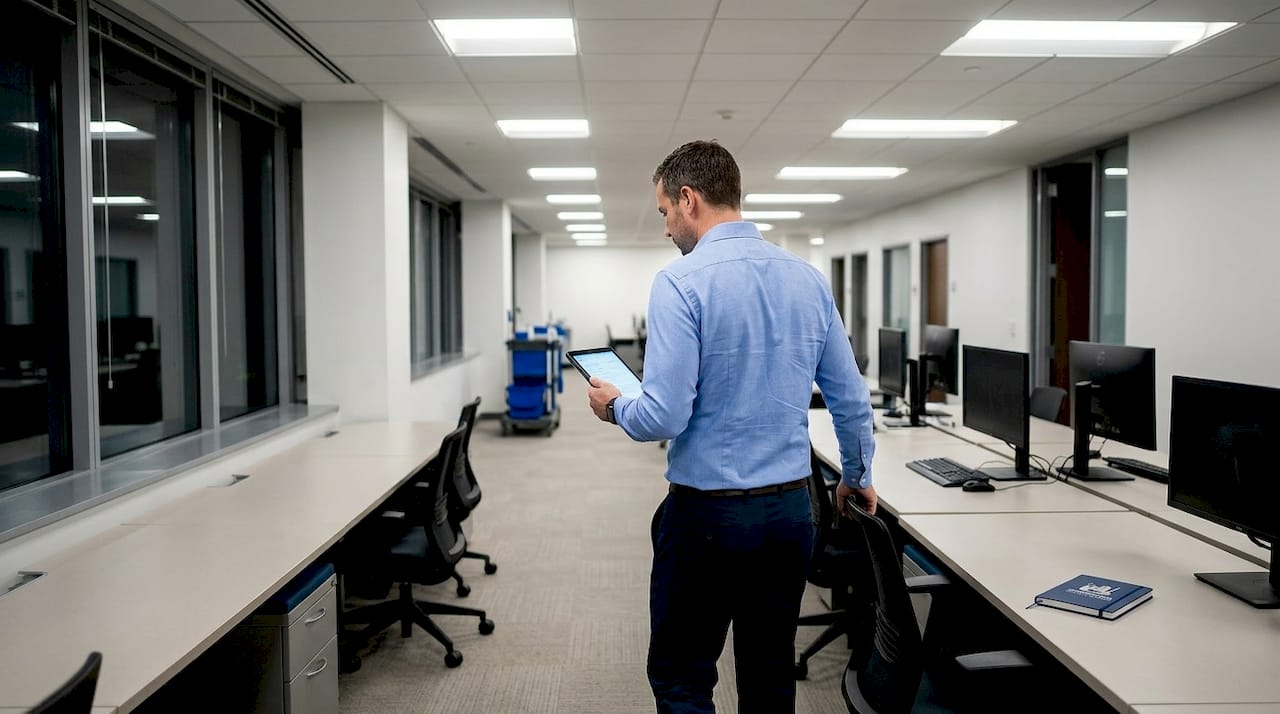
Health and safety compliance is the most immediate benefit. OSHA standards require sanitary working conditions, and facilities that skip periodic deep cleaning accumulate biological hazards that routine cleaning misses entirely. Reduced absenteeism is a measurable downstream effect, since cleaner air and surfaces directly lower pathogen transmission rates.
Asset longevity is where the financial case becomes undeniable. Regular deep cleaning can double carpet lifespan from roughly 5 years to 10 years, and the same principle applies to hard flooring, restroom fixtures, and HVAC components. Maintaining lasting floor cleanliness through periodic deep treatment delays costly replacement cycles significantly.
Cost comparison: deep cleaning vs. deferred maintenance
| Category | With regular deep cleaning | Without deep cleaning |
|---|---|---|
| Carpet replacement cycle | 10+ years | 4 to 5 years |
| Tenant complaint rate | Significantly reduced | Up to 41% cleaning-related |
| HVAC maintenance costs | Lower (cleaner components) | Higher (buildup accelerates wear) |
| Tenant retention | Up to 78% improvement | Higher turnover risk |
The numbers tell a clear story. Facilities that treat deep cleaning as optional end up paying more in replacement costs and losing tenants who simply expect a clean environment.
Key financial and operational benefits:
- Lower long-term capital expenditure on flooring and fixtures
- Reduced liability exposure from slip hazards and contaminated surfaces
- Stronger lease renewal rates tied to building quality perception
- Fewer emergency maintenance calls triggered by neglected buildup
- Documented compliance records that protect against OSHA citations
Tenant satisfaction is the metric that ties everything together. Up to 78% of tenant retention correlates directly to cleanliness standards. That's not a soft metric. It directly affects your occupancy rate and revenue stability.
How to select the right professional deep cleaning provider
The benefits outlined above only materialize when you work with a provider who actually delivers on their scope. Choosing the wrong vendor is one of the fastest ways to waste budget and still end up with compliance gaps.
Start with non-negotiable qualifications:
- Licensing and insurance — Your provider must carry general liability and workers' compensation insurance. Verify certificates directly, not just verbally.
- ISSA or CIMS certification — ISSA CIMS certification signals that a provider adheres to industry quality management standards and compliance frameworks. It's the clearest third-party signal of operational maturity.
- Commercial environment experience — Residential cleaning experience doesn't translate. Ask specifically about their portfolio in office buildings, healthcare facilities, or retail centers similar to yours.
- Transparent reporting — Reputable providers document pre- and post-service conditions, production rates, and any areas that required deviation from the original scope.
- References from comparable facilities — Request two or three references from property managers overseeing buildings of similar size and type.
During your vetting process, ask these specific questions: What inspection protocol do you follow after each deep clean? How do you handle areas that don't pass the initial quality check? Can you provide production rate estimates for our specific building layout?
Understanding CIMS certification standards before you start interviewing vendors puts you in a much stronger negotiating position.
Pro Tip: Use ISSA production rate benchmarks as a baseline when reviewing provider proposals. If a vendor's quoted labor hours are dramatically lower than industry standards for your square footage, that's a red flag for corners being cut.
What most facility managers overlook about deep cleaning
Here's an uncomfortable truth: most facility managers treat deep cleaning as a reactive measure rather than a proactive one. They schedule it after a tenant complaint, before a lease renewal inspection, or following a health department visit. That reactive posture is exactly what drives up costs and complaint rates over time.
The deeper issue is the absence of measurable benchmarks. Without documented pre- and post-service conditions, there's no way to hold a vendor accountable or track improvement over time. Facilities that implement systematic post-clean inspections see first-pass yield jump from 68% to 91%. That 23-point gap represents real money in labor efficiency and real risk in compliance exposure.
Deep cleaning also isn't optional from a legal standpoint. It's a core component of maintaining OSHA-compliant sanitation standards. Managers who view it as an "extra" service are essentially accepting unquantified liability. The shift from reactive to scheduled, benchmarked deep cleaning is where the real operational gains live.
Partnering with a trusted deep cleaning specialist
Understanding the full scope of deep cleaning makes it easier to act on it strategically rather than scrambling when problems surface.
At Sparkle Pro Commercial Cleaning, we work with property managers across the country to deliver scheduled, compliance-focused deep cleaning that protects asset value and keeps tenants satisfied. Whether you manage office towers in commercial cleaning in California or multi-tenant properties through New York commercial cleaning solutions, our teams apply ISSA-aligned protocols with full documentation and post-service inspection. Explore our full range of national deep cleaning services and request a site assessment today.
Frequently asked questions
What areas are included in a deep cleaning for commercial buildings?
Deep cleaning covers floors, carpets, walls, restrooms, HVAC vents, and high-touch surfaces including switches and door handles. It addresses building assets and health hazards that routine cleaning consistently misses.
How often should deep cleaning be scheduled in commercial environments?
Most facilities schedule deep cleaning quarterly or semi-annually, though high-traffic zones may need more frequent service. Deep cleaning is a periodic sanitation process tied to compliance requirements, not just appearance.
What is the average cost per square foot for commercial deep cleaning?
Deep cleaning typically costs between $0.07 and $0.29 per square foot depending on building type and scope. ISSA cleaning benchmarks provide a reliable baseline for budgeting and vendor comparison.
How does deep cleaning improve tenant satisfaction?
Clean buildings retain tenants at significantly higher rates, with 78% of tenant retention directly linked to cleanliness standards. Consistent deep cleaning reduces the complaint volume that erodes tenant confidence over time.
Why is ISSA CIMS certification important when choosing a cleaning provider?
ISSA CIMS certification confirms that a provider follows structured quality management practices and industry compliance standards. It's the most reliable third-party indicator of a vendor's operational credibility.