
Managing a commercial facility means juggling competing demands every single day. The cleaning solutions you choose affect your compliance standing, your tenants' satisfaction, and your bottom line in ways that most product labels never mention. A wrong call on a degreaser in a post-construction setting can void a surface warranty. An underperforming disinfectant in a high-traffic lobby can trigger tenant complaints or worse, a health inspection flag. This guide breaks down real-world cleaning solution examples by phase and facility type, giving you the decision-making framework you need to stop guessing and start specifying.
Table of Contents
- How to evaluate cleaning solutions for your facility
- Post-construction cleaning: Solution examples by phase
- Routine maintenance: Best cleaning solution options for everyday needs
- Specialized cleaning: Environmental and compliance-driven solutions
- Comparing cleaning solution types: Summary table and recommendations
- Our take: Why 'solution-first' saves time, money, and headaches
- Partner with experts for your cleaning solution needs
- Frequently asked questions
Key Takeaways
| Point | Details |
|---|---|
| Start with criteria | Evaluate cleaning needs based on surfaces, compliance, and usage frequency before choosing products. |
| Phase-driven choices | Match cleaning solutions to the specific phase of post-construction or type of routine use. |
| Special situations need special tools | Environmental and compliance-driven cleaning require HEPA filters and green-certified products. |
| Compare and adapt | Use side-by-side comparisons and real cost benchmarks to inform your facility choices. |
How to evaluate cleaning solutions for your facility
Before you order a single product, you need a clear picture of what your facility actually requires. Evaluation starts with surface types. Polished concrete, epoxy-coated warehouse floors, VCT tile, and natural stone each react differently to cleaning agents. Using a high-alkaline cleaner on natural stone, for example, can etch the surface permanently.
Regulatory compliance is the next layer. OSHA mandates specific safety data sheet (SDS) management for all chemical products used in commercial settings. LEED-certified buildings require low-VOC (volatile organic compound) and green-certified chemicals to maintain certification points. Failing to align your solution choices with these standards is not just a compliance risk, it is a financial one.
Here are the core criteria every property manager should check before selecting a cleaning solution:
- Surface compatibility: Is the solution pH-balanced for the material?
- Regulatory fit: Does it meet OSHA SDS requirements and any LEED or EPA mandates?
- Tenant safety: Is it safe for occupied spaces, or does it require evacuation protocols?
- Dilution and yield: What is the true cost per use after dilution?
- Contractor requirements: Does the task require a licensed contractor? Post-construction cleaning is not the same as regular janitorial work due to licensing and compliance demands.
Cost benchmarks matter too. Commercial cleaning rates typically range from $0.05 to $0.25 per square foot depending on scope, frequency, and specialty needs. Understanding these benchmarks helps you spot when a vendor is overcharging or, just as importantly, cutting corners.
If you are new to industry terminology, reviewing a cleaning industry term guide will help you communicate clearly with vendors and contractors from day one.
Pro Tip: Always ask vendors for a product's SDS before signing any service contract. If they hesitate, that tells you everything you need to know about their compliance culture.
Post-construction cleaning: Solution examples by phase
Post-construction cleaning follows a structured, three-phase process. Each phase has distinct solution requirements, and skipping steps or using the wrong product in the wrong phase creates problems that show up weeks later.
- Rough clean (Phase 1): This phase removes bulk debris, construction dust, and adhesive residues. Heavy-duty degreasers and alkaline cleaners are the workhorses here. Concrete dissolver solutions handle grout haze and mortar splatter on tile and stone surfaces.
- Detail clean (Phase 2): HEPA-filter vacuums are non-negotiable at this stage. Fine silica dust and drywall particles are respiratory hazards. Low-VOC chemical solutions handle window frames, fixtures, and cabinetry without off-gassing in enclosed spaces.
- Final clean and polish (Phase 3): Glass polishers, surface sealers, and neutral pH floor finishes bring the space to occupancy-ready condition. This is also when stainless steel protectants and anti-smudge coatings are applied.
"Using HEPA filtration during the detail clean phase is not optional for OSHA compliance. Silica dust exposure limits are strictly enforced, and a ceiling-to-floor cleaning methodology ensures contaminated particles do not resettle on cleaned surfaces."
For exterior surfaces, soft washing is preferred over pressure washing on new construction. Pressure washing can force water behind cladding, damage fresh mortar joints, and strip sealants. Soft washing uses lower pressure with surfactant solutions to lift contaminants safely.
| Phase | Solution Type | Primary Purpose |
|---|---|---|
| Rough clean | Heavy-duty degreaser, alkaline cleaner | Debris, adhesive, grout haze removal |
| Detail clean | HEPA vacuums, low-VOC chemicals | Dust control, fixture cleaning |
| Final clean | Glass polisher, neutral pH floor finish | Occupancy-ready polish and sealing |
The three-phase process is the industry standard for good reason. Skipping Phase 2 is the most common and costly mistake property managers make when trying to save time. For broader context on how these phases connect to ongoing care, janitorial service examples across facility types offer useful reference points. You can also review floor cleaning process tips to understand how post-construction floor care transitions into routine maintenance.
Routine maintenance: Best cleaning solution options for everyday needs
Once construction is behind you, the goal shifts to protecting your investment and keeping tenants satisfied. Routine maintenance solutions need to be effective, safe for occupied spaces, and cost-efficient at scale.
Neutral pH cleaners (pH 6 to 8) are the backbone of daily maintenance for most hard surfaces. They clean without stripping floor finishes or damaging grout. For high-touch areas like elevator buttons, door handles, and restroom fixtures, EPA-registered quaternary ammonium disinfectants provide reliable pathogen control.
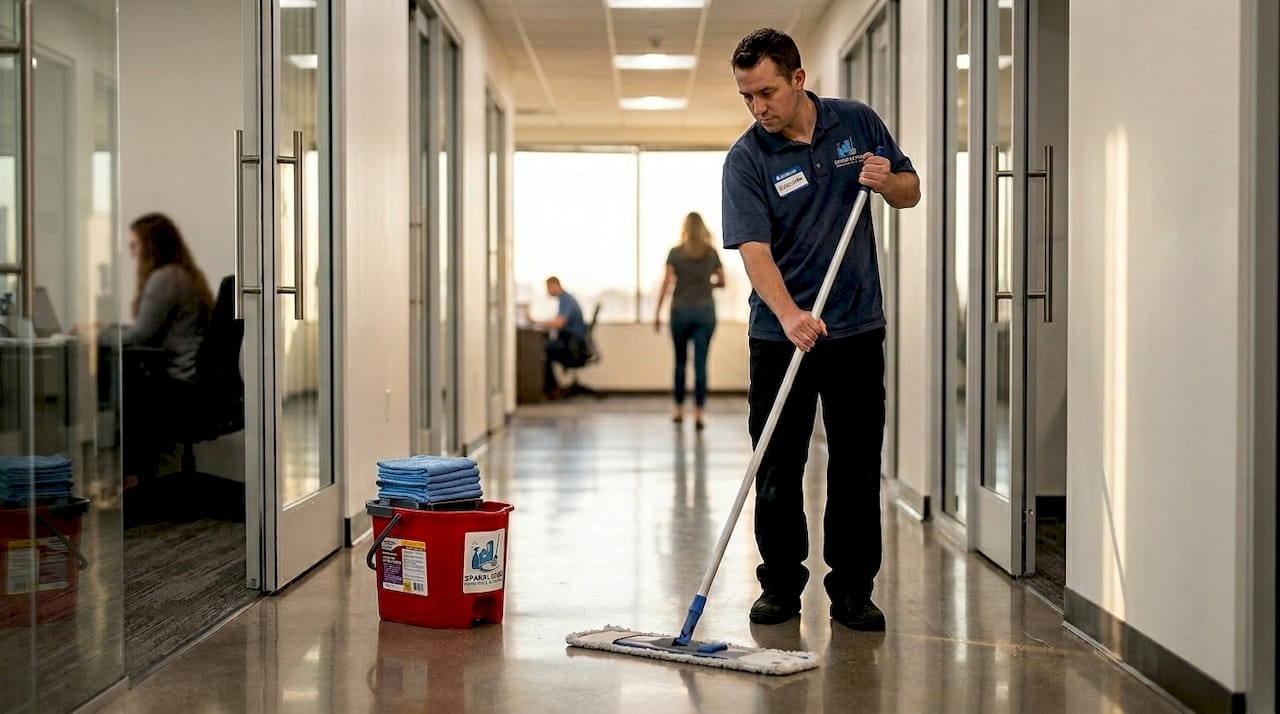
Microfiber mopping systems significantly reduce chemical usage compared to traditional string mops. A flat microfiber mop with a no-rinse neutral cleaner can cover 300 square feet per minute, which is a useful benchmark for scheduling and labor planning.
Here is a quick comparison of branded versus generic solutions for common maintenance tasks:
| Task | Branded Solution | Generic Solution | Cost Difference | Eco-Friendly Option |
|---|---|---|---|---|
| Floor mopping | Betco pH7Q | Generic neutral cleaner | 20-40% higher | Green Seal certified neutral |
| Disinfecting surfaces | Lysol Pro | Generic quat disinfectant | 15-30% higher | EPA Safer Choice registered |
| Glass cleaning | Zep Commercial | Generic ammonia-free glass cleaner | 10-25% higher | Vinegar-based concentrate |
Generic solutions often perform comparably for routine tasks. The real difference shows up in consistency of dilution ratios and documentation for compliance audits.
Key routine maintenance solutions to keep stocked:
- Neutral pH floor cleaner for daily mopping
- EPA-registered disinfectant for high-touch surfaces
- Microfiber mop systems for labor efficiency
- No-rinse restroom cleaner for occupied-building safety
- Carpet encapsulation solution for periodic deep cleaning
Pro Tip: Schedule quarterly solution audits alongside your regular property inspections. New tenant activities, seasonal changes, and building renovations can shift your solution needs faster than annual reviews catch.
For guidance on maintaining floors efficiently after construction, efficient floor cleaning methods can help you build a realistic maintenance schedule.
Specialized cleaning: Environmental and compliance-driven solutions
Some facilities operate under stricter rules than standard commercial buildings. Healthcare environments, LEED-certified offices, and industrial sites with active dust hazards each require solutions that go well beyond the janitorial supply catalog.
For LEED-certified buildings, every cleaning product used must meet Green Seal or EPA Safer Choice standards. This is not optional. Using non-certified products in a LEED space can cost the building its certification points during an audit. HEPA filtration is also required for any dust-generating activity, as OSHA's permissible exposure limit for respirable silica dust is 50 micrograms per cubic meter of air, averaged over an 8-hour shift.
Here are the solution categories for specialized environments:
- Healthcare and biohazard areas: EPA-registered hospital-grade disinfectants, sporicidal agents for C. diff control, and color-coded microfiber systems to prevent cross-contamination
- Industrial and construction sites: Dust suppression agents (calcium chloride or polymer-based solutions) applied to active work areas
- LEED and green buildings: Green Seal GS-37 certified cleaners, low-VOC products, and concentrated formats to reduce packaging waste
- Food service and commercial kitchens: NSF-registered degreasers and sanitizers that meet food-contact surface standards
Key stat: Facilities that align their solution choices with compliance requirements report a 72% median compliance rate during regulatory inspections, compared to significantly lower rates for facilities using generic, unverified products.
Understanding the terminology behind these requirements is half the battle. Reviewing compliance cleaning terminology helps your team communicate requirements clearly to vendors and avoid costly misunderstandings during audits.
Comparing cleaning solution types: Summary table and recommendations
With all the options laid out, a side-by-side view makes the decision clearer. Here is a summary of solution types across the most common commercial use cases:
| Cleaning Type | Solution Examples | Compliance Basics | Estimated Cost/Sq Ft |
|---|---|---|---|
| Post-construction | Heavy degreaser, HEPA vacuum, low-VOC chemical | OSHA SDS, LEED green cert | $0.15–$0.50 |
| Routine maintenance | Neutral pH cleaner, quat disinfectant | EPA registration, SDS on file | $0.05–$0.15 |
| Healthcare/biohazard | Hospital-grade disinfectant, sporicidal agent | EPA hospital-grade, CDC protocols | $0.20–$0.60 |
| LEED/green building | Green Seal certified, low-VOC concentrate | Green Seal GS-37, LEED IEQ credits | $0.10–$0.25 |
| Industrial/warehouse | Dust suppression agent, heavy degreaser | OSHA PEL compliance | $0.08–$0.20 |
The differences between post-construction, maintenance, and specialized cleaning solution requirements are significant enough that treating them interchangeably is one of the most expensive mistakes a property manager can make.
Best-fit recommendations by facility type:
- Large office buildings: Neutral pH cleaners for daily use, quat disinfectants for restrooms and lobbies
- Warehouses: Heavy degreasers for floor maintenance, dust suppression agents near loading docks
- Medical facilities: Hospital-grade EPA-registered disinfectants with documented kill claims
- LEED-certified buildings: Green Seal certified products across all categories
If you are evaluating vendors or want to compare service approaches, reviewing cleaning solution alternatives gives you additional context for making an informed choice.
Our take: Why 'solution-first' saves time, money, and headaches
Here is something most cleaning vendors will not tell you: the product is rarely the problem. The problem is using the right product in the wrong context, or specifying nothing at all and letting the crew decide on the day.
We have seen property managers spend thousands correcting surface damage caused by a well-meaning crew using a high-alkaline cleaner on polished concrete. The product was not bad. It was simply wrong for that surface. The fix cost more than a year of proper maintenance would have.
The most effective approach is to specify phase, product, and expected outcome in every cleaning contract. Vague contracts produce vague results. Post-construction contracts often require distinct purchase orders per phase precisely because the solution requirements are so different between phases. That same discipline should apply to your maintenance and specialty cleaning agreements.
Focusing on fit-for-purpose solutions also increases staff efficiency. When crews know exactly which product to use and why, they work faster and make fewer errors. You spend less time on callbacks and more time on actual facility management. Explore proven cleaning strategies to see how this plays out across different facility types.
Partner with experts for your cleaning solution needs
Applying the right cleaning solutions at scale requires more than a good product list. It requires experienced crews, proper equipment, and a service partner who understands compliance requirements across different facility types.
At Sparkle Pro Commercial Cleaning, we work with property managers and building owners nationwide to implement phase-specific, compliance-ready cleaning programs. Whether you manage a post-construction site in commercial cleaning in California, a high-rise office in New York facility cleaning, or a multi-site portfolio anywhere in between, our team provides countrywide cleaning support backed by licensed, insured professionals. Contact us today to get a site-specific quote and put the right solutions to work for your facility.
Frequently asked questions
What are the main phases of post-construction cleaning?
There are three core phases: rough clean using heavy degreasers, detail clean using HEPA vacuums and low-VOC chemicals, and final clean with surface polishing and protective coatings.
How do I ensure cleaning solutions meet OSHA or LEED compliance?
Specify HEPA filtration for dust and Green Seal or EPA Safer Choice certified chemicals for LEED projects, and maintain SDS documentation for all products used on site.
What's the typical cost range for commercial cleaning services?
Industry benchmarks show $0.05 to $0.25 per square foot for most routine commercial cleaning, with post-construction and specialty services running higher depending on scope.
What is the difference between post-construction cleaning and janitorial services?
Post-construction cleaning is more specialized, often requires contractor licensing, and must be managed phase-by-phase, unlike routine janitorial work which follows a repeating maintenance schedule.
How can I avoid damage when cleaning new building exteriors?
Soft washing is strongly preferred over pressure washing on new building exteriors because it uses lower pressure and surfactant solutions that lift contaminants without damaging fresh mortar, cladding, or sealants.