
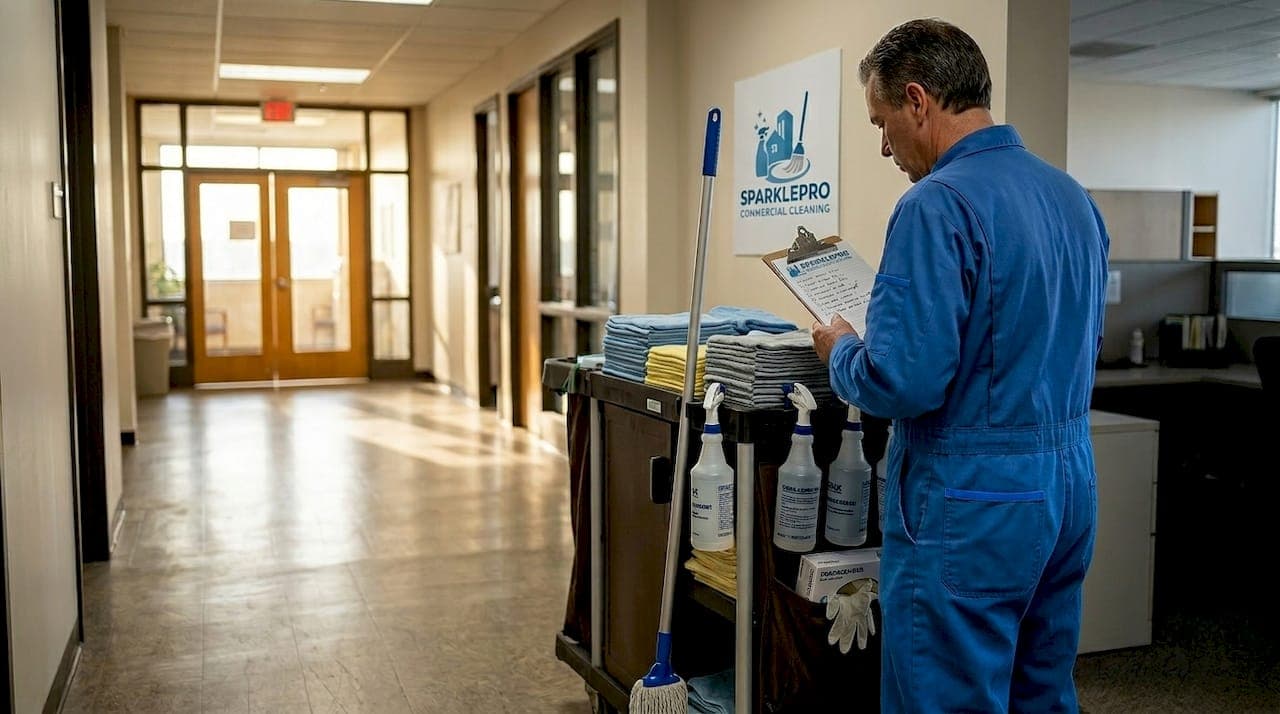
Keeping a commercial property clean is not just about appearances. Facility maintenance costs often range $2 to $6 per square foot annually, with cleaning accounting for 15 to 20% of that total. For property managers and facility directors, every dollar spent on cleaning supplies either protects your bottom line or quietly drains it. The wrong products create compliance gaps, waste labor hours, and invite regulatory citations. This guide walks you through selection criteria, core supply categories, side-by-side comparisons, and practical decision frameworks so you can build a cleaning program that actually works at scale.
Table of Contents
- Core selection criteria for commercial cleaning supplies
- Essential cleaning chemicals: cleaners, disinfectants, and specialty items
- Can't-miss equipment: microfiber, vacuums, mops, and carts
- Supporting supplies: disposables, PPE, and compliance essentials
- Comparing cleaning solutions: cost, compliance, and specialty needs
- What most supply lists miss: The real cost of generic choices
- Get professional support for your cleaning program
- Frequently asked questions
Key Takeaways
| Point | Details |
|---|---|
| Build on compliance | Always start your must-have list with OSHA, EPA, and SDS requirements to avoid legal and safety risks. |
| Prioritize effectiveness and durability | Invest in quality microfiber, EPA-grade disinfectants, and HEPA equipment for best hygiene outcomes. |
| Tailor to property needs | For specialty sites like healthcare or green buildings, choose hospital-grade or eco-certified alternatives. |
| Standardize and buy smart | Bulk-purchase concentrates and centralize checklists to cut supply costs up to 30%. |
Core selection criteria for commercial cleaning supplies
Choosing cleaning supplies is not as simple as ordering whatever's cheapest in bulk. There are legal, operational, and financial variables that have to line up before a product earns a place on your approved list.
Here are the six criteria every property manager should use to evaluate any cleaning supply:
- Legal compliance. OSHA requires labeling, SDS documentation, appropriate PPE, and EPA-registered disinfectants in commercial settings. Non-compliance creates liability, not just fines.
- Product effectiveness. For disinfectants, check dwell time and kill spectrum. For vacuums, verify HEPA filtration ratings. A product that requires five applications does not save money.
- Ease of use. Concentrates reduce storage costs but require accurate dilution. Ready-to-use products are safer for less-trained staff. Match the format to your team's skill level and workflow.
- Durability and lifespan. Microfiber cloths are rated for hundreds of wash cycles. Cotton replacements cost less upfront but add up fast. Factor total cost of ownership, not just unit price.
- Cost efficiency. Bulk purchasing, standardized concentrates, and reducing the number of SKUs (stock keeping units) on your list directly lower operating costs. Fewer products mean fewer reorders, less storage confusion, and tighter budget control.
- Sustainability and LEED alignment. For properties pursuing green certification, you need products that qualify under LEED standards. Understanding commercial cleaning terms like "Green Seal certified" and "biodegradable" helps you make purchases that count.
Pro Tip: Keep a binder with printed SDS sheets for every chemical on your list, organized by area of use. During an inspection, auditors want immediate access to those documents. Digital backups are fine for daily use, but a physical binder at each janitorial station eliminates scrambling during surprise audits.
Essential cleaning chemicals: cleaners, disinfectants, and specialty items
Chemicals are the engine of any cleaning program. Having the right ones on hand prevents gaps in coverage, especially when you're managing multiple building types with different hygiene demands.
Core chemicals every commercial facility should stock:
- All-purpose cleaners: For general surfaces, lobbies, and break rooms. Fast application, broad compatibility.
- Glass cleaners: Streak-free formula for windows and partitions. Non-ammonia options protect tinted glass.
- Restroom cleaners and disinfectants: Acid-based for mineral deposits, paired with an EPA-registered disinfectant for pathogen control.
- Floor cleaners: Must match floor type. Neutral pH for hardwood, alkaline for concrete. Learn more about matching products to surfaces in this floor cleaning process guide.
- Degreasers: Essential for kitchens, loading docks, and mechanical rooms. Enzyme-based options are safer for drain systems.
- Hospital-grade or EPA-registered disinfectants: Must-have chemicals include these for healthcare settings, high-touch areas, and any facility managing immunocompromised occupants.
| Feature | Ready-to-use | Concentrate |
|---|---|---|
| Upfront cost | Higher per unit | Lower per unit |
| Storage space | More required | Minimal |
| Dilution error risk | None | Moderate |
| Shelf life | Shorter | Longer |
| Compliance management | Simpler | Requires training |
Pro Tip: Choose "no-rinse" disinfectants for high-traffic areas whenever possible. They eliminate the residue buildup that makes floors sticky and actually attracts dirt faster, increasing labor time on your next cleaning cycle.
"EPA registration is not optional documentation. It's the legal threshold that determines whether your disinfectant actually qualifies as one under federal law. Property managers who skip this step are one citation away from a serious liability event." Review proper SDS documentation practices to stay ahead of enforcement.
Can't-miss equipment: microfiber, vacuums, mops, and carts
Chemicals are only half the story. The tools your team uses to apply those chemicals determine whether you get consistent results or inconsistent performance that drives complaints and repeat cleaning.
Key equipment every commercial cleaning program needs:
- Microfiber cloths and mops: Microfiber traps up to 99% of bacteria and dirt, reducing chemical use by 90% and cutting labor time significantly. Color-code by zone (red for restrooms, blue for general surfaces) to prevent cross-contamination.
- HEPA vacuums: Required in healthcare settings and for LEED certification. They capture particles as small as 0.3 microns, which standard vacuums recirculate into the air.
- Mops and buckets: Flat mops are more sanitary than traditional string mops because they reduce moisture spread. Dual-bucket systems keep rinse water separate from cleaning solution.
- Janitorial carts: Look for carts with locking chemical storage, color-coded caddy systems, and easy-roll wheels. A well-organized cart reduces time between tasks.
| Equipment | Avg. cost | Lifespan |
|---|---|---|
| Microfiber cloths | $1 to $3 each | 100 to 200 washes |
| Cotton cloths | $0.50 to $1 each | 20 to 30 washes |
| HEPA commercial vacuum | $300 to $800 | 5 to 8 years |
| Flat mop system | $50 to $120 | 2 to 4 years |
| Janitorial cart | $150 to $400 | 5 to 10 years |
For properties managing multiple floors, invest in efficient floor cleaning setups with dedicated equipment per zone. Sharing equipment between high-risk and low-risk areas is one of the most common sources of cross-contamination in commercial buildings.
Supporting supplies: disposables, PPE, and compliance essentials
Your cleaning program is only as strong as its weakest link. Forgetting to stock the right disposables or skipping PPE protocols introduces real risk, both for your workers and your facility's compliance standing.
Core disposables checklist:
- Heavy-duty trash liners (30-gallon and 55-gallon for bulk areas)
- Paper towels and facial tissues
- Liquid hand soap and hand sanitizer with 60%+ alcohol
- Pump dispensers and refill bottles
- Toilet paper and seat covers
- Air fresheners (spray and continuous-release)
- Disposable wipes for quick surface sanitizing between deep cleans
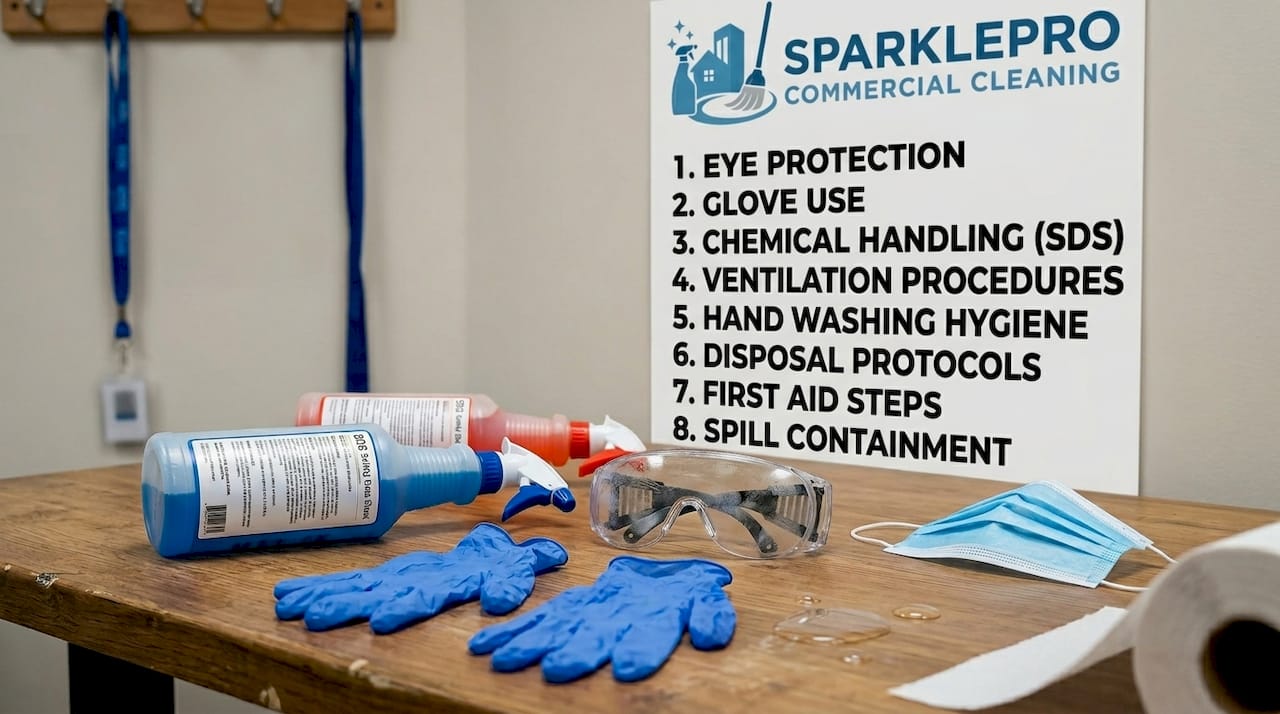
Required PPE for your janitorial staff:
- Nitrile or latex gloves (change between zones)
- Safety goggles for chemical handling
- Waterproof aprons
- Respirator masks for enclosed chemical areas
Pro Tip: Standardizing your disposable supply types and setting fixed reorder points cuts procurement costs by 20 to 30%. When every building in your portfolio uses the same soap dispenser model, you buy in bulk and never deal with compatibility issues.
OSHA mandates proper PPE, clear chemical labels, and accessible SDS for all hazardous materials. Restroom supplies are included in that scope. Refer to this facilities compliance guide for a full breakdown of what's required by setting type. Strong cleaning compliance essentials also reduce worker absenteeism and liability claims, outcomes that show up directly in your operating budget.
Comparing cleaning solutions: cost, compliance, and specialty needs
With all essential categories covered, it's time to compare your options and address the practical realities of making smart decisions for different facility types.
| Solution type | Compliance level | Est. cost/sqft | Sustainability | Best for |
|---|---|---|---|---|
| Standard/traditional | Moderate | $0.08 to $0.15 | Low | Offices, retail |
| Eco-friendly/green | High (with LEED) | $0.12 to $0.20 | High | LEED buildings, schools |
| Hospital-grade | Very high | $0.15 to $0.25 | Moderate | Healthcare, labs |
Some facilities prioritize green or low-chemical options for LEED certification, while others need hospital-grade products. The best approach is zone-specific protocols that match product intensity to actual risk level.
Quick wins to eliminate supply bloat:
- Audit your current list and remove products that serve the same function
- Consolidate to one all-purpose cleaner brand across all zones
- Eliminate single-use specialty products that can be replaced by concentrates
- Track usage rates monthly and cut products with low consumption
"What counts as 'must-have' is completely different for an office building versus a surgical center versus a food distribution warehouse. A single generic list is not a strategy. It's a liability." Use frameworks that let you choose the right chemical based on surface type, occupancy risk, and regulatory tier.
When scaling across a portfolio, define cleaning supply definitions clearly in your vendor contracts. Ambiguity about product specifications leads to substitutions that break compliance chains.
What most supply lists miss: The real cost of generic choices
Here's what the industry rarely admits: most published supply lists are written for the average facility, which means they're optimized for no facility in particular.
Generic lists ignore what actually drives cost overruns. Improper concentrate dilution can result in 30 to 50% product waste per shift. Poor PPE compliance drives absenteeism, and one missed SDS entry during an OSHA inspection can cost thousands in fines and remediation. These aren't edge cases. They're common results of treating supply selection as a procurement task rather than an operational strategy.
We've seen firsthand what happens when a portfolio audit replaces guesswork with data. Cutting the SKU count by 30% and standardizing concentrates across a multi-building account reduced supply costs by 20% within two quarters. Cleanliness scores didn't drop. Worker confidence improved. Audit outcomes got better.
The lesson is straightforward: your supply list should reflect your actual buildings, your actual staff capabilities, and your actual regulatory environment. A healthcare facility and an office park are not the same problem, and they shouldn't share the same solution. Customizing your list by building type, occupancy level, and cleaning frequency delivers higher ROI than any off-the-shelf package ever will.
Get professional support for your cleaning program
Building the right supply list is one part of the equation. Executing it consistently across your portfolio is another challenge entirely.
Sparklepro works with property managers and facility directors across the country to design and deliver cleaning programs that are fully compliant, operationally efficient, and tailored to your specific building types. Whether you manage offices in California cleaning services or oversee high-rise properties with New York cleaning solutions, our team brings regional expertise and nationwide consistency. Our facility cleaning experts can help you assess your current supply strategy, identify cost gaps, and implement a program built for your actual needs. Reach out to schedule a consultation or request a supply assessment today.
Frequently asked questions
What is the most important cleaning supply for commercial buildings?
All-purpose cleaners and EPA-registered disinfectants are the backbone of any commercial program, covering daily surface cleaning and mandatory pathogen control in one consistent routine.
What does OSHA require for cleaning chemicals?
OSHA mandates labeling, accessible SDS sheets, appropriate PPE like nitrile gloves and goggles, and EPA-registered disinfectants for facilities where chemical exposure is a risk.
How often should microfiber cleaning cloths be replaced?
Replace microfiber cloths after 100 to 200 wash cycles. Beyond that threshold, microfiber loses effectiveness and begins to spread bacteria instead of capturing it.
How can facility managers cut cleaning supply costs?
Standardizing your approved supply list and buying concentrates in bulk can reduce procurement costs by 20 to 30% without changing cleaning frequency or quality.
Do eco-friendly cleaning products require SDS documentation?
Yes. Green cleaning products still require full SDS documentation under OSHA. EPA registration and hazard disclosure requirements apply regardless of how a product is marketed.
Recommended
- Streamline Your Commercial Floor Cleaning Process
- Decode commercial cleaning terms: guide for managers
- Top examples of janitorial services for every facility type
- Massachusetts – Sparklepro Commercial Cleaning
- 4 Spring Cleaning Tips For Carpet & Flooring | Quality Carpet Trims
- Streamline Your Marble Maintenance for Lasting Elegance– SurfacesGalore