
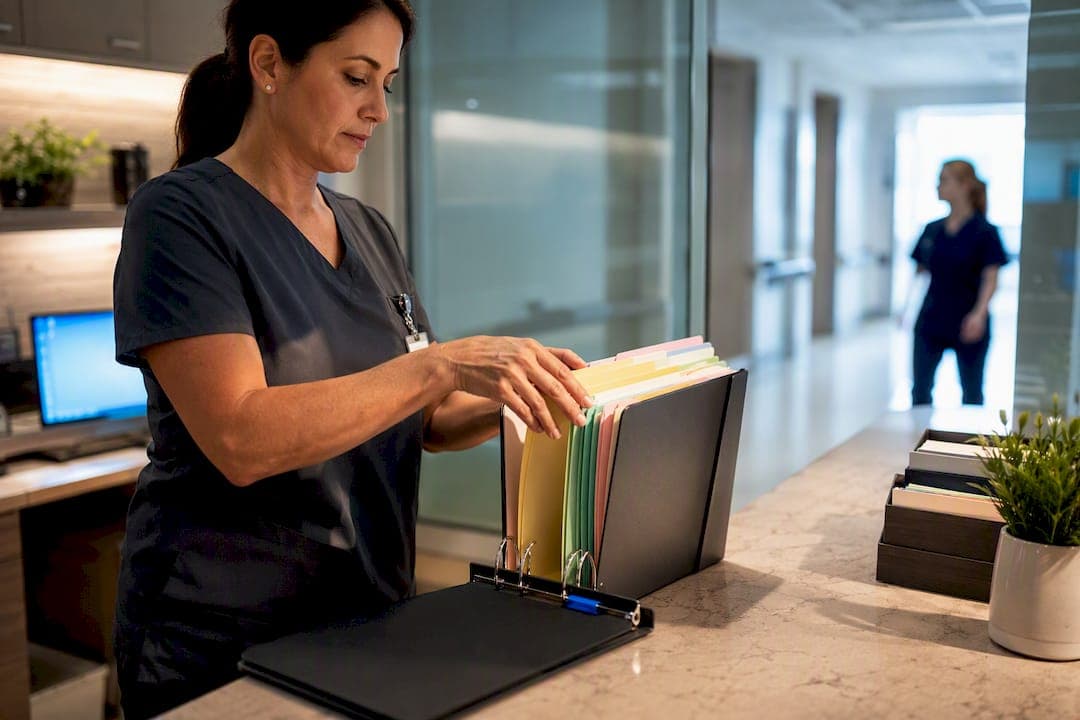
Healthcare cleaning compliance in the United States means running a written infection prevention and control (IPC) program with documented SOPs, risk-based cleaning schedules, and audit evidence that traces back to CDC, Joint Commission, and CMS requirements. There's no shortcut around the paperwork. If you manage a facility or coordinate cleaning contracts, your first move this week is pulling your written SOPs and the last 12 months of audit logs and asking whether a surveyor could reconstruct your program from them alone.
TL;DR:
- Documentation of policies, SOPs, and audit logs for each patient care area must be complete and easily retrievable for survey verification.
- Cleaning frequency and methods should be tailored to each area’s infection risk tier, with high-risk spaces requiring stricter protocols and daily audits.
- Disinfectant use must adhere to EPA registration, including appropriate contact time, proper equipment, and surface compatibility to ensure effectiveness.
- Isolation room cleaning requires specific PPE, dedicated carts, and strict protocols to prevent cross-contamination during doffing and handling.
- Ongoing staff training, competency assessments, and routine audits are essential to demonstrate actual compliance and prevent survey citations.
Table of Contents
- Healthcare Cleaning Compliance and the Rules Behind It
- The Compliance Checklist: Policies, SOPs, and Records That Hold Up
- Risk-Based Cleaning: Matching Frequency to Transmission Risk
- Cleaning Technique and Disinfectant Selection Done Right
- PPE and Precautions When Cleaning Isolation Areas
- Documentation, Training, and Proving Staff Competency
- Monitoring and Audits: Proving Cleaning Actually Worked
- Building the Compliance Program Into Daily Operations
- What This Looks Like on the Ground for a Nationwide Provider
- Where the Real Risk Hides in Compliance Programs
- How Sparkleprocommercialcleaning Supports Compliance-Ready Facilities
- Primary Sources Worth Bookmarking
- Sources
Healthcare Cleaning Compliance and the Rules Behind It
Three federal and accrediting bodies define what "compliant" actually looks like, and they don't operate in isolation. Each one references the others, so a gap in one document usually shows up as a gap in all three.
The CDC's Core infection prevention and control practices form the technical foundation. These cover standard precautions, hand hygiene, PPE use, and environmental cleaning, and they're the baseline that both Joint Commission and CMS point back to when they ask "how do you know your cleaning is effective?" The CDC's own environmental cleaning procedures guidance goes further, laying out risk-based cleaning frequency, two-step spill response, and the expectation that every patient care area has its own written SOP and checklist.
The Joint Commission builds its accreditation requirements on top of that foundation. Its revised Infection Control chapter now puts heavy weight on documentation: written policies, a formal IPC program, and demonstrated alignment with CDC guidance and CMS Conditions of Participation. An AHE analysis of the update describes the change as simplifying some requirements while tightening the documentation bar, standardizing what facilities must show and how they must show it.
CMS enters through the Conditions of Participation, which hospitals and many outpatient facilities must meet to bill Medicare and Medicaid. The CoPs don't spell out cleaning procedures line by line, but they require an active, facility-wide infection control program, and device reprocessing is a frequent flashpoint. Surveyors expect reprocessing decisions to follow Spaulding classification, the standard framework that sorts devices into critical, semicritical, and noncritical categories based on infection risk, each carrying its own disinfection or sterilization requirement.
When a surveyor walks in, they're rarely satisfied with a verbal explanation. They typically ask for:
- Written IPC policies and cleaning/disinfection SOPs for each patient care area
- Training records and competency sign-offs for environmental services staff
- Audit reports and corrective action logs from the past year
- Device reprocessing logs tied to Spaulding classification
- Evidence that EPA-registered products are used according to label directions
Miss any one of these, and the conversation shifts from "show me" to "explain why not."
The Compliance Checklist: Policies, SOPs, and Records That Hold Up
Every requirement above traces back to a document. If that document doesn't exist, or exists but nobody can find it during a survey, it doesn't count. Here's the minimum paper trail a facility needs to defend its program.
- Written IPC program description. A single governing document that names your infection prevention lead, defines scope, and states how CDC Core Practices inform your policies.
- Cleaning and disinfection SOPs by area type. Separate, specific procedures for exam rooms, procedure rooms, operating rooms, and common areas, not one generic checklist stretched to cover everything.
- Reprocessing SOPs mapped to Spaulding classification. Critical devices (entering sterile tissue) require sterilization; semicritical devices (contacting mucous membranes) require high-level disinfection; noncritical devices need only low-level disinfection. Each category needs its own documented process and log.
- Training logs and competency assessments. Dated records showing who was trained, on what, and how their competency was verified, not just attendance sheets.
- Disinfectant lot numbers and product logs. Traceability for which EPA-registered product was used, when, and on what surface.
- Sterilizer cycle logs. Biological and chemical indicator results for every load, retained per your facility's record retention policy.
- Audit reports and corrective action records. Both efficacy audits (did the cleaning work?) and technical audits (was the process followed?), with documented follow-up when something failed.
Each item maps directly to what Joint Commission and CMS ask for during survey, and the AHE analysis notes that the 2024 IC chapter revisions specifically call out written documentation of activities and methods as the standard surveyors now check first, not an afterthought.
Pro Tip: Build a one-page "survey binder index" for each unit that lists exactly where each of these seven documents lives, physically or digitally. Surveyors move fast, and hunting for a log costs you more credibility than the log itself would have.
Risk-Based Cleaning: Matching Frequency to Transmission Risk
Not every square foot of a facility carries the same infection risk, and treating a waiting room like an ICU (or vice versa) either wastes labor or leaves gaps. The CDC's environmental cleaning framework sorts areas into risk tiers, and your cleaning frequency, method, and audit intensity should all scale with that tier.
Low-risk areas include lobbies, administrative offices, and public corridors. These see cleaning once or twice daily, general-purpose disinfectants, and light audit frequency, maybe monthly spot checks.
Moderate-risk areas cover most clinic exam rooms, outpatient procedure spaces, and patient rooms without transmission-based precautions. These typically need daily cleaning plus dedicated high-touch surface disinfection between patients, hand rails, bed rails, call buttons, doorknobs, at intervals tight enough that a busy exam room might see disinfection wipe-downs three or four times a shift.
High-risk areas include operating rooms, ICUs, isolation rooms, and any space handling immunocompromised patients or invasive procedures. These require terminal cleaning protocols after every patient discharge or procedure, stricter dwell times, and audit checks on a near-daily basis in the busiest units.
A few operational rules apply across all three tiers:
- Terminal cleaning happens at discharge, transfer, or after a procedure, not just at the end of a shift, and it covers every surface in the room, not just the obviously used ones.
- Outbreak conditions override baseline schedules immediately. If your facility identifies a cluster of Clostridioides difficile or another reportable pathogen, cleaning frequency and product selection escalate that day, not at the next scheduled review.
- Special pathogen rooms (confirmed or suspected highly resistant organisms) may require single-use equipment or dedicated cleaning tools that never leave the room.
- Audit frequency should rise with risk tier. A monthly visual check might satisfy a low-risk lobby; a high-risk OR often warrants documented review after every case or at minimum daily.
Our guide to terminal cleaning procedures breaks down the room-by-room sequence in more depth, useful if you're building or revising SOPs for high-risk turnover.
The mistake facilities make most often isn't skipping cleaning. It's applying one frequency and one method across areas that carry very different risk profiles, then being unable to explain the logic behind their schedule when asked.
Cleaning Technique and Disinfectant Selection Done Right
Technique matters as much as frequency, and the sequence you follow determines whether disinfection actually works or just moves contamination around. The CDC's environmental cleaning procedures lay out a consistent logic: assess, clean, then disinfect, never skip straight to the third step.
The standard sequence:
- Visually assess the area for visible soil, spills, or damage before touching anything.
- Remove gross soil first with detergent and water or a cleaner, since organic material inactivates many disinfectants before they can work.
- Apply an EPA-registered disinfectant to the now-clean surface and let it sit for the full labeled contact time.
- Work top to bottom and clean to dirty, so debris and contaminants move from cleaner surfaces toward dirtier ones, never the reverse.
Blood and body-fluid spills need a distinct, faster-moving process. Don a full PPE set, contain the spill, remove visible material with absorbent material, then apply an EPA-registered disinfectant labeled for bloodborne pathogens and let it sit for the full contact time before final wipe-down. Speed matters here, but skipping the contact time to save two minutes defeats the purpose of the whole response.
Disinfectant selection is where a lot of facilities lose the thread. An EPA registration number on the label doesn't mean the product works for every job, it means the EPA has verified specific claims for specific pathogens and specific contact times, and departing from those specifics voids the claim. Before stocking a product, check that it's registered for the pathogens you're targeting, that the contact time is realistic for your staffing model (a 10 minute wet-contact requirement is common, and most surfaces air-dry faster than that), and that it's compatible with the surfaces you're applying it to. Bleach-based products, for instance, can degrade certain plastics and metals over repeated use, so read the compatibility notes, not just the kill claims.
Equipment matters too. Color-coded microfiber cloths and mop heads, red for isolation rooms, yellow for restrooms, and so on, prevent cross-contamination between area types, and they need their own maintenance SOP: laundering temperature, replacement frequency, and storage that keeps clean and used cloths separated.
Pro Tip: Keep a laminated quick-reference card taped inside every supply closet listing the contact time for each disinfectant you stock. Staff turnover is constant in environmental services, and memorized contact times drift fast without a visual reminder.
PPE and Precautions When Cleaning Isolation Areas
Routine cleaning and transmission-precaution cleaning call for different PPE, and mixing them up either wastes protective equipment or leaves staff exposed. Routine cleaning of a standard patient room generally calls for gloves and, depending on task, an apron or gown for splash risk. Cleaning a room under contact, droplet, or airborne precautions raises that bar to gown, gloves, and, for droplet or airborne isolation, a surgical mask or N95 respirator plus eye protection.
Donning and doffing order isn't a formality, it's the step most likely to cause self-contamination if rushed. Standard order for donning: gown, mask or respirator, eye protection, gloves. Doffing reverses the exposure logic: gloves come off first (they're the most contaminated), then eye protection, then gown, then mask or respirator last, with hand hygiene performed between each removed item, not just at the end.
Equipment handling around isolation rooms deserves its own rule set:
- Leave cleaning carts outside the isolation room; carry only what's needed inside to avoid contaminating shared supplies.
- Dedicate mop heads, cloths, and buckets to that room when feasible, and if disposable equipment is used, discard it in the room before doffing.
- Never carry a cart from an isolation room directly into a non-isolation area without a full restock and disinfection cycle.
- During PPE shortages, prioritize N95 respirators and eye protection for airborne and droplet precaution rooms first, and have a documented contingency plan (extended use protocols, alternative barrier products) rather than improvising in the moment.
Getting this sequence wrong is one of the most common findings during infection control walkthroughs, not because staff don't know the rules, but because nobody wrote down the isolation-specific cart protocol until it became a problem.
Documentation, Training, and Proving Staff Competency
Surveyors don't just want to know that cleaning happened. They want to see that the person who cleaned the room was trained to do it, assessed as competent, and following a written procedure specific to that room type. Documentation is where this gets proven or falls apart, and it's also the single most common survey citation area. Joint Commission survey data shows IPC-related RFIs remain common, with most surveyed hospitals receiving at least one such finding in recent cycles.
Keep these documents current for every clinical area type:
- Exam room SOP and checklist covering routine cleaning frequency, high-touch surface list, and disinfectant contact time.
- Procedure room SOP with additional steps for equipment disinfection and any semicritical device handling under Spaulding classification.
- Operating room terminal cleaning checklist documenting every surface, the sequence followed, and the staff member and time of completion.
- Isolation room addendum specifying PPE level, cart protocol, and any pathogen-specific disinfectant requirement.
Training cadence matters as much as content. New hires need documented initial competency assessment before working unsupervised, and most facilities benchmark annual refreshers at minimum, with additional training triggered by a product change, a new SOP, or a failed audit. Competency assessment should be observational, not just a quiz, someone watches the cleaning happen and signs off that technique matched the SOP.
Spaulding classification adds a layer of ownership clarity that's easy to overlook. Critical and semicritical device reprocessing often falls to sterile processing or clinical staff rather than environmental services, and your documentation needs to make that handoff explicit so nobody assumes "someone else" is logging the sterilizer cycle.
Contractor and vendor work needs the same rigor as in-house staff. If an outside cleaning company handles post-construction turnover, tenant move-out cleaning, or supplemental janitorial work in clinical-adjacent spaces, their SOPs need to align with your facility's own policies, and their completion records need to be retained the same way in-house logs are. Our contractor cleaning compliance checklist walks through what that handoff documentation should include.
Pro Tip: Store training records and audit reports in the same system, cross-referenced by area and date. When a surveyor asks about a specific room's cleaning failure, being able to pull both the training record for that shift's staff and the audit history for that room in one search saves real time.
Monitoring and Audits: Proving Cleaning Actually Worked
A cleaning schedule proves intent. An audit proves execution. The two aren't interchangeable, and facilities that rely solely on schedules to demonstrate compliance are missing the evidence surveyors actually want.
Monitoring methods break into two categories with real trade-offs. Visual inspection and structured performance observations are cheap and immediate, someone walks the room with a checklist right after cleaning, but they're inherently subjective and can miss microbial contamination invisible to the eye. ATP bioluminescence testing and fluorescent gel markers give objective, quantifiable evidence that a surface was actually wiped, not just glanced at, but they require equipment, training to interpret results correctly, and added time per audit. Culture testing offers the strongest microbial evidence but is slow and typically reserved for outbreak investigation rather than routine monitoring.
The strongest programs run both efficacy audits (did the cleaning actually reduce contamination or bioburden) and technical audits (did staff follow the written procedure step by step) on separate but overlapping schedules. A practical cadence looks like daily visual checks in high-risk areas, weekly structured observations across all units, and monthly ATP or fluorescent marker audits sampled across risk tiers.
Track a handful of KPIs consistently rather than drowning in metrics:
- Percentage of audited high-touch surfaces passing ATP or fluorescent marker checks
- Training completion rate and competency sign-off rate by unit
- Number of corrective actions closed within a set timeframe (say, 14 days)
- Repeat failure rate on the same surface type or room
A mixed monitoring strategy holds up better under scrutiny than either extreme. Relying only on visual checks leaves no objective evidence when a surveyor pushes back; relying only on ATP testing without daily visual oversight means problems go unnoticed between audit cycles. When an audit reveals a pattern, say, the same three high-touch surfaces failing repeatedly across a unit, that's the trigger for retraining, not just a note in a log. Audit data that never drives a corrective action isn't really monitoring, it's just paperwork.
Building the Compliance Program Into Daily Operations
Written policies only work if someone owns them day to day. Governance structure is where a lot of programs quietly fail, not because the SOPs are wrong, but because nobody's job description actually includes checking whether they're followed.
- Assign clear roles. Name an IPC lead (often infection preventionist or nursing leadership), an environmental services manager responsible for day-to-day execution, and a procurement contact who vets products before they hit the supply closet. Overlap between these roles, without clarity on who has final say, is a common source of drift.
- Build a procurement checklist. Before adding any disinfectant or cleaning product, verify EPA registration status, confirm the manufacturer's instructions for use match your intended application, keep the safety data sheet on file, and check that your supplier has a reliable restock history, a shortage on a critical disinfectant mid-outbreak is its own compliance failure.
- Formalize contractor onboarding. Any outside cleaning provider working in or near clinical areas should sign off on your facility's SOPs before starting, not after, and their work should feed into the same audit system as in-house staff.
- Close the loop with continuous improvement. Audit results and training gaps should trigger actual SOP revisions on a set review cycle, at minimum annually, sooner if a specific failure pattern shows up repeatedly. A program that never updates its own paperwork based on audit findings isn't really improving.
The peer-reviewed literature on this is consistent: structured governance and routine competency assessment correlate with better cleaning performance more reliably than any specific product or technology upgrade. The organizational structure around cleaning matters more than what's in the bucket.
What This Looks Like on the Ground for a Nationwide Provider
A nationwide commercial cleaning provider runs healthcare and cleanroom environmental services through a four-step process typical for commercial engagements: quote, site visit, scheduled cleaning, and customer approval. For healthcare clients, that site visit is where risk categorization actually happens, walking each area, confirming which spaces need terminal cleaning protocols, and aligning the proposed SOP with the facility's existing IPC documentation before a single cleaning shift is scheduled.
That structure matters because compliance isn't something you bolt onto a cleaning contract after the fact. It has to be built into the SOP from day one, with training records and audit support documented alongside the routine service itself, not treated as a separate add-on.
Where the Real Risk Hides in Compliance Programs
The biggest mistake I see facilities make isn't a missing SOP, it's a beautifully written SOP nobody actually audits. If you're starting from scratch or fixing a program that's drifted, put your first real effort into two things: getting written SOPs current for your highest-risk areas, and setting up a recurring audit schedule for high-touch surfaces in those same areas. Everything else, contractor checklists, training refreshers, procurement forms, matters, but it matters less if those two foundations aren't solid.
The pitfall to watch for is checklist fatigue. Piling five new forms onto environmental services staff without training them on why each one exists produces compliance theater, paperwork that gets filled out because it's required, not because anyone believes it reflects reality. Train first, document second. The order matters more than most programs admit.
— Sales
How Sparkleprocommercialcleaning Supports Compliance-Ready Facilities
Sparkleprocommercialcleaning gives facility managers a way to close the gap between a written IPC program and what actually happens on the floor, without adding another vendor relationship to manage. Our environmental services teams work from documented SOPs aligned to your facility's risk categorization, handle terminal cleaning and contractor handover cleaning with the same audit trail your accreditation process expects, and support the training and record-keeping that surveyors actually ask to see.
That means less time reconstructing documentation before a survey and more confidence that your cleaning contractor's paperwork will hold up next to your own. If you're in Delaware, Massachusetts, or Washington, our state pages walk through how to request a quote and schedule a site visit so we can map your risk-based cleaning schedule before your next contract renewal. Facilities elsewhere in the country can start the same process through our national request line, no long-term commitment required to get a site assessment on the calendar.
Primary Sources Worth Bookmarking
For the regulatory language behind everything covered here, go directly to the source documents rather than secondary summaries:
- CDC Environmental Cleaning Procedures: frequency frameworks, spill response, SOP recommendations
- Joint Commission Revised IC Chapter: documentation and policy requirements
- AHE analysis of Joint Commission updates: plain-language breakdown of the 2024 changes
- Peer-reviewed sanitation practices review: evidence on training, monitoring, and governance structures
This article is general information, not a substitute for advice from a qualified doctor. Consult a qualified healthcare professional about your own circumstances before acting on anything here.
Sources
- Environmental Cleaning Procedures | HAIs | CDC
- Revised Infection Control (IC) Chapter | The Joint Commission
- AHE: Joint Commission new requirements in infection prevention and control chapter (analysis)
- Peer-reviewed article on hospital sanitation best practices (PMC)