
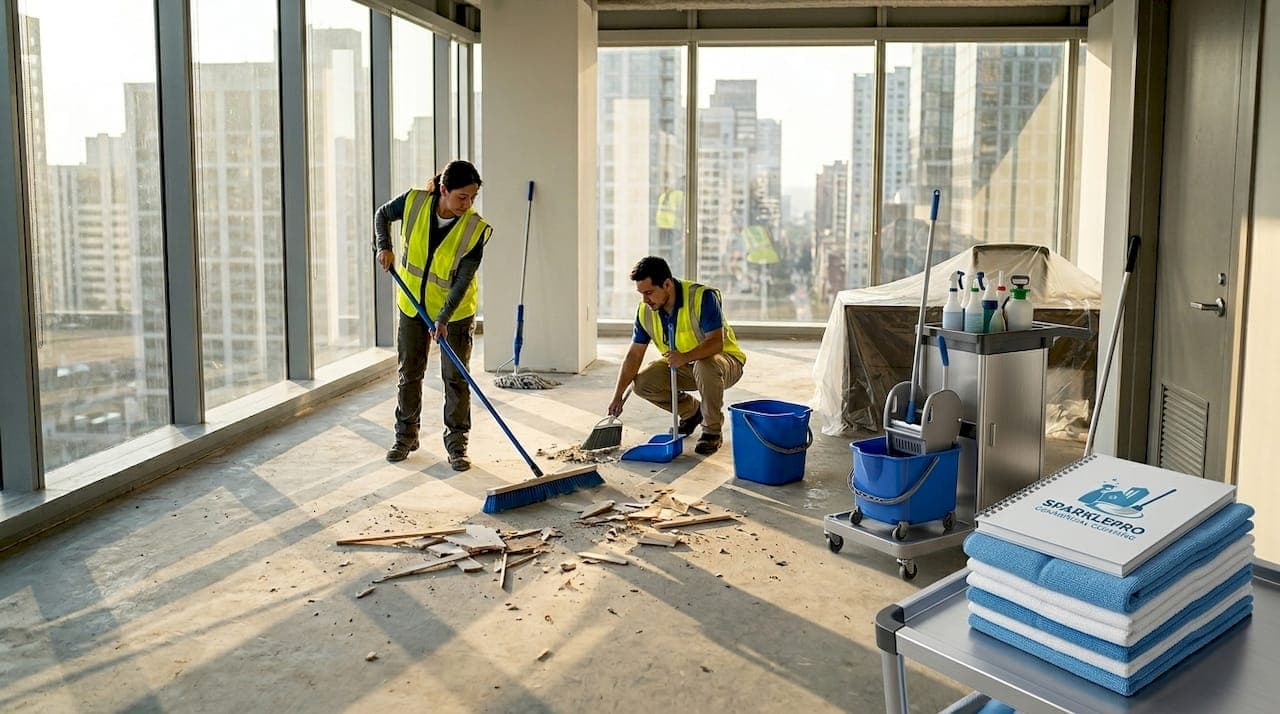
When a construction crew leaves a commercial facility, what stays behind is far more dangerous than most property managers realize. Fine silica dust settles into HVAC systems, drywall compound coats surfaces, and volatile chemical residues linger in poorly ventilated corners. Assuming a sweep and mop can resolve this is exactly the kind of mistake that leads to failed occupancy inspections, tenant complaints, and serious liability exposure. Cleaning for contractors is a phased, safety-focused protocol that goes well beyond surface appearance. This guide breaks down what it really means, why it matters, and what you must require from every contractor cleaning engagement.
Table of Contents
- Understanding cleaning for contractors: The essentials
- Breaking down the three key phases of contractor cleaning
- Documentation requirements for cleaning contractors
- Evaluating cleaning quality and cost for contractors
- Why most guides overlook the risks in contractor cleaning
- Find trusted contractor cleaning services with Sparklepro
- Frequently asked questions
Key Takeaways
| Point | Details |
|---|---|
| Phased cleaning is essential | Professional contractor cleaning follows three key phases to eliminate debris, dust, and hazards in commercial spaces. |
| Documentation prevents disputes | Always require proof of phased cleaning, HEPA filtration, and walkthrough completion to avoid failed inspections. |
| Evaluate quality and cost | Compare contractors based on experience, compliance proof, and detailed bids for best results. |
| Expert guidance matters | Industry oversight, air quality checks, and thorough documentation are often overlooked but vital to safe occupancy. |
Understanding cleaning for contractors: The essentials
Let's clear up the most common misconception right away. When property managers hear "post-construction cleaning," many picture a crew wiping down counters and vacuuming. The reality is entirely different. Post-construction cleaning services describes it accurately: post-construction cleaning for contractors is a specialized, phased service performed after construction or renovation to remove dust, debris, residues, and hazards, making commercial spaces safe and ready for occupancy by property managers and owners.
That definition carries real weight. The word "hazards" is not exaggeration. Construction sites generate materials that can cause respiratory illness, skin irritation, and long-term air quality problems if they are not properly removed. This includes silica dust from concrete cutting, adhesive fumes from flooring installation, fiberglass particles from insulation work, and heavy metal residues from welding or electrical work.
Understanding the cleaning benefits for managers in a post-construction context also means recognizing the regulatory stakes. Many commercial facilities must pass inspections before tenants can occupy the space. A surface-level cleaning job that looks acceptable to the eye may still fail an air quality test or trigger code violations.
Here is what separates contractor cleaning from routine janitorial work:
- Hazard identification and removal: Phased cleanouts target materials that standard cleaning products and methods cannot handle
- Regulated waste handling: Construction debris often includes regulated materials requiring specific disposal methods
- Air quality remediation: HEPA filtration equipment is required to capture fine particles that standard vacuums recirculate into the air
- Surface restoration: Removing adhesive residues, overspray, and construction film from finished surfaces without causing damage
- Documentation at every phase: Professional contractor cleaners provide written confirmation of completed work for compliance records
Property managers who treat post-construction cleaning as routine janitorial work are taking on risks they may not even know exist until an inspection fails or a tenant files a complaint.
The effective post-construction cleaning process is a managed service, not a task list. When you understand that distinction, you can make better decisions about who you hire and what you require from them.
With the basics covered, let's break down these specialized cleaning phases step by step.
Breaking down the three key phases of contractor cleaning
One of the most useful frameworks for property managers is understanding the three-phase structure of professional contractor cleaning. According to post-construction cleaning services, the process is typically divided into three phases: Rough clean for bulk debris removal, Detail or Light clean for surface deep cleaning, and Final or Punch clean for inspection-ready touch-ups.
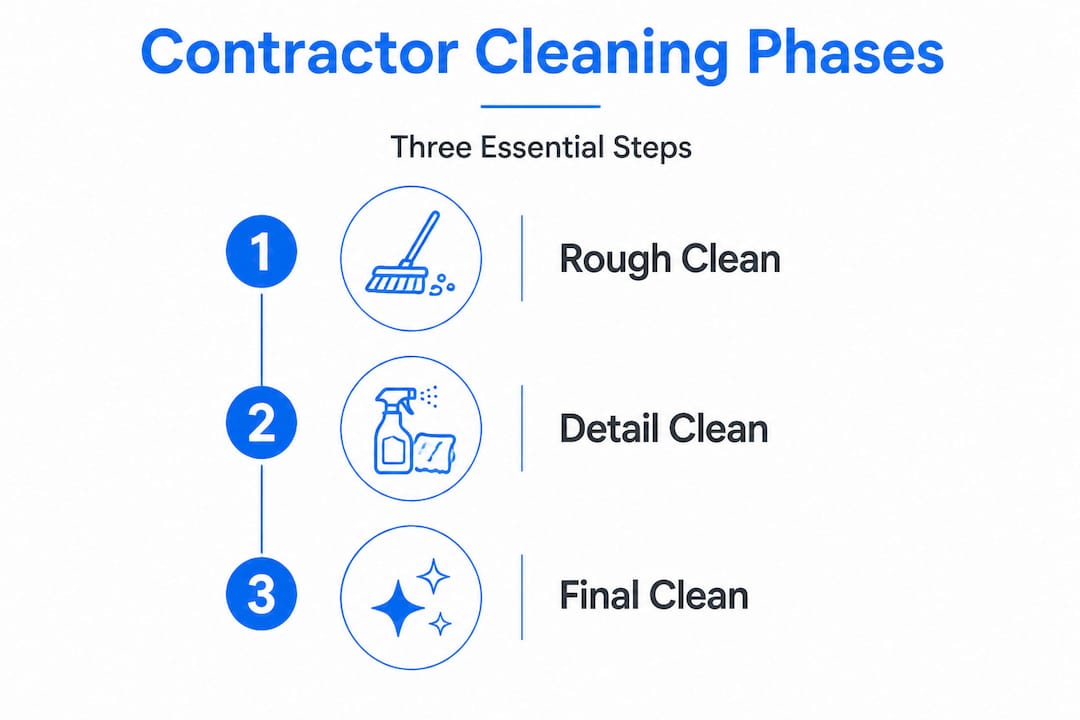
Each phase has a distinct purpose, and skipping any one of them creates gaps in safety and compliance that can surface later.
Phase 1: Rough clean
This is the first phase, and it is the most physically demanding. Crews remove bulk materials including wood scraps, drywall cutoffs, packaging materials, concrete chunks, and any debris left behind by subcontractors. Hazardous materials such as insulation fragments, broken glass, and chemical containers are identified and handled according to disposal regulations. Window and door coverings used to protect surfaces during construction are also removed at this stage.
Phase 2: Detail or light clean
Once bulk debris is gone, the detail clean targets what the eye cannot immediately see. This is where deep cleaning solutions come into play. Crews use HEPA-filter vacuums to pull fine particles from every surface, including walls, ceiling fixtures, window frames, and vents. Construction film is removed from glass. Adhesive residues are treated with appropriate solvents. Grout lines are cleaned, surfaces are wiped down, and any remaining residue is addressed with the correct cleaning agent for each material type.
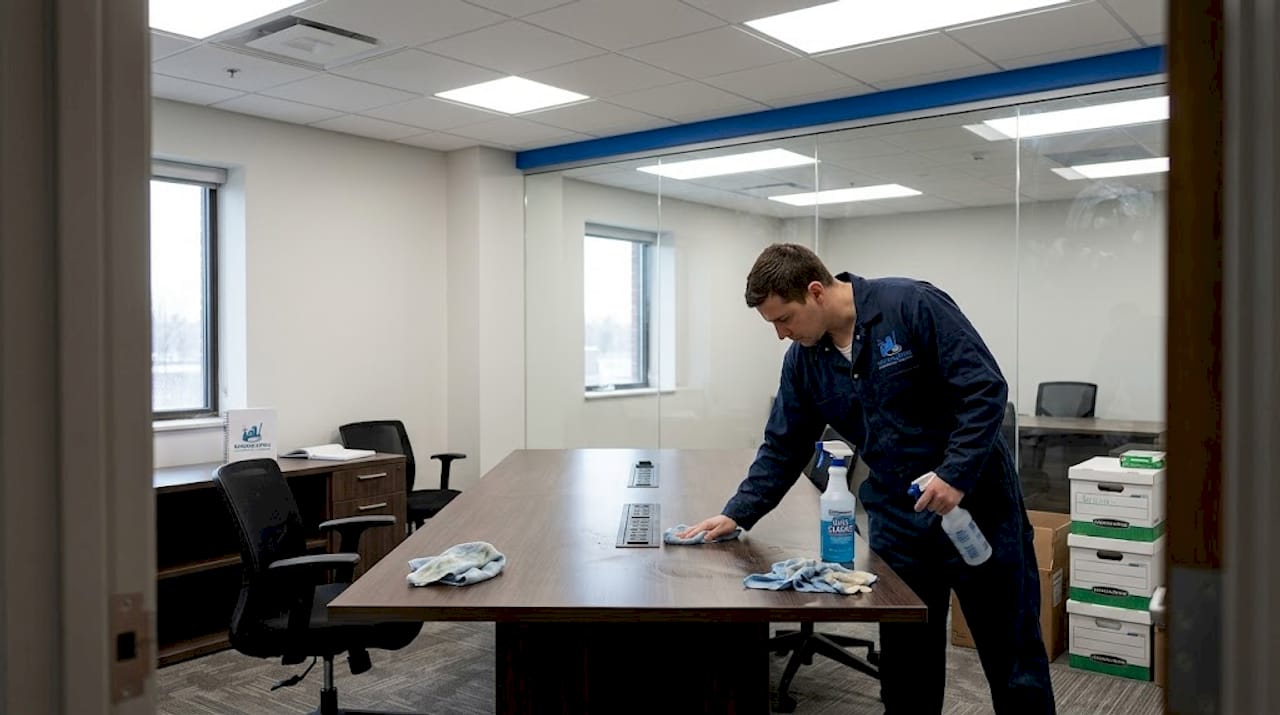
Phase 3: Final or punch clean
This phase happens immediately before the space is handed off for occupancy or inspection. Think of it as the quality-control pass. Floors are polished or buffed, fixtures are inspected and spot-cleaned, restrooms are sanitized to occupancy standards, and any areas that need additional attention after the detail clean are addressed. This is also when the move-in cleaning process aligns with the contractor cleaning phase, ensuring the space is truly ready for tenants.
| Phase | Primary goal | Key tasks | Risk if skipped |
|---|---|---|---|
| Rough clean | Remove bulk debris and hazards | Debris hauling, hazmat ID, cover removal | Safety hazards remain, debris damages surfaces |
| Detail/light clean | Deep surface cleaning | HEPA vacuuming, residue removal, vent cleaning | Air quality violations, surface damage discovered later |
| Final/punch clean | Inspection readiness | Polish, sanitize, spot-check | Failed inspection, tenant move-in delays |
Here is the step-by-step sequence you should verify with any contractor cleaning provider:
- Pre-cleaning site walk to identify hazardous materials
- Debris removal and regulated waste disposal documentation
- HEPA vacuum sweep of all surfaces, fixtures, and HVAC components
- Chemical residue treatment appropriate to each surface type
- Window, glass, and fixture cleaning with non-damaging solvents
- Final sanitization and floor finishing
- Written sign-off on each completed phase
Pro Tip: Always request HEPA filtration documentation from your cleaning contractor before they begin work. If their equipment does not include certified HEPA filters, they are recirculating fine particles and potentially making air quality worse, not better.
Now that you understand how the process unfolds, let's examine how documentation and compliance fit in.
Documentation requirements for cleaning contractors
Documentation is the part of contractor cleaning that most property managers overlook until something goes wrong. A well-executed cleaning job with no paper trail is almost worthless when an inspection fails or a tenant dispute arises. As post-construction cleaning services makes clear: for occupied renovations, you must contract directly and require phased bids, HEPA proof, and final walkthrough docs to prevent disputes and failed inspections.
What does that look like in practice? Here is what every property manager should request before signing a contractor cleaning agreement:
- Phased bid documentation: The bid should list each cleaning phase separately with its own scope, timeline, and cost. A single lump-sum bid for post-construction cleaning is a red flag. It usually means the contractor is not actually planning a phased approach.
- HEPA filtration certification: Ask for documentation confirming that all vacuum and air filtration equipment meets HEPA filter standards. Equipment specifications or manufacturer certifications are acceptable.
- Safety data sheets: For any chemical solvents used during the detail clean, the contractor should supply safety data sheets confirming the products are appropriate for the surfaces being cleaned and safe for the facility's occupants.
- Hazardous waste disposal records: If the site involves any regulated materials, you need written proof that disposal was handled correctly. This protects you from liability if disposal issues surface later.
- Final walkthrough sign-off: After the punch clean, the cleaning contractor should conduct a documented final walkthrough with your facility manager. This creates a shared record of what was completed, who approved it, and when.
Reviewing the move-out workflow documentation process can give you additional insight into how professional cleaning documentation protects both parties in a handoff scenario. Similarly, the tenant move-out guide offers a practical framework for understanding what documentation expectations look like when transitioning spaces.
Pro Tip: Keep copies of all cleaning contracts, phase completion records, and HEPA documentation in your facility's compliance file for a minimum of three years. If a dispute arises six months after a contractor cleaning engagement, you will want every document on hand.
Documentation is just one safeguard. But how do you evaluate cleaning quality and cost against your facility's needs?
Evaluating cleaning quality and cost for contractors
Choosing a contractor cleaning provider based on price alone is one of the most common and costly mistakes property managers make. A low bid that skips proper phasing, uses uncertified equipment, or provides no documentation will ultimately cost more in inspection failures, rework, and liability than a thorough, well-documented service.
Post-construction cleaning is a specialized, phased service, and evaluating bids requires a more structured approach than comparing numbers on a spreadsheet.
Here is a comparison of what separates a quality contractor cleaning bid from a problematic one:
| Evaluation factor | Strong bid | Weak bid |
|---|---|---|
| Phased scope | Each phase listed with detail | Single line item for "post-construction cleaning" |
| Equipment certification | HEPA documentation provided | No equipment specifications |
| Safety compliance | Safety data sheets included | Verbal assurance only |
| Scheduling | Phase-by-phase timeline provided | "We'll get it done" |
| Walkthrough process | Final inspection built into contract | No walkthrough mentioned |
| Insurance and licensing | Certificates attached | Not provided unless asked |
Beyond the bid comparison, the cost drivers for contractor cleaning depend on several specific factors:
- Facility size and complexity: Larger spaces with multiple floors, specialized HVAC systems, or sensitive surfaces require more time and specialized equipment
- Scope of construction work: A full gut renovation generates significantly more debris and residue than a partial office refresh
- Specialized equipment required: High-reach cleaning for warehouse ceilings or HEPA air scrubbers for highly contaminated spaces adds legitimate cost
- Geographic location: Labor costs vary by market, and some regions have stricter disposal regulations that affect overall pricing
When you evaluate contractor bids, use phased documentation and equipment certification as your primary quality filters. Price becomes much easier to evaluate once you know each bidder is offering the same scope of work. Familiarizing yourself with commercial cleaning standards for your facility type will also give you a benchmark against which to measure any bid you receive.
Facilities with fully documented, phased post-construction cleaning consistently show lower rates of inspection failure and fewer occupancy-related disputes. That is not a coincidence. It is the direct result of treating contractor cleaning as the compliance-critical process it actually is.
Having explored quality and cost, let's see what most guides miss about contractor cleaning.
Why most guides overlook the risks in contractor cleaning
After working with property managers across the country, here is what we notice consistently: most guides on contractor cleaning focus almost entirely on the visible result. Does it look clean? Are the floors shiny? Is the glass streak-free? These are reasonable questions, but they are the wrong starting point.
The real risks in contractor cleaning are invisible. Fine silica particles suspended in air. Adhesive solvent residues on HVAC intake surfaces. Fiberglass fragments embedded in ceiling tile joints. None of these show up in a visual walkthrough, but all of them can trigger air quality violations, tenant health complaints, and regulatory enforcement.
The hidden cleaning benefits of a properly phased contractor cleaning go far beyond aesthetics. A well-documented, HEPA-compliant cleaning creates a legal record of due diligence. If a tenant files a complaint about air quality six months after move-in, that documentation is your protection.
What we find equally troubling is how rarely property managers are advised to require phased bids, HEPA proof, and final walkthrough docs to prevent disputes and failed inspections. This is not optional guidance for large facilities. It is the minimum standard for any commercial space that will be occupied by employees, customers, or tenants after construction work.
The uncomfortable truth is that most failed post-construction inspections are not caused by bad cleaning. They are caused by inadequate scoping, uncertified equipment, and missing documentation. Those are all things you control from the moment you issue a request for a cleaning bid.
Pro Tip: Never accept a cleaning bid without clear safety and compliance documentation attached. A contractor who cannot provide HEPA certification and a phased scope before the job starts will not be able to provide documentation after the fact when you need it most.
Find trusted contractor cleaning services with Sparklepro
If reading this has made you rethink your current approach to contractor cleaning, you are not alone. Property managers across the U.S. are realizing that post-construction cleaning requires the same level of scrutiny as any other compliance-critical facility service.
Sparkle Pro Commercial Cleaning specializes in phased post-construction cleanouts for commercial facilities, with fully licensed and insured crews trained in safety compliance and documentation requirements. Whether your facility is in the mid-Atlantic region, New England, or the Northeast, our regional teams bring local knowledge and national standards to every job. Explore our services for Delaware commercial cleaning, Massachusetts commercial cleaning, and New Jersey commercial cleaning to connect with a specialist who understands your market. Request a quote or schedule a site evaluation today and take the guesswork out of your next contractor cleaning engagement.
Frequently asked questions
What makes contractor cleaning different from regular janitorial services?
Contractor cleaning uses a phased approach designed to remove construction debris, dust, and hazards for safe occupancy, while regular janitorial services focus on routine maintenance of already-occupied spaces. The phased cleaning process includes specialized equipment like HEPA vacuums and regulated waste handling that standard janitorial work does not require.
What documents should a property manager request during post-construction cleaning?
Property managers should request phased bids, HEPA filter certification, and final walkthrough documentation to protect against incomplete work and failed inspections. Requiring these documents upfront prevents disputes and creates a compliance record for your facility files.
How can I ensure my facility passes inspection after contractor cleaning?
Insist on a final walkthrough with written documentation and proof of air quality compliance from your cleaning contractor before accepting the completed job. Final walkthrough documentation creates a shared record that protects both parties if inspection issues arise.
Why is HEPA filtration important in post-construction cleaning?
HEPA filtration captures fine particles as small as 0.3 microns, including silica dust and fiberglass fragments that standard vacuums push back into the air. Requiring HEPA proof from your cleaning contractor is essential for meeting air quality standards and protecting occupant health after construction work.