
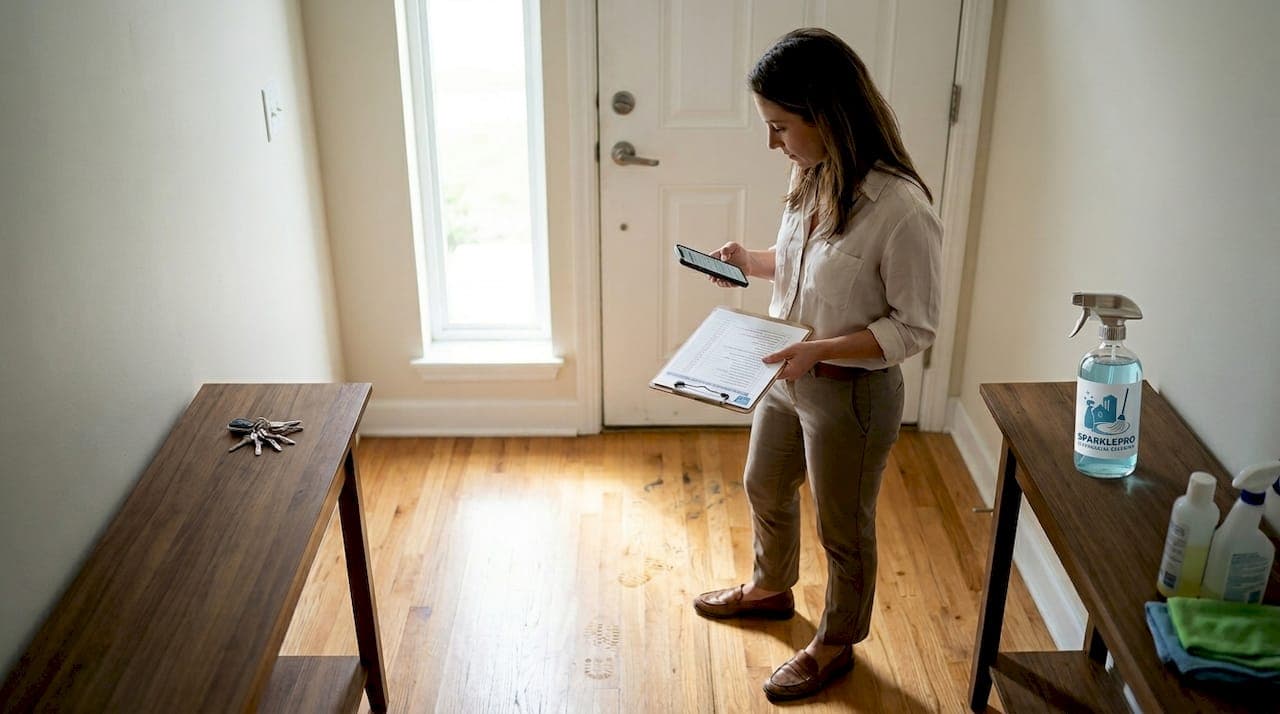
Every day a unit sits empty after a tenant leaves, you lose money. Vacancy costs pile up fast, and if your cleaning and make-ready process is slow or disorganized, those days stretch into weeks. A solid move-out cleaning workflow is not just about making the unit look good. It is about protecting your revenue, maintaining your property standards, and getting a qualified new tenant in the door as quickly as possible. This guide walks you through every phase of the process, from the 30-day notice all the way through final handover, with practical steps you can start using right away.
Table of Contents
- Understanding the move-out cleaning workflow
- Preparation: Pre-move-out essentials for a smooth transition
- Step-by-step deep cleaning and make-ready process
- Verification and handover: Inspection and minimizing vacancy
- What most property managers miss about move-out cleaning
- Simplify your next move-out: Professional help available
- Frequently asked questions
Key Takeaways
| Point | Details |
|---|---|
| Phased cleaning workflow | Move-out cleaning involves several defined stages from tenant notice to final handover for maximum efficiency. |
| Preparation is key | Early communication and pre-inspections help speed up turnover and prevent costly surprises. |
| Cleaning timing matters | Scheduling cleaning after repairs minimizes wasted effort and supports fast marketing and leasing. |
| Thorough inspection reduces vacancy | A detailed quality assurance phase ensures units are truly move-in ready, shrinking vacant days. |
Understanding the move-out cleaning workflow
Before you can speed up turnover, you need to understand how the phases connect. According to a phased turnover process, move-out cleaning workflows follow a structured sequence that keeps tasks from overlapping or getting dropped. Most professional property managers work within a 14 to 21-day total turnover window. Each day in that window has a purpose.
Here is a breakdown of the key phases and what happens in each one:
| Phase | Key tasks | Typical timeline |
|---|---|---|
| Pre-move-out | Send instructions, schedule inspection, book vendors | Day 1 to Day 30 before move-out |
| Move-out day | Final walkthrough, key return, condition documentation | Move-out date |
| Make-ready | Repairs first, then deep cleaning | Days 1 through 7 |
| Marketing overlap | Photos, listing updates, showing scheduling | Days 5 through 14 |
Cleaning typically starts on Day 5 PM, once the bulk of repairs are finished, and a standard unit takes 4 to 6 hours to deep clean properly. That timing matters because rushing cleaning before repairs are done just means rework.
Why does an efficient workflow matter? Here are the core reasons:
- Minimize vacancy: Every extra day adds direct revenue loss
- Maintain standards: Consistent cleaning protects your property value and reputation
- Reduce costs: Organized workflows cut down on vendor overtime and emergency calls
- Boost tenant satisfaction: New tenants who walk into a clean, ready unit are more likely to renew
A well-run commercial floor cleaning process is one piece of this larger puzzle, but it only delivers value when it fits into the right sequence. If you want to tighten your process, start by getting clear on cleaning terms for managers so you can communicate precisely with vendors and staff.
Preparation: Pre-move-out essentials for a smooth transition
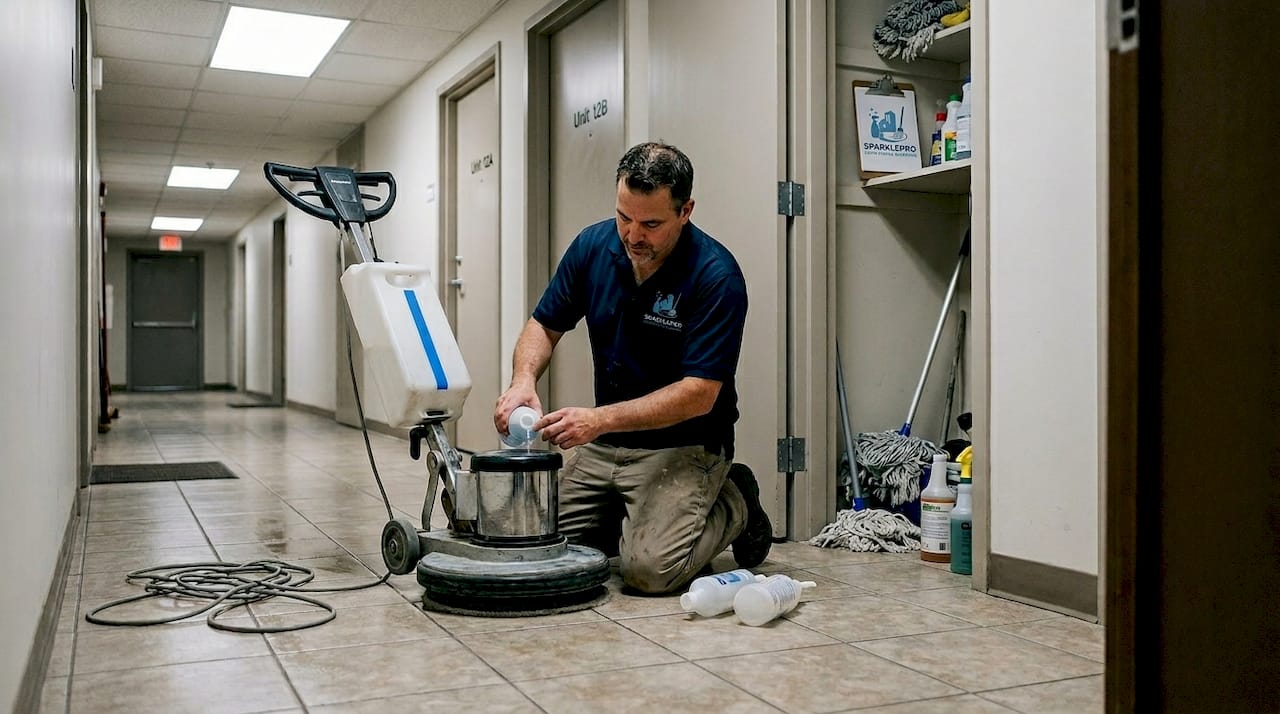
The groundwork you lay before the tenant even leaves determines how fast everything moves once they're gone. A 30-day notice triggers the turnover process, and that month is your best asset. Use it.
Here is a numbered sequence for effective pre-move-out preparation:
- Send a formal notice acknowledgment to the tenant confirming their move-out date and your expectations for the unit's condition
- Distribute a cleaning expectations checklist so tenants know what they are responsible for versus what your team will handle
- Schedule a pre-move-out inspection at least 14 days before the last day to identify issues that need vendor attention
- Book your cleaning crew and repair vendors in advance so they are confirmed and available on Day 1 after move-out
- Review your lease terms for any tenant-responsible cleaning or repair clauses so you know your legal standing before disputes arise
Communication is the difference between a smooth transition and a chaotic one. When tenants know what is expected upfront, they are far less likely to leave you with surprises. That means less time negotiating and more time executing.
A thorough review of your facility maintenance checklist at this stage can help you catch issues before they become costly post-vacancy repairs.
Pro Tip: During the pre-move-out inspection, photograph and document every existing issue. This protects you legally and gives your repair vendors a head start so they can line up materials before move-out day even arrives.
Getting clear on terminology with your cleaning vendors at this stage also pays dividends. When everyone uses the same language around scope and standards, there are fewer misunderstandings on the day the crew shows up.
Step-by-step deep cleaning and make-ready process
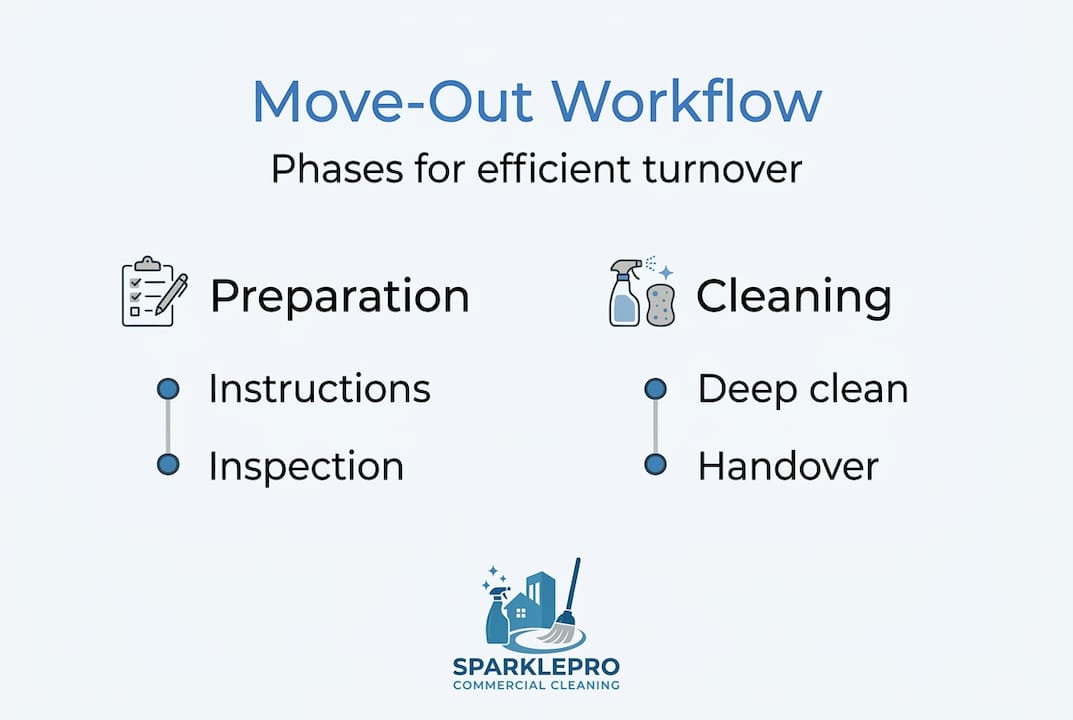
Once the tenant is out and your repair crew has had their first pass at the unit, it is time to clean. The make-ready phase runs Days 1 through 7, with cleaning scheduled for Day 5 PM after repairs wrap up, covering a thorough deep clean in 4 to 6 hours.
Follow this sequence to keep things moving:
- Remove all trash and leftover belongings from every room, closet, and outdoor space
- Wipe down all surfaces including walls, baseboards, cabinet interiors, light switches, and door handles
- Deep clean the kitchen including appliance interiors (oven, microwave, refrigerator), countertops, and sinks
- Sanitize bathrooms completely including grout lines, toilet bases, shower doors, and exhaust fans
- Clean and treat all floors using the right method for each surface type, from tile to hardwood to carpet
- Clear air vents and replace filters to ensure HVAC is not circulating dust into your freshly cleaned unit
- Clean windows, tracks, and blinds inside and out for a move-in-ready finish
Here is how DIY compares to professional cleaning at this stage:
| Factor | DIY cleaning | Professional cleaning |
|---|---|---|
| Time | 8 to 12+ hours | 4 to 6 hours |
| Cost | Lower upfront, higher error risk | Predictable, often all-inclusive |
| Consistency | Variable, team-dependent | Standardized checklists |
| Risk | Missed items delay re-rental | Accountability and re-clean guarantees |
For larger properties or units with significant wear, hiring contractors consistently reduces both risk and overall cost when you account for rework and extended vacancy. A review of janitorial service examples by facility type can help you match the right service tier to your property needs.
Pro Tip: Schedule your marketing photographer for the same day as post-cleaning final touches, not after. Even a one-day overlap between cleaning completion and listing photos can cut your vacancy window by several days.
Verification and handover: Inspection and minimizing vacancy
Cleaning is done. Now comes the step most managers underestimate: the final inspection before handover. Overlapping your marketing with this phase is one of the most effective ways to reduce your total days vacant.
Areas that cleaning crews and property managers most commonly overlook include:
- Baseboards and crown molding where dust builds up but rarely gets wiped
- Inside appliances like the dishwasher filter, dryer drum, and refrigerator door seals
- HVAC filters and vent covers which affect air quality and new tenant first impressions
- Light fixtures and ceiling fans where grime accumulates unseen until a bright day reveals it
- Sliding door tracks and window sills that collect debris and mold if ignored
Vacancy is expensive. Even modest-rent units can cost $50 to $100 per day or more in lost income when you factor in carrying costs, utilities, and lost lease revenue. Getting every item on your checklist done right the first time is not perfectionism. It is math.
Digital documentation is your best friend at this stage. Use timestamped photos from your final walkthrough inspection to record the unit's condition before handing over keys. This protects you against future disputes and gives you a quality benchmark for your cleaning vendors.
Once the inspection is signed off, initiate the new tenant move-in process immediately. Send the welcome packet, confirm the move-in date, and activate the lease. Speed here is everything.
What most property managers miss about move-out cleaning
Here is the uncomfortable truth: following the checklist is not the same as executing the checklist. Most move-out cleaning breakdowns are not about missing a step on paper. They happen because no single person owns each step, weather delays a repair vendor, or a communication gap between your cleaning crew and your leasing team means nobody knew the unit was ready for photos.
Property managers who have managed dozens of turnovers will tell you that the checklist is a floor, not a ceiling. The real skill is building in advanced cleaning workflows with backup plans for every bottleneck. Who is the backup vendor if your primary cleaning crew cancels? What happens if a repair reveals hidden damage and the timeline shifts by three days?
There is also a hidden benefit to using experienced professional cleaning teams that rarely gets discussed: they often spot maintenance issues that your own staff miss entirely. A thorough cleaning crew will notice water stains under a sink, soft flooring near a toilet, or mold behind an appliance. Catching those early saves you from a far more expensive repair down the line.
Build your turnover process around accountability, not just steps. Assign a named team member to own each phase, set internal deadlines a day ahead of your actual deadline, and do a midpoint check-in rather than waiting until the end to find out something went wrong.
Simplify your next move-out: Professional help available
A well-run move-out cleaning process is one of the strongest levers you have on vacancy rates and property condition. But even the best process benefits from a reliable professional partner who shows up on time, works to a consistent standard, and catches what others miss.
Sparklepro Commercial Cleaning works directly with property managers and building owners across the country to deliver fast, thorough tenant move-out cleaning that keeps your turnovers on schedule. Whether you manage a single building or a large portfolio, our teams are trained for the specific demands of rental property transitions. If you manage properties in California, explore move-out cleaning in California, or if your portfolio is on the East Coast, learn about move-out cleaning in New York. Ready to reduce vacancy and protect your investment? Reach out today for a fast quote.
Frequently asked questions
What tasks are typically included in a move-out cleaning for rental properties?
Move-out cleaning covers kitchens, bathrooms, appliances, walls, floors, windows, air vents, and trash removal, all done to a complete property reset standard.
How long does a professional move-out cleaning usually take?
Professional move-out cleaning typically takes 4 to 6 hours for a standard unit, though larger or heavily soiled units may require additional time.
How can property managers reduce rental vacancy during turnover?
By overlapping cleaning and marketing efforts, property managers can trim several days off their vacancy window and accelerate new tenant placement.
When should a property manager schedule the move-out cleaning?
Schedule cleaning for Day 5 PM after the make-ready repair phase wraps up, so the unit is in final condition before the cleaning crew arrives.