
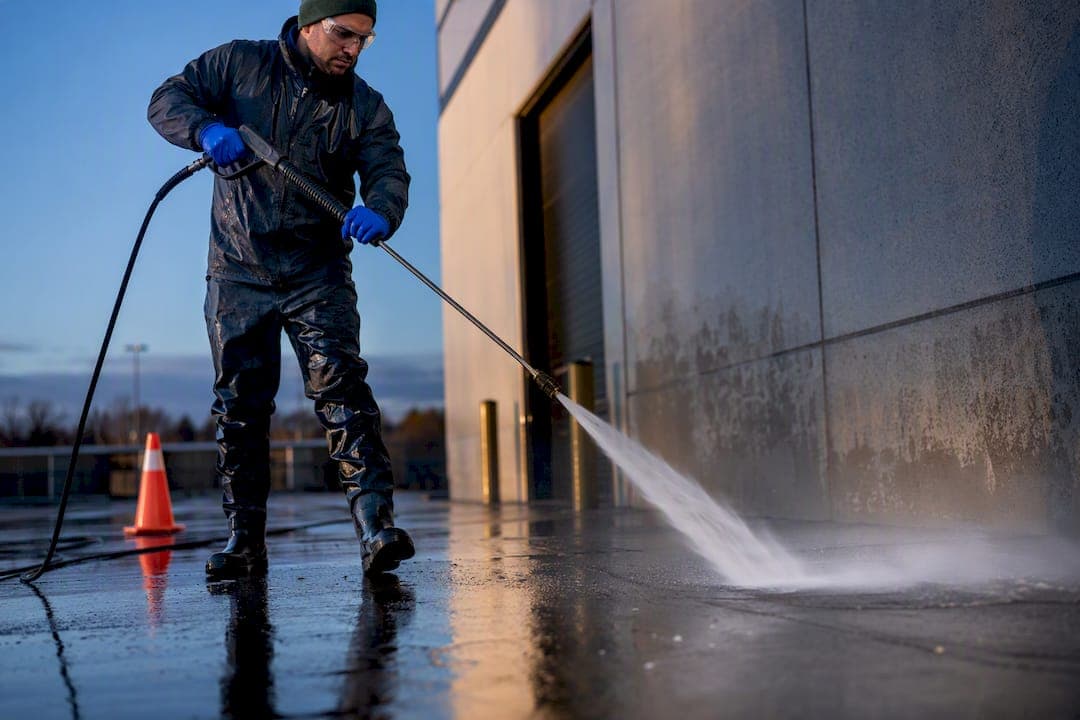
Keep your distance, wear your gear, and treat any skin break as an emergency. That's the entire rulebook in one sentence. The CDC warns that fluid injection injuries look minor and aren't, the CPSC has flagged electrocution risks for decades, and professional commercial cleaning services build every job around that same hierarchy: distance first, protection second, no exceptions.
TL;DR:
- Using a narrow-angle or high-pressure tip too close to the skin can cause injection injuries that require immediate medical attention.
- PPE such as sealed goggles, slip-resistant boots, gloves, and face shields must be checked and worn before starting operations, not after.
- Maintaining a safe distance and avoiding pointing the nozzle at any body part significantly reduces the risk of injury and falls.
- Electric units should be plugged into GFCI outlets and checked regularly, while gas engines must be operated outdoors to prevent carbon monoxide buildup.
- Wastewater containing paint chips, grease, or lead paint must be properly contained, sampled, and disposed of according to local regulations to prevent environmental contamination.
Table of Contents
- Major Hazards: Injection Injuries, Flying Debris, and Falls
- PPE and Pre-Use Equipment Checks
- Safe Operating Procedures That Keep Everyone Clear
- Electrical and Engine Hazards: GFCI and Carbon Monoxide Rules
- Wastewater Handling and Lead Paint Rules You Can't Ignore
- First Aid: What to Do the Moment Something Goes Wrong
- When It's Time to Bring in a Licensed Commercial Crew
- Get Compliant Pressure Washing Without the Guesswork
- Where These Safety Rules Come From
- Sources
Major Hazards: Injection Injuries, Flying Debris, and Falls
A pressure washer stream running at high pressure can break skin the way a nail gun does, except most people don't expect it. The CDC treats any penetration wound from a pressure washer as a medical emergency, because the puncture looks tiny while the jet has already driven water, paint, or bacteria deep into muscle tissue below.
Three scenarios cause the bulk of injuries operators report:
- Testing the spray pattern against a bare hand before starting the job
- Washing toward the off hand while holding a surface steady
- Ricocheting debris (nails, gravel, chipped paint) flying back at the operator's face or shins
Wet concrete, algae-slicked siding, and ladder rungs add a second category of risk entirely. Slips happen fast on a surface you just soaked, and a fall from a ladder while holding a live wand turns one accident into two.
Pro Tip: Never point the nozzle at any part of your body, even to check pressure. Fire test shots into a driveway or dirt patch instead.
PPE and Pre-Use Equipment Checks
Gear up before you turn the water on, not after the first close call. An institutional pressure washer SOP lays out PPE requirements by pressure band, and the baseline for almost any commercial job includes:
- Sealed, indirect-vent goggles meeting ANSI Z87.1, not open safety glasses
- Waterproof boots with slip-resistant tread, steel toe on job sites with debris
- Cut-resistant, water-repellent gloves that keep grip on a wet trigger
- Face shield and hearing protection once you're running higher-pressure gas units or working alongside other loud equipment
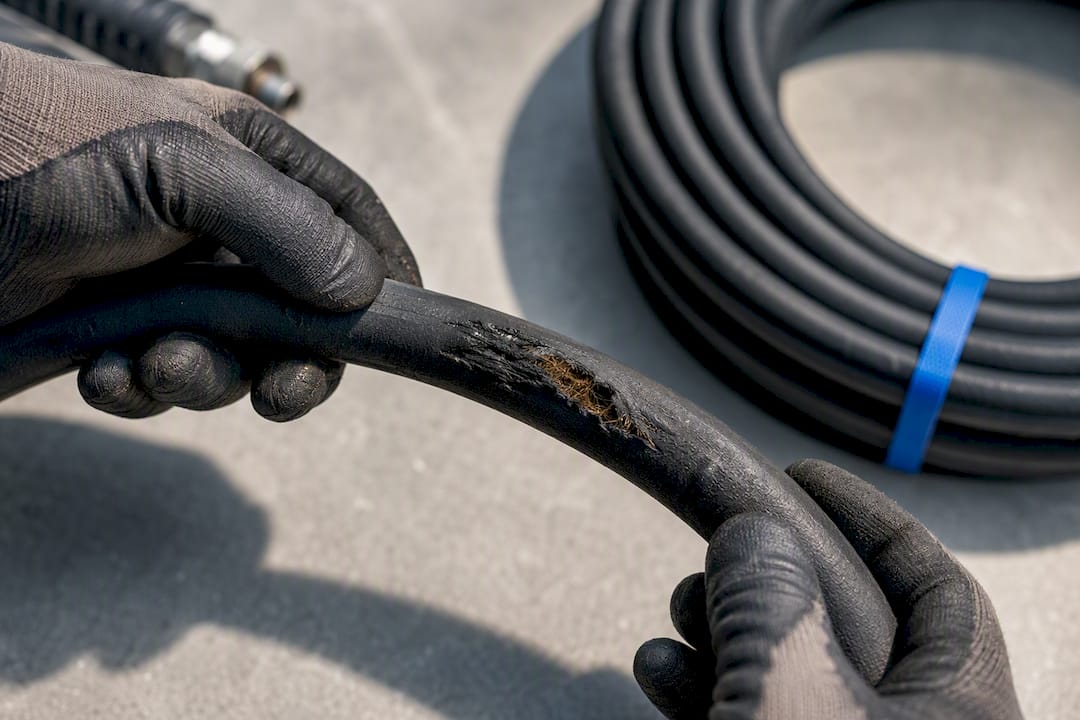
Before the trigger gets pulled, walk the equipment: check hose integrity for bulges or abrasion, confirm fittings are snug, test the wand's trigger lock, inspect the cord and GFCI on electric units, and verify the fuel system and water supply are sound as advised in this Guida manutenzione attrezzature a noleggio. Commercial crews document this walk-through every time, and that habit alone is tied to fewer on-site incidents according to the same institutional SOP.
Retire a hose the moment you see fraying, kinks, or a soft spot. A blown high-pressure hose under load is its own projectile hazard.
Safe Operating Procedures That Keep Everyone Clear
Distance is your throttle. That's the single biggest thing new operators get backwards, according to CDC guidance on pressure washer use, because force drops off fast as you back away, and closing that gap gradually is far safer than starting close and hoping for control.
- Start with a wide-angle 40 degree nozzle from a few feet out and only narrow the tip or step closer once you've seen how the surface responds.
- Reserve a 0 degree tip for specialty jobs like tough stain removal on concrete. Manufacturer safety guidance recommends against using it for routine cleaning altogether.
- Walk the entire work zone before starting: clear cords, hoses, toys, planters, anything that could trip a foot or fly off a surface under pressure.
- Post visible signage, block off the area, and get children and pets indoors before the water starts moving.
- Use extension wands or a lift for anything above reach. Never stand on a ladder while holding a live wand.
A wet ladder combined with recoil force from the trigger is a fall waiting to happen. Site managers should treat that combination as a hard no, not a judgment call left to whoever's holding the wand that day. A construction cleaning safety checklist is a useful reference if you're setting up a formal exclusion zone on an active job site.
Secure loose objects nearby too. Anything light enough to move under a 3,000 PSI stream can become debris fast, and that includes patio furniture, planters, and small tools left on a job site.
Electrical and Engine Hazards: GFCI and Carbon Monoxide Rules
Electric units and gas engines fail in completely different ways, and both failures can kill.
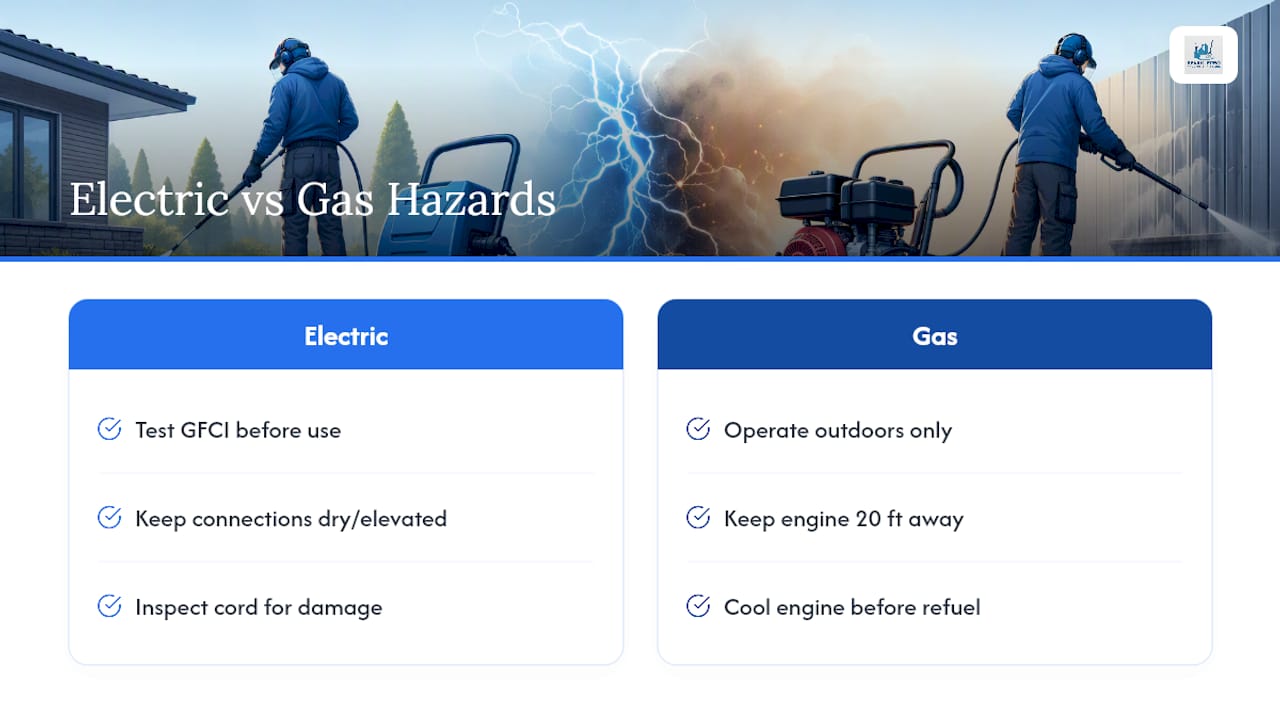
On electric washers, always plug into a GFCI-protected outlet and test it before you start. Keep every connection off the ground and away from puddles, and inspect the cord for nicks or exposed wire each time you use it. The CPSC has issued specific warnings about electrocution risk tied to pressure washers, and grounding pins exist for a reason. Never file one down to fit an old outlet.
Gas engines carry a different killer: carbon monoxide. Run them outdoors only, and keep the engine at least 20 feet from doors, windows, and any vent, following NIOSH exhaust guidance on how fast CO can accumulate near openings. Let the engine cool before refueling, and never top off a hot tank.
Wastewater Handling and Lead Paint Rules You Can't Ignore
Wash water isn't just water once it's picked up detergent, grease, or paint chips. Many municipalities, including Portland's Bureau of Environmental Services, prohibit sending that runoff straight into a storm drain. The rule of thumb operators follow nationwide:
- Block or divert storm drains before you start any wet cleaning job
- Screen out solids and collect the runoff rather than letting it sheet across a parking lot
- Verify pH is within an appropriate range before discharging collected water to a sanitary sewer, and only after confirming your local utility accepts it
- Use absorbent pads for any hydrocarbon spills (oil, grease) rather than trying to rinse them away
If the surface you're cleaning has lead-based paint, the containment requirement isn't optional. The EPA's RRP rule applies the moment pressure washing disturbs lead paint, which means isolating the work area and following specific waste-handling steps before, during, and after the job. Practical setups on commercial sites often combine sediment screens with a pump-to-collection tank, and dry sweeping loose debris before you ever turn on water cuts down how much wastewater you generate in the first place. When containment logistics start looking bigger than a garden hose and a shop vac can handle, that's the point to call your facility's environmental health and safety contact.
First Aid: What to Do the Moment Something Goes Wrong
Speed matters more than composure here.
- If the skin is broken, apply firm pressure to control bleeding, cover the wound, and get to an emergency room immediately. The CDC is explicit that these wounds must never be treated as ordinary cuts, since the injury below the surface is almost always worse than what you can see.
- For chemical or detergent exposure to the eyes, flush with clean water for at least 15 minutes and seek urgent care. Ask about tetanus status and antibiotic needs when you arrive, since contaminated punctures carry infection risk well beyond the visible wound.
- Shut down the equipment, contain any spilled fuel or chemicals, and give responders clear details about pressure, chemicals used, and time of injury.
Don't wait to see if swelling goes down. High-pressure injection wounds can progress to deep tissue infection within hours, and that window closes fast.
When It's Time to Bring in a Licensed Commercial Crew
Some jobs cross a line where a homeowner-grade setup and good intentions aren't enough. Large volumes of contaminated runoff, any surface with suspected lead paint, work at height, or containment logistics that exceed what a site can manage in-house are the clearest signals to call a professional. Professional commercial cleaning providers work with property managers and facility directors on exactly these calls, operating with a straightforward process: quote, site visit, scheduled cleaning, and client approval, with documentation available to support compliance needs along the way.
— Sales
Get Compliant Pressure Washing Without the Guesswork
Certain commercial cleaning services give property managers and facility directors something a solo contractor often can't: a documented process built around containment and disposal compliance from the first site visit, not an afterthought bolted on after a complaint. That matters most on jobs where wastewater rules or lead-paint containment are in play, and where the paperwork needs to hold up if a municipality ever asks for it.

If your property is due for exterior cleaning and you need a written containment and disposal plan alongside the work itself, request a quote through the Delaware service page or check availability on the Washington state landing page for West Coast facilities. A site visit gets you a scope, a schedule, and a plan you can hand to your own compliance team before a single hose gets connected.
Where These Safety Rules Come From
These guidelines draw on primary sources every commercial operator should bookmark:
- CDC pressure washer safety guidance on injection injuries and emergency care
- CPSC warning on electrocution and consumer hazards
- EPA's RRP rule for lead-paint containment
- City of Portland wastewater rules as a municipal disposal example
- An institutional pressure washer SOP for PPE and pre-use checklists
Sources
- Pressure Washer Safety | Natural Disasters | CDC
- How do RRP requirements apply to pressure washing? | EPA
- Pressure washing rules | City of Portland Bureau of Environmental Services
- Pressure Washer SOP (University/Institutional SOP)
- Commission issues pressure washer warning | CPSC