
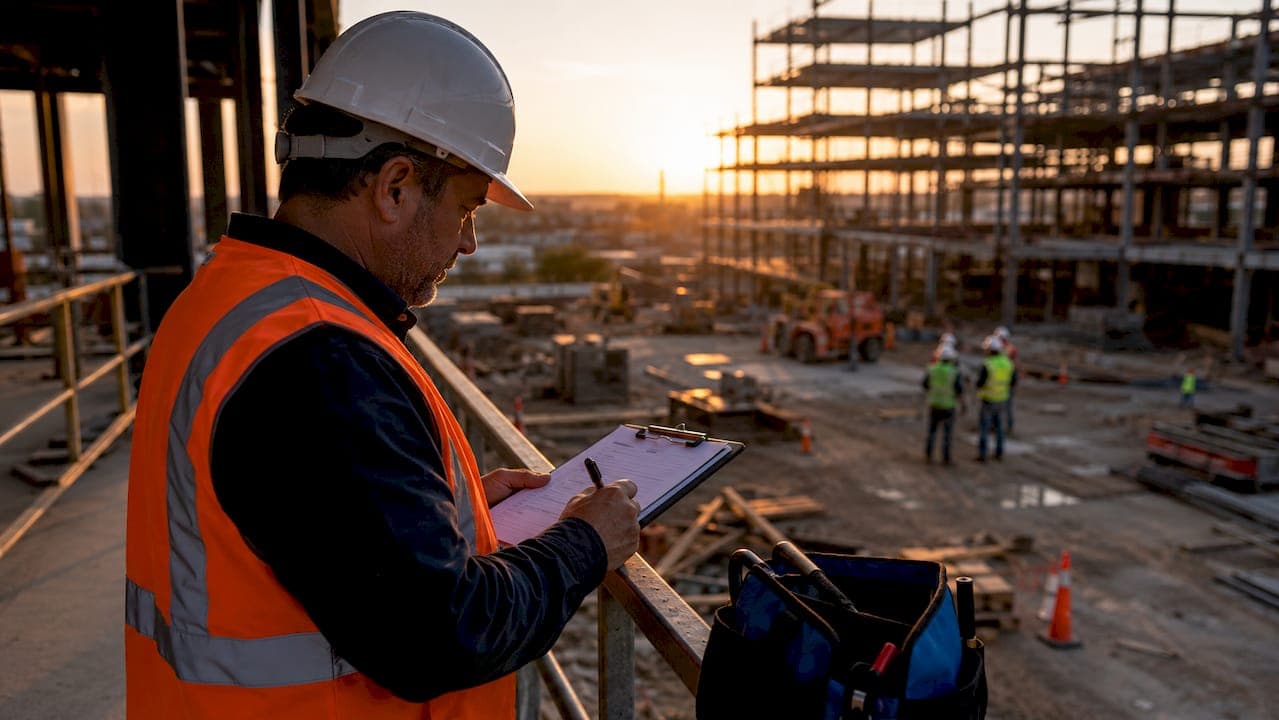
Construction cleaning safety requirements are the OSHA-mandated standards that protect workers from silica dust, chemical exposure, falls, and other hazards during and after construction projects. The governing framework is 29 CFR 1926, which covers everything from housekeeping under §1926.25 to respirable crystalline silica controls under §1926.1153. Site managers, safety compliance officers, and contractors who treat cleaning as an afterthought routinely face the most preventable injuries on their projects. Getting these protocols right from day one is not optional. It is a legal obligation and a direct measure of site leadership.
What are the essential PPE and engineering controls for construction cleaning?
Personal protective equipment and engineering controls form the two-layer defense that keeps cleaning crews safe. OSHA's hierarchy of controls places engineering controls above PPE, meaning you address hazards at the source before relying on a worker's respirator. That distinction matters because PPE fails when it is worn incorrectly, damaged, or simply not used.
Required PPE for cleaning crews
Every cleaning crew member working on a construction site needs the following:
- Respirators: N95 minimum for general dust; P100 half-face or full-face respirators for silica-heavy tasks
- Safety glasses or goggles: Rated for impact and chemical splash depending on the task
- Chemical-resistant gloves: Nitrile for most cleaning agents; heavier rubber gloves for caustic chemicals
- Steel-toed boots: Required on all active construction sites per OSHA 29 CFR 1926
- High-visibility vests: Mandatory when cleaning crews share space with active equipment or vehicle traffic
PPE is the last line of defense, not the first. A crew member wearing a respirator while sweeping dry debris is still being exposed to silica at dangerous levels if no engineering control is suppressing the dust.
Engineering controls that come first
HEPA-filtered vacuums are the single most critical engineering control in post-construction cleaning. HEPA filters capture 99.97% of particles at 0.3 microns, which covers the respirable silica range that causes silicosis. That capture rate means silica dust does not recirculate into the air workers breathe. Wet suppression methods, such as misting surfaces before sweeping, also reduce airborne particulate significantly. Ventilation systems that exhaust contaminated air out of enclosed spaces complete the engineering layer.
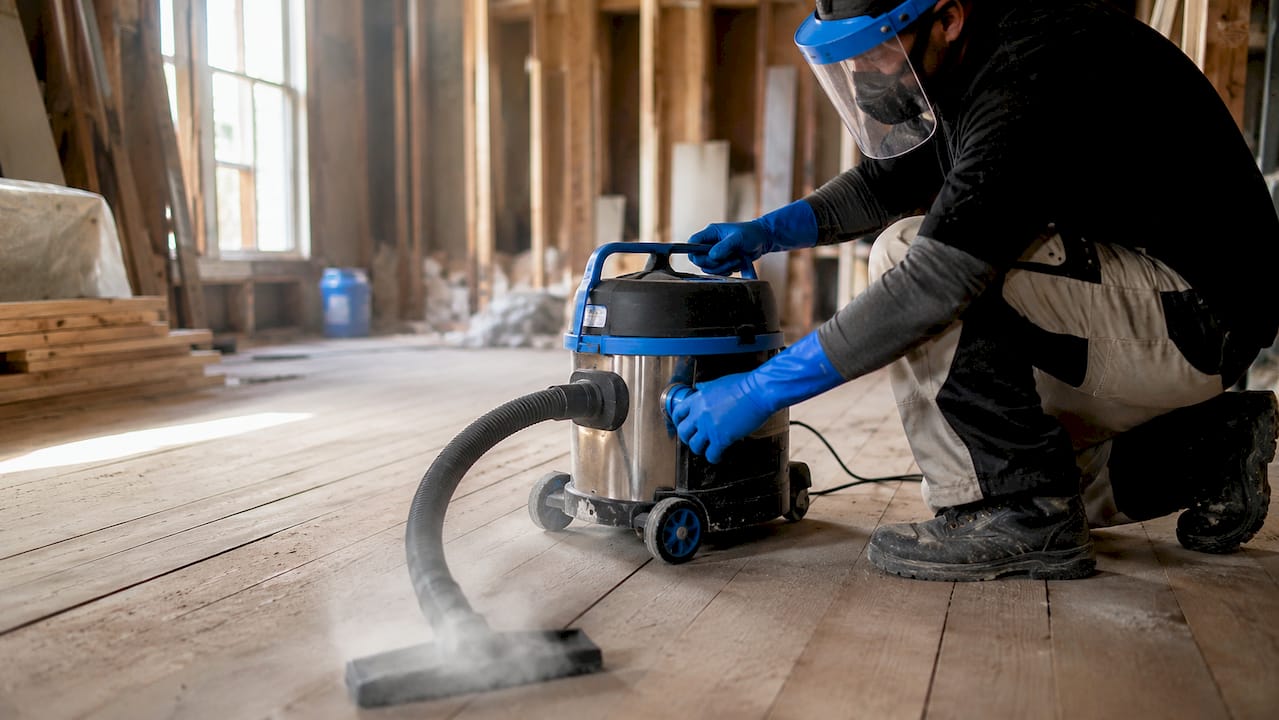
OSHA sets the permissible exposure limit (PEL) for respirable crystalline silica at 50 µg/m³ over an 8-hour shift, with an action level of 25 µg/m³. Any cleaning task that generates silica dust requires both engineering controls and respiratory protection simultaneously.
Pro Tip: Inspect HEPA vacuum filters and seals before every shift. A cracked housing or clogged filter bypasses the 99.97% capture rating entirely, turning your primary engineering control into a false sense of security.
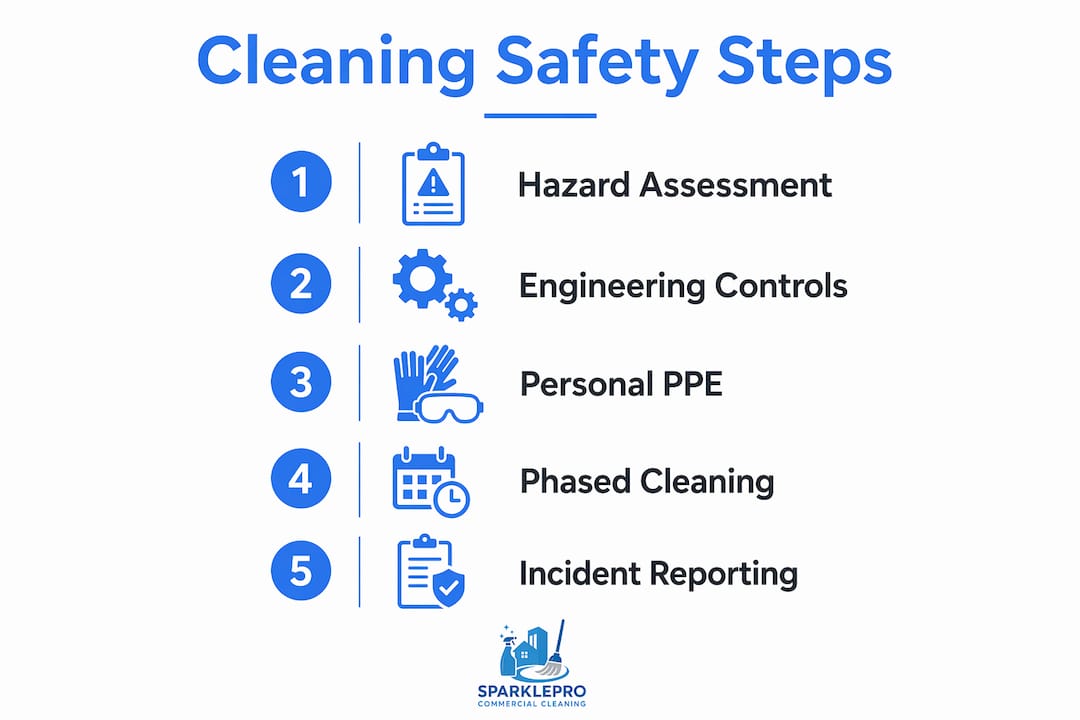
How to conduct pre-cleaning hazard assessments on construction sites
Pre-job hazard assessments are the foundation of every safe cleaning operation. OSHA requires documented hazard assessments before cleaning crews begin work on construction sites, and those assessments must be site-specific, not generic. A checklist borrowed from a previous project is not a compliant hazard assessment for a new site.
Steps for a compliant pre-cleaning assessment
- Walk the full site with a supervisor. Identify active hazards: open floor penetrations, unsecured materials, wet concrete, and electrical panels without covers.
- Classify hazardous materials. Check for lead paint, asbestos-containing materials, and chemical residues. Signs of asbestos presence in older structures require abatement before any cleaning begins.
- Define restricted zones. Mark areas where cleaning crews cannot enter without additional authorization or PPE upgrades.
- Assign supervision roles. Every cleaning crew needs a designated safety lead who monitors conditions and has authority to stop work.
- Conduct crew orientation. Training must be site-specific and cover the hazards identified in the assessment, not general cleaning procedures from a different industry standard.
- Document everything. Signed hazard assessment forms, training records, and PPE assignments create the paper trail OSHA inspectors will request.
Safety planning and supervision are not one-time events. Conditions on a construction site change daily, which means hazard reviews must happen at the start of every shift.
Pro Tip: Create a near-miss log separate from your incident report. Workers are far more likely to report a close call if it does not trigger a formal injury investigation. That data tells you where your controls are weak before someone gets hurt.
What are the phased post-construction cleaning procedures?
Post-construction cleaning follows three defined phases: rough clean, detail clean, and final clean. Each phase has a distinct hazard profile, required PPE, and engineering controls. Skipping phases or rushing the sequence creates both safety failures and quality failures.
| Phase | Primary focus | Key hazards | PPE required | Engineering controls |
|---|---|---|---|---|
| Rough clean | Debris removal, large waste | Falls, cuts, silica dust | N95/P100, gloves, steel-toed boots, hard hat | HEPA vacuum, wet suppression |
| Detail clean | Surface cleaning, fixtures, windows | Chemical exposure, silica residue | Chemical gloves, safety glasses, P100 respirator | Ventilation, HEPA vacuum |
| Final clean | Touch-ups, polishing, inspection | Residual dust, slip hazards | N95, gloves, safety glasses | HEPA vacuum, damp wiping |
The rough clean phase carries the highest injury risk. Workers remove construction debris, broken materials, and bulk waste while other trades may still be active on site. Fall protection is mandatory when cleaning near open edges or elevated surfaces. HEPA vacuuming during rough clean prevents silica from embedding into HVAC ductwork, which causes long-term indoor air quality problems and expensive remediation after handover.
The detail clean phase introduces chemical hazards. Cleaning agents used on glass, tile, and fixtures require Safety Data Sheets (SDS) on site and crew members trained in chemical handling. Ventilation is critical during this phase, particularly in bathrooms and enclosed mechanical rooms.
The final clean timing matters as much as the work itself. Performing the final clean 24–48 hours before project handover prevents dust from resettling on cleaned surfaces and eliminates the need for rework. Scheduling it too early wastes labor and creates a false compliance record.
How to manage hazardous materials and physical hazards during cleanup
Hazardous materials handling during construction cleanup requires knowing which specific hazards are present and applying the correct mitigation for each. Generic "be careful" instructions do not satisfy OSHA requirements and do not protect workers.
The most common hazards cleaning crews encounter include:
- Respirable crystalline silica: Generated by cutting, grinding, and sweeping concrete or masonry. Requires HEPA vacuuming, wet methods, and P100 respiratory protection.
- Lead paint: Present in pre-1978 structures. Requires lead-safe work practices, specialized PPE, and disposal procedures under EPA RRP rules.
- Chemical residues: Adhesives, sealants, and cleaning agents left by other trades. Require SDS review and appropriate glove and eye protection selection.
- Slippery surfaces: Freshly sealed concrete, wet tile, and polished floors create slip hazards. Non-slip footwear and wet floor signage are required controls.
- Electrical hazards: Exposed wiring and incomplete panel installations require lockout/tagout procedures before cleaning in those areas.
- Ergonomic strain: Repetitive lifting, awkward postures during floor cleaning, and overhead work cause musculoskeletal injuries. Rotate tasks and use mechanical aids for heavy debris.
OSHA §1926.25 housekeeping requirements mandate daily debris removal and spill management to maintain safe access routes. Stray nails, loose boards, and pooled liquids are not minor inconveniences. They are recordable incident triggers waiting to happen.
For industrial site cleaning plans that address these hazards systematically, documented work zone restrictions and rotating crew schedules reduce both exposure duration and injury frequency.
How to implement incident reporting and continuous safety improvement
Incident reporting is the feedback loop that keeps cleaning safety from degrading over time. Near-miss reporting is the leading indicator that most sites underuse. A dropped tool or a near-trip on debris signals a control failure that will eventually produce an injury if left unaddressed.
A functional reporting and improvement system works through four steps:
- Report immediately. Near misses and incidents go to the site safety lead within the same shift, not at the end of the week.
- Investigate the control failure. Identify whether the hazard was unrecognized, inadequately controlled, or the result of a procedure not being followed.
- Correct and document. Update the hazard assessment, retrain affected crew members, and record the corrective action with a completion date.
- Track trends. Review incident and near-miss logs weekly. Patterns reveal systemic gaps in training, equipment, or supervision.
Supervisors are the critical link in this system. Effective supervision during cleaning phases reduces injuries and increases compliance because supervisors catch unsafe practices before they cause harm. A supervisor who corrects a crew member sweeping dry silica-laden concrete without a respirator prevents a future workers' compensation claim and a potential OSHA citation. Video documentation of cleaning operations also supports incident investigations and training reviews by providing an objective record of site conditions and crew behavior.
Key Takeaways
Construction cleaning safety compliance requires engineering controls, phased procedures, documented hazard assessments, and active supervision working together, not independently.
| Point | Details |
|---|---|
| Engineering controls come first | HEPA vacuums and wet suppression must precede PPE in the hierarchy of controls. |
| Three-phase cleaning is mandatory | Rough, detail, and final clean each carry distinct hazards requiring specific protocols. |
| Hazard assessments must be site-specific | Generic checklists do not satisfy OSHA 29 CFR 1926 documentation requirements. |
| Near-miss reporting prevents injuries | Tracking close calls identifies control failures before they escalate to recordable incidents. |
| Final clean timing affects compliance | Scheduling the final clean 24–48 hours before handover prevents dust resettlement and rework. |
What I've learned about cleaning safety that most sites get wrong
The biggest mistake I see on construction projects is treating cleaning as the last task rather than an integrated safety function. Site managers schedule cleaning crews after every other trade has finished, hand them a mop and a HEPA vacuum, and assume the job is done. That approach produces the highest injury rates and the worst air quality outcomes.
The second mistake is over-relying on PPE. A respirator does not eliminate silica exposure. It reduces it. Engineering controls eliminate it. When a site skips wet suppression and HEPA vacuuming because "the crew has respirators," the crew is still being exposed above the OSHA action level of 25 µg/m³. That is a compliance failure and a health failure simultaneously.
Phased cleaning adherence is where I have seen the most dramatic safety improvements. Sites that run a proper rough clean before detail work begins eliminate the bulk of fall and cut hazards before the crew is working in close quarters with chemicals and polished surfaces. The sequence is not arbitrary. It reflects the actual hazard progression of a construction project.
Near-miss reporting transformed safety culture on every project where I have seen it implemented correctly. Workers who know their reports lead to real corrective action start reporting more. That data becomes the most valuable safety tool on the site, more useful than any inspection checklist.
— Sales
Sparkleprocommercialcleaning: professional cleaning built for compliance
Construction sites in Delaware, Massachusetts, Washington, and New Jersey operate under the same OSHA 29 CFR 1926 framework, but local site conditions, project types, and contractor requirements vary significantly. Sparkleprocommercialcleaning deploys trained crews equipped with commercial HEPA vacuum systems and follows documented safety protocols aligned with construction-specific OSHA standards, not general industry cleaning rules.

Every Sparkleprocommercialcleaning engagement begins with a site assessment and a written cleaning plan that maps hazards, assigns PPE, and schedules phased cleaning to match project milestones. Contractors and site managers in Delaware and Massachusetts can request a quote directly and receive a cleaning plan built around their specific compliance requirements, not a generic service package.
FAQ
What OSHA standard governs construction cleaning safety?
OSHA 29 CFR 1926 governs construction cleaning, including §1926.25 for housekeeping and §1926.1153 for respirable crystalline silica. Cleaning crews on construction sites fall under construction standards, not general industry rules under 29 CFR 1910.
What PPE do construction cleaning crews need?
Construction cleaning crews require N95 or P100 respirators, safety glasses, chemical-resistant gloves, steel-toed boots, and high-visibility vests as a baseline. Specific tasks like lead paint removal or chemical cleaning require upgraded PPE based on the site hazard assessment.
How many phases does post-construction cleaning have?
Post-construction cleaning has three phases: rough clean, detail clean, and final clean. Each phase targets different hazards and requires specific engineering controls and PPE to maintain worker safety and air quality.
When should the final clean be scheduled?
The final clean should be scheduled 24–48 hours before project handover to prevent dust from resettling on cleaned surfaces and to avoid rework. Performing it too early wastes labor and creates a false compliance record.
Why is near-miss reporting critical in construction cleaning?
Near-miss reporting identifies control failures before they cause recordable injuries. A near-trip on debris or a dropped tool signals a gap in hazard controls that requires immediate corrective action to prevent escalation.