
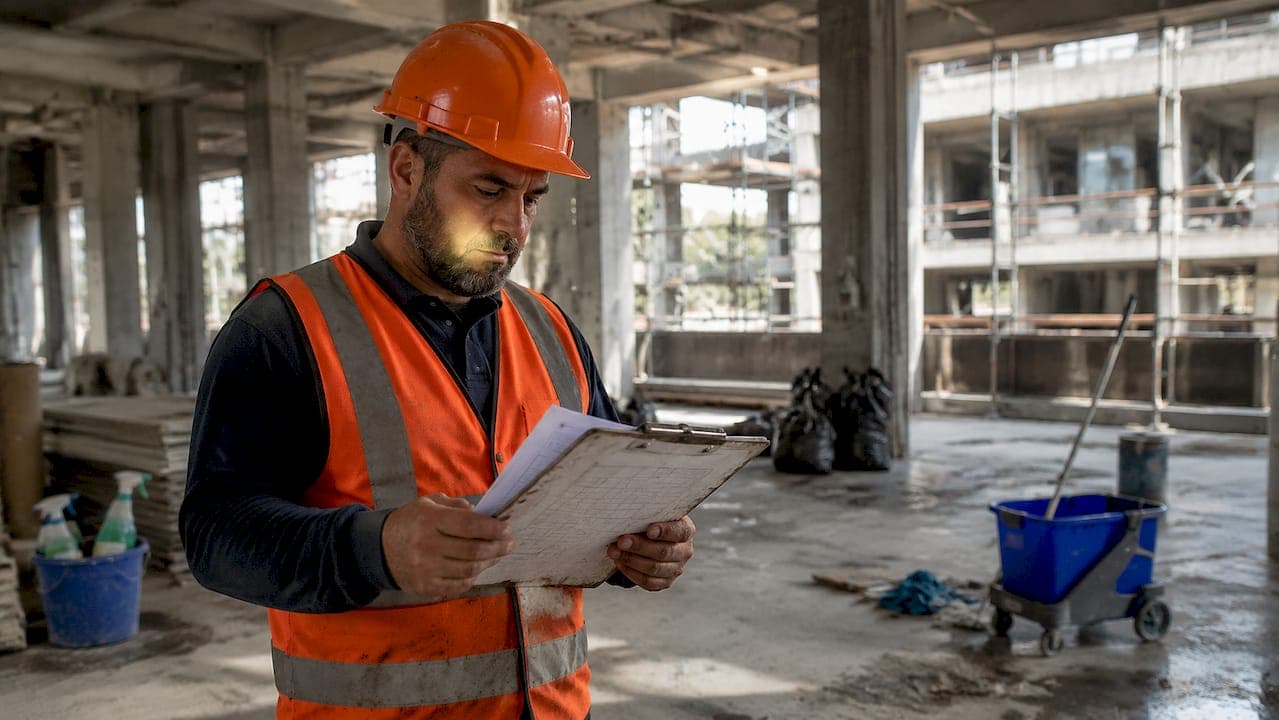
Construction cleaning crew supervision is the process of managing cleaning teams on post-construction sites to deliver timely, thorough, and safe site turnover. The industry term for this discipline is post-construction cleaning management, and it covers everything from phased cleaning sequences to OSHA-compliant safety protocols. Supervisors who apply structured workflows, size crews to square footage, and document every phase consistently avoid the rework and inspection failures that push handover dates back. This guide gives construction professionals, project managers, and site supervisors the specific construction cleaning crew supervision tips needed to run efficient, compliant, and well-documented cleanouts.
What are the best construction cleaning crew supervision tips?
Effective crew supervision starts with matching your team size to the actual scope of the job. Staffing scales directly with square footage: sites under 5,000 sq ft need 2–3 technicians for 1–2 days, sites from 5,000–15,000 sq ft need 4–6 technicians for 2–3 days, and sites from 15,000–30,000 sq ft need 6–10 technicians for 3–5 days. Sites over 60,000 sq ft require custom staffing plans built around zone complexity and trade coordination. Getting this ratio wrong is the most common reason cleaning crews fall behind on general contractor timelines.
Post-construction projects run 20–30% slower than initial estimates because of layout complexity, trade overlap, and recontamination risk. That figure means a job you estimate at three days should be scheduled for four. Build that buffer into every staffing plan before you commit to a handover date.
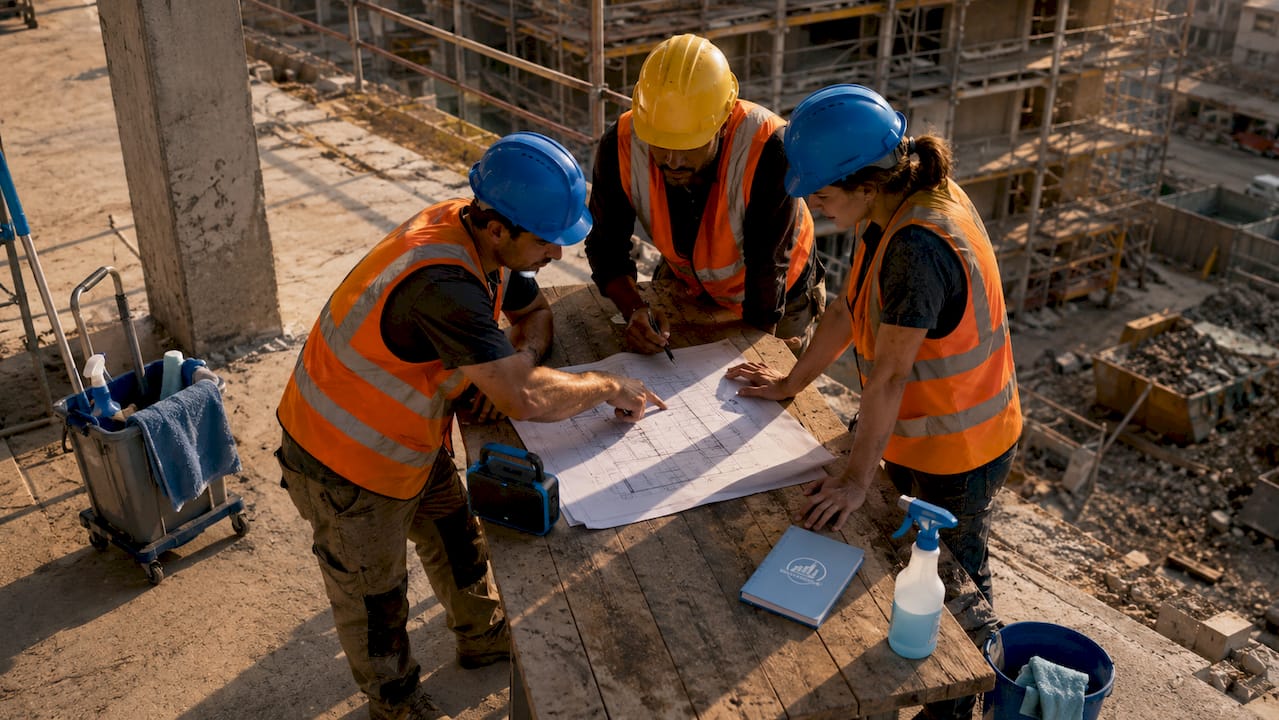
Pro Tip: Assign your most experienced supervisor to any project with more than three active zones. Multi-zone sites require constant sequencing decisions that junior supervisors consistently underestimate.
| Project size | Crew size | Estimated duration |
|---|---|---|
| Under 5,000 sq ft | 2–3 technicians | 1–2 days |
| 5,000–15,000 sq ft | 4–6 technicians | 2–3 days |
| 15,000–30,000 sq ft | 6–10 technicians | 3–5 days |
| Over 60,000 sq ft | Custom plan | Varies by zone |
For complex industrial or multi-floor projects, a detailed industrial site cleaning plan built before mobilization prevents the mid-job scrambles that waste labor hours and delay handover.
How does a phased cleaning sequence prevent rework?
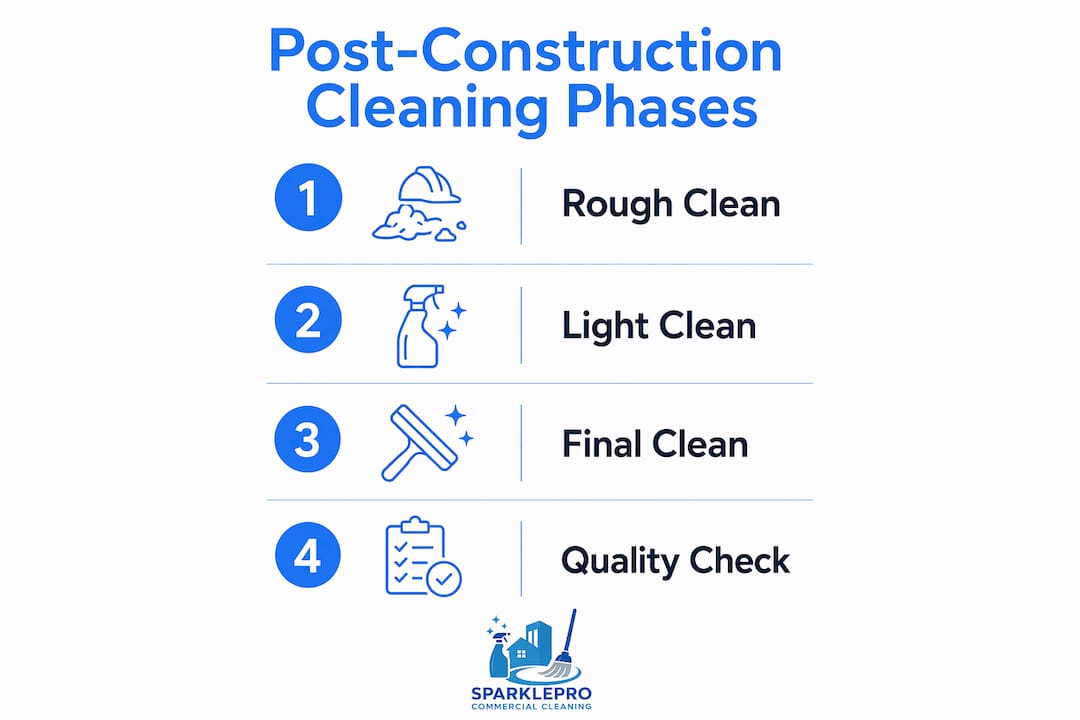
The three-phase cleaning model is the industry standard for post-construction sites: Rough Clean, Light Clean, and Final Clean. Each phase has a defined scope, and skipping ahead is the single biggest cause of re-cleaning and failed inspections. Starting the final phase before the site is ready forces crews to repeat work after trades return, which doubles labor costs and delays turnover.
The correct sequence within each phase follows a strict top-down order. Cleaning from ceilings to floors prevents dust and debris from contaminating surfaces already cleaned below. Top-down sequencing combined with periodic weekly cleaning of high-traffic zones is the 2026 industry standard for dust control on active sites.
HEPA vacuums and microfiber cloths are the two non-negotiable tools for dust management. HEPA filtration captures fine particulate that standard vacuums recirculate into the air, and microfiber cloths trap rather than spread surface dust. Speed does not equal efficiency in post-construction cleaning. Methodical, deliberate work using these tools prevents the costly re-cleans that result from rushing.
The full phased sequence runs as follows:
- Rough Clean: Remove all construction debris, scrap materials, and bulk waste. Sweep and vacuum all surfaces. This phase happens while trades are still active.
- Light Clean: Wipe down all surfaces, clean windows, and address residual dust after trades have finished. Use HEPA vacuums on floors and horizontal surfaces.
- Final Clean: Complete detail cleaning of all fixtures, glass, floors, and cabinetry. Verify utilities are live and all trades have cleared before mobilizing this phase.
- Touch-Up Clean: Address any punch-list items identified during the client walkthrough. This phase is brief but critical for sign-off.
Pro Tip: Before mobilizing your final clean crew, walk the site yourself and confirm that all trades have cleared, utilities are active, and no debris has been reintroduced. A 20-minute pre-check prevents a full day of re-cleaning.
For detailed guidance on concrete dust removal during the rough and light phases, the concrete dust cleanup guide from Sparkleprocommercialcleaning covers the specific techniques supervisors need.
What safety practices protect your crew during construction cleaning?
Safety management for cleaning crews requires trained supervisors, strict OSHA compliance, PPE usage, and a documented risk assessment before any crew mobilizes. Proper training, trade coordination, and waste controls are the three pillars that prevent accidents and keep projects compliant with regulatory standards. A supervisor who skips the pre-cleaning risk assessment is personally liable for any incident that follows.
Safety rule: Never allow cleaning crews to work in areas where active trades are still operating without a formal site access agreement in place. Coordinate directly with the general contractor to establish clear zone boundaries and crew entry times before each shift.
The core safety checklist for every construction cleaning supervisor includes:
- Conduct a written risk assessment before mobilizing any crew to a new zone.
- Confirm all crew members have current PPE: respirators, safety glasses, gloves, and steel-toed boots.
- Post construction site signage at all restricted access points and wet floor areas.
- Establish a spill control protocol and identify the location of spill kits before work begins.
- Coordinate waste disposal routes with the GC to avoid conflicts with active material deliveries.
- Conduct a daily safety briefing at the start of each shift covering zone changes and new hazards.
Daily cleaning routines around walkways, spill control, and waste disposal maintain active sites safely throughout the construction lifecycle. These routine tasks are not optional maintenance. They are the primary mechanism for preventing slip, trip, and fall incidents that generate OSHA citations and project delays.
How do checklists and digital tools protect your contracts?
A structured checklist is the difference between a clean handover and a disputed one. Skipping detailed cleaning checklists leads directly to poor handover readiness and client dissatisfaction. General contractors prioritize documented QC and insurance coverage over price when selecting cleaning partners. That means your documentation is a competitive asset, not just an administrative task.
The final sign-off process should combine date-stamped photographs with a completed checklist for every phase. Photographic evidence and phase checklists create an audit trail that resolves disputes and supports payment collection. A photo taken under strong lighting reveals surface defects that a casual walkthrough misses entirely.
Digital cleaning management software adds a second layer of accountability. Centralized digital tools allow supervisors to assign tasks, track crew location in real time, and capture proof of service, which prevents errors like double-booking and missed zones. Transitioning from manual spreadsheets to a digital platform is the clearest operational upgrade available to supervisors managing more than one active project.
Pro Tip: Conduct your final walkthrough inspection under bright portable lighting, not just the building's installed fixtures. Strong directional light reveals dust, smears, and residue that overhead lighting conceals.
Key documentation practices for every project:
- Use phase-specific checklists with individual sign-off lines for each task.
- Capture date-stamped photos at the start and end of each cleaning phase.
- Log crew hours and zone assignments daily in your digital management platform.
- Retain all checklists, photos, and sign-off records for a minimum of 12 months after project completion.
- Verify your cleaning company's insurance credentials are current and on file with the GC before mobilization.
For a practical checklist framework that translates directly to construction cleaning, the office cleaning checklist guide from Sparkleprocommercialcleaning provides a solid structural template.
Key Takeaways
Effective construction cleaning crew supervision requires phased sequencing, size-matched staffing, OSHA-compliant safety protocols, and documented quality control to deliver clean, dispute-free handovers on schedule.
| Point | Details |
|---|---|
| Staff to square footage | Match crew size to project scale using defined ratios to avoid GC timeline delays. |
| Build in schedule buffers | Add 20–30% to all time estimates to account for trade coordination and recontamination risk. |
| Follow the top-down sequence | Clean from ceilings to floors in every phase to prevent dust from contaminating finished surfaces. |
| Verify site readiness before final clean | Confirm all trades have cleared and utilities are live before mobilizing the final cleaning crew. |
| Document every phase | Use date-stamped photos and signed checklists to protect contracts and support payment collection. |
The part most supervisors get wrong about construction cleaning
Most new supervisors treat post-construction cleaning as a labor management problem. It is not. It is a logistics and sequencing problem where the wrong order of operations multiplies your labor costs and kills your reputation with GCs.
I have watched experienced supervisors lose repeat contracts not because their crews cleaned poorly, but because they could not prove it. No photos, no checklists, no sign-offs. The GC had a punch-list dispute, and the cleaning company had nothing to show. That is a completely avoidable outcome.
The shift to digital management tools is real, and it is not optional for supervisors running multiple projects. The learning curve is real too. The first month of using scheduling and task-tracking software feels slower than your old spreadsheet. By month three, you will not go back. The visibility alone, knowing which crew is in which zone and what they have completed, changes how you manage the whole operation.
The other thing I push hard on: do not let speed pressure from GCs override your sequencing discipline. A GC who wants the final clean started before trades have cleared is asking you to re-clean at your own expense. Hold the line on site readiness verification. Your thoroughness is your reputation, and your reputation is your pipeline.
— Sales
Sparkleprocommercialcleaning: professional post-construction cleaning crews
Post-construction cleaning done right requires more than labor. It requires licensed, insured crews, documented quality control, and supervisors who understand phased cleaning workflows at scale.

Sparkleprocommercialcleaning provides post-construction cleaning services with fully insured crews, phase-specific checklists, and digital QA reporting on every project. Whether you manage a single commercial buildout or a portfolio of active sites, Sparkleprocommercialcleaning delivers staffing plans sized to your project, compliance with OSHA standards, and the documented sign-offs that protect your contracts. Contact Sparkleprocommercialcleaning for a site consultation or project quote and get a cleaning partner who treats your handover deadline as seriously as you do.
FAQ
What are the three phases of post-construction cleaning?
Post-construction cleaning follows three phases: Rough Clean, Light Clean, and Final Clean. Each phase must be completed in sequence, with the final phase starting only after all trades have cleared the site.
How large should a construction cleaning crew be?
Crew size scales with square footage. Sites under 5,000 sq ft need 2–3 technicians, while sites from 15,000–30,000 sq ft require 6–10 technicians. Sites over 60,000 sq ft need a custom staffing plan.
Why do construction cleaning projects run over schedule?
Post-construction cleaning projects typically run 20–30% slower than estimates due to layout complexity, trade coordination delays, and recontamination risk. Supervisors should build that buffer into every timeline before committing to a handover date.
What documentation protects a cleaning contractor after handover?
Date-stamped photographs combined with signed phase checklists create an audit trail that resolves disputes and supports payment collection. Retaining these records for at least 12 months after project completion is standard practice.
What PPE do construction cleaning crews require?
Crews require respirators, safety glasses, chemical-resistant gloves, and steel-toed boots as a baseline. Supervisors must conduct a written risk assessment before each phase to identify any additional PPE requirements specific to the site.