
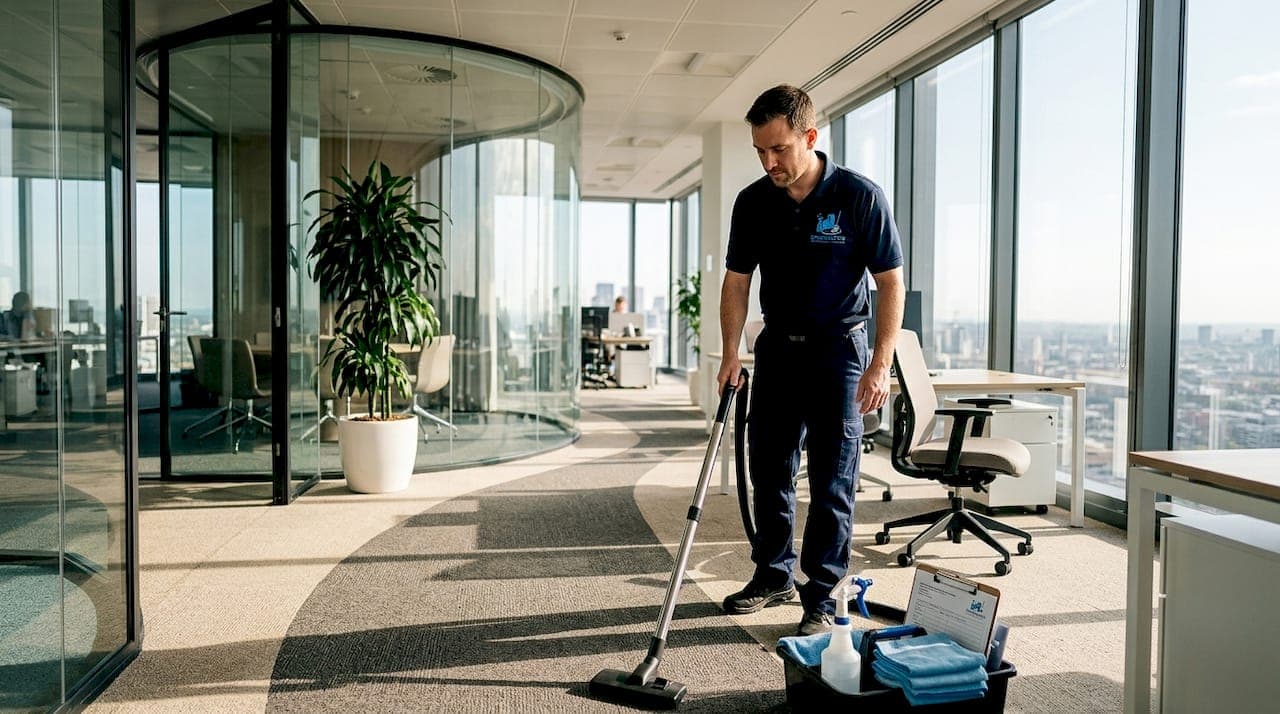
Managing a commercial property means juggling dozens of priorities at once. Many property managers assume that keeping cleaning operations in-house gives them the tightest grip on quality, but the reality is often the opposite. Stretched supervisors, inconsistent staffing, and outdated equipment quietly erode the standards your tenants and visitors expect. Outsourcing commercial cleaning to a qualified provider can actually deliver better results, more predictably, and at a lower administrative cost. This guide walks you through what outsourcing means, the real advantages and challenges, and a practical framework for selecting a provider that performs.
Table of Contents
- Understanding commercial cleaning outsourcing
- Key benefits of outsourcing commercial cleaning
- Common challenges and how to manage them
- How to choose the right commercial cleaning provider
- Why outsourcing isn't one-size-fits-all: A property management lens
- Meet your high-quality commercial cleaning partner
- Frequently asked questions
Key Takeaways
| Point | Details |
|---|---|
| Save time, reduce hassle | Outsourcing commercial cleaning frees you from recruitment and management headaches. |
| Boost cleaning quality | Professional providers offer consistent, up-to-date cleaning standards and techniques. |
| Anticipate drawbacks early | Inconsistencies or loss of direct control can be mitigated with good contracts and oversight. |
| Choose vendors carefully | A clear vetting process and specific service agreements result in better outcomes. |
Understanding commercial cleaning outsourcing
Commercial cleaning outsourcing means contracting a third-party company to handle all or part of your facility's cleaning and janitorial needs, rather than employing cleaning staff directly. The contracted provider brings their own trained personnel, equipment, supplies, and management structure. Your role shifts from day-to-day supervision to contract oversight and performance monitoring.
It sounds simple, but the distinction matters. When you hire in-house cleaners, you take on payroll taxes, benefits, workers' compensation, scheduling, training, and turnover costs. When you outsource, those burdens transfer to the vendor. You're paying for a defined outcome, not managing a labor force.
Facilities choose outsourcing for several clear reasons:
- Specialized expertise: Professional cleaning companies invest in ongoing training, certifications, and industry-grade equipment you'd rarely justify buying outright.
- Cost predictability: Fixed monthly contracts replace the variable costs of wages, sick days, and turnover.
- Compliance support: Reputable providers stay current on OSHA standards, EPA-approved products, and industry hygiene protocols.
- Scalability: Need a deep clean before a major tenant move-in? Outsourced teams scale up without you posting a single job listing.
- Consistency: Structured quality-check systems replace informal supervisor walkthroughs.
Understanding key cleaning industry terms like service level agreements (SLAs), scope of work, and performance metrics will help you hold any vendor accountable from day one. An SLA is simply a written document defining exactly what gets cleaned, how often, to what standard, and what happens when those standards aren't met.
| Factor | In-house staff | Outsourced provider |
|---|---|---|
| HR and payroll burden | High | None |
| Equipment investment | High upfront | Included |
| Training responsibility | Manager's burden | Vendor's responsibility |
| Scalability | Slow | Immediate |
| Quality accountability | Informal | Contract-backed |
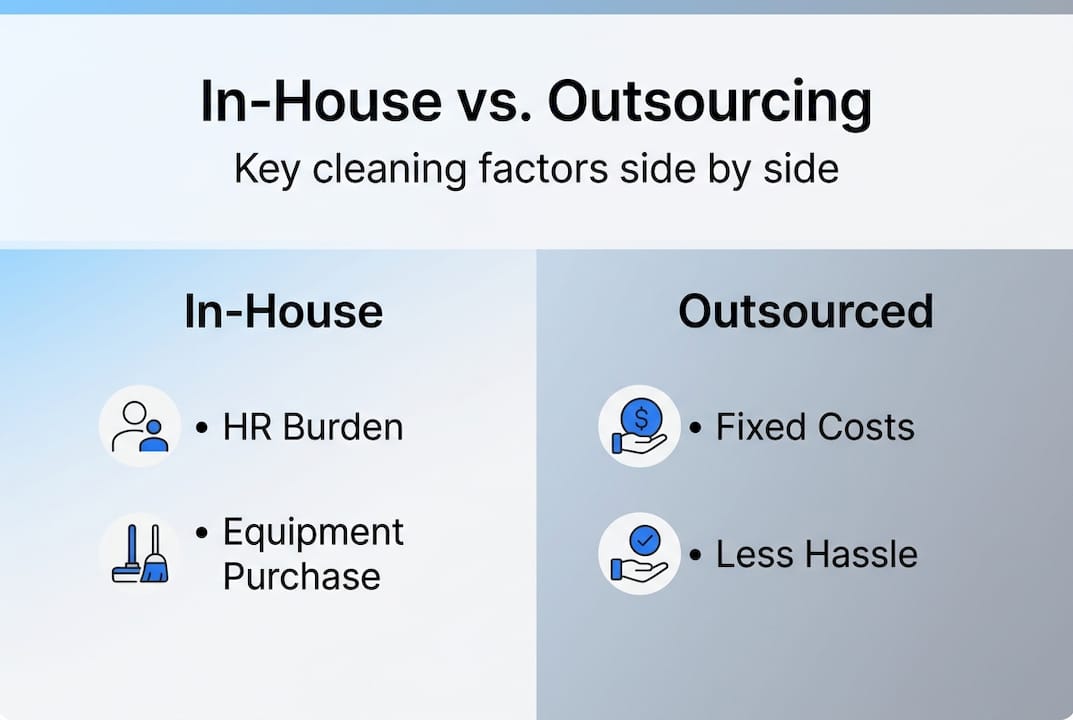
That said, outsourcing isn't without risk. Potential drawbacks include less direct control, vendor staff turnover leading to inconsistency, and dependence on provider quality. Choosing the right vendor and building a strong contract mitigates most of these concerns.
Pro Tip: Before signing any contract, require a written SLA that specifies cleaning frequencies, acceptable quality benchmarks, escalation procedures, and replacement staff protocols. Vague agreements are the number-one source of outsourcing frustration.
Key benefits of outsourcing commercial cleaning
With a clear understanding of what outsourcing means, let's look at the most impactful advantages property managers and owners actually experience.
The first and most immediate benefit is administrative relief. Managing in-house cleaners means tracking timesheets, handling callouts, replacing equipment, and fielding tenant complaints. Outsourcing shifts that entire operational layer to a provider who is contractually responsible for outcomes. Your team focuses on the building, not the mop schedule.
Cost predictability is the second major advantage. In-house cleaning costs fluctuate with overtime, turnover, training, and equipment replacement. An outsourced contract sets a fixed monthly rate, which makes budgeting cleaner and surprises less frequent. You also eliminate the hidden costs of benefits and employer-side payroll taxes.

Here's how outsourcing compares to direct management on the metrics that matter most:
| Metric | In-house management | Outsourced provider |
|---|---|---|
| Monthly cost predictability | Variable | Fixed |
| Hiring and training burden | High | None |
| Equipment and supply sourcing | Manager's task | Included |
| Compliance management | Manager's task | Vendor's task |
| Service flexibility | Limited | High |
Third, professional providers deliver access to specialized techniques and equipment your in-house team likely doesn't have. Understanding the full commercial cleaning process reveals just how technical modern facility care has become, from electrostatic disinfection to advanced floor restoration.
To realize these benefits, follow these steps:
- Audit your current cleaning costs, including labor, supplies, equipment, and management time.
- Define your facility's specific needs by area type, frequency, and compliance requirements.
- Issue a detailed request for proposal to at least three qualified providers.
- Compare total cost of ownership, not just the monthly service fee.
- Pilot with one provider before committing to a long-term contract.
Research consistently shows that vendor staff turnover can lead to inconsistency, but professional providers address this with structured training programs and routine quality audits. The best providers build redundancy into their staffing models so one employee calling out doesn't leave your building uncleaned.
Common challenges and how to manage them
While outsourcing delivers substantial advantages, there are real obstacles property managers need to anticipate.
The most common challenges include:
- Loss of direct control: You no longer supervise the cleaning staff directly, which can feel uncomfortable at first.
- Staff turnover at the vendor level: High turnover in the cleaning industry means the team that starts your contract may not be the one cleaning your building six months later.
- Provider dependency: If your vendor underperforms or goes out of business, you face an urgent gap in coverage.
- Communication gaps: Without clear reporting, issues can linger unreported until a tenant escalates a complaint.
- Scope creep: Tasks not listed in the contract often become points of dispute.
Each of these challenges has a straightforward management response.
"Drawbacks include less direct control and inconsistency due to frequent staff turnover" reinforces why a structured oversight process on the client side is non-negotiable, regardless of vendor reputation.
For loss of control, build a simple inspection checklist you or your facility manager completes weekly. Document findings and share them directly with your vendor's account manager. This creates a paper trail and keeps the provider accountable.
For staff turnover, require your contract to include a clause mandating that replacement staff receive site-specific orientation before working unsupervised. Reviewing janitorial service examples across different facility types shows how quality providers build onboarding into their standard workflow.
For provider dependency, maintain a short list of backup vendors and review your contract's termination notice period before signing. A 30-day notice clause gives you enough flexibility to transition without crisis.
Pro Tip: Schedule a formal quarterly performance review with your vendor's account manager. Bring your inspection logs, tenant feedback, and any unresolved tickets. This single habit prevents small issues from becoming contract-ending problems.
How to choose the right commercial cleaning provider
Knowing the pain points, the next step is learning how to evaluate providers systematically before you sign anything.
Follow these steps to structure your selection process:
- Define your scope clearly. List every area to be cleaned, the required frequency, and any compliance standards that apply to your facility type.
- Check licensing and insurance. Your provider must carry general liability, workers' compensation, and any specialized certifications your state requires.
- Ask about training and turnover rates. A provider who can't tell you their annual staff turnover rate is a provider who doesn't track it. That's a red flag.
- Require references from similar facilities. An office cleaning testimonial means little if you manage a healthcare building. Ask for references from your specific sector.
- Review the contract in detail. Look for SLA language, performance remedy clauses, and exit provisions before signing.
Here are must-ask questions for any vendor you're seriously evaluating:
- What is your process when a scheduled crew member is unavailable?
- How do you handle a complaint or quality failure?
- Do you use standardized checklists, and can I see a sample?
- What cleaning products and equipment do you use, and are they green-certified?
- How are your employees background-checked?
Understanding the full range of types of janitorial services helps you write a more precise scope of work, which protects you during contract negotiations.
On contract terms, negotiate for a performance remediation process before any termination clause kicks in. This gives both sides a structured path to fix problems rather than jumping straight to contract disputes. Research confirms that provider quality is crucial and dependence on the wrong vendor can directly harm your facility's outcomes, so invest the extra time in the vetting stage.
Why outsourcing isn't one-size-fits-all: A property management lens
Here's something most outsourcing guides won't say directly: outsourcing works brilliantly for some facilities and creates friction for others, and the difference rarely comes down to building size or budget.
In our experience, the facilities that benefit most from outsourcing are those where the property manager's time is genuinely stretched, where cleaning needs vary by season or occupancy, and where compliance documentation is required. Outsourcing gives those managers a professional partner with real accountability.
But we've also seen cases where a hybrid approach works better. Some facilities keep a small in-house team for daily touch-ups and high-visibility areas, then outsource deep cleaning, floor care, and post-construction work. The in-house team handles intimacy; the outsourced team handles scale.
The real test is this: if cleaning problems consistently consume your time, cause tenant complaints, or require you to manage HR issues you're not equipped for, outsourcing is the right move. Familiarizing yourself with understanding industry terms positions you to evaluate vendors from a place of knowledge, not guesswork. Don't outsource to escape accountability. Outsource to redirect it to someone contractually obligated to deliver.
Meet your high-quality commercial cleaning partner
For property managers ready to explore reliable outsourcing options, here's how you can start the process with a trusted partner.
Sparkle Pro Commercial Cleaning serves property managers and building owners nationwide with fully vetted, licensed, and insured cleaning teams. Whether your facility is in New York commercial cleaning or you need California commercial cleaning coverage, we bring local operational knowledge backed by national standards.
Getting started takes four simple steps: fast quote, site visit, scheduled cleaning, and your approval. No long-winded setup, no guesswork about scope. We build a custom plan around your facility's specific needs, so you get consistent results from day one. Reach out today to see how we can simplify your operations and raise your building's standards.
Frequently asked questions
How much can businesses save by outsourcing commercial cleaning?
Outsourcing can cut cleaning costs by eliminating HR, benefits, and equipment expenses, often resulting in meaningfully lower overall spend. Outsourcing leads to measurable cost and resource efficiencies compared to managing in-house teams.
What are the risks of outsourcing commercial cleaning?
Potential risks include less direct oversight, inconsistent quality due to staff turnover, and dependence on provider performance. Drawbacks include less direct control and inconsistency tied to staff turnover at the vendor level.
How do I ensure consistent quality from an outsourced cleaning provider?
Set clear expectations through a detailed contract, require regular inspection reports, and schedule formal performance reviews quarterly. Quality and consistency can be maintained through proactive monitoring and well-written SLAs.
What tasks should never be outsourced in commercial cleaning?
Highly sensitive or confidential cleaning tasks, such as those in secure server rooms or areas with restricted access, are best kept in-house to protect privacy and security.
Is outsourcing a good fit for small buildings?
Yes, outsourcing can be flexible and cost-effective even for smaller facilities, with scaled service plans tailored to your actual square footage and traffic levels.