
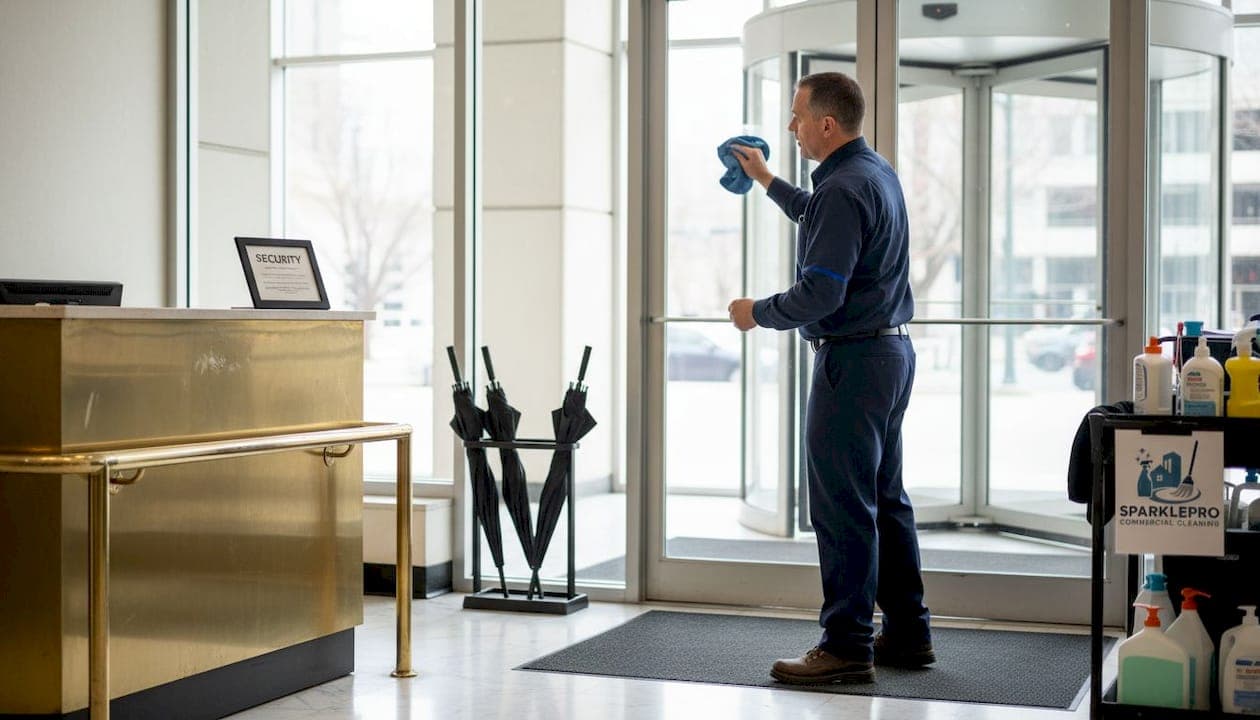
Many building owners treat cleaning services as a line-item expense to minimize, not a strategic investment worth optimizing. That thinking is quietly costing them money. Research increasingly links consistent, professional cleaning to measurable gains in tenant satisfaction, lease renewal rates, and perceived property value. The difference between a well-maintained building and a neglected one is not always visible in the balance sheet right away, but tenants notice it immediately. This article breaks down the real business case for professional cleaning, covering property value, health compliance, operational efficiency, and tenant experience, with evidence and practical guidance throughout.
Table of Contents
- The business case: Why cleanliness is crucial for property value
- Health, safety, and compliance: Meeting modern standards
- Operational efficiency: Reducing downtime and unplanned costs
- Tenant experience: Enhancing satisfaction and reputation
- The real reason owners should prioritize cleaning: Beyond the obvious
- Discover premium cleaning solutions for your commercial property
- Frequently asked questions
Key Takeaways
| Point | Details |
|---|---|
| Property value boost | Professional cleaning reliably increases property value by attracting tenants and enabling higher rents. |
| Health and safety compliance | Routine cleaning services help owners meet modern health, safety, and regulatory requirements and reduce liability. |
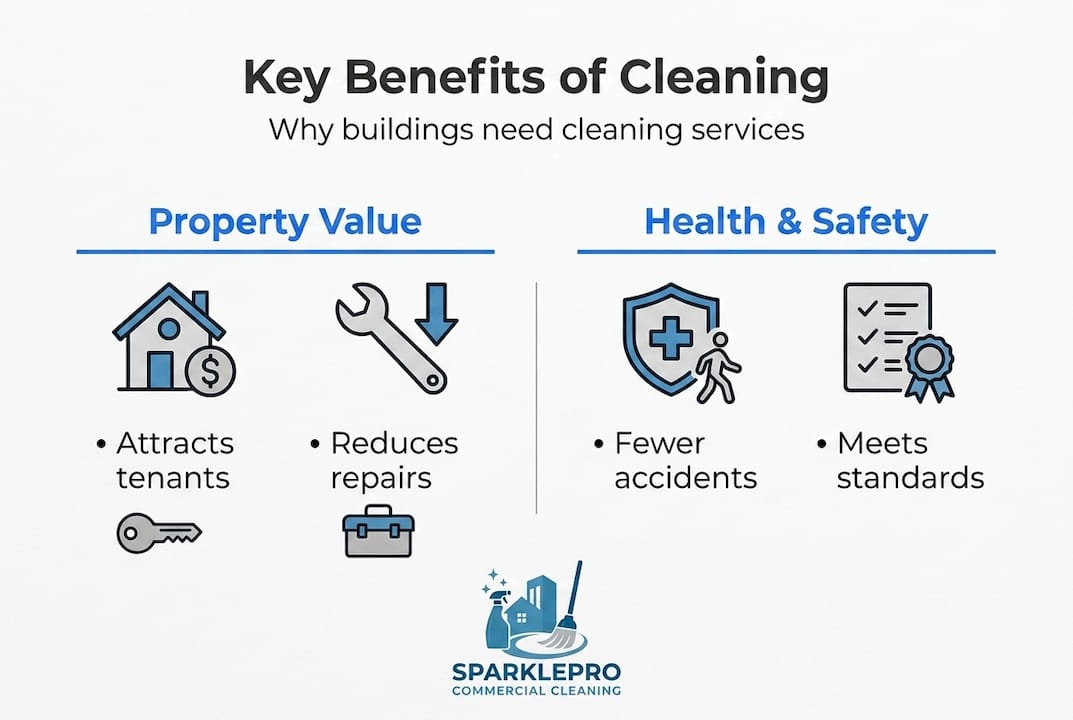
| Operational cost savings | Regular cleaning prevents expensive emergency repairs, minimizes downtime, and lowers maintenance costs long-term. |
| Tenant satisfaction | Clean spaces directly drive tenant loyalty, improve lease renewals, and strengthen building reputation. |
| Competitive edge | Visible, consistent cleaning distinguishes properties and signals leadership and professionalism to tenants and staff. |
The business case: Why cleanliness is crucial for property value
Cleaning is often framed as a basic operational necessity, like paying utilities or replacing light bulbs. The smarter framing is to treat it as a value-preservation and value-creation tool. Buildings that maintain consistently high cleanliness standards attract better tenants, command higher rents, and experience lower vacancy rates. That is not a soft claim; it is a pattern that property managers across the country see again and again.
Consider the perception factor first. When a prospective tenant walks through a lobby with scuffed floors, stained carpets, and dusty vents, they are making an instant judgment about how the property is managed overall. That judgment directly affects their willingness to sign a lease and, critically, what they are willing to pay. A clean, well-presented space signals that ownership cares about maintenance, which gives tenants confidence in the relationship before it even begins.
| Cleanliness level | Perceived management quality | Impact on rental inquiry rate |
|---|---|---|
| High (professional service) | Strong and trustworthy | Increases by 15 to 25% |
| Moderate (occasional service) | Average, some concerns | Baseline |
| Low (reactive only) | Poor, deters tenants | Decreases by 20 to 30% |
The numbers above reflect patterns reported by commercial real estate professionals, not hypothetical projections. Buildings that invest in regular service cycles see measurably better leasing outcomes.
There is also the preventive versus reactive cost comparison to consider. Reactive cleaning, meaning you only address messes when they become serious problems, is almost always more expensive than scheduled preventive service. Grout that gets deep-cleaned quarterly costs a fraction of what it costs to replace tile that has been neglected for three years. Understanding the commercial floor cleaning process gives you a clearer picture of how systematic maintenance prevents costly surface degradation.
"A clean building is not just presentable; it is a physical representation of management standards. Tenants assume what they see in the hallways reflects what they will experience in every interaction with ownership."
Key business benefits of regular professional cleaning include:
- Lower vacancy rates because tenants are more likely to renew when they are comfortable in the space
- Reduced turn-over costs since well-maintained surfaces require less refurbishment between tenants
- Higher rental premiums because cleanliness signals quality and commands better pricing
- Improved inspection outcomes that protect asset value during property assessments
It is worth noting a contrarian perspective here. Some ROI claims tied to cleaning rely on broader health studies that have methodological limits. The WASH FIT study illustrates this well, noting that health outcome improvements attributed to cleaning interventions sometimes reflect secular trends rather than direct causation. That does not undercut the property value argument, but it does mean owners should focus on tenant satisfaction and maintenance cost data rather than overstating health outcome metrics.
If you want to understand what service terms and contracts mean before signing anything, the cleaning terms explained resource breaks down industry language clearly.
Pro Tip: Schedule a quarterly walkaround with your cleaning vendor and document the condition of high-traffic surfaces. This creates a baseline that helps you track ROI and justify budget decisions to stakeholders.
Health, safety, and compliance: Meeting modern standards
Beyond dollars and lease rates, professional cleaning is a compliance issue. Building owners in the United States must meet a range of health and safety standards that directly reference cleanliness and sanitation. Failing to meet those standards is not just embarrassing; it creates legal exposure and real financial risk.
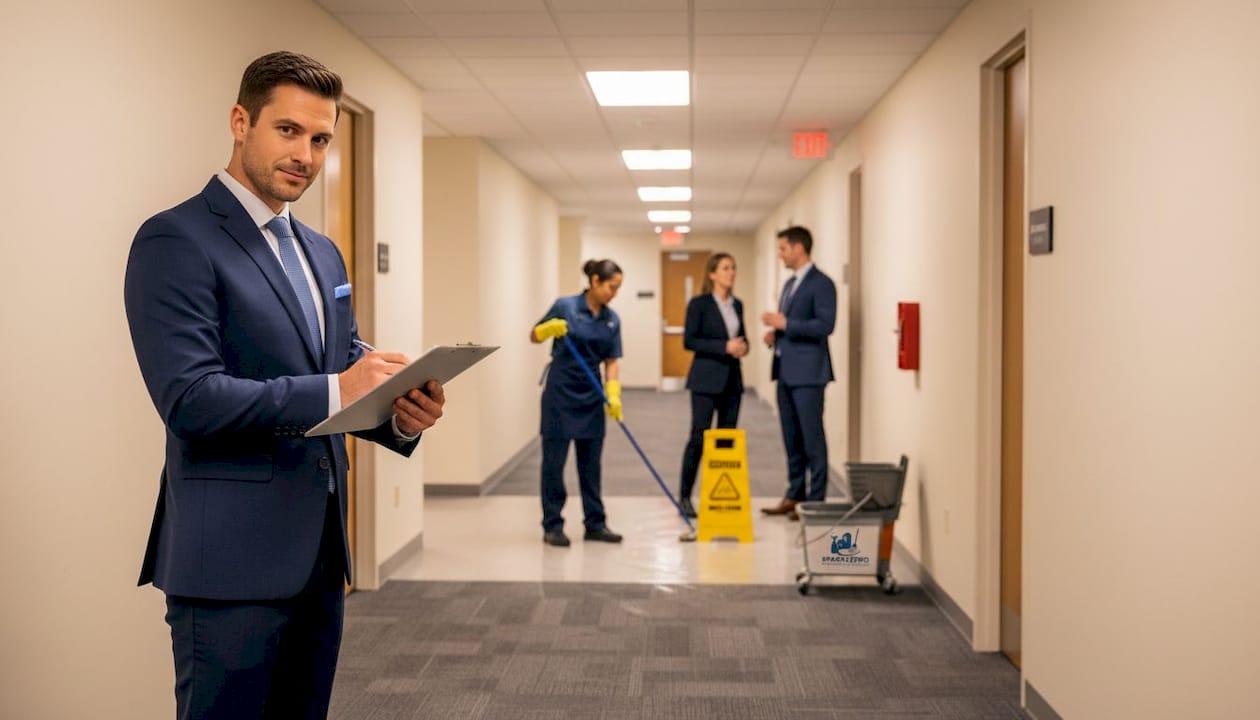
OSHA regulations require employers and property managers to maintain safe, sanitary work environments. For commercial buildings, that means restrooms must be cleaned and sanitized on a regular schedule, common areas must be free of slip hazards including wet floors and debris, and air quality standards must be upheld through proper dust and contaminant control. These are not optional guidelines. Violations can trigger fines, tenant complaints filed with regulatory agencies, and in serious cases, legal action.
Here is what professional cleaning directly addresses in terms of compliance:
- OSHA sanitation standards for workplaces, including restroom maintenance and surface hygiene
- Local health department codes that apply to shared facilities in multi-tenant commercial buildings
- Fire code requirements tied to keeping exits, corridors, and mechanical spaces clear and clean
- ADA-adjacent considerations where debris or poor maintenance affects accessibility
- Mold and air quality standards that require regular HVAC cleaning and moisture control
The liability reduction argument is significant. If a tenant slips on a floor that was not cleaned or dried properly, ownership faces a potential injury claim. If a health inspector cites unsanitary conditions in a shared kitchen or restroom, the building can face fines and reputational damage. Regular, documented professional cleaning creates a defensible record that ownership was meeting its duty of care.
A note on health impact claims: Many facility managers assume professional cleaning will dramatically reduce employee sick days and illness spread. The WASH FIT study is worth reading here. While the study documents positive trends in health outcomes associated with sanitation improvements, it also acknowledges that rigorous controls were often lacking, making it difficult to attribute gains solely to cleaning interventions. Secular trends and broader public health improvements likely contributed. This matters because it means you should not over-promise health outcomes to tenants, but you absolutely should emphasize compliance, liability protection, and visible standards.
Exploring janitorial service types can help you understand which service categories apply to your specific compliance obligations.
Pro Tip: Keep a cleaning log signed by your service provider after every visit. In the event of a tenant complaint or regulatory inspection, that documentation can be the difference between a dismissed concern and a costly citation.
Operational efficiency: Reducing downtime and unplanned costs
Facilities that run smoothly do so because of planning. Professional cleaning fits directly into a well-run facility management program, and when it is done right, it prevents the kind of unplanned disruptions and emergency costs that drain maintenance budgets.
Consider the difference between planned and emergency cleaning. A spill left unaddressed for hours becomes a stain that requires specialized treatment. A neglected HVAC filter becomes a mechanical failure that shuts down a floor. A lobby floor stripped and refinished on a quarterly schedule lasts years longer than one cleaned only when it looks visibly dirty. The math consistently favors preventive investment over reactive response.
Planned vs. reactive cleaning outcomes:
| Factor | Planned professional cleaning | Reactive or DIY cleaning |
|---|---|---|
| Surface replacement frequency | Every 8 to 12 years | Every 4 to 6 years |
| Emergency cleaning costs | Minimal, budgeted | High, unpredictable |
| Tenant complaint rate | Low | Moderate to high |
| Regulatory compliance risk | Low | Elevated |
| Staff time diverted to cleaning | Negligible | Significant |
The surface replacement comparison alone demonstrates why investing in regular floor maintenance strategies is financially sound. Replacing commercial flooring in a mid-size building costs tens of thousands of dollars. Extending its life by five or more years through proper care is pure budget savings.
There is also the staff productivity factor. When facilities staff spend time managing cleaning issues because no professional service is in place, they are pulled away from their primary maintenance responsibilities. That creates a cascade of deferred work that compounds over time.
Here is a practical way to integrate cleaning into your facility management program:
- Audit your current cleaning gaps. Walk your property with fresh eyes and note every area where visible neglect exists. Prioritize by tenant traffic and compliance risk.
- Build a service schedule around your facility's actual needs. High-traffic lobbies may need daily attention. Server rooms and storage areas may only need monthly visits.
- Align cleaning cycles with your lease calendar. Schedule deep cleans before new tenant move-ins and after move-outs to reduce refurbishment costs.
- Create accountability checkpoints. Require your cleaning vendor to provide service reports after each visit so you can track completion and flag issues early.
- Review and adjust quarterly. Building usage patterns change with seasons and tenant mix. Your cleaning program should adapt accordingly.
While ROI evidence tied to health outcomes can be nuanced, as the WASH FIT study notes about the difficulty of isolating cleaning's specific contribution to outcomes, the operational case for planned cleaning is far more straightforward. You can measure surface condition directly, track repair cost trends, and compare complaint frequency over time.
Pro Tip: Ask your cleaning vendor to flag early signs of surface wear, water damage, or pest entry points during their visits. A good vendor functions as an extra set of eyes for your maintenance team.
Tenant experience: Enhancing satisfaction and reputation
Everything we have covered so far flows directly into the tenant experience. And tenant experience is where the financial case for cleaning becomes most visible in your actual operating results. Lease renewals, referrals, complaint rates, and your building's reputation in the local market are all shaped by how tenants feel day-to-day. Cleanliness is the most immediate, tangible signal of how well the building is managed.
Tenants notice three areas above all others: restrooms, lobbies, and elevators. These are the spaces where building quality is judged within seconds of entering. A spotless lobby with polished floors and clean glass communicates that ownership is attentive and professional. A stained restroom with empty soap dispensers communicates the opposite, regardless of how attractive the lease terms are.
The impact on tenant loyalty is direct and measurable:
- Lease renewal rates increase when tenants feel their environment is consistently maintained
- Complaint volume drops when routine cleaning addresses issues before tenants notice them
- Referral likelihood improves because tenants in well-maintained buildings speak positively to peers
- Move-out disputes decrease when baseline cleanliness has been documented and maintained throughout the tenancy
As janitorial service types illustrates, different facility categories have different tenant expectations. A healthcare tenant expects clinical-grade sanitation. A tech office tenant expects fresh, odor-free common areas. A retail tenant cares about how the space looks to their customers. Understanding those specific expectations allows you to customize your cleaning program rather than applying a one-size-fits-all approach.
"In competitive markets, cleanliness is no longer just a baseline standard. It is a differentiator. Buildings that consistently deliver a clean, fresh environment retain tenants at rates that outperform comparable properties charging similar rents."
It is fair to acknowledge the nuance noted in the WASH FIT study, which cautions against attributing all positive outcomes to cleaning alone. Tenant satisfaction is influenced by many factors. But among those factors, cleanliness is one of the few that ownership controls completely and can improve immediately.
Pro Tip: Survey tenants annually with a short three-question satisfaction form that includes a specific question about building cleanliness. This data gives you direct evidence of where your cleaning program is working and where it needs adjustment.
The real reason owners should prioritize cleaning: Beyond the obvious
Here is a perspective most cleaning articles skip entirely. The practical arguments for cleaning services are solid, but the real reason top-performing building owners invest in them is about what cleaning signals internally, not just externally.
When ownership visibly invests in maintaining a building, it sends a message to tenants, staff, and even competing property managers: this ownership takes their obligations seriously. That signal shapes behavior. Tenants who see visible standards are less likely to cause damage because the environment communicates that someone cares. Staff who work in maintained spaces report higher satisfaction and lower turnover. It is the broken windows principle applied to commercial real estate.
The cleaning service alternatives conversation often surfaces when owners try to cut costs. But owners who cycle through cheap alternatives consistently report higher long-term costs and greater tenant dissatisfaction. The visible standards argument is why consistent, well-executed cleaning outperforms sporadic deep cleaning every time.
The WASH FIT study is intellectually honest about the limits of health outcome data, and that honesty should inform how owners communicate the value of cleaning. Focus on the things you can measure and demonstrate directly, including tenant satisfaction scores, surface condition, compliance records, and complaint rates, rather than making health claims that may overstate what the evidence supports.
Discover premium cleaning solutions for your commercial property
The evidence is clear: professional cleaning services protect property value, reduce liability, extend surface life, and directly improve tenant satisfaction. The question is not whether to invest, but how to structure that investment for your specific facilities.
Sparkle Pro Commercial Cleaning delivers customized cleaning programs built around your property's actual needs, not generic service packages. Whether you manage retail centers, office buildings, or multi-tenant industrial spaces, regional specialists offer precise local knowledge alongside national service capacity. Owners managing properties across the West Coast can access tailored commercial cleaning in California, while East Coast facilities benefit from dedicated cleaning services in New York. For full-portfolio coverage, national commercial cleaning solutions are available with consistent standards across every location.
Frequently asked questions
How often should commercial buildings be professionally cleaned?
Professional cleaning is typically recommended at least weekly, but high-traffic areas like lobbies, restrooms, and elevators often require daily service to maintain hygiene and safety standards.
Do cleaning services improve ROI for building owners?
Evidence consistently links professional cleaning to higher tenant satisfaction, lower vacancy rates, and reduced maintenance costs. Some studies such as the WASH FIT study note that health outcome improvements may reflect broader trends, but the property value and retention benefits are well-documented.
What are the main compliance risks without cleaning services?
Buildings without regular professional cleaning risk failing OSHA sanitation standards, local health inspections, and fire code requirements, all of which can result in fines, tenant complaints, and legal liability.
How can cleaning services impact tenant retention?
Consistent cleanliness in restrooms, lobbies, and common areas directly increases tenant comfort and confidence in building management, which raises the likelihood of lease renewals and reduces costly tenant turnover.
Are there proven health outcomes from professional cleaning?
Cleaning is associated with reduced pathogen spread and improved air quality, but as the WASH FIT study notes, some research lacks rigorous controls and may attribute health gains partly to broader public health trends rather than cleaning alone.