
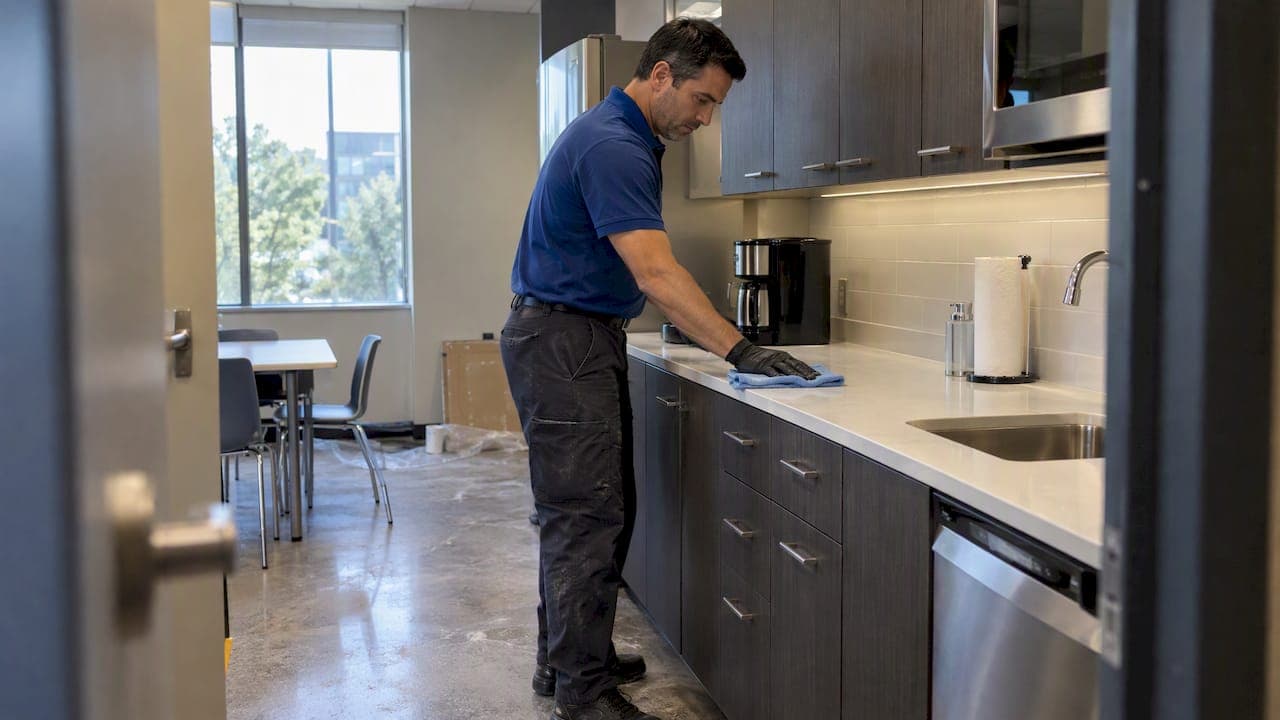
Declare a property ready for occupancy by completing three staged tasks: bulk debris removal, HEPA and wet dust control following OSHA housekeeping guidance, and a room-by-room detail clean. Document the result with a signed punchlist before handover. Follow the checklist below yourself, or hire a HEPA-capable crew like Sparkle Pro Commercial Cleaning when the job is large or involves concrete and drywall dust.
TL;DR:
- OSHA restricts dry sweeping when it increases silica exposure; use wet cleanup or HEPA vacuuming, and never use compressed air without ventilation that captures dust.
- Leave protective film and floor coverings in place until trades finish; early removal lets later work recontaminate cleaned surfaces and creates avoidable rework.
- A single room takes a few hours, while a house or small commercial space often needs a full day; larger turnovers can take several days.
- Use pH neutral cleaner on natural stone, clean stainless steel with the grain, and vacuum window tracks before wiping to prevent scratches and surface damage.
Table of Contents
- Preparation and Essential Supplies for a Final Construction Clean
- Debris Removal and Waste Handling Before Fine Cleaning
- Dust Control, HEPA Use, and OSHA-Aware Safety Measures
- Room-by-Room Final-Clean Checklist
- Final Inspection and Punchlist Before Occupancy
- Timeline for a Final Clean and When to Hire a Pro
- Waste Recycling and Environmentally Responsible Disposal
- Specialty Surface Checklist: Glass, Stainless Steel, and Stone
- What Site Supervisors Get Wrong About Final Cleans
- How Sparkle Pro Commercial Cleaning Can Help With Your Final Clean
- FAQ
- Sources
Preparation and Essential Supplies for a Final Construction Clean
A final clean goes faster and holds up better when the right tools arrive before the crew does. A HEPA vacuum pulls fine particulates that a shop vac exhausts right back into the air, so it belongs on every post-construction job, not just the ones with visible concrete dust. A wet mop or microfiber system handles the slurry and film a vacuum alone leaves behind.
Before anyone picks up a tool, walk the site and confirm protective film, tape, and floor coverings are still intact where trades are still working, and only pulled once that phase is done. Pulling protection too early invites rework.
Crew prep matters as much as equipment:
- Stock HEPA vacuums, microfiber cloths, wet mops, pH-neutral cleaners, and sealed trash bags.
- Confirm PPE: gloves, eye protection, and N95 or better respirators for dusty phases.
- Check egress paths, lighting, and temporary power before work starts.
- Note any wet slurry or standing water that needs handling first.
Staging the work in phases (rough clean, final detail, then a touch-up pass) keeps dust-generating tasks from recontaminating surfaces that are already finished, which is the single biggest driver of rework on these jobs.
Debris Removal and Waste Handling Before Fine Cleaning
Bulk debris has to leave the building before fine cleaning starts, otherwise dust resettles on surfaces the crew just wiped down. Work room by room rather than trying to clear the whole site at once.
- Clear large debris, packaging, and offcuts into designated bins by material type.
- Remove protective floor coverings and window film once trades have signed off on that area.
- Sweep loose debris toward a central collection point rather than scattering it with a blower.
- Separate hazardous items (adhesives, solvent cans, treated wood scraps) for specialist pickup rather than standard trash.
- Check for protruding nails, screws, and trip hazards as each area clears.
- Confirm fire exits and stairwells are fully clear before moving to detail work.
Call a specialist disposal service for anything flagged as hazardous waste under local rules rather than guessing. Once bulk debris is out and the floor is walkable, the space is ready for dust control.
Dust Control, HEPA Use, and OSHA-Aware Safety Measures
Dry sweeping and compressed air feel faster, but both can send respirable crystalline silica airborne instead of removing it. OSHA's construction silica standard restricts dry sweeping and dry brushing when that activity would increase exposure, and directs employers toward wet methods or HEPA-filtered vacuuming instead.
Compressed air used to clean dust from surfaces or clothing can increase airborne silica exposure unless it is paired with ventilation that captures the dust, which is why HEPA vacuums and wet cleanup are the preferred alternatives.
That guidance comes from OSHA's standard interpretation on handling and disposal of respirable silica dust, which also covers safe filter and PPE disposal.
A practical HEPA workflow: vacuum horizontal surfaces first, then vertical surfaces, then crevices and corners, finishing with a wet wipe on anything that held visible dust. For concrete grinding or milling work, OSHA's guidance on floor grinders recommends wet methods or a vacuum dust collection system during the work, plus a HEPA pass between runs when working indoors. Wet slurry should be cleaned up promptly with a HEPA-filtered wet vacuum before it dries and turns back into airborne dust.

Pro Tip: Change HEPA filters outdoors or in a ventilated area, and seal the used filter in a bag immediately rather than tapping it out against a surface.
Employers with workers regularly exposed above action limits need a written exposure-control plan; the respirable crystalline silica standard spells out training, recordkeeping, and medical surveillance requirements in detail.
Room-by-Room Final-Clean Checklist
Once bulk debris is gone and dust control is handled, work the space room by room so nothing gets missed. Our internal guide to the staged cleaning process breaks down how rough, final, and touch-up passes fit together; here's what each room needs in the final pass.
Kitchen: wipe down cabinetry inside and out, degrease countertops, clean under and behind appliances where accessible, polish hardware, and clear range hood and exhaust vents of construction dust. Run appliances through a quick test cycle to confirm they're operational before handover.
Bathrooms: remove grout haze left by tile work, sanitize every surface, check caulk lines, test fixtures for leaks, and run water through drains to clear any debris that settled during construction.
Bedrooms and living areas: HEPA-vacuum carpet and upholstered built-ins, wipe baseboards and window sills, clean light fixtures and ceiling fans, test every outlet and switch, and confirm doors close and latch properly.
A short list covers the recurring tasks across every room:
- HEPA-vacuum all horizontal surfaces before wet-wiping.
- Clean windows inside and out, including tracks and sills.
- Wipe down light switches, outlet covers, and door hardware.
- Remove any remaining protective film from fixtures and glass.
Flooring needs matching the material: hard floors get a damp mop with a pH-neutral cleaner after vacuuming, carpet gets a full HEPA pass plus spot treatment for any construction stains, and tile grout often needs a second pass with a grout brush if haze remains. Our guide to concrete dust cleanup covers slab and polished concrete specifically. Exterior touch-ups, like sweeping entryways and wiping down exterior light fixtures, finish the pass before the walkthrough.
Final Inspection and Punchlist Before Occupancy
The final walkthrough is where the clean either passes or needs another round. Work through it systematically rather than spot-checking.
- Confirm HVAC intakes and vents are free of dust and debris, not just visibly clean.
- Check every finish (paint, trim, flooring) for leftover residue or missed spots.
- Test all switches, outlets, and fixtures one more time.
- Photograph each room from the doorway and any area that needed extra attention.
- Get a sign-off from the site supervisor or property manager before calling the job done.
A structured punchlist process, backed by dated photos, gives both the cleaning crew and the property manager a documented record of condition at handover, which matters if a warranty or tenant dispute comes up later tied to the respirable crystalline silica standard's recordkeeping expectations for the job itself. This record should get filed alongside other turnover documentation and warranty paperwork so it's easy to reference later.
Timeline for a Final Clean and When to Hire a Pro
A single room typically wraps in a few hours; a whole house or small commercial space often needs a full day, and larger commercial turnovers can take significantly longer depending on square footage and how much dust-generating work preceded the clean. Our scheduling guide for rough versus final cleans covers the 24 to 72 hour windows property managers typically use to trigger each phase.
Hire a professional crew when the job involves concrete grinding, large square footage, or a tight occupancy deadline. Before a site visit, prepare answers to a few questions:
- Does the crew carry insurance and licensing for the property type?
- Are they equipped with HEPA vacuums and wet-method tools for dust-heavy jobs?
- Can they commit to a specific completion window ahead of occupancy?
Walking the site yourself beforehand, noting problem areas, helps any vendor quote the job accurately.
Waste Recycling and Environmentally Responsible Disposal
Construction debris is rarely one material. Separating it at the source, wood, metal, cardboard, and drywall each in their own stream, makes recycling possible instead of sending everything to a landfill by default. Many municipalities and waste haulers accept clean wood and metal scrap separately from mixed construction debris, often at a lower disposal cost than commingled loads.
Cardboard and packaging from appliance and fixture installs typically go straight into standard recycling if kept dry and free of contamination. Drywall scrap can sometimes be recycled through specialty processors rather than landfilled, though availability depends on local infrastructure.
Hazardous materials, leftover paint, solvents, and adhesive containers, need a separate disposal path entirely. Mixing them into general debris risks contaminating an otherwise recyclable load and can create liability for whoever hauls it. Checking with the local waste hauler or municipal program before the job starts, rather than after bins are already full, keeps sorting simple and avoids re-sorting debris that's already bagged. A clearly labeled bin system on site, set up during preparation rather than improvised at cleanup time, is usually the difference between a job that recycles well and one that doesn't.
Specialty Surface Checklist: Glass, Stainless Steel, and Stone
Specialty surfaces need their own approach because standard all-purpose cleaners can etch, streak, or dull them permanently.
Glass should be cleaned with a dedicated glass cleaner and a microfiber or squeegee pass rather than paper towels, which leave lint and streaks. Window tracks need a HEPA vacuum pass before any wet cleaning to pull out grit that would otherwise scratch the glass during wiping.

Stainless steel appliances and fixtures need a cleaner formulated for the finish, applied in the direction of the grain, followed by a dry microfiber buff. Abrasive pads or acidic cleaners can leave permanent dull patches that no amount of polishing will fix.
Natural stone, granite, marble, quartzite, is vulnerable to acidic cleaners that etch the surface over time. A pH-neutral stone cleaner, applied with a soft cloth, is the safer default, and any sealant the manufacturer recommends should go on after cleaning, not before.
Running through these surfaces as their own checklist item, separate from general room cleaning, catches the kind of damage that's expensive to fix after the fact and easy to avoid with the right product on the first pass.
What Site Supervisors Get Wrong About Final Cleans
The most common mistake isn't a missed surface, it's sequencing. Crews pull protective film before the last trade finishes, or skip the HEPA pass because the space "looks clean." Dust that isn't visible is still dust.
A repeatable process beats improvising every time: quote the scope, walk the site, schedule the clean, then get sign-off before calling it done. That four-step rhythm, used consistently, catches problems before they become callbacks.
— Sales
How Sparkle Pro Commercial Cleaning Can Help With Your Final Clean
We handle the full scope this checklist covers: post-construction cleaning with HEPA-capable crews trained to OSHA-aware dust methods, plus tenant turn cleans and deep cleans for properties that need a reset between occupants. Crews are available, with local teams who know the pace commercial deadlines require.

When requesting a quote, let us know the scope of work, your target completion window, and whether concrete grinding or other silica-generating work happened on site, since that changes the dust-control plan we bring. We offer the following services directly:
- Post-construction cleaning.
- Tenant turn cleans and move-out cleans.
- Deep cleans and disinfecting services.
Get a quote or schedule a site visit and we'll walk the space, scope the work, and confirm a completion window before you commit to anything.
FAQ
What is included in a construction final clean checklist?
A final clean checklist covers bulk debris removal, HEPA and wet dust control, room-by-room surface cleaning including kitchens, bathrooms, and living areas, plus a documented final inspection before occupancy. It also includes flooring, window, and specialty surface tasks specific to the materials used in the build.
How long does a post-construction final clean take?
A single room usually takes a few hours, while a full house or small commercial space often takes a full day, and larger commercial turnovers can run several days. Scope, square footage, and how much dust-generating work preceded the clean all affect the timeline.
Is dry sweeping safe for construction dust?
Dry sweeping and compressed air can increase airborne respirable crystalline silica exposure, which is why OSHA's silica standard restricts dry methods in favor of HEPA vacuuming or wet cleanup. Wet methods and HEPA-filtered vacuums are the safer default for any visible construction dust.
When should I hire a professional cleaning crew instead of doing it myself?
Hiring a professional makes sense for large square footage, concrete grinding or milling work, or a tight occupancy deadline where HEPA-capable equipment and trained crews speed up the job. We offer post-construction cleaning with licensed, insured crews built for exactly this kind of turnover.
How do I document that a final clean is complete?
A punchlist with dated photos of each room, plus a sign-off from the site supervisor or property manager, creates a clear record of condition at handover. That documentation also supports warranty and turnover paperwork if questions come up later.