
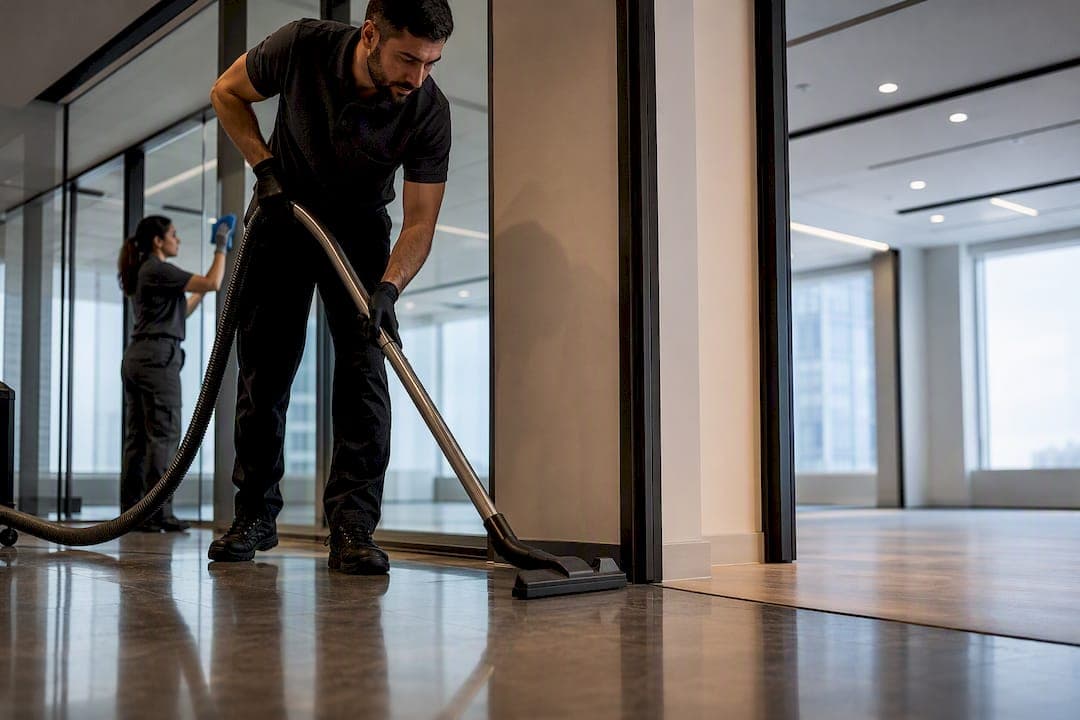
Book a rough clean once major trades finish and drywall is hung, so crews can keep working in a safe, debris-free space. Book a final clean after punch-list work wraps, when every finish is in and the space needs to look move-in ready. Most commercial builds and tenant improvements need both passes, plus often a middle "light" clean between them, and skipping either one almost always shows up later as rework, delayed handover, or an unhappy tenant walk-through.
TL;DR:
- A rough clean should only be scheduled after drywall and MEP rough-in are completed, to avoid the need for a costly second pass.
- The final clean must occur after punch-list work is substantially finished, with detailed tasks like floor scrubbing and interior glass cleaning included clearly in the scope.
- Coordinating cleaning phases with project milestones, such as drywall completion for rough clean and punch-list closure for final clean, avoids delays and misunderstandings.
- Using HEPA vacuums, PPE, and containment methods during cleaning ensures safety, compliance, and effective dust control for construction sites.
- Clear scope language that specifies trigger events and deliverables prevents mislabeling cleans and reduces change orders and disputes.
Table of Contents
- Rough Clean vs Final Clean: The Phased Approach to Post-Construction Cleaning
- What Is a Rough Clean? Timing, Scope, and Checklist
- What Is Final Clean in Construction? The Move-In-Ready Checklist
- When to Schedule Rough and Final Cleans in the Construction Timeline
- Safety and Environmental Controls Your Cleaning Scope Should Include
- How Sparklepro Commercial Cleaning Handles Rough and Final Cleans
- Why the Real Risk Isn't Skipping a Clean, It's Mislabeling One
- Get an Accurate Quote for Your Next Rough or Final Clean
- Sources
- FAQ
Rough Clean vs Final Clean: The Phased Approach to Post-Construction Cleaning
Post-construction cleaning rarely happens in one visit. Contractors and property managers typically work through three named phases: rough clean, light or pre-punch clean, and final or pre-turnover clean. Each has a different trigger, a different crew size, and a different level of detail.
The general contractor usually calls for the rough clean once framing, drywall, and mechanical, electrical, and plumbing (MEP) rough-in are done. The property manager or owner's rep often requests the light clean once painting and flooring are underway, and the final clean gets scheduled once the punch list is substantially closed. A multi-pass approach that separates debris removal, fine dust capture, and detail work costs less overall than trying to compress everything into one exhaustive final visit. Cutting a phase to save money almost always adds hours back somewhere else.
- Rough clean: bulk debris and coarse dust, requested by the GC
- Light clean: mid-project dust control, often requested by the PM
- Final clean: move-in-ready detail work, requested by the owner or tenant
For a fuller breakdown of how these phases fit into a complete janitorial scope, see this guide to post-build janitorial cleaning.
What Is a Rough Clean? Timing, Scope, and Checklist
A rough clean happens after the messiest construction work is largely done but before finishes go in. That means after drywall is hung, taped, and sanded, and after MEP rough-in is complete. The goal isn't a polished space. It's a safe, workable one where finish trades (painters, flooring installers, cabinet crews) can move around without tripping over debris or breathing drywall dust all day.
A typical rough clean scope includes examples you can find in ADU Projects in Los Angeles and San Gabriel Valley:
- Bulk debris removal (scrap drywall, packaging, wire clippings, wood offcuts)
- Sweeping and HEPA-vacuuming slabs to pull up coarse construction dust
- First-pass wipe-down of window frames and sills to remove gross debris
- Restroom prep so incoming trades have a usable facility
- Hauling and disposal of collected waste per site protocol
Equipment matters here. HEPA-filtered vacuums are the standard for coarse drywall and concrete dust, not shop vacs, because standard vacuums recirculate fine particulate right back into the air. Crews should be in appropriate PPE, respirators and gloves at minimum, in line with OSHA's housekeeping standard, which requires job sites to stay free of hazardous accumulations of debris and refuse.
The most common scheduling error is calling for a rough clean too early, while MEP rough-in is still active, which just means paying for a second pass a week later. The second most common: treating a rough clean like a deep clean and expecting streak-free glass or spotless floors. That's not this phase's job, and a standard deep clean isn't a substitute for post-construction cleaning either way.
Pro Tip: Walk the site with your cleaning vendor before the rough clean starts. A five-minute walkthrough catches scope gaps, like unmarked hazardous waste or locked mechanical rooms, that turn into change orders later.
For debris-specific guidance, this construction debris removal guide covers waste stream separation and disposal timing in more detail.
What Is Final Clean in Construction? The Move-In-Ready Checklist
Final clean, sometimes called pre-turnover clean, happens after the punch list is substantially complete and every finish, flooring, paint, fixtures, cabinetry, is installed. This is the pass that determines whether a tenant, buyer, or occupant walks into a space that looks finished or one that still looks like a job site.
The scope is far more detailed than a rough clean:
- Second-pass dust capture on all surfaces, including ledges, vents, and light fixtures
- Interior glass and storefront cleaning, streak-free
- Machine-scrubbing and finishing of hard-surface floors
- Removal of adhesive residue, paint spots, and stickers from windows and fixtures
- Cabinet interior wipe-down
- Full restroom and kitchen sanitation, including fixtures and grout
This phase calls for different tools than rough clean does: floor machines for stripping and finishing, tack cloths for fine dust pickup, appropriate solvents for adhesive and paint removal, and still HEPA filtration for any remaining airborne particulate. One detail that trips up a lot of scheduling conversations: "final clean" doesn't mean the same thing to every vendor. Some contractors use it to describe a light touch-up before occupancy; others mean a full detail clean that takes a crew a full day per 10,000 square feet. That ambiguity is exactly why scope language should spell out the trigger and the deliverable rather than relying on the label alone.
Industry guides largely agree on what belongs in a final clean scope, and reusing that consistent task list in your contract is one of the simplest ways to avoid a dispute over what "done" means. Write "final clean: floors machine-scrubbed, interior glass cleaned, cabinet interiors wiped, all surfaces dust-free" into the contract, and there's nothing left to argue about at walkthrough.
When to Schedule Rough and Final Cleans in the Construction Timeline
The scheduling logic is simpler than most project timelines make it look. Drywall finished and MEP rough-in complete triggers the rough clean. All finishes installed and punch list substantially closed triggers the final clean. Everything else is coordination.
- Confirm drywall taping, sanding, and MEP rough-in are done before booking a rough clean crew
- Give your cleaning vendor 3 to 5 business days' notice for a rough clean and 5 to 7 for a final clean on mid-size commercial jobs
- Coordinate the final clean date with your punch-list closeout meeting, not your calendar guess
- Confirm flooring cure times and paint dry times don't overlap with the scheduled clean date
- Build in a buffer day between final clean and tenant move-in or ownership walkthrough
For office fit-outs, the rough clean typically lands right after ceiling grid and drywall close-up, before carpet tile goes down. For tenant-improvement projects with tight handover dates, the final clean often has to be locked in two to three weeks ahead just to secure a crew, especially if the space includes glass storefronts or specialty flooring that need extra labor hours.
Safety and Environmental Controls Your Cleaning Scope Should Include
Dust control isn't just a cleanliness issue. It's a safety and compliance issue, and it belongs in the contract language, not left to the cleaning crew's discretion.
- Require HEPA-filtered vacuums for all coarse and fine dust removal, not standard shop vacuums
- Specify PPE requirements (respirators, gloves, eye protection) consistent with OSHA housekeeping standards
- Include wet methods or containment per EPA dust control best practices to limit airborne particulate spread
- Specify HVAC filter-change timing after the final clean, before occupancy
- Add a written waste-disposal and inspection checklist to the scope of work
Leftover construction dust holds moisture in corners and behind fixtures, and the EPA notes that conditions favorable to mold growth should be addressed promptly. That's part of why a final clean without a filter change and a real dust pass isn't actually final.
Pro Tip: Ask your vendor exactly when they'll change HVAC filters relative to the final clean date. Doing it before the last dust pass just means the new filter clogs immediately.
This construction cleaning safety guide breaks down PPE and housekeeping expectations crew by crew.
How Sparklepro Commercial Cleaning Handles Rough and Final Cleans
A typical professional commercial cleaning company runs a four-step process for both phases: quote, site visit, scheduled cleaning, customer approval. That site visit matters more than it sounds. It's where the actual scope, rough debris removal, fine dust capture, or full final detail, gets confirmed against what the job site actually needs, not a generic checklist.
- Rough clean tasks: debris hauling, HEPA-vacuum dust capture, restroom prep for trades
- Final clean tasks: floor finishing, interior glass, cabinet interiors, full sanitation
- Proposal should include: proof of insurance, equipment list, and a written scope
To get an accurate quote from a site visit, have your project timeline, square footage, and current construction phase ready before the walkthrough. It saves a follow-up call and a revised estimate.
Why the Real Risk Isn't Skipping a Clean, It's Mislabeling One
The biggest mistake in this whole process isn't skipping a phase outright. Most experienced GCs know better than that. It's calling for the wrong clean at the wrong trigger point and assuming the label covers the gap. A "final clean" requested while flooring crews are still on site isn't a final clean. It's an expensive rough clean with a fancier invoice.
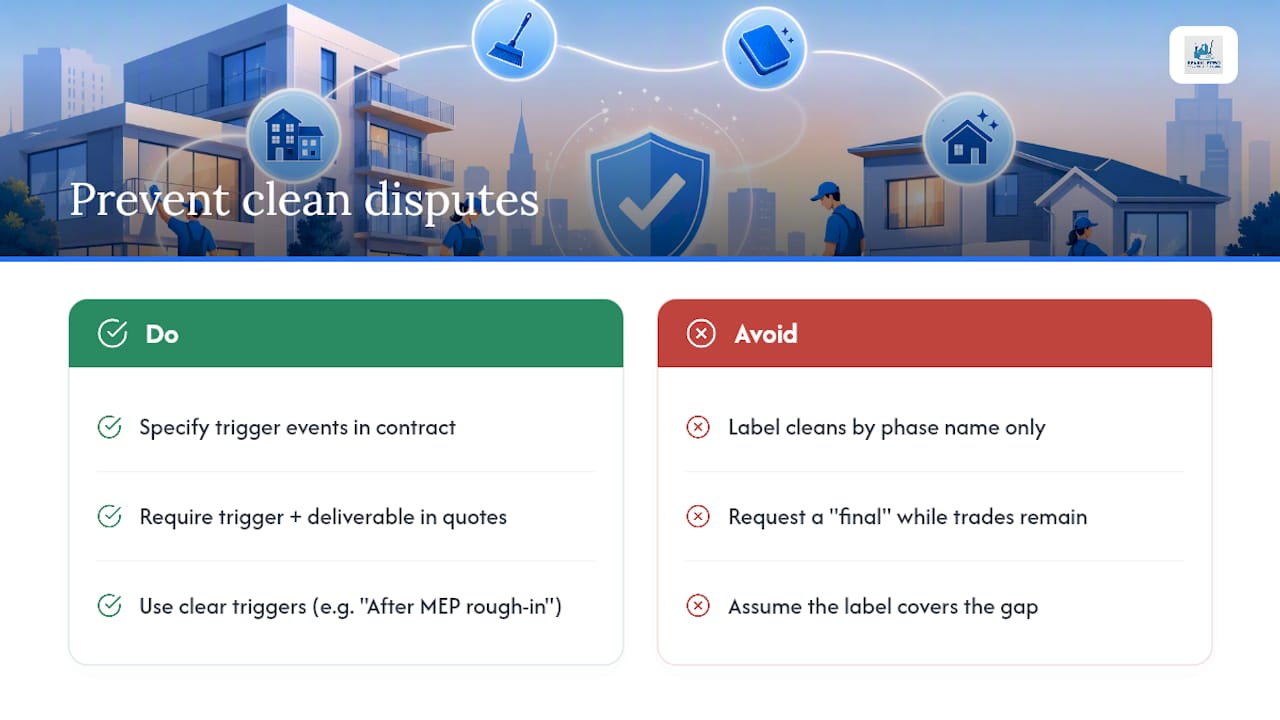
Conventional advice tends to treat this as a two-option decision: rough or final. In practice, the projects that avoid disputes are the ones that write trigger events into the contract instead of phase names. "After MEP rough-in" is a trigger. "Rough clean" alone, without that context, is a label two people can read differently at walkthrough.
If you manage more than one project a year, the habit worth building isn't memorizing checklists. It's asking your vendor, at quote stage, to put the trigger and the deliverable in writing, not just the phase name. That single habit prevents more change orders than any checklist ever will.
— Sales
Get an Accurate Quote for Your Next Rough or Final Clean
Some commercial cleaning companies price rough or final cleans around actual site conditions rather than using flat per-square-foot rates that ignore the project's current phase.
To get a fast, accurate quote, have four things ready: square footage, current construction phase (framing, punch-list, or finishes complete), target handover date, and any special surfaces like polished concrete or storefront glass. Your quote will come back with a line-item scope, a realistic lead time, and confirmation of equipment and insurance coverage, so there's nothing left to interpret at walkthrough. Property managers in Delaware can request a quote here, and teams in Massachusetts or Washington can reach the Massachusetts landing page or Washington landing page directly. Whichever phase you're booking, get the site visit scheduled before your finish trades lock in their own timeline.
Sources
- 1926.25 Housekeeping | Occupational Safety and Health Administration
- Best Management Practices for Dust Control (EPA PDF)
- What are molds? | US EPA
FAQ
What Does Final Clean Mean in Construction?
Final clean, also called pre-turnover clean, refers to the detail-level cleaning pass performed after all finishes are installed and the punch list is substantially complete, making the space ready for occupancy or handover.
What Are the Three Levels of Cleaning in Construction?
Most post-construction projects use three passes: rough clean (after major trades and drywall), light or pre-punch clean (during finish work), and final or pre-turnover clean (after punch-list completion).
What Is a Rough Clean?
A rough clean is the first cleaning pass after major construction trades finish, focused on bulk debris removal and coarse dust control so finish trades can safely work in the space.
What Are the Four Types of Cleaning in Commercial Settings?
Commercial cleaning generally breaks into routine janitorial, deep cleaning, post-construction cleaning, and specialized services like disinfecting; post-construction cleaning itself further splits into the rough and final phases covered above.