
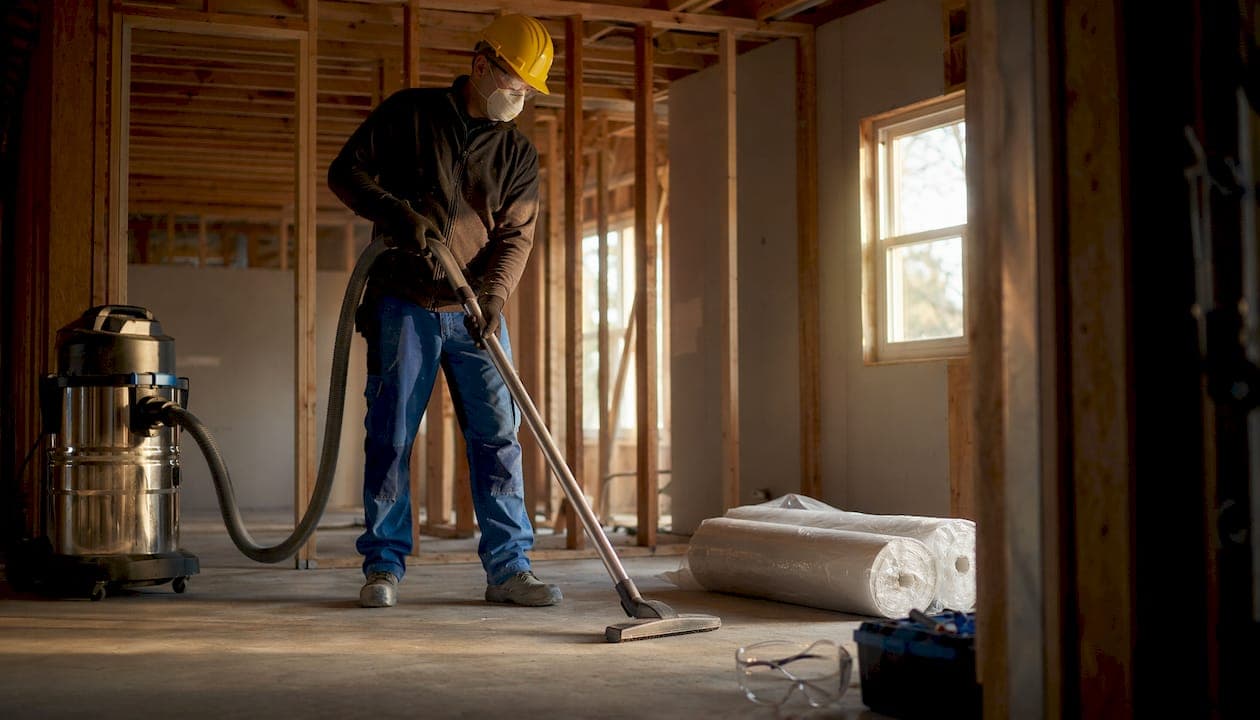
What is interior construction cleaning?
Interior construction cleaning is a specialized, multi-phase cleaning process performed after building or renovation work finishes, preparing a space for final inspection and occupancy. It is not routine janitorial work. Construction dust, drywall residue, paint overspray, adhesive, and sharp debris require different equipment, different sequences, and trained personnel who understand how construction sites behave.
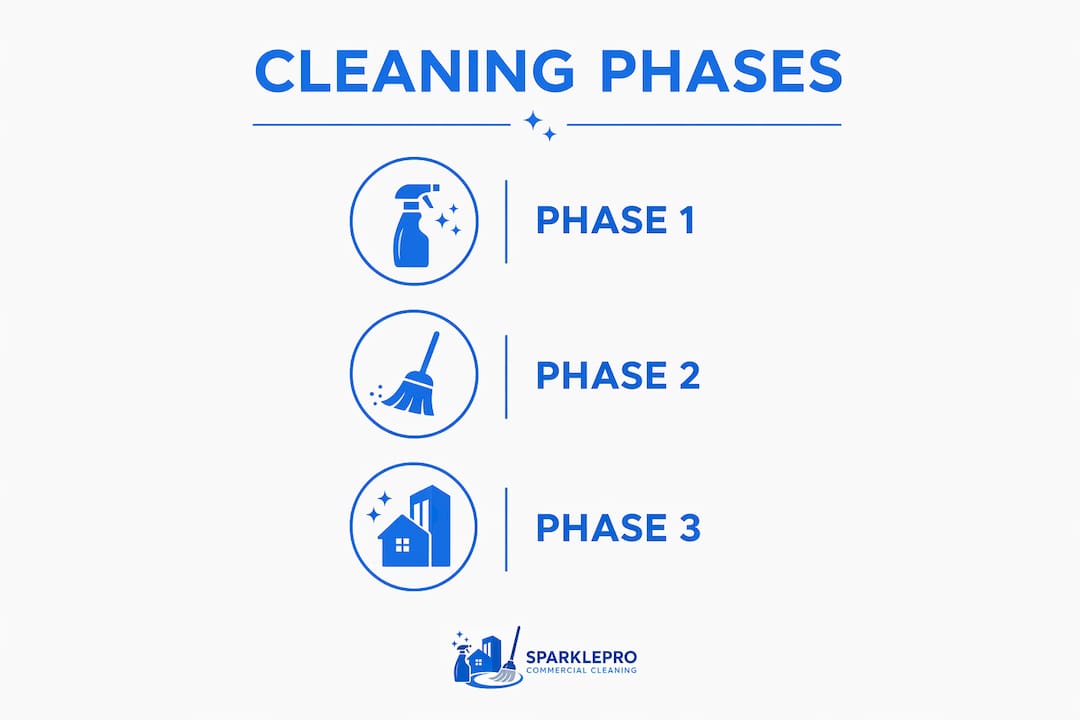
The industry standard breaks this work into three phases:
- Rough clean: Removal of bulk debris, lumber scraps, drywall offcuts, packaging, and large waste materials
- Light/detail clean: Surface cleaning of walls, windows, fixtures, and floors using HEPA vacuums and microfiber cloths to capture fine dust
- Final clean: Inspection-ready finishing, including polishing fixtures, sanitizing high-touch areas, and removing any residue left by last-minute trades
Timing matters as much as technique. Each phase ties directly to a construction milestone: rough clean follows framing and drywall, detail clean happens after all major trades complete their work, and final clean takes place 24–72 hours before the certificate of occupancy inspection or owner move-in.
The three phases of post-construction cleaning explained
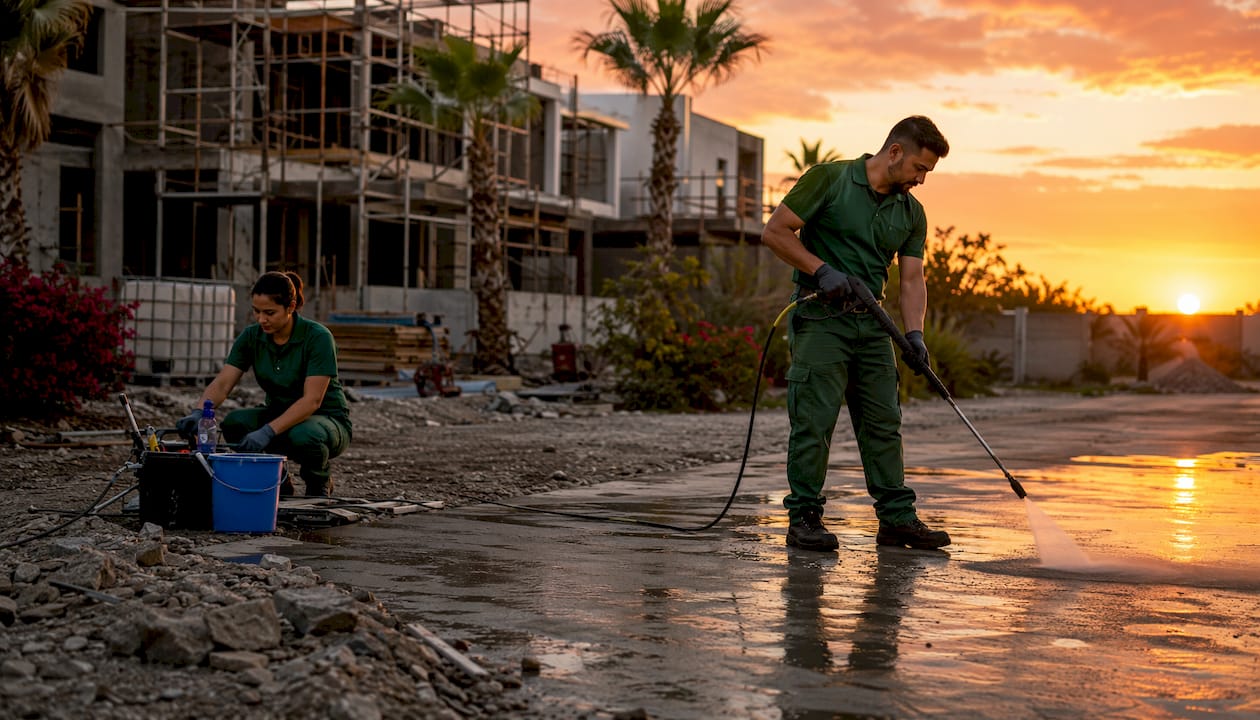
Phase 1: Rough clean
Rough clean is the first pass, usually performed while construction is still wrapping up. The goal is simple: remove everything that does not belong. That means lumber offcuts, drywall scraps, packaging materials, and any large debris left by trades. This phase often overlaps with active construction, so crews must coordinate closely with the general contractor.
Phase 2: Light/detail clean (pre-punch)
This is the substantive cleaning phase, and it demands the most technical skill. Crews work through every surface in the building after all major trades complete their work but before the GC's punch walk with the owner.
Key tasks include:
- Clean all surfaces from ceiling to floor: light fixtures, HVAC registers, walls, sills, door frames
- Interior window cleaning, including frames and glass
- Hard floor prep: grout haze removal from tile, adhesive removal from concrete
- Fixture wipe-down and removal of protective coverings
- Restroom and kitchen construction clean, including first-time sanitization
The top-down cleaning sequence is non-negotiable here. Dust follows gravity, and cleaning floors before ceilings guarantees you will redo the same work twice. HEPA vacuums are required because standard vacuums recirculate fine particles rather than capturing them.
Phase 3: Final clean (certificate of occupancy)
Final clean delivers the inspection-ready condition. This phase addresses any recontamination from last-minute trades, touch-up painters, and punch list electricians who worked after the detail clean. Scope includes all glass (interior and exterior), final floor finishing, high dusting of light fixtures and ceiling fans, and full restroom sanitization with fixture polish.
Pro Tip: Schedule the final clean no more than 48 hours before the walkthrough. Any gap longer than that invites recontamination from trades still on site.
Why proper cleaning methods protect your project and your people
Treating post-construction cleaning as simple tidying is one of the most costly misconceptions in the industry. Fine drywall dust spreads into corners, settles repeatedly, and reappears after the first pass if crews clean out of sequence. The result is rework, delays, and a space that fails inspection.
The health risks are real. Silica dust from drywall cutting, chemical solvents, caulk residue, and metal filings are not hazards that a standard mop and bucket can address. HEPA filtration is the standard because it captures particles that ordinary vacuums push back into the air. For HVAC systems, this matters even more: construction dust pulled into ductwork circulates through the building long after occupancy begins.
Personnel working on active construction sites must comply with OSHA 29 CFR 1926 construction safety standards, which are distinct from the general industry 1910 standards that apply to routine commercial cleaning. This distinction carries real liability. A cleaning crew that does not understand construction site hazards, from open penetrations to live electrical work, creates exposure for the GC and the property owner alike. Reviewing construction cleaning safety requirements before mobilizing any crew is not optional.
On the cost side, mid-size commercial projects can vary widely in cost depending on phases, finish level, and building complexity. Skipping or shortcutting phases does not save money. It creates rework costs that typically exceed what the skipped phase would have cost.
Workplace hygiene responsibilities during and after construction extend beyond aesthetics. Inadequate cleaning creates documented safety liabilities and can delay occupancy permits.
How to manage interior construction cleaning contracts effectively
The single most effective thing a property manager or GC can do is write the three-phase model explicitly into every cleaning contract. Vague scope language like "post-construction cleaning" invites disputes. Naming each phase, its timing trigger, and its deliverables removes ambiguity before work begins.
Practical steps for managing the process:
- Tie each cleaning phase to a specific construction milestone, not a calendar date
- Require OSHA 29 CFR 1926 compliance documentation from any cleaning contractor before mobilization
- Confirm HEPA equipment is on-site before the detail clean begins
- Schedule a crew supervision walkthrough at the start of each phase to verify sequence and scope
- Build a 48-hour buffer before the certificate of occupancy inspection for the final clean
Clear phased cleaning schedules help property managers avoid budget overruns and keep inspection readiness on track. The most common failure point is out-of-sequence cleaning: a crew that mops floors before dusting ceilings forces a second floor cleaning, adding cost and time.
Pro Tip: Ask any cleaning contractor to walk you through their sequencing plan before signing. A contractor who cannot explain top-down methodology clearly has probably not done serious post-construction work.
How Sparkleprocommercialcleaning approaches post-construction cleaning
Sparkleprocommercialcleaning is a fully licensed and insured commercial cleaning company operating nationwide, with specialized expertise in post-construction cleanouts across office buildings, retail centers, healthcare facilities, and industrial spaces.
Their client engagement follows a transparent four-step process:
- Quote: Detailed scope review and pricing based on building size, finish level, and phase requirements
- Site visit: On-site assessment to confirm conditions and identify any access or sequencing considerations
- Scheduled cleaning: Phased execution coordinated with the construction schedule and GC milestones
- Customer approval: Final walkthrough with the client before sign-off
Sparkleprocommercialcleaning's blog resources cover technical topics including high-touch surface sanitization and building cleaning preparation, giving property managers and GCs practical guidance before and during the cleaning process. For regional projects, their Washington-area post-construction services reflect the same phased, compliance-focused approach applied locally.
Key Takeaways
Interior construction cleaning requires a strict three-phase sequence, HEPA filtration, and OSHA 29 CFR 1926 compliance to deliver inspection-ready results without costly rework.
| Point | Details |
|---|---|
| Three-phase structure | Rough, detail, and final clean each tie to a specific construction milestone and build on each other. |
| Top-down sequence | Cleaning ceilings before floors prevents dust resettlement and eliminates rework. |
| HEPA filtration required | Standard vacuums recirculate fine construction dust; HEPA equipment captures it. |
| OSHA 29 CFR 1926 compliance | Cleaning crews on active construction sites follow construction safety standards, not general janitorial rules. |
| Cost range | Mid-size commercial projects run $15,000–$200,000 depending on phases and finish level. |