
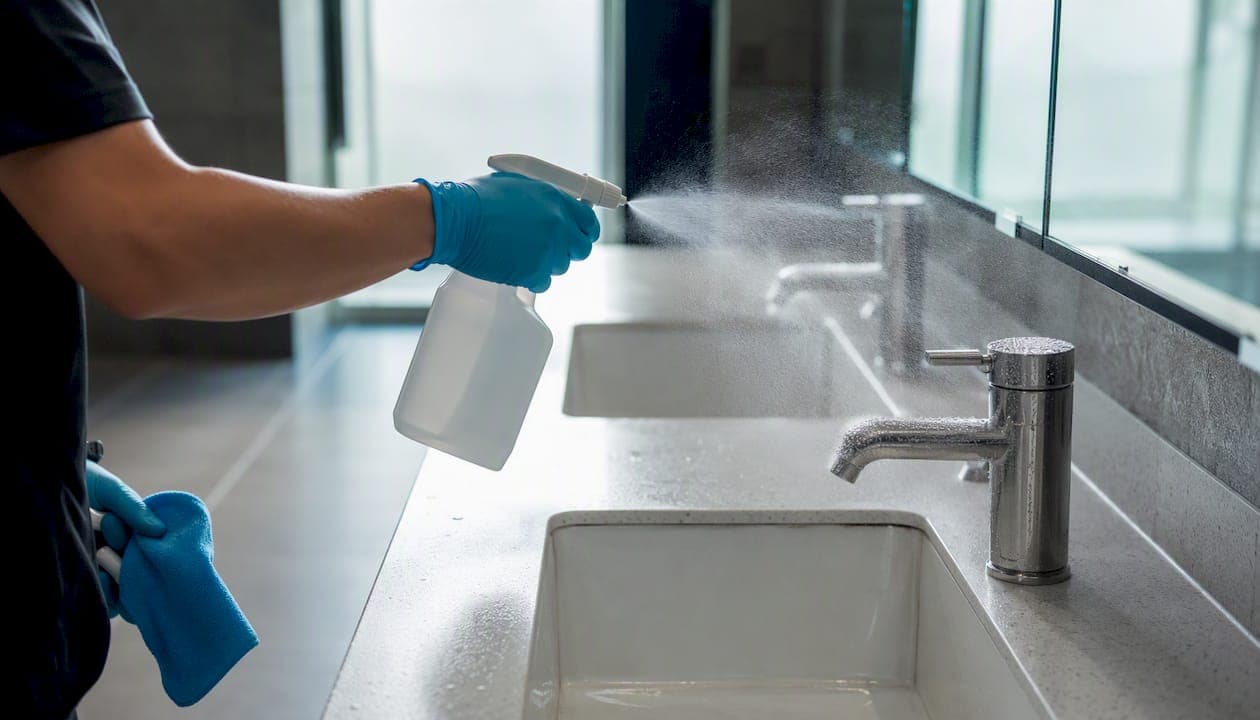
Hiring a professional disinfecting service reduces illness transmission, protects productivity, and delivers measurable operational ROI for commercial facilities. That is the verdict, backed by CDC guidance on cleaning versus disinfecting and by disinfectants registered with the EPA for use against specific pathogens.
The primary disinfecting service advantages break down into five categories:
- Reduced absenteeism from illness transmission
- Higher employee productivity and morale
- Stronger customer and tenant confidence
- Protection of surfaces, equipment, and long-term asset value
- Easier compliance with workplace health expectations
According to CleanLink, regular professional cleaning and disinfection helps cut the spread of illness, which shows up directly in fewer sick days and steadier output.
Key Takeaways
Professional disinfecting reduces illness transmission and delivers measurable ROI when facility managers pair EPA-registered products with documented, repeatable processes.
| Point | Details |
|---|---|
| Disinfecting beats cleaning alone | Cleaning removes visible dirt; disinfecting kills remaining pathogens and is required after illness or in high-risk areas. |
| Health gains drive productivity | Fewer sick days and lower illness transmission translate directly into steadier staffing and output. |
| ROI is modelable | Compare average wage times sick days reduced against contract cost to justify a standing disinfecting program. |
| Documentation is non-optional | Request SDS, treatment logs, and verification testing from any provider before signing a contract. |
| Sparkleprocommercialcleaning offers structured programs | Nationwide site surveys, EPA-registered products, and flexible contracts give facility managers consistent, documented disinfecting. |
This article is general information, not a substitute for advice from a qualified doctor. Consult a qualified healthcare professional about your own circumstances before acting on anything here.
Table of Contents
- Why Disinfecting Services Matter for Reducing Sick Days
- Productivity, Morale, and the Customer-Facing Payoff
- Cost Considerations and How to Model Disinfecting ROI
- Cleaning, Sanitizing, and Disinfecting: What's the Difference?
- Air Quality and Environments That Need Extra Attention
- What a Professional Disinfecting Service Actually Delivers
- How to Vet a Disinfecting Service Before You Sign
- Why Documentation Separates a Real Program From a One-Off Visit
- A Practical Next Step for Facility Managers
- Sources
Why Disinfecting Services Matter for Reducing Sick Days
Standard cleaning wipes away dirt and visible residue, but it does not reliably kill the pathogens left behind on a doorknob or a break room table. Professional disinfection goes a step further, targeting the microorganisms that a mop and soap simply move around rather than eliminate.
The CDC's guidance on cleaning and disinfecting is direct on this point: cleaning removes most germs, but disinfecting is what's called for once someone has been sick or when a space carries elevated risk, like a shared restroom or a clinic waiting room. CleanLink ties this same practice to measurably fewer sick days and better overall productivity.
The practical upshot for facility managers: build a rapid post-illness disinfection response into your incident plan, not just your routine schedule. When flu season hits a floor or a stomach bug moves through a break room, a targeted disinfection pass on high-touch points can contain the spread before it takes out half your staff for a week.
Productivity, Morale, and the Customer-Facing Payoff
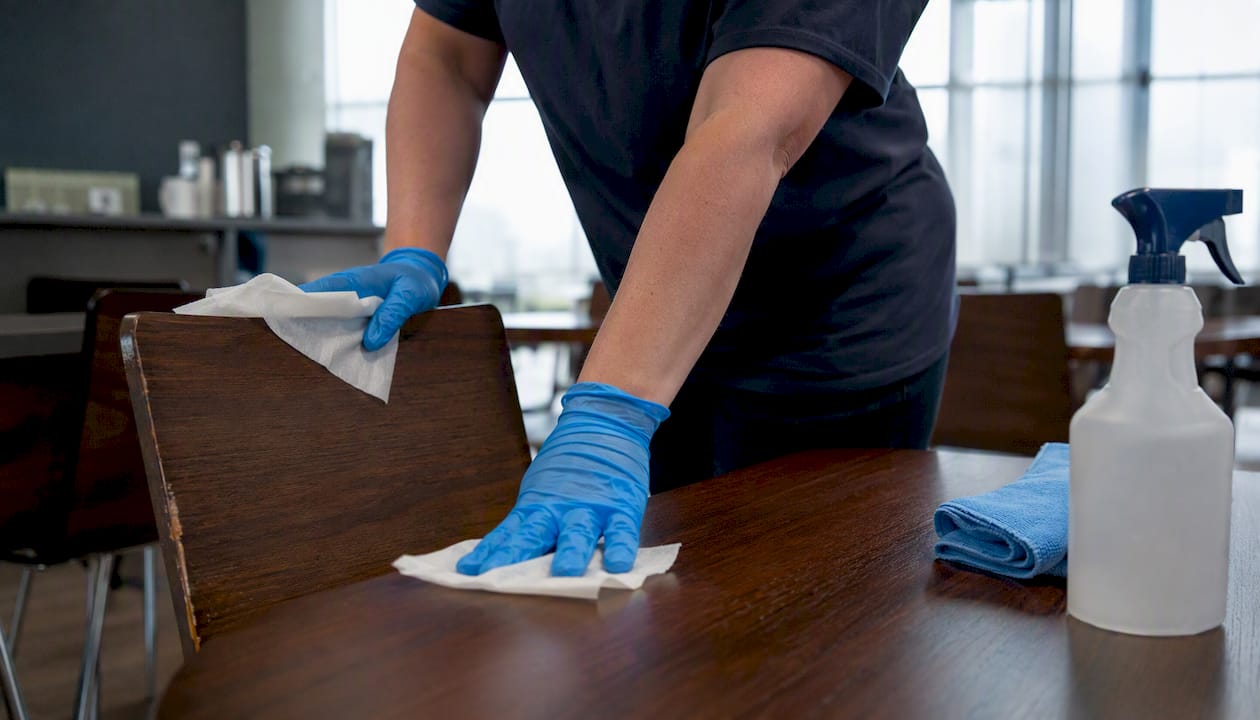
Fewer sick days means fewer scrambled schedules, less overtime coverage, and a workforce that isn't operating short-staffed every other week. That's the direct line from disinfecting to output. There's a quieter benefit too: employees notice when a space is genuinely disinfected, not just tidied, and that shows up in morale and how they talk about the workplace.
On the customer-facing side, the advantages of professional disinfection include:
- A cleaner, more confident first impression for visitors and tenants
- Fewer visible outbreaks or odor issues that disrupt business
- Reduced risk of a facility becoming known for illness incidents among staff or clients
Pro Tip: Post a simple, visible disinfection schedule near entrances or in shared kitchens. It reassures occupants and gives you an easy KPI to track: log completed touchpoint disinfections weekly and watch whether reported illness incidents trend down.
Cost Considerations and How to Model Disinfecting ROI
Disinfecting earns its keep when you measure it against what it prevents, not just what it costs. A basic ROI model needs three inputs: average daily wage across affected staff, the number of sick days you realistically expect to reduce, and your annual contract cost. Multiply wage by days saved across your headcount, then compare that figure to the contract price. Add in avoided costs like emergency deep cleans after an outbreak, and the math usually favors a standing program over reactive one-off calls.
Pricing typically hinges on a few drivers: square footage, visit frequency, whether the scope covers high-touch points only or the whole site, the equipment involved, and any premium for emergency response. Common contract structures include:
- A one-off deep disinfection after a specific incident
- A recurring add-on layered onto existing janitorial service
- A bundled package combining routine cleaning and disinfecting under one contract
Cleaning, Sanitizing, and Disinfecting: What's the Difference?
These three terms get used interchangeably, and that confusion leads facilities to under-treat risk. Cleaning removes dirt and organic matter. Sanitizing lowers microbe counts to a level public health standards consider safe. Disinfecting kills the germs that remain after cleaning, and it's the step you need when illness has been present or risk is elevated.
The CDC's operational sequence is: clean the surface first, then apply an EPA-registered disinfectant, following the product label for the required contact or wet time. Before any crew starts, run this safety checklist:
- Review the Safety Data Sheet for every product in use
- Confirm appropriate PPE for the specific chemical
- Ventilate the space during and after application
- Never mix disinfectant products
- Store chemicals according to label instructions
Wide-area methods like fogging or electrostatic spraying aren't recommended as a primary disinfection method unless the product label specifically permits that application, since misuse carries real safety risk.
Air Quality and Environments That Need Extra Attention
Surface disinfection handles what people touch. It does not replace ventilation and filtration, which handle what people breathe. Treat the two as complementary layers of the same infection-control strategy, not substitutes for each other.
Some environments warrant tighter protocols regardless of season: clinics and healthcare-adjacent spaces, food prep and service areas, gyms, schools, high-traffic retail floors, and post-construction zones being handed over to new tenants. Our guide on right-sizing disinfecting services for facilities walks through matching protocol intensity to facility type.
Pro Tip: Loop your HVAC team into disinfection scheduling. Running treatments during low-occupancy windows lets contact time and drying finish before air handlers pull occupants back into the space.
What a Professional Disinfecting Service Actually Delivers
A qualified provider combines trained staff, EPA-registered products, and a documented process, not just a spray bottle and a checklist copied from a template. Sanitization industry sources describe the standard workflow: site survey, scope definition, product selection based on the pathogens of concern, pre-cleaning, targeted disinfection application, the required dwell or contact time, then post-service inspection.
Expect a competent provider to bring specific tools to that process:
- Electrostatic sprayers for even coverage, used only where the product label allows it
- Spot UV-C treatment in select applications
- ATP or swab testing to verify surfaces meet cleanliness thresholds
- Written reports and, where applicable, before-and-after documentation
Before signing, ask for the Safety Data Sheet, a treatment log, verification test results, and a recommended ongoing schedule. Providers should also flag when a situation, like a sewage backup or a biohazard event, calls for specialized sanitization beyond standard disinfecting.
How to Vet a Disinfecting Service Before You Sign
Use a short, structured checklist during procurement rather than relying on a sales pitch. A vendor worth hiring will answer every item below without hesitation.
- Licensing and insurance. Confirm active business licensing and liability coverage before any site visit.
- EPA-registered products. Ask which specific disinfectants they use and confirm registration for the pathogens you're concerned about.
- Safety Data Sheets on request. A provider unwilling to hand over SDS documentation is a hard pass.
- Documented worker training. Staff should be trained on contact time, PPE, and chemical handling, not just given a bottle and a rag.
- Site-specific risk assessment. The scope should reflect your actual foot traffic and risk areas, not a generic template.
- Written protocols and reporting. Expect a treatment log and a proposed schedule, not a verbal promise.
When you're getting quotes, ask directly: what product and EPA registration number will you use, what contact time does the label require, what's your PPE and ventilation plan, and can you provide references from similar facilities? Watch for red flags: vague answers about product identity, refusal to share an SDS, claims of "permanent" germ elimination, no written documentation, or gaps in insurance coverage. Our checklist for choosing office disinfecting services covers additional office-specific questions worth raising during the quote stage.
Why Documentation Separates a Real Program From a One-Off Visit
Paperwork isn't a formality. A treatment log and verification results are what let you prove due diligence if an illness incident, insurance claim, or compliance question ever comes up. We push clients toward contract terms that build in routine reporting and a fixed schedule, not a handshake agreement.
A Practical Next Step for Facility Managers
A nationwide disinfecting partner takes the guesswork out of procurement: one point of contact, consistent EPA-registered products across every site, and the documentation your compliance file actually needs. That consistency matters most for multi-site portfolios, where managing five different local vendors with five different protocols creates exactly the kind of gaps this article just walked through.
Sparkleprocommercialcleaning builds every disinfecting engagement around a site survey, a defined scope, and a paper trail: treatment logs, product documentation, and a recommended ongoing schedule handed to you, not buried in an inbox. That's paired with flexible contract structures, from a one-off deep disinfection to a bundled add-on inside routine janitorial service, so you're not locked into more than your facility needs. If you're weighing a recurring program, our guide to matching disinfecting scope to facility type is a good starting point. Managers in Massachusetts can get a quote and schedule a site visit through the Massachusetts service page directly.
Sources
- Cleaning and Disinfecting | Water, Sanitation and Hygiene (WASH) | CDC
- 5 Benefits Of Proper Cleaning And Disinfecting - CleanLink
- Why Professional Sanitization Services Matter for Homes & Businesses | 911 Restoration