
A routine facility cleaning process is a structured, scheduled system of tasks that maintains hygienic, safe, and operationally sound commercial spaces through consistent execution across all zones and surface types. Property managers and facility directors who treat cleaning as a documented program rather than an ad hoc task see measurable gains in occupant health, asset longevity, and regulatory compliance. The industry term for this discipline is environmental services management, and it applies equally to office buildings, retail centers, healthcare facilities, and industrial spaces. This guide breaks down how to build and maintain that system using CDC-aligned protocols, EPA-registered disinfectants, and tools like Nilfisk commercial equipment.
What areas and surfaces should a routine cleaning process cover?
A commercial facility divides naturally into zones with different contamination risks, and your cleaning schedule must reflect those differences. Treating a lobby the same as a server room wastes resources. Treating a restroom the same as a private office creates compliance gaps.
The primary zones in most commercial facilities include:
- Restrooms: Daily disinfection of fixtures, floors, and dispensers; odor control; supply restocking
- Kitchens and break rooms: Daily wipe-down of counters and appliances; weekly deep cleaning of refrigerators and microwaves
- Lobbies and reception areas: Daily floor care and glass cleaning; frequent disinfection of reception desks and door handles
- Private offices: Daily trash removal and surface dusting; weekly vacuuming and glass cleaning
- High-traffic corridors and stairwells: Daily mopping and spot cleaning; weekly floor treatment
- Exterior grounds: Weekly litter removal; seasonal pressure washing and HVAC intake clearing
Within each zone, surfaces split into two categories. High-touch surfaces include door handles, elevator buttons, light switches, shared keyboards, and faucet handles. These points concentrate microbial load because dozens or hundreds of people contact them daily. Low-touch surfaces like ceiling tiles, upper wall panels, and storage shelving require less frequent attention but still need scheduled care to prevent dust accumulation and mold growth.
Food preparation areas and medical zones require a separate tier of protocol entirely. The medical facility cleaning process requires tailored methods including terminal cleaning for patient rooms and strict PPE protocols, with infection prevention as the primary goal rather than surface aesthetics. A school facility cleaning checklist, by contrast, prioritizes high-touch classroom surfaces and restrooms but does not require the same regulatory oversight as a healthcare setting. Knowing your zone types before building your schedule is the single most important structural decision you will make.
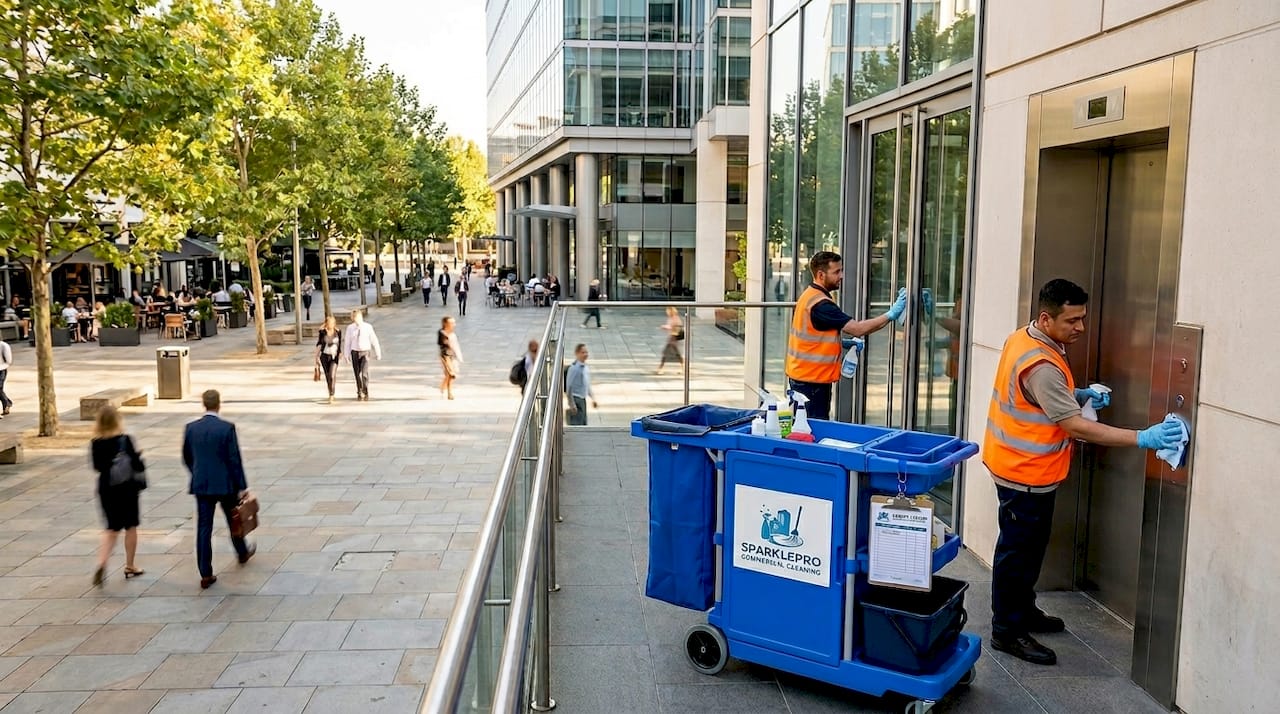
Pro Tip: Use a color-coded zone map of your facility when building your first checklist. Assign red to high-risk zones like restrooms and medical areas, yellow to moderate-risk zones like kitchens, and green to low-risk zones like private offices. This visual tool makes task delegation faster and reduces training time for new custodial staff.
How to structure cleaning frequency: daily, weekly, monthly, and seasonal tasks
Frequency is where most facility cleaning programs fail. Managers either over-schedule low-risk areas or under-schedule high-traffic zones, creating wasted labor in one place and hygiene gaps in another. The fix is matching task frequency to actual usage patterns, not to calendar convenience.
A practical frequency model for commercial facilities works as follows:
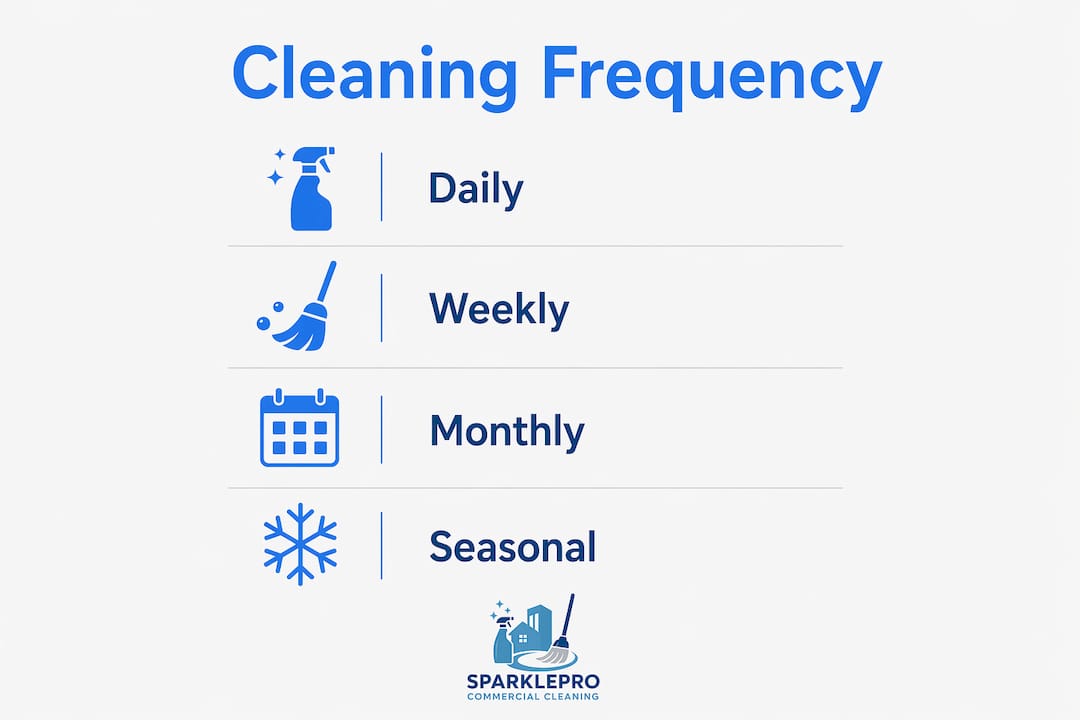
- Daily tasks: Sweep and mop high-traffic floors, empty all waste bins, wipe down high-touch surfaces with EPA-registered disinfectants, clean and restock restrooms, and spot-clean glass entry points. Daily cleaning schedules should also include sweeping floors, emptying waste bins, and mopping high-traffic spots to maintain baseline hygiene.
- Weekly tasks: Deep clean carpets and hard floors, scrub kitchen appliances, clean interior glass and partition walls, sanitize break room refrigerators, and inspect and clean floor drains.
- Monthly tasks: Buffer and refinish hard floors, service and clean commercial equipment like Nilfisk floor scrubbers, inspect grout lines in restrooms, and conduct a full inventory of cleaning supplies.
- Seasonal tasks: Pressure wash exterior walkways and parking structures, clean HVAC intake vents and replace filters, treat exterior matting, and conduct a full facility audit against your documented cleaning program.
The table below maps task categories to frequency and primary purpose:
| Task category | Frequency | Primary purpose |
|---|---|---|
| High-touch surface disinfection | Daily or every 2-4 hours | Pathogen reduction |
| Floor care (sweep, mop) | Daily | Slip prevention, appearance |
| Deep floor treatment (buffing, scrubbing) | Monthly | Asset preservation |
| Equipment maintenance | Weekly/Monthly | Downtime prevention |
| Exterior and HVAC maintenance | Seasonal | Structural and air quality |
Preventive cleaning systems that align schedules with traffic patterns reduce redundant work and maintain facility cleanliness more efficiently than fixed clock-based routines. Entrance matting, for example, reduces dirt ingress at building entries by capturing particulates before they spread to interior floors, cutting the frequency of interior mopping needed.
What are best practices for cleaning high-touch surfaces effectively?
High-touch surfaces in public and shared areas should be disinfected every 2 to 4 hours to reduce pathogen transmission risk. That frequency may feel aggressive for a low-traffic office building, but it is the baseline for any facility with shared amenities, visitor access, or food service.
The two-step cleaning and disinfection process is the standard method aligned with CDC guidance. Step one removes visible soil and organic matter using a general cleaner. Step two applies an EPA-registered disinfectant and allows it to remain on the surface for the labeled dwell time. Wiping a disinfectant off too soon can reduce its efficacy by up to 90%, which means a surface that looks clean is still microbiologically compromised. Facilities must follow EPA-labeled instructions, keeping surfaces visibly wet for the required contact period, typically 1 to 10 minutes depending on the product.
Color-coded microfiber cloth systems prevent cross-contamination between different facility zones. A red cloth stays in restrooms, a blue cloth handles office surfaces, and a yellow cloth covers kitchen areas. This practice eliminates the single most common source of cross-zone contamination in commercial facilities.
Verification matters as much as execution. ATP bioluminescence testing allows objective verification of cleaning effectiveness beyond visual inspection, detecting organic contamination rapidly on any surface. This tool is standard in healthcare facility cleaning workflows and is increasingly used in schools and food service facilities. Pair ATP testing with laminated zone-specific checklists posted in each area, and you create a self-auditing system that holds staff accountable without requiring constant supervisor presence.
Pro Tip: Schedule ATP testing on a rotating basis across your highest-risk zones rather than testing the same surfaces every time. This gives you a statistically representative picture of your program's performance and surfaces patterns you would miss with a fixed testing location.
What tools and technologies support an efficient cleaning operation?
The right equipment does not just clean faster. It cleans more consistently and generates data that improves your scheduling decisions over time.
Commercial-grade floor scrubbers from manufacturers like Nilfisk reduce labor time on large hard-floor areas while delivering more consistent results than manual mopping. Routine maintenance of cleaning tools prevents cross-contamination, unpleasant odors, and equipment downtime. Cleaning vacuum filters, brushes, and sanitizing wet tools weekly prolongs equipment life and protects cleaning quality. A floor scrubber with a dirty recovery tank is not just ineffective. It actively redistributes contaminants.
The more significant shift in commercial facility cleaning is the adoption of sensor-driven and AI-powered scheduling. AI-driven predictive cleaning uses sensor data to prioritize cleaning tasks based on actual facility usage, improving hygiene and reducing wasted labor. Sensors track foot traffic, washroom usage rates, and bin fill levels to trigger cleaning tasks dynamically rather than at fixed times. A restroom that sees 200 uses before noon gets cleaned at noon. One that sees 20 uses gets cleaned at end of day. The result is better hygiene where it matters and less unnecessary labor where it does not.
| Approach | Basis for scheduling | Outcome |
|---|---|---|
| Fixed-time cleaning | Clock schedule | Predictable but often misaligned with actual need |
| Traffic-based scheduling | Foot traffic data | Better resource allocation, fewer redundant tasks |
| AI-driven predictive cleaning | Sensor data and usage analytics | Highest efficiency and hygiene alignment |
Integrating real-time usage data into cleaning scheduling optimizes resource deployment and balances hygiene needs with operational efficiency in complex facilities. For property managers overseeing multiple buildings, this technology also creates centralized visibility into cleaning activity across all sites.
How to implement and maintain a documented cleaning program
A documented cleaning program is the difference between a facility that passes audits and one that scrambles before inspections. Documented environmental cleaning programs aligned with CDC guidance define surface categories, frequencies, cleaning methods, and quality control monitoring for compliance. The same structure applies to any commercial facility, not just healthcare.
A complete program document includes:
- Scope statement: Which buildings, floors, and zones the program covers
- Surface and zone classification: High-touch, low-touch, food prep, medical, and exterior categories
- Task frequency matrix: Daily, weekly, monthly, and seasonal tasks mapped to specific areas
- Approved products list: EPA-registered disinfectants with labeled dwell times for each surface type
- Staff training records: Sign-off sheets for initial training and annual refreshers
- Audit and inspection logs: Dated records of supervisor walkthroughs and ATP test results
- Corrective action protocol: Steps taken when a zone fails inspection or a complaint is received
Documentation including logs, checklists, and audit reports is the foundation of compliance and quality assurance in any cleaning program. Regular audits and feedback loops improve execution and maintain standards over time. Post laminated zone-specific checklists in each area so custodial staff can self-verify task completion without relying on memory. For daily commercial cleaning routines, this documentation layer is what separates a professional program from a list of informal habits.
Key takeaways
A routine facility cleaning process succeeds when it combines zone-based task classification, frequency scheduling aligned to actual usage, two-step disinfection protocols, and a documented audit system that holds staff accountable.
| Point | Details |
|---|---|
| Zone-based task assignment | Classify areas by contamination risk before building any schedule or checklist. |
| Frequency matched to usage | Align daily, weekly, and monthly tasks to actual traffic patterns, not fixed clock schedules. |
| Two-step disinfection protocol | Always clean before disinfecting, and respect EPA-labeled dwell times to achieve full efficacy. |
| Color-coded cloth systems | Separate microfiber cloths by zone to eliminate cross-contamination between restrooms, kitchens, and offices. |
| Documented audit trails | Maintain logs, checklists, and ATP test records to support compliance and continuous improvement. |
Why systematic cleaning changed how I think about facility management
Most property managers I work with inherited their cleaning programs. They got a vendor, a schedule, and a checklist from whoever held the role before them, and they kept running it. The problem is that inherited programs are almost never built around the facility's actual usage. They are built around convenience.
The shift I have seen make the biggest difference is moving from clock-based scheduling to exposure-based scheduling. When you clean a restroom at 9 AM because that is what the schedule says, you are not responding to the facility. You are responding to a spreadsheet. When you clean it after it has seen 150 uses, you are responding to reality. That distinction sounds simple, but it changes labor allocation, supply consumption, and occupant satisfaction in ways that show up in your budget and your tenant feedback.
The other thing I would push back on is the assumption that technology replaces human judgment. Sensor-driven scheduling and ATP testing are powerful, but they require a trained person to interpret the data and act on it. A facility that invests in smart tools without investing in staff training will get expensive data and mediocre results. The technology supports the human. It does not replace them.
Cleanliness is also a trust signal. Occupants who see a clean facility assume the building is well-managed. Occupants who see a dirty one assume everything else is deferred too. That perception affects lease renewals, tenant retention, and your reputation as a facility director. The right disinfecting services and a documented program are not just operational tools. They are part of how you communicate professional standards to everyone who walks through your doors.
— Sales
Professional cleaning services built for commercial facilities
Sparkleprocommercialcleaning delivers routine and specialty cleaning programs designed specifically for property managers and facility directors who need consistent, documented results across complex commercial spaces.
Whether you manage an office building, retail center, or healthcare facility, Sparkleprocommercialcleaning builds customized cleaning plans that align with your zone classifications, compliance requirements, and occupancy schedules. Their teams are trained on two-step disinfection protocols, EPA-registered product use, and documentation standards that hold up to audits. If you are ready to replace an inherited cleaning program with one built around your facility's actual needs, request a cleaning consultation and get a plan that works from day one.
FAQ
What is a routine facility cleaning process?
A routine facility cleaning process is a scheduled, documented system of cleaning and disinfection tasks organized by zone, surface type, and frequency to maintain hygiene and safety in commercial spaces. It differs from reactive cleaning by operating on a proactive schedule aligned to facility usage patterns.
How often should high-touch surfaces be disinfected?
High-touch surfaces in shared commercial areas should be disinfected every 2 to 4 hours to reduce pathogen transmission risk. Door handles, elevator buttons, and shared equipment are the highest priority targets.
What is the difference between cleaning and disinfecting?
Cleaning removes visible soil and organic matter from a surface, while disinfecting uses an EPA-registered product to kill pathogens. Both steps are required in sequence for effective high-touch surface treatment.
What does a healthcare facility cleaning workflow include?
A healthcare facility cleaning workflow includes zone-specific protocols, terminal cleaning for patient rooms, strict PPE requirements, EPA-registered disinfectants with documented dwell times, and regular audits aligned with CDC guidance. The focus is infection prevention, not just surface appearance.
How do I build a facility cleaning checklist?
Start by mapping your facility zones by contamination risk, then assign tasks and frequencies to each zone. Include surface types, approved products, dwell times, and staff sign-off fields. Post laminated versions in each zone and review the checklist quarterly against audit results and occupant feedback.