

Facility sanitization is defined as the methodical reduction of harmful bacteria on surfaces to levels considered safe by public health authorities, specifically achieving a 5-log bacterial reduction of 99.999%. The industry term used by the ISSA and the CDC is "sanitizing," and it sits between cleaning and disinfecting on the microbial control spectrum. Facility managers who understand this distinction make better decisions about which process to apply, when to apply it, and how to verify it worked. This guide covers the standardized procedures, common misconceptions, and compliance strategies you need to maintain safe, hygienic facilities.
What is facility sanitization and how does it work?
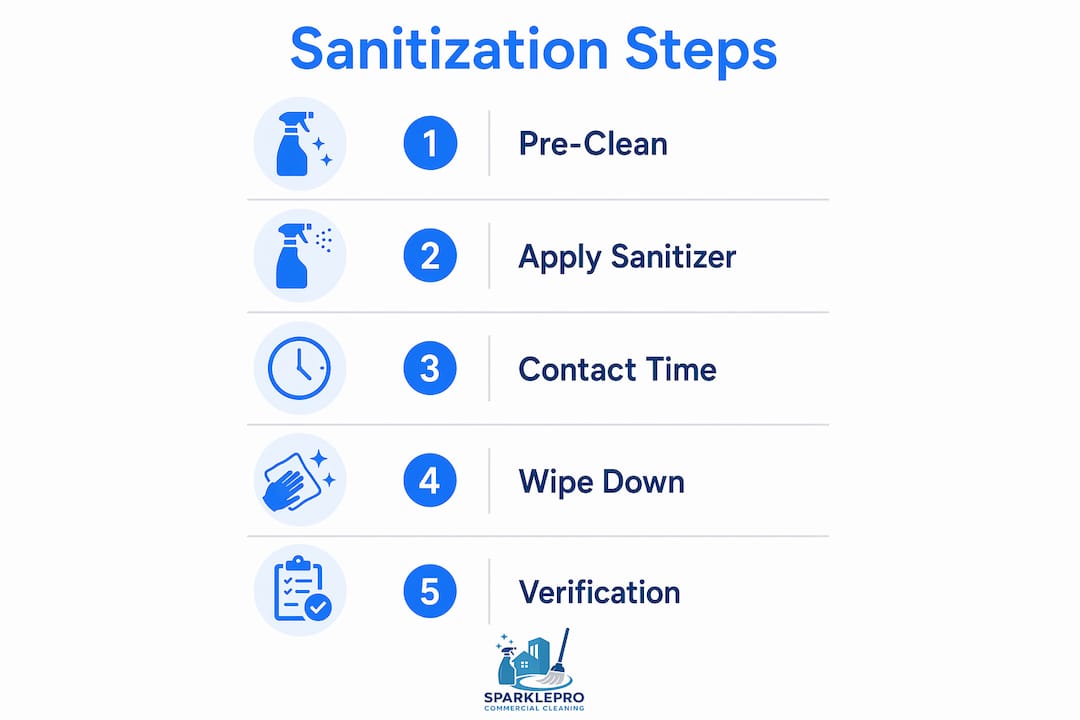
Facility sanitization is a sequential chemical and physical process designed to bring bacterial counts on surfaces down to levels that public health codes define as safe. The CDC and ISSA both recognize it as a distinct tier of microbial control, separate from general cleaning and from full disinfection. The process requires physical soil removal before any chemical sanitizer is applied, because dirt and organic matter shield bacteria from the sanitizing agent and render it ineffective.
Sanitization targets high-contact surfaces where bacterial transmission is most likely. Door handles, light switches, and countertops are the primary focus because they accumulate pathogens through repeated hand contact. A facility manager who sanitizes only visible or large surface areas misses the transmission points that matter most.
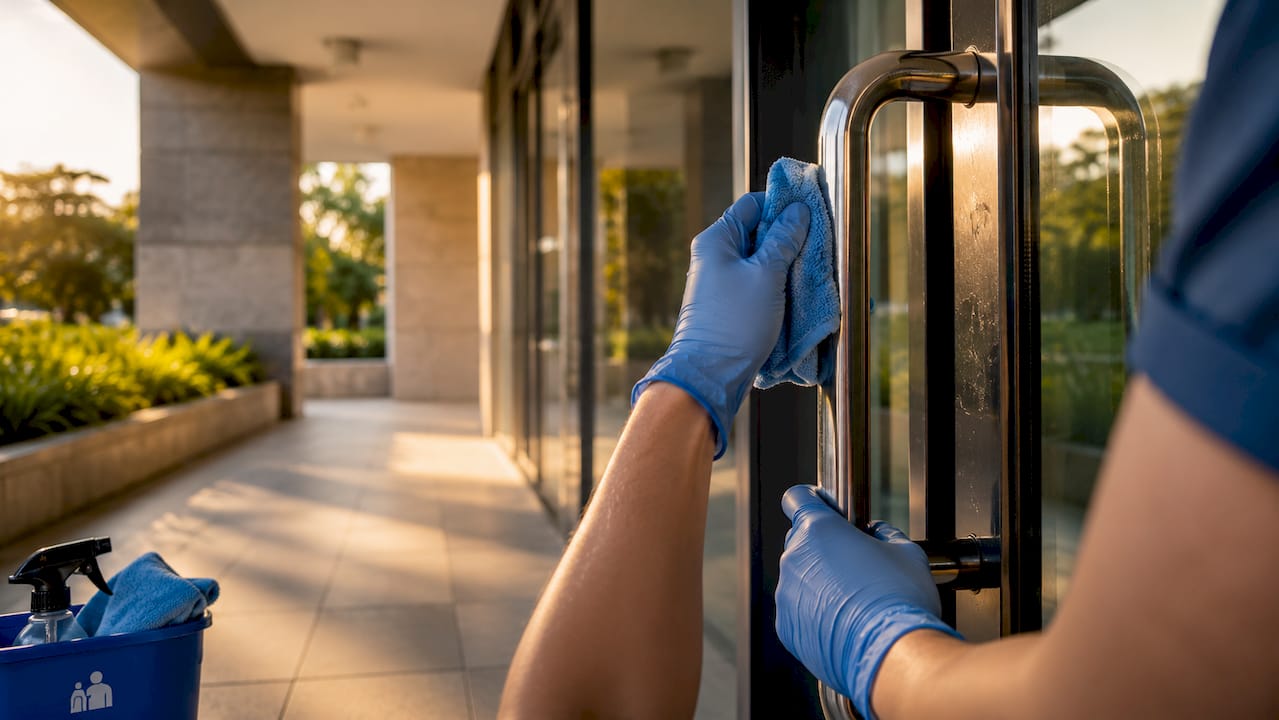
The outcome of proper sanitization is a surface that is bacteriologically safe, not sterile. That distinction matters operationally. Sanitizing does not eliminate viruses, fungi, or bacterial spores. Facilities that handle immunocompromised populations or confirmed viral outbreaks require disinfection, not sanitization alone.
What are the standardized steps in facility sanitization?
The 7-step cleaning process provides the industry-standard framework for facility sanitization. Each step has a specific purpose, and skipping any one of them reduces the effectiveness of the entire sequence.
- Preparation. Gather all required supplies, including the correct sanitizing agent, dilution tools, PPE, and clean cloths or mop heads. Confirm the sanitizer is appropriate for the surface type.
- Inspection. Walk the area to identify soiling levels, high-touch zones, and any surfaces that need special attention before chemical application.
- Dry removal. Sweep, vacuum, or dry-wipe loose debris. Removing dry soil first prevents it from spreading during wet cleaning.
- Scrubbing. Apply a general-purpose cleaner and scrub surfaces to remove grease, grime, and organic matter. This step is non-negotiable. Sanitizing after scrubbing ensures the sanitizer contacts the surface directly rather than reacting with residual soil.
- Sanitizing. Apply the approved sanitizing solution at the correct dilution. Allow the product to remain on the surface for the full contact time specified on the label. Do not wipe early.
- Final inspection. Verify coverage, check that contact time was observed, and confirm no areas were missed. Document the completed task.
- Signage. Place wet floor signs or area-closed notices where applicable to protect building occupants and allow surfaces to dry fully.
Pro Tip: Set a timer when applying sanitizer. Most facility teams wipe surfaces too early, which invalidates the contact time and leaves bacteria alive. A 30-second or 60-second timer per surface zone costs nothing and protects your compliance record.
The order of these steps is not flexible. Physical cleaning must precede chemical sanitization every time. Facilities that reverse or skip steps produce results that look clean but fail microbial testing.
How does facility sanitization differ from cleaning and disinfecting?
Facility managers frequently conflate cleaning, sanitizing, and disinfecting. Mixing up these terms leads to inaccurate application and insufficient pathogen control, which creates real liability in healthcare, food service, and high-traffic commercial environments.
The three processes target different outcomes and require different products.
| Process | Target | Outcome | Typical Use Case |
|---|---|---|---|
| Cleaning | Visible dirt and debris | Removes soil; does not reduce microbes | General maintenance, pre-sanitization prep |
| Sanitizing | Bacteria | 5-log (99.999%) bacterial reduction | Food prep surfaces, restrooms, high-touch zones |
| Disinfecting | Bacteria, viruses, fungi | Kills a broader pathogen spectrum | Healthcare settings, post-illness response |
Cleaning removes what you can see. Sanitizing reduces what you cannot see, specifically bacteria, to a safe threshold. Disinfecting goes further and eliminates a broader range of pathogens including viruses and fungi, but it typically requires stronger chemicals, longer contact times, and thorough rinsing afterward.
Choosing the wrong process for the context creates two types of risk:
- Under-treatment: Sanitizing a surface that requires disinfection leaves viruses and spores active. This is the most common error in facilities that have had a confirmed norovirus or influenza outbreak.
- Over-treatment: Applying hospital-grade disinfectants to surfaces that only need sanitizing increases chemical costs, raises staff exposure risk, and accelerates surface degradation.
For daily facility hygiene practices in office buildings, retail centers, and industrial spaces, sanitization covers the majority of high-touch surface needs. Disinfection protocols belong in the written SOP for specific trigger events, not as a daily default. For a deeper look at when disinfecting applies, the disinfecting cleaning guide covers the practical distinctions in detail.
What are best practices for effective facility sanitization?
Effective facility sanitization depends on four operational disciplines: correct chemical dilution, proper contact time, sequential process order, and documented procedures. Failing any one of these produces a program that looks compliant but is not.
Mixing errors are the leading cause of sanitization failure. A sanitizer that is too dilute does not achieve the required 5-log reduction. A sanitizer that is too concentrated can damage surfaces and create a chemical exposure hazard for staff. Use test strips to verify concentration at the point of use, and document the result on the task checklist.
Key practices every facility manager should enforce:
- Never sanitize before cleaning. Organic soil deactivates sanitizers. The sequence is always clean first, then sanitize.
- Rotate sanitizing agents periodically. Using the same product indefinitely can contribute to microbial resistance. Rotate between approved chemistries on a scheduled basis.
- Enforce PPE use. Gloves, eye protection, and appropriate footwear are required for chemical handling. Document PPE compliance in your SOP records.
- Write and follow SOPs. Standardized procedures with checklists create defensible, consistent hygiene programs. Verbal instruction alone does not produce consistent results across crews or shifts.
- Train staff on contact times. Every sanitizing product has a label-specified dwell time. Staff must know the time for each product they use and observe it without exception.
Pro Tip: Keep a laminated contact-time reference card at each supply station. Staff should not need to memorize dwell times. The card removes guesswork and keeps your program compliant even during high-turnover periods.
The importance of facility sanitation extends beyond compliance. A documented, well-executed sanitization program reduces sick days, limits liability exposure, and protects the reputation of the facility with tenants and clients.
How can facilities monitor and verify sanitization effectiveness?
Visual inspection is not a reliable measure of sanitization quality. A surface can look clean and still carry a significant bacterial load. Objective auditing methods like fluorescent marker testing and ATP bioluminescence testing provide quantifiable evidence of whether sanitization actually worked.
Fluorescent markers are applied to high-touch surfaces before a cleaning shift. After the crew completes their work, a UV light reveals whether the marked areas were wiped. The result is photographic and objective. ATP testing measures the biological residue remaining on a surface after sanitization and produces a numeric score that can be tracked over time.
| Audit Method | What It Measures | Best Use Case |
|---|---|---|
| Visual inspection | Surface appearance | Quick daily checks |
| Fluorescent marking | Coverage of high-touch areas | Crew training and accountability |
| ATP bioluminescence | Biological residue on surfaces | Compliance verification and trending |
| Photographic documentation | Condition before and after cleaning | Dispute resolution and SOP review |
Monthly cleanliness audits with data-backed scores help managers identify gaps and push performance toward the 94% or higher benchmark that leading facilities target. Audits also generate the training data needed to correct specific crew behaviors rather than issuing blanket retraining.
Infection prevention experts advocate continuous auditing and data-driven compliance checks over reliance on verbal instruction alone. That position reflects a practical reality: what gets measured gets managed. Facilities that audit monthly outperform those that rely on supervisor walkthroughs.
A facility audit framework that integrates sanitization scoring into broader building inspections gives facility managers a single compliance record that covers both structural and hygiene standards. That integration simplifies reporting and makes it easier to demonstrate due diligence to building owners and regulatory bodies.
Key Takeaways
Effective facility sanitization requires a sequential process, correct chemical application, and objective auditing to achieve and maintain safe bacterial reduction levels.
| Point | Details |
|---|---|
| Sanitization is bacteria-focused | It achieves a 5-log (99.999%) bacterial reduction but does not eliminate viruses or spores. |
| Clean before you sanitize | Physical soil removal must precede chemical application every time, without exception. |
| Contact time is non-negotiable | Wiping a surface before the dwell time expires invalidates the sanitization effort. |
| Document everything | SOPs, checklists, and chemical dilution records create a defensible compliance program. |
| Audit with data, not eyes | ATP testing and fluorescent markers reveal what visual inspections miss. |
What I've learned from watching facilities get sanitization wrong
Most facility managers I've worked with understand that sanitization matters. Where they struggle is operationalizing it consistently across multiple crews, shifts, and building zones. The gap between knowing the right process and executing it reliably is where most programs break down.
The single most common mistake I see is treating sanitization and disinfection as interchangeable. A facility manager will respond to a reported illness by telling staff to "sanitize everything," when the situation actually calls for a full disinfection protocol targeting viruses. That confusion does not just waste product. It leaves the facility exposed.
The second mistake is trusting visual assessments. A floor that looks clean after mopping can still carry a bacterial load that fails ATP testing. I've seen facilities with spotless-looking restrooms score poorly on objective audits because staff were not observing contact times. The surface looked right. The microbiology did not agree.
The fix is not complicated, but it requires discipline. Write the SOP. Train to the SOP. Audit against the SOP. When scores drop, use the audit data to retrain on the specific failure point, not the entire program. That targeted approach builds accountability without burning out your team.
Facility managers who treat sanitization as a documented, audited process rather than a task list protect their buildings, their tenants, and themselves.
— Sales
Professional sanitization services for your facility
Sparkleprocommercialcleaning works with facility managers across the country to deliver sanitization programs built on CDC-aligned protocols, documented SOPs, and verifiable compliance records.
Whether you manage an office building, a retail center, or an industrial space, Sparkleprocommercialcleaning provides licensed, insured cleaning teams trained in the 7-step process and equipped to handle everything from routine sanitization to post-construction cleanouts. State-specific service is available for facilities in Delaware, Massachusetts, Washington, and New Jersey. Contact Sparkleprocommercialcleaning to schedule a site visit and get a documented cleaning plan for your facility.
FAQ
What is the difference between sanitizing and disinfecting?
Sanitizing reduces bacteria by 99.999% through a 5-log reduction but does not eliminate viruses or spores. Disinfecting kills a broader range of pathogens including viruses and fungi, and is required in healthcare settings or after confirmed illness outbreaks.
How often should a facility be sanitized?
High-touch surfaces in commercial facilities should be sanitized at least daily, with frequency increasing in restrooms, food prep areas, and high-traffic zones. Audit data and occupancy levels should drive scheduling decisions.
Can you sanitize without cleaning first?
No. Organic soil and dirt deactivate sanitizing agents before they can achieve the required bacterial reduction. Physical cleaning must always precede chemical sanitization for the process to be effective.
What is ATP testing and why does it matter for facility sanitation?
ATP bioluminescence testing measures biological residue remaining on a surface after sanitization and produces a numeric score. It replaces subjective visual inspection with objective, trackable data that supports crew training and compliance verification.
What should a facility sanitization SOP include?
A sanitization SOP should specify the cleaning sequence, approved chemical products and dilution ratios, required contact times, PPE requirements, documentation procedures, and audit frequency. Documented SOPs create consistency across crews and shifts, and provide a defensible record for regulatory review.