
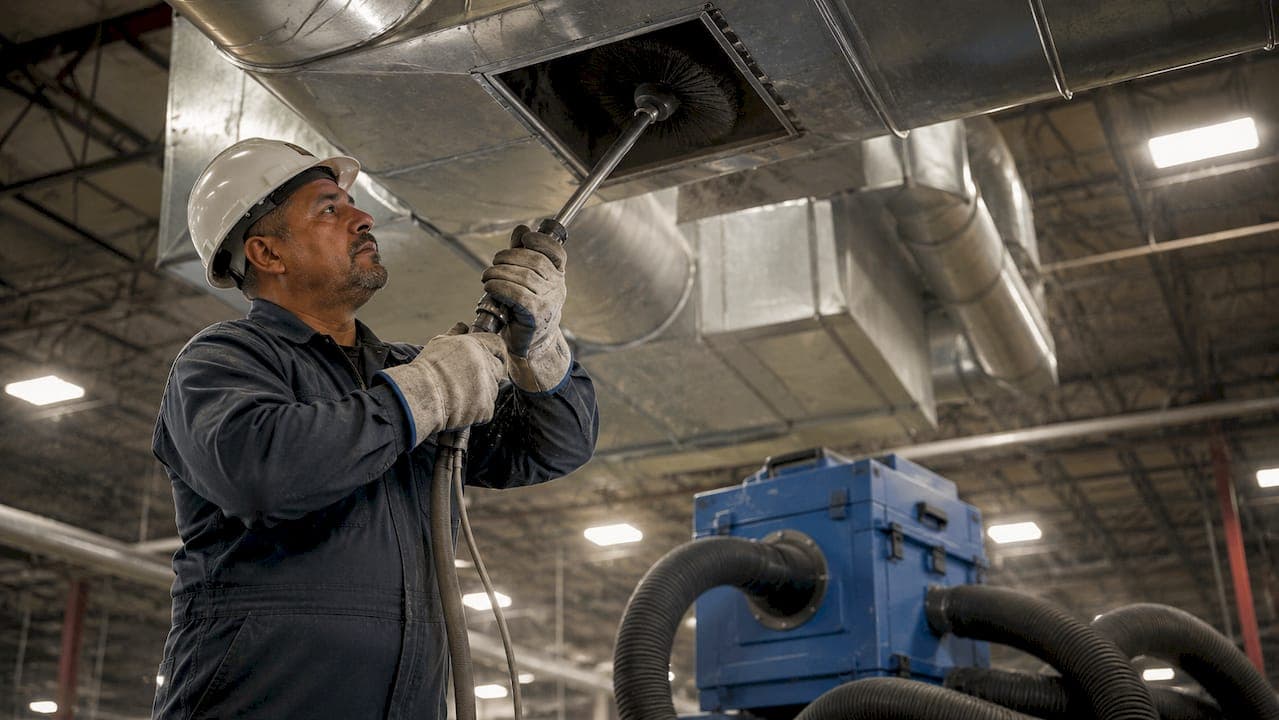
Post-construction HVAC system cleaning is the process of removing construction-generated contaminants, including silica dust, drywall particles, and volatile organic compounds (VOCs), from ductwork, coils, and air handling units to restore system efficiency and indoor air quality. The US EPA confirms that construction dust bypasses standard filters, creating measurable workplace hazards under OSHA's General Duty Clause. Proper post-construction HVAC cleaning can improve system efficiency by up to 40% and extend equipment lifespan by 30–50%. For property owners, facility managers, and contractors, skipping this step is not a minor oversight. It is a direct threat to occupant health, energy budgets, and equipment warranties.
What tools and preparations are needed for HVAC system cleaning after construction?
Effective post-construction HVAC cleaning requires specialized equipment, not standard janitorial supplies. The difference between a thorough job and a superficial one comes down to the tools on the truck.
Required equipment
The core toolkit for professional-grade duct cleaning after construction includes:
- HEPA vacuum systems: Capture fine particles down to 0.3 microns, preventing recirculation of silica and VOC-laden dust.
- Pneumatic agitation brushes: Dislodge debris bonded to duct walls, which static vacuuming cannot reach.
- Negative air machines: Create negative pressure inside ductwork, pulling loosened particles toward the collection point rather than back into the space.
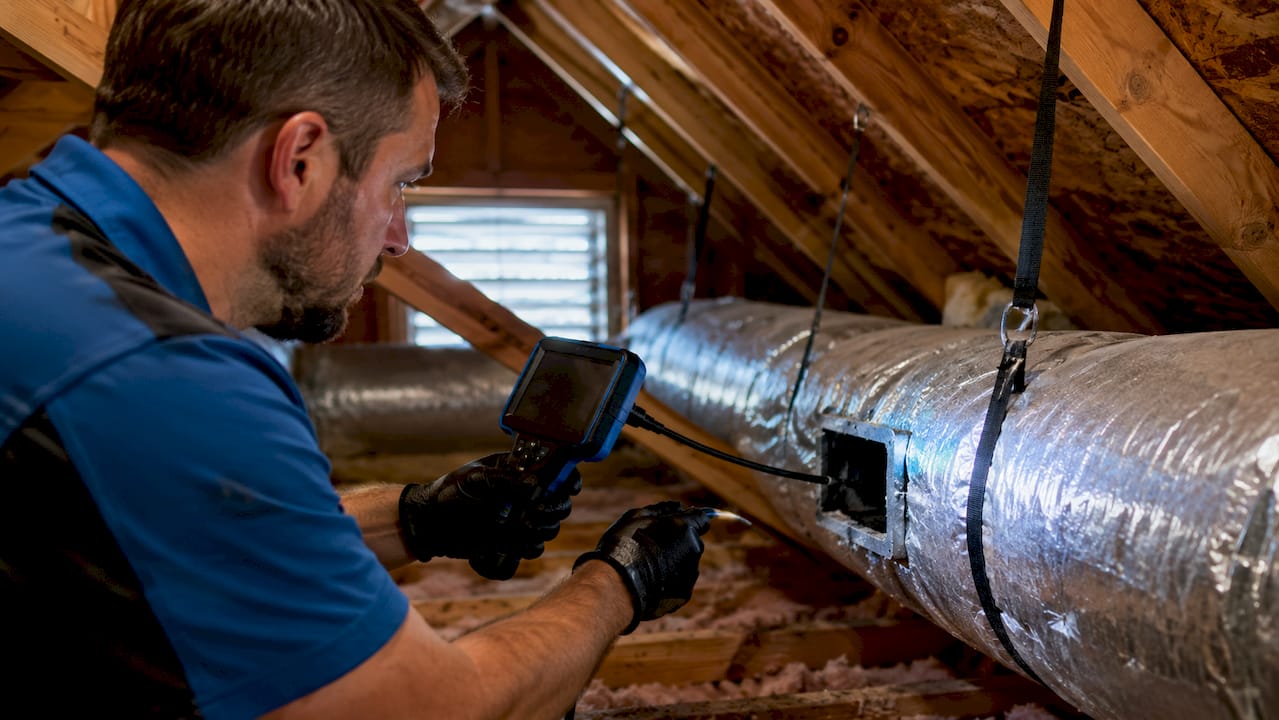
- Video inspection scopes: Verify contamination levels before and after cleaning, especially in long duct runs where visual checks are impossible.
- Vent covers and temporary seals: Block supply and return openings during cleaning to contain debris.
Preparation steps before you start
Preparation determines how much debris you actually capture. Start by sealing all supply and return vents with temporary covers before any agitation begins. Fine construction dust particles in the 1–100 micron range can bypass painter's tape and masking materials, so verify every seal with a video scope before proceeding.
Schedule the cleaning after the construction site has been fully cleared and swept. Airborne dust from active work will recontaminate ducts immediately. For safety, review contractor compliance standards before sending crews into spaces with residual chemical vapors. A guide on contractor safety protocols covers the key hazard categories relevant to post-construction environments.
Pro Tip: Wait 1–2 weeks after construction wraps before scheduling HVAC cleaning. Cleaning too early captures airborne particles rather than the settled debris inside ducts, reducing overall effectiveness.
How do you clean HVAC ducts, coils, and air handling units after construction?
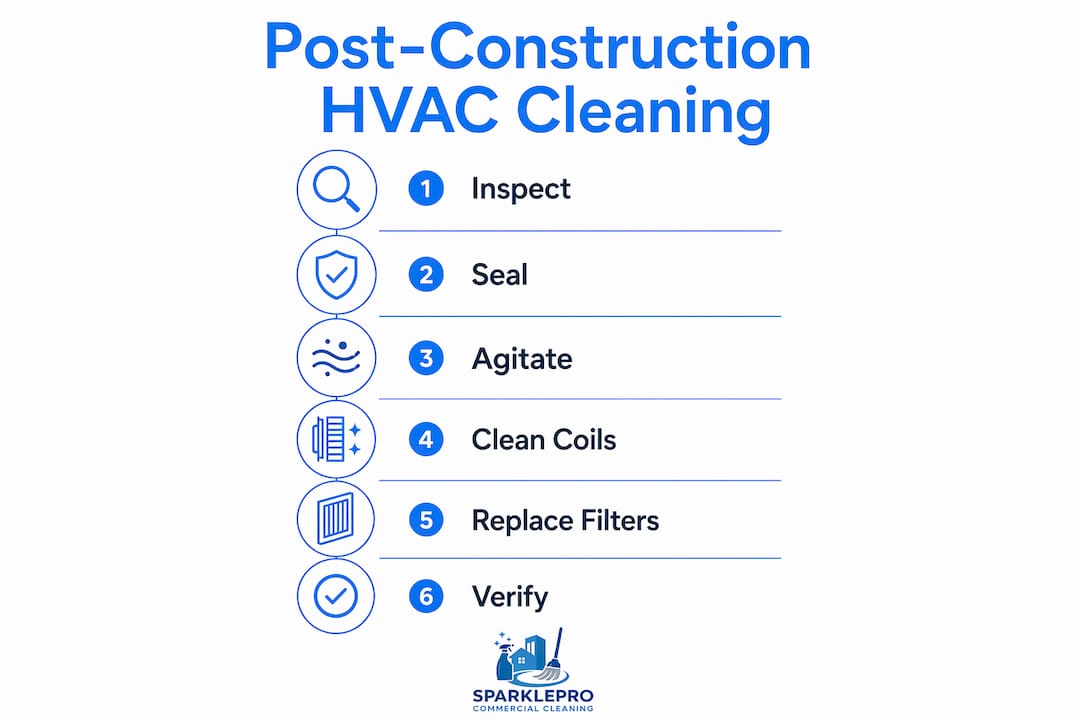
The industry term for the correct method is "source removal." NADCA's ACR standard defines source removal as physically extracting contaminants from the system rather than simply displacing them. Here is the sequential process professionals follow.
Step 1: Initial inspection and condition assessment
Use a video inspection scope to document contamination levels in main trunk lines, branch ducts, and the air handling unit (AHU). Photograph or record findings. This baseline drives the cleaning scope and protects you legally if disputes arise later.
Step 2: Seal the system
Cover all supply registers and return grilles with temporary foam or plastic seals. Attach the negative air machine to a main duct access point. The machine runs throughout the cleaning process, maintaining negative pressure so loosened debris travels toward collection rather than into the occupied space.
Step 3: Agitate and extract ductwork
Working section by section, insert pneumatic brushes or air whips through access panels. Agitation breaks the bond between debris and duct walls. The negative air machine simultaneously pulls the loosened material into HEPA-filtered collection bags. For a detailed walkthrough of the full post-construction cleaning process, the sequence applies across commercial building types.
Step 4: Clean coils and the air handling unit
Evaporator and condenser coils collect fine dust that restricts airflow and forces the system to work harder. Clean coils with a low-pressure coil cleaner approved for the coil material. Wipe down the AHU interior, drain pan, and blower assembly. Construction debris in the blower wheel causes vibration and premature motor failure.
Step 5: Replace filters
Install new high-efficiency filters rated for the system's design specifications. Do not reuse filters that were in place during construction. Even if they look clean, fine silica particles embedded in filter media will shed back into the airstream once the system restarts.
Step 6: Verify and test
Run the system for 30 minutes and re-inspect duct interiors with the video scope. Check static pressure readings against the system's design specs. Document final conditions. NADCA ACR standards require no visible contamination at the conclusion of cleaning, and that documentation supports compliance records.
Pro Tip: Test airflow at each register after cleaning. A significant drop from design specs often signals a missed debris blockage in a branch duct, not a mechanical fault.
How do you avoid the most common mistakes in post-construction HVAC cleaning?
Most errors in cleaning HVAC after a build fall into three categories: starting too early, using inadequate equipment, and running the system during construction. Each mistake compounds the others.
Running the system during construction
Running HVAC during active construction acts like a vacuum, pulling dust and chemical vapors from the work zone and distributing them throughout the duct network. This dramatically increases contamination volume and makes post-construction cleaning more complex. If the system must run for temperature control during construction, install temporary pre-filters at all return grilles and replace them daily.
Relying on simple vacuuming
Standard shop vacuums and household HEPA vacuums cannot generate the sustained negative pressure needed to extract debris from long duct runs. Source removal requires professional-grade negative air machines and agitation tools. Vacuuming only the visible portion of a duct opening leaves the bulk of the contamination untouched.
Common mistakes to avoid
- Cleaning before dust has fully settled (less than 1–2 weeks post-construction)
- Using painter's tape alone to seal vents without verifying with a video scope
- Skipping coil and AHU cleaning and treating ductwork as the only contaminated component
- Replacing filters before completing duct cleaning, which contaminates the new filters immediately
- Treating post-construction cleaning as a routine annual service rather than a distinct, inspection-driven event
"Post-construction contamination is acute and non-cumulative. It requires a targeted response, not a scheduled one." — NADCA-aligned inspection guidance
The building cleanliness practices that work for routine maintenance do not translate directly to post-construction scenarios. The contamination type, volume, and distribution are fundamentally different.
What are the best practices for maintaining HVAC cleanliness after post-construction cleaning?
Post-construction cleaning resets the system. Ongoing maintenance keeps it performing at that level. HVAC systems consume about 40% of total facility energy in commercial buildings, so degraded performance has a direct cost.
Ongoing maintenance schedule
- Monthly: Inspect and replace filters based on pressure drop readings, not calendar dates.
- Quarterly: Visually inspect accessible duct sections and AHU components for debris accumulation.
- Annually: Commission a full duct inspection using video scope tools, following NADCA's inspection-driven cleaning approach that prioritizes actual contamination over arbitrary schedules.
- After any renovation: Treat any subsequent construction work as a new post-construction event requiring full cleaning.
Energy and cost benefits
Post-construction cleaning reduces annual maintenance costs by up to 25% by preventing clogged filters, motor strain, and coil failure. Clean coils transfer heat efficiently, reducing compressor run time and electricity consumption. For a 100,000-square-foot commercial facility, that reduction represents a material budget line.
Documentation and compliance
ASHRAE 62.1 sets minimum ventilation rates for acceptable indoor air quality (IAQ). Maintaining records of cleaning dates, filter replacements, and inspection findings demonstrates compliance with ASHRAE 62.1 and supports OSHA's General Duty Clause requirements. Facility managers should keep a cleaning log tied to the building's maintenance management system. This documentation also protects property owners during tenant disputes or insurance claims related to air quality.
| Maintenance task | Recommended frequency |
|---|---|
| Filter inspection and replacement | Monthly or by pressure drop |
| AHU and coil visual check | Quarterly |
| Full duct video inspection | Annually or post-renovation |
| Complete source-removal cleaning | Post-construction and as needed |
Key takeaways
Thorough HVAC system cleaning after construction requires source removal with HEPA-filtered negative air machines, timed 1–2 weeks post-build, and documented to NADCA ACR standards for lasting air quality and energy savings.
| Point | Details |
|---|---|
| Source removal is non-negotiable | Simple vacuuming cannot extract debris from full duct lengths; negative air machines are required. |
| Timing matters | Wait 1–2 weeks after construction so airborne dust settles before cleaning begins. |
| Run the system only after cleaning | Operating HVAC during construction spreads contamination and increases cleaning complexity. |
| Document to NADCA ACR standards | No visible contamination at completion is the compliance benchmark, not a general clean appearance. |
| Ongoing maintenance protects the investment | Inspection-driven filter and coil maintenance can cut annual maintenance costs by up to 25%. |
What I've learned from watching post-construction HVAC jobs go wrong
The most consistent mistake I see is treating post-construction HVAC cleaning as an afterthought scheduled during the final punch list. By that point, the system has often been running for weeks, pulling construction dust through every duct branch in the building. The cleaning crew then faces a contamination load that should have been prevented, not remediated.
The second pattern is over-reliance on what looks clean. A duct opening that appears clear at the register can hide a foot of compacted drywall dust six feet back. Video scope inspection is not optional for post-construction work. It is the only way to know what you are actually dealing with before you start and after you finish.
Coordinating with the general contractor before construction begins makes a real difference. Agreeing on vent protection standards, temporary filter protocols, and a no-run policy for the HVAC during active dusty trades saves significant remediation cost. Most contractors are receptive when you frame it as protecting their warranty obligations. The commercial kitchen post-construction cleanup context illustrates how the same coordination principles apply across high-stakes commercial environments.
Post-construction HVAC cleaning done right is not complicated. It requires the right equipment, the right timing, and a commitment to verification rather than assumption.
— Sales
Sparkleprocommercialcleaning: professional post-construction HVAC cleaning
Property owners and facility managers who need post-construction HVAC cleaning done to NADCA ACR standards have a clear next step with Sparkleprocommercialcleaning.
Sparkleprocommercialcleaning provides fully licensed and insured post-construction cleaning services across the United States, including source-removal duct cleaning, coil and AHU sanitation, and inspection-verified completion. The team works with property managers and contractors to schedule cleaning at the right point after construction, protecting both air quality and equipment warranties. Facilities in Delaware, New Jersey, Massachusetts, and Washington can request a site assessment and get a cleaning quote directly through the Sparkleprocommercialcleaning platform.
FAQ
What is post-construction HVAC cleaning?
Post-construction HVAC cleaning is the process of removing construction-generated debris, including silica dust, drywall particles, and VOCs, from ductwork, coils, and air handling units using source-removal methods and HEPA-filtered equipment.
How soon after construction should HVAC ducts be cleaned?
Schedule duct cleaning 1–2 weeks after construction ends. Waiting allows airborne dust to settle inside ducts, so cleaning crews capture maximum particulate matter rather than still-suspended particles.
Why is simple vacuuming not enough for post-construction duct cleaning?
Standard vacuums cannot generate the sustained negative pressure needed to extract debris from full duct lengths. Professional negative air machines and pneumatic agitation tools are required for complete source removal.
Does running HVAC during construction make cleaning harder?
Running the system during active construction distributes dust and chemical vapors throughout the entire duct network, significantly increasing contamination volume and making post-construction cleaning more complex and time-consuming.
How often should commercial HVAC ducts be cleaned after the initial post-construction service?
NADCA recommends an inspection-driven approach: commission a full video scope inspection annually and schedule cleaning based on actual contamination levels, not a fixed calendar interval.