
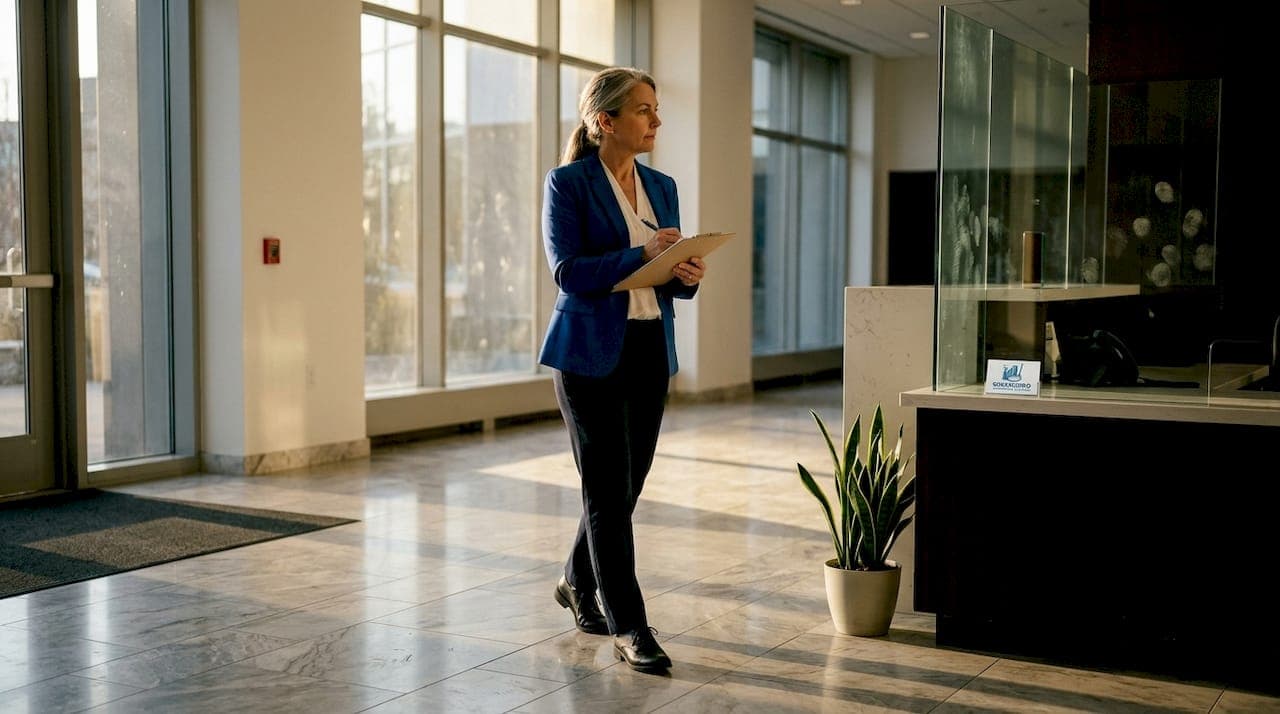
Property managers face a deceptively complex challenge: keeping commercial buildings clean enough to satisfy tenants, protect occupant health, and meet regulatory expectations, all while controlling costs and managing vendor relationships. The buildings that consistently earn high tenant retention scores share one trait. Their managers treat cleanliness as a system, not a checklist. This article covers six proven, research-backed strategies to raise your building's cleanliness standard, from defining measurable criteria to connecting surface cleaning with indoor air quality, so you can make confident, well-prioritized decisions for your facility.
Table of Contents
- Set clear cleanliness criteria for your building
- Adopt high-impact cleaning routines and schedules
- Connect cleaning with indoor air quality management
- Follow HVAC and ductwork cleaning industry standards
- Put it all together: Comparison of strategies at a glance
- What most property managers miss about building cleanliness
- Get expert help for lasting building cleanliness
- Frequently asked questions
Key Takeaways
| Point | Details |
|---|---|
| Sequence matters | Always clean before you disinfect to ensure maximum hygiene effectiveness. |
| High-touch focus | Prioritize cleaning and disinfecting frequently touched surfaces for best results. |
| Link with air quality | Integrate cleaning routines with air quality management for healthier facilities. |
| Follow industry standards | Use recognized HVAC and cleaning protocols to minimize risks and maximize efficiency. |
Set clear cleanliness criteria for your building
Before you can improve cleanliness, you need to agree on what "clean" actually means in your facility. This sounds obvious, but most building complaints stem from misaligned expectations between managers, cleaning crews, and tenants rather than from genuinely dirty spaces.
Start with definitions. Cleaning physically removes dirt, dust, and debris using water, soap, or detergent. Sanitizing reduces germ counts on a surface to levels considered safe by public health standards. Disinfecting kills or inactivates nearly all pathogens on a surface using registered chemical agents. These are three different outcomes, and mixing them up wastes money and effort. The CDC is clear that you should clean before disinfecting because removing surface debris first ensures disinfectant chemicals can actually contact and destroy germs rather than getting neutralized by dirt and organic matter.
Once you have definitions locked in, build your cleanliness KPIs (key performance indicators) around three measurement types:
- Visual inspection scores: Structured walkthroughs using a scoring sheet rated by zone (restrooms, lobbies, stairwells, common areas).
- ATP testing results: Adenosine triphosphate (ATP) testing uses a bioluminescence meter to measure biological residue on surfaces. A clean surface reads below 100 relative light units (RLUs) on most commercial benchmarks.
- Tenant feedback data: Track complaint categories, frequency, and resolution time. Patterns reveal chronic problem zones faster than any inspection protocol.
Building a custom cleaning schedule means mapping your occupancy profile first. A 200-person office building occupied Monday through Friday needs a very different schedule than a retail center open seven days a week with weekend peak traffic. Factor in seasonal changes too; cold and flu season typically warrants higher-frequency disinfecting of shared surfaces.
Pro Tip: Identify your high-touch and high-traffic zones in writing before setting cleaning frequencies. Door handles, elevator call buttons, reception countertops, shared kitchen surfaces, and restroom fixtures all need attention two to four times more often than low-traffic areas. If you haven't studied the commercial cleaning basics for your building type, that's the right starting point.
Adopt high-impact cleaning routines and schedules
Once your standards are set, the next step is to execute with efficient, high-ROI cleaning routines tailored to those criteria. Structuring tasks by frequency is the most reliable way to make sure nothing falls through the cracks and resources stay focused where they generate the most value.
Here is a practical framework for classifying commercial cleaning tasks:
- Daily tasks: Restroom cleaning and restocking, trash removal, lobby and entrance sweeping, wiping high-touch surfaces (door handles, elevator buttons, reception desks), spot-mopping spills, and kitchen or break room wipedowns.
- Weekly tasks: Full floor mopping and vacuuming, conference room deep wipes, interior glass and partition cleaning, stairwell sweeping, and restocking supply inventories.
- Monthly tasks: Deep carpet extraction or hard floor buffing, light fixture dusting, air vent grille wipe-downs, chair and upholstery vacuuming, and exterior entrance mat cleaning.
- Quarterly or periodic tasks: Full HVAC filter inspection and replacement, ceiling tile inspection, deep-clean behind large fixtures and appliances, exterior window washing, and parking garage sweeping.
Integrating cleaning routines with your HVAC maintenance calendar is a step most managers skip, and it's a significant missed opportunity. Cleaning improves indoor air quality when surface cleaning is timed to coincide with filter replacement. If you clean floors and dust surfaces on the same week HVAC filters are replaced, airborne particles are recaptured rather than redistributed.
For accountability, paper checklists work but digital cleaning logs are far more reliable. Cloud-based facility management apps let supervisors sign off tasks in real time, attach photographic evidence, and flag re-cleans without the ambiguity of a handwritten sheet. If you want examples to benchmark against, reviewing top cleaning routines used by high-performing facility teams is an efficient way to calibrate your own program.
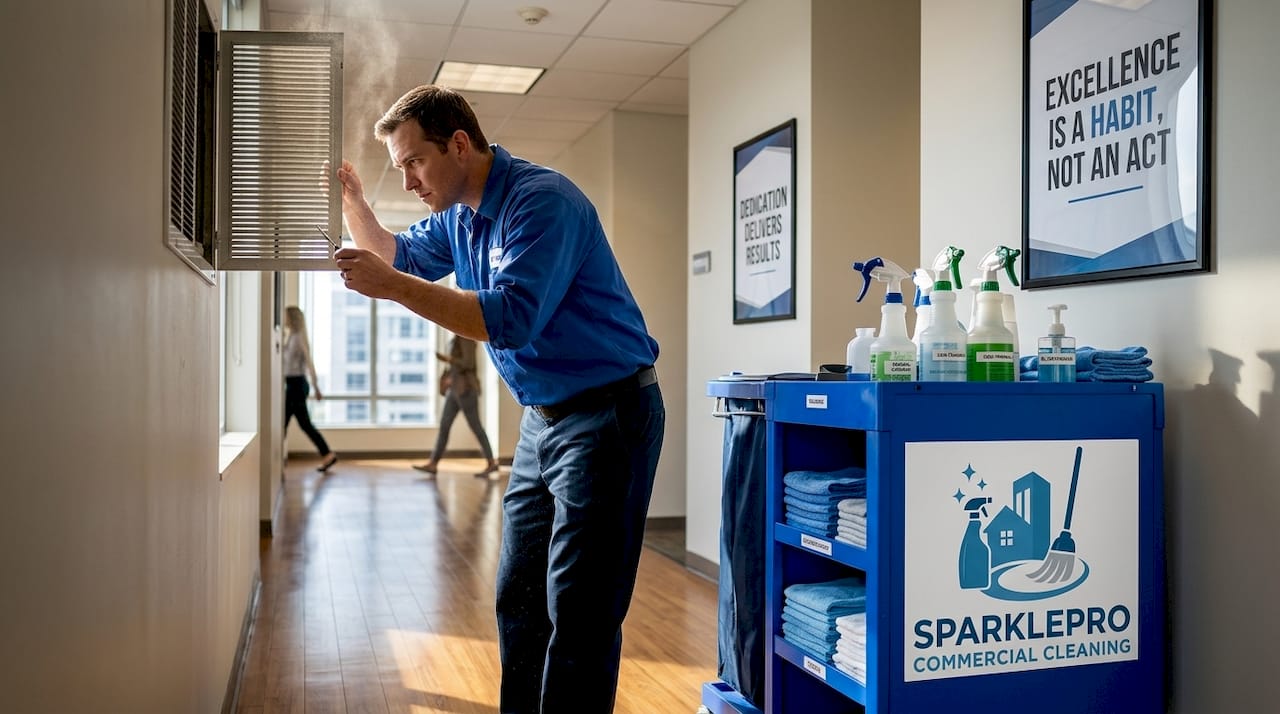
Pro Tip: Standardize your checklists by building zone rather than by day of the week. Zone-based checklists make it easier to reassign staff without losing task continuity and make auditing far more efficient during management reviews.
For buildings that need a reset before launching a new maintenance routine, a structured deep cleaning solution is often the smartest starting point. You can also cross-reference your program against a published cleaning standards guide to confirm you're meeting industry benchmarks.
Connect cleaning with indoor air quality management
A well-planned cleaning routine not only impacts surfaces; it's integral to your building's air and occupant health. Indoor air quality (IAQ) is the measure of air cleanliness and comfort inside a building. Poor IAQ contributes to headaches, fatigue, respiratory irritation, and increased absenteeism among building occupants.
Here is how cleaning decisions directly affect IAQ:
- Dry dusting disperses particles: Dry dusting with conventional cloths lifts particulates into the air, where they can remain suspended for 30 minutes or longer. Microfiber cloths capture particles mechanically and keep them out of the breathing zone.
- Chemical fumes affect air quality: Conventional cleaning agents containing VOCs (volatile organic compounds) can reduce air quality immediately after use. Green-certified cleaning products reduce chemical off-gassing and are especially important in occupied buildings.
- Neglected grilles and diffusers spread contamination: Air return grilles, ceiling diffusers, and exhaust fans collect dust and debris. When uncleaned, they redistribute that material every time the HVAC system cycles.
- Carpet holds contaminants: Carpet acts as a reservoir for dust, allergens, and mold spores. Regular extraction cleaning, not just vacuuming, is essential in high-traffic carpeted areas.
"Facilities can improve overall performance by adopting modified cleaning practices, investing in the right tools and training, and integrating cleaning into an IAQ strategy."
This principle means cleanliness improvements should be designed with air quality outcomes in mind, not just visual results. When you brief your cleaning vendor, include IAQ targets as part of the scope. Ask specifically about HEPA vacuum use, microfiber protocol, and low-VOC chemical selection.
Communicating IAQ-linked cleanliness to tenants and building stakeholders also builds trust and reduces friction during lease renewals. A short quarterly report showing ATP test results, cleaning frequency logs, and air filter replacement records gives tenants concrete evidence that their work environment is being actively maintained. For office buildings specifically, our office cleaning guide covers the full scope of what a modern IAQ-aware cleaning program should include.
Follow HVAC and ductwork cleaning industry standards
For lasting improvement, essential protocols like HVAC cleaning integrate with daily routines and set your facility apart from buildings that only maintain visible surfaces.
HVAC systems circulate air continuously throughout your building. When ducts accumulate dust, biological growth, or debris, every occupied space in the building is affected. This is not a cosmetic issue. Contaminated ductwork can distribute mold spores, bacterial colonies, and fine particulate matter that surface cleaning alone will never address.
Following recognized standards matters here. HVAC cleaning industry standards from organizations like ASHRAE and NADCA establish a structured protocol: inspect first, contain the work area to prevent cross-contamination, clean using mechanical agitation plus negative air pressure, and verify the result.
Key requirements under recognized industry protocols include:
- Inspection before cleaning: Use camera inspection to assess actual contamination levels before committing to a full duct cleaning scope.
- Containment during cleaning: Seal register openings during duct cleaning to prevent dust and debris from escaping into occupied spaces.
- Mechanical agitation plus negative pressure: Compressed air or rotary brushes loosen debris, while a HEPA-equipped negative air machine captures it rather than redistributing it.
- HEPA filtration during work: All vacuuming and collection equipment used during duct cleaning must be HEPA-rated to prevent fine particles from escaping.
- Post-cleaning verification: ATP testing or visual camera inspection confirms the ductwork meets cleanliness thresholds before the system is returned to normal operation.
| Factor | With industry-standard HVAC cleaning | Without industry-standard HVAC cleaning |
|---|---|---|
| Airborne particulate levels | Significantly reduced | Elevated, especially after system startup |
| Mold and biological risk | Managed and documented | Hidden and potentially growing |
| Filter lifespan | Extended by reduced debris load | Shortened, with higher replacement costs |
| Tenant complaint rate | Lower, especially respiratory complaints | Higher, correlated with poor IAQ scores |
| Regulatory compliance | Met for most commercial buildings | At risk for healthcare and food service facilities |
Scheduling HVAC duct inspections annually and full cleaning on a two to four year cycle (or as inspection results indicate) is a practical standard for most commercial buildings. Buildings with healthcare, food service, or laboratory uses should inspect more frequently. If you need a starting point for surface-level flooring work that complements your HVAC program, a streamlined floor cleaning process builds the foundation for a fully integrated maintenance plan.
Put it all together: Comparison of strategies at a glance
Now that each approach is covered, see how the main strategies compare so you can prioritize rollout based on your building's current conditions and management bandwidth.
Note that the CDC distinguishes cleaning, sanitizing, and disinfecting, and emphasizes clean-first sequencing. This distinction matters when selecting your strategy combinations, because skipping the cleaning step reduces disinfectant effectiveness and wastes product. You can also find a more detailed breakdown in this disinfecting services guide for facility managers.
| Strategy | Main benefit | Effort required | Recommended frequency | Measurability |
|---|---|---|---|---|
| Set cleanliness criteria | Alignment across teams | Low to medium | One-time setup, annual review | KPIs, ATP scores, feedback |
| Cleaning and disinfecting routines | Surface hygiene and tenant satisfaction | Medium | Daily to monthly by task | Checklist compliance rate |
| IAQ integration | Occupant health and retention | Medium to high | Ongoing, connected to HVAC cycles | Air quality readings, complaints |
| HVAC and ductwork cleaning | Systemic air and surface cleanliness | High, specialist required | Annual inspection, 2 to 4 year cleaning | Pre/post ATP, camera inspection |
Use this table as a quick scoring tool. If your building scores low on tenant satisfaction surveys and has frequent surface complaints, prioritize criteria-setting and routine improvement first. If occupant health complaints and absenteeism are the pattern, IAQ integration and HVAC cleaning will deliver more leverage.
What most property managers miss about building cleanliness
After comparing strategy options, here's what experience in the field reveals that standards and checklists alone don't catch.
The single biggest missed opportunity is treating cleanliness as a visual standard rather than a health-based framework. A lobby can look spotless and still have ATP scores three times above safe thresholds on the reception desk. Tenants and visitors read visual cues, but occupant health outcomes are driven by microbial load and air quality, not appearance. Managers who only inspect with their eyes are measuring the wrong variable.
The second issue is supply chain neglect. Many property managers inherit cleaning contracts without ever auditing the chemicals and equipment in use. A crew using a non-HEPA vacuum and a generic all-purpose spray is not delivering the same outcome as one using microfiber protocol and a certified disinfectant matched to the surface type. The commercial cleaning benefits of upgrading equipment quality are measurable within weeks. Yet this lever rarely gets pulled because it requires asking harder questions during vendor reviews.
Pro Tip: Build an equipment and chemical audit into your vendor contract review cycle. Ask for product data sheets, vacuum filtration ratings, and dilution logs annually. This single action reveals more about actual cleaning quality than any number of walkthroughs.
Lasting cleanliness improvement also depends on staff training continuity. High turnover in commercial cleaning crews is common, and protocol knowledge walks out the door with every departure. The most resilient programs we've seen require documented onboarding for every new crew member, zone-specific training rather than generic orientation, and a supervisor verification sign-off before any new staff works independently. Those key benefits of cleaning services only materialize when the people doing the work are trained consistently and held accountable through measurable standards.
Get expert help for lasting building cleanliness
If you're ready to move from planning to action, advanced support is available.
Sparklepro Commercial Cleaning works directly with property managers and facility directors to design evidence-based cleaning programs built around your building's specific occupancy profile, surface types, and tenant expectations. Our teams are fully licensed and insured, and we deploy structured protocols that address surfaces, air quality, and HVAC-connected cleanliness in a coordinated way.
We offer custom programs for commercial properties throughout the Northeast and Mid-Atlantic, including dedicated Massachusetts cleaning services and New Jersey cleaning services tailored to local regulatory requirements and commercial building standards. Whether you need a one-time deep clean to reset your building's baseline or an ongoing janitorial program with measurable accountability, Sparklepro offers a free assessment and same-day quote. Connect with us to schedule a site visit and let's build a cleanliness program your tenants will notice.
Frequently asked questions
What is the difference between cleaning, sanitizing, and disinfecting?
Cleaning removes dirt and most germs from surfaces, sanitizing reduces germ counts to levels considered safe by public health standards, and disinfecting destroys nearly all pathogens using registered chemical agents, as the CDC outlines in its sequencing guidance.
Why is it important to clean before disinfecting?
Surface debris and organic matter can block or neutralize disinfectant chemicals, so cleaning first ensures the disinfectant can directly contact and destroy germs rather than being absorbed by dirt.
How often should commercial HVAC systems be cleaned to support building cleanliness?
Inspect HVAC systems annually and clean ductwork every two to four years, or more frequently for healthcare and food service facilities, following ASHRAE and NADCA standards for proper containment and verification.
How does cleaning affect indoor air quality in commercial buildings?
Effective cleaning removes dust, allergens, and chemical residues that would otherwise become airborne, directly improving indoor air quality and supporting better occupant health and productivity.