
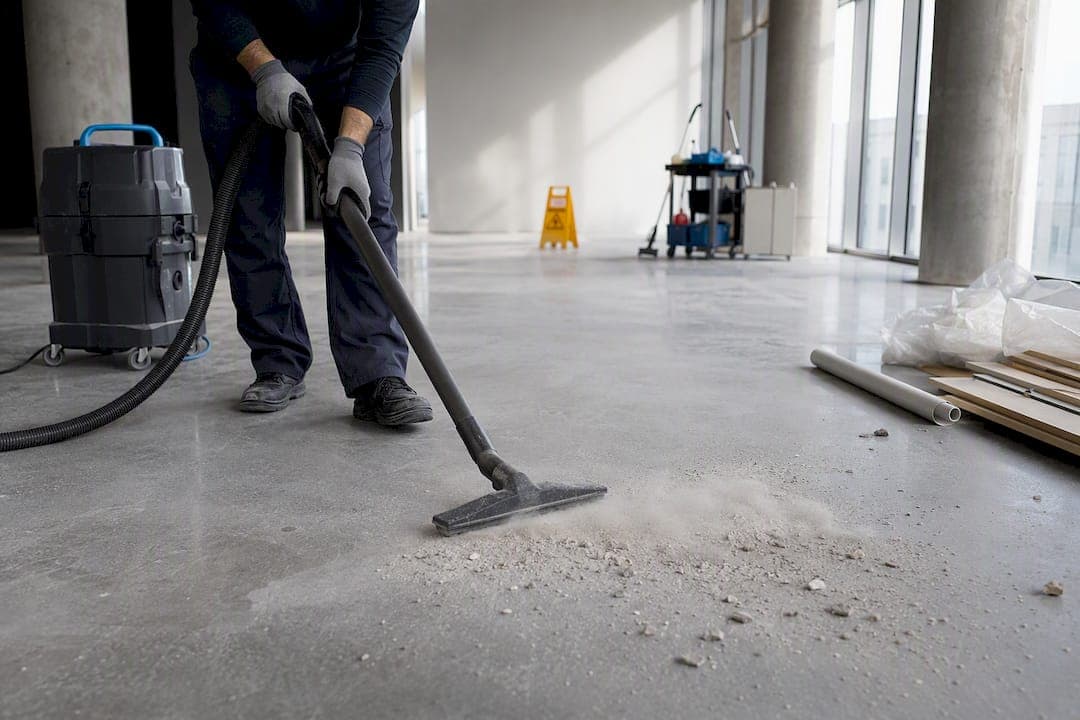
Post-construction cleaning runs $0.15 to $0.60 per square foot depending on the phase, with rough cleans landing at $0.10–$0.25, final cleans at $0.30–$0.50, and touch-ups back down at $0.10–$0.25 per square foot. A 3,000 square-foot suite typically has a total cost varying depending on phases included and debris removal, with prices spanning a broad range. Most published national averages for full projects fall in the $210–$379 to $274–$707 range. Debris volume and site access swing that number more than anything else on the job.
Key Takeaways
Post-construction cleaning cost depends less on square footage than on debris load, access difficulty, and whether the contract defines acceptance criteria before work begins.
| Point | Details |
|---|---|
| Know your phase rates | Rough cleaning runs $0.10–$0.25/sq ft, final $0.30–$0.50/sq ft, touch-up $0.10–$0.25/sq ft. |
| Labor drives the bill | Labor accounts for roughly 90% of total cost, so stairs and multi-surface work raise price fast. |
| Budget disposal separately | Dumpster and disposal fees commonly add $100–$300 on top of the base cleaning rate. |
| Lock in acceptance criteria | Define what "final clean" means in writing so re-clean costs don't become a dispute later. |
| Work with a documented process | Sparkleprocommercialcleaning's nationwide, licensed, insured four-step process ties quotes to an actual site visit. |
Table of Contents
- How Much Does Post-Construction Cleaning Cost Per Square Foot?
- What Does Post-Construction Cleaning Cost by Project Size?
- What Drives Post-Construction Cleaning Cost Up?
- Who Pays for Re-Cleaning and Failed Inspections?
- How Do You Get an Accurate Post-Construction Cleaning Quote?
- Why a Licensed, Insured Cleaning Partner Reduces Your Risk
- What the Rate Bands Don't Tell You
- Get a Post-Construction Cleaning Quote That Holds Up
- Sources
How Much Does Post-Construction Cleaning Cost Per Square Foot?
Post-construction cleaning happens in three distinct phases, and each one has its own price band. Rough cleaning, the first pass that clears large debris, sticker residue, and heavy dust, runs $0.10 to $0.25 per square foot. Final cleaning, the detailed pass that gets a space ready for occupancy, costs more, reflecting the extent of work like wiping surfaces and polishing floors. Touch-up cleaning, done right before walkthrough or move-in, drops back to $0.10–$0.25 per square foot because it's largely cosmetic.
Across all phases combined, interior post-construction cleaning generally lands between $0.15 and $0.60 per square foot, and exterior work like pressure washing entryways or cleaning parking structures often runs $125 to $800 or more per job, depending on scope.
Additional services typically add to the base rate and should be budgeted separately from per-square-foot pricing.
- Window cleaning: $3–$8 per window, or $150–$370 for a larger commercial glass package
- Floor stripping and waxing: costs are variable and depend on area size and complexity.
- HVAC and duct cleaning: $180–$1,000 depending on system size and duct access
- Dumpster rental and debris hauling costs are typically separate from labor charges.
Labor is the dominant line item in almost every quote. Angi's cost data shows labor can account for roughly 90% of the total cleaning bill on a typical job, which is why regional wage differences matter more than most GCs expect. A final clean priced at $0.35 per square foot in a mid-sized Midwest market can run noticeably higher in coastal metros where cleaning crews command higher hourly rates.
What Does Post-Construction Cleaning Cost by Project Size?
Rate bands only mean something once you run them against real square footage. Here's how the math plays out across the project sizes property managers and GCs handle most often.
- Small tenant fit-out (1,500–5,000 sq ft): At a blended rate of $0.30/sq ft across rough and final phases, a 3,000 sq ft space runs roughly $900, before add-ons like window cleaning or dumpster fees. Light debris and easy ground-floor access keep this near the low end.
- Standard new-build suite (2,000–3,000 sq ft): Using CleanerHQ's phase bands, a 2,500 sq ft suite might break down as $0.20/sq ft rough ($500), $0.40/sq ft final ($1,000), and $0.15/sq ft touch-up ($375), for a project total near $1,875.
- Large commercial project (20,000+ sq ft): At a combined $0.30/sq ft across phases, a 20,000 sq ft build lands around $6,000, but multi-story access, freight elevator scheduling, and higher debris volume routinely push that 20 to 40% higher.
The multiplier that trips up most budgets isn't square footage. It's debris density and access. A gutted retail space with construction dust coating every surface and no loading dock costs meaningfully more per square foot than a clean, ground-level office suite with light dust and curbside dumpster access.
What Drives Post-Construction Cleaning Cost Up?
Four factors explain almost every variance you'll see between bids on paper-identical square footage.
Labor intensity tops the list.
Debris removal and disposal is its own line item. Disposal fees commonly run $100 to $300 depending on volume and local dump fees, and heavier construction debris (drywall scraps, packaging, wood offcuts) requires more dumpster pulls than a typical remodel.
Specialty equipment and safety protocols add cost when the dust itself is hazardous. Concrete dust, sanded hardwood, and older buildings with lead paint require Class M or Class H HEPA vacuums rather than standard Class L equipment, and that jump in equipment class comes with higher operating costs that get passed through to the quote. Lifts, scaffolding, and fall-protection gear for high-ceiling or exterior work add rental fees on top.
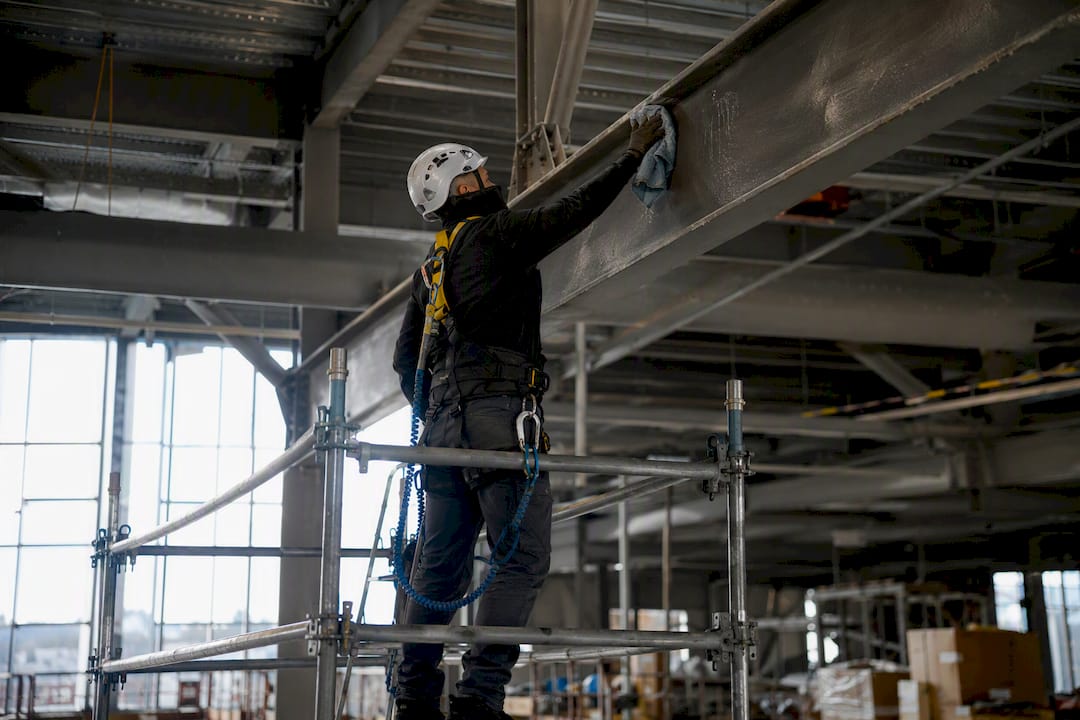
Regional labor rates and access surcharges round it out. A crew working a downtown high-rise with restricted loading dock hours and mandatory badge access almost always costs more than the identical scope in a suburban single-story building.
Pro Tip: Ask every bidder to break out labor, disposal, and equipment as separate line items. A quote that bundles everything into one flat number makes it nearly impossible to compare bids or catch where one contractor is padding the price.
For more on debris logistics specifically, see this breakdown of construction site debris removal approaches and how they factor into total cost.
Who Pays for Re-Cleaning and Failed Inspections?
This is the clause most contracts get wrong, and it's the one that causes the most billing disputes after the fact. Build these terms into the contract before work starts, not after a failed walkthrough.
- Define acceptance criteria in writing: what "final clean" means, room by room, before either party signs off
- Specify who covers re-clean costs if a space fails a clearance test or a tenant walkthrough, since HUD's clearance guidance for hazardous dust anticipates that repeated cleaning may be necessary and contracts should account for that upfront rather than treating it as a surprise change order
- Structure the quote by phase (rough, final, touch-up) plus separate line items for add-ons, disposal, rush scheduling, and difficult access
- Require clearance testing and documentation on any project involving lead paint, asbestos abatement, or other regulated materials, and budget the test cost separately from the cleaning itself
- Set deposit and final payment terms clearly: many commercial cleaning contracts require a deposit at scheduling with the balance due on approved completion
A documented acceptance standard, agreed to before the crew shows up, shifts responsibility for extra cleaning onto the contractor when the space doesn't meet spec. Without it, "who pays for round two" becomes a negotiation instead of a contract term. For sample language, this contractor cleaning compliance checklist covers the clauses worth adding.
How Do You Get an Accurate Post-Construction Cleaning Quote?
A defensible quote depends on four inputs, and any bid that skips one of them isn't comparable to the others.
- Total square footage of the space, broken out by floor if the building has more than one level
- Cleaning phase needed (rough, final, touch-up, or all three)
- Debris load, described honestly rather than downplayed to get a lower bid
- Access and difficulty, including stairs, elevator availability, loading dock hours, and parking restrictions
Before the walkthrough, take photos of the space and note anything unusual: exposed hazardous materials, damaged flooring, or areas requiring special handling. Ask each bidder about insurance coverage, the equipment class they'll use for dust-heavy areas, their disposal plan, and whether they can provide references from comparable commercial projects. Run their number against the banded rates above as a sanity check before you sign.
Why a Licensed, Insured Cleaning Partner Reduces Your Risk
Hiring a contractor without verified insurance or a documented process is how re-clean disputes and liability headaches start. A licensed, insured cleaning partner with a repeatable process protects you on both fronts.
Sparkleprocommercialcleaning operates nationwide and follows a four-step process built for exactly this kind of accountability: quote, site visit, scheduled cleaning, and customer approval. That site visit matters more than it sounds. It's the step where debris load and access get assessed in person, before a number gets locked into a contract.
- Fully licensed and insured, which matters when a job involves hazardous dust or high-value finishes
- A documented approval step, so acceptance criteria aren't left to a verbal agreement
Pro Tip: Always confirm a contractor's insurance covers the specific building type you manage, healthcare and industrial facilities often require different coverage than a standard office fit-out.
| Point | Details |
|---|---|
| Site visits reduce risk | A pre-clean walkthrough catches access issues and debris load before the price is locked in. |
| Four-step process | Quote, site visit, scheduled cleaning, and customer approval keep expectations documented. |
What the Rate Bands Don't Tell You
Every cost guide, including this one, will hand you a per-square-foot range and call it a day. The number that actually determines your final bill is rarely the rate. It's whether the contract specifies what "done" looks like before the crew ever shows up.
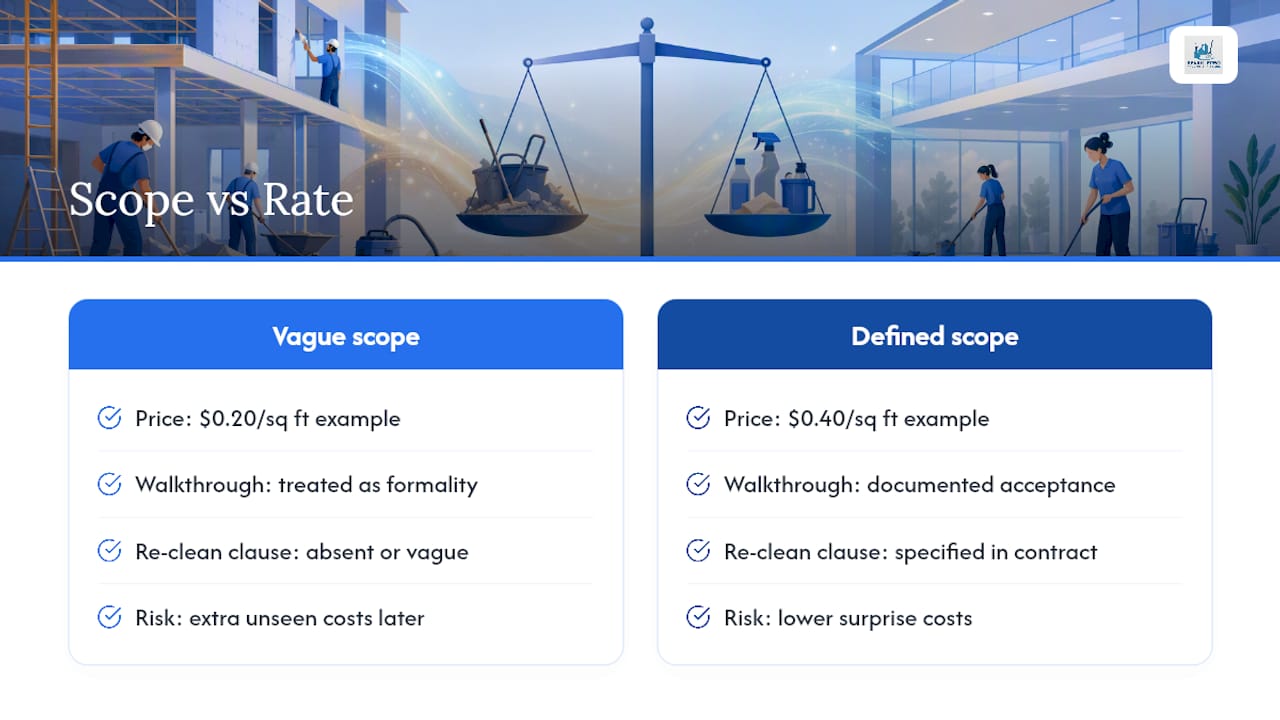
Most property managers treat the quote as the negotiation and the acceptance walkthrough as a formality. That's backward. The walkthrough is where disputes actually happen, when a tenant or inspector flags dust on a ledge nobody thought to check, and the contract is silent on who eats the cost of going back. HUD's clearance language exists precisely because "clean" without a defined standard is unenforceable.
The conventional advice, get three bids and pick the middle one, ignores that bids without matching scope definitions aren't comparable at all. A $0.20/sq ft bid with vague debris assumptions can cost more than a $0.40/sq ft bid with a documented walkthrough and re-clean clause. If you take one thing from this guide, make it this: negotiate the acceptance criteria before the price. The number matters less than what it's actually buying you.
— Sales
Get a Post-Construction Cleaning Quote That Holds Up
Rate bands and worked examples get you close, but the number that actually protects your budget comes from a real site visit, not a phone estimate. Sparkleprocommercialcleaning is the nationwide alternative to piecing together bids from local one-off crews: one licensed, insured provider, one documented four-step process, and a quote built around your actual debris load and access conditions instead of a generic per-square-foot guess.
That matters most on jobs where a failed walkthrough means a costly re-clean, healthcare buildouts, multi-story tenant fit-outs, or any project with hazardous dust protocols. Property managers and general contractors working in Delaware can request a site visit and quote directly, with the same four-step process, quote, site visit, scheduled cleaning, customer approval, applied to every project regardless of size.
Sources
- HUD: Lead-Based Paint and Renovation Guidance (excerpts)
- HomeGuide: Post-Construction Cleaning Rates
- CleanerHQ: Post Construction Cleaning Calculator (2026)
- Angi: How much does it cost to clean a construction site?
- Thumbtack: Post-construction cleaning rates (2026)