
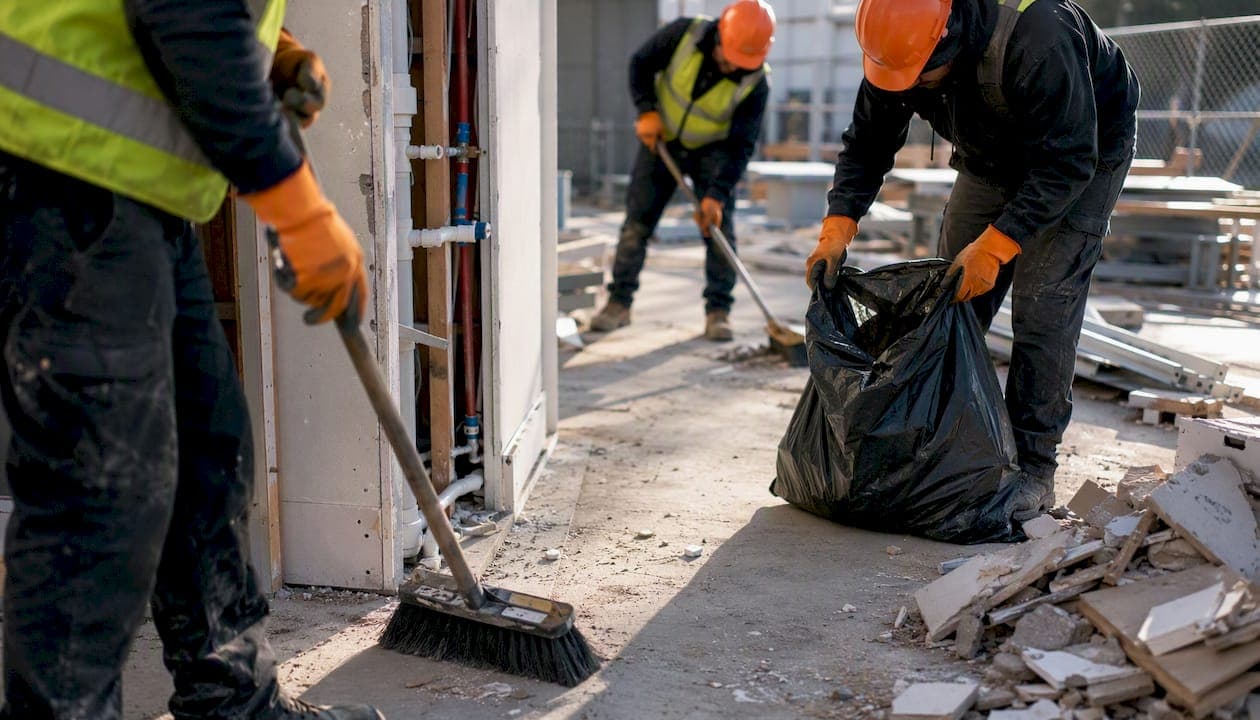
Hire a trained, OSHA-aware post-construction cleaning contractor before your final inspection. That is the short answer. The longer one: the best cleaning solutions for builders are not products on a shelf. They are contracted crews with documented safety training, phased scope agreements, and the insurance to back it all up.
- OSHA 29 CFR 1926 compliance separates a qualified construction-site cleaning crew from a general janitorial team. Training, PPE, and site-hazard coordination are non-negotiable on an active build.
- Named-insured general liability and workers' compensation protect you when a cleaner is injured on your site or damages a finished surface.
Sparkleprocommercialcleaning offers nationwide post-construction cleaning and follows a four-step engagement process: quote, site visit, scheduled cleaning, and customer approval.
Table of Contents
- What does a professional builder's-clean service actually cover?
- Why post-construction cleaning requires OSHA 29 CFR 1926 compliance
- How to evaluate bids, price ranges, and contract terms
- Key Takeaways
- What a phased approach actually prevents on a real project
- Sparkleprocommercialcleaning handles post-construction cleans nationwide
- Authoritative sources and further reading
What does a professional builder's-clean service actually cover?
Post-construction cleaning is not one event; understanding the role of construction site cleanup is essential for effective project management. It runs in three distinct phases, each tied to a different point in the construction schedule. Treating them as a single line item is how scope gaps and rework charges happen.
| Phase | Typical Tasks | When to Schedule |
|---|---|---|
| Rough clean | Debris removal, sweep-out, dumpster coordination, protection of installed fixtures | After framing/MEP rough-in, before drywall or flooring |
| Final clean | HEPA vacuuming, surface wipe-downs, window interior cleaning, floor scrubbing, restroom detail, fixture polish | After all trades complete, before punch list and inspection |
| Touch-up clean | Spot cleaning, fingerprint removal, threshold detail, final floor buff | After punch-list corrections, day of or day before turnover |
Final cleans require materially more labor per square foot than rough cleans. Budget accordingly and staff for that intensity. Per-phase pricing from industry guidance confirms that final-clean labor hours can run two to three times higher than rough-clean hours on the same footprint.
Certain items are frequently excluded from standard scopes and must be spelled out explicitly. Exterior glass and high-access window washing, HVAC duct cleaning and filter changes, power-washing of exterior hardscape, and concrete dust remediation in mechanical rooms all tend to fall outside a default final clean. A step-by-step scope document that lists inclusions and exclusions by phase is the single best tool for avoiding a disputed invoice.
Pro Tip: Schedule a scope walkthrough with your cleaning contractor before the final trade is out. Walking the space together surfaces exclusions, access conflicts, and protection requirements that no written spec catches on its own.
Why post-construction cleaning requires OSHA 29 CFR 1926 compliance
General janitorial work falls under OSHA 29 CFR 1910 (General Industry). Post-construction cleaning on an active or recently completed construction site falls under OSHA 29 CFR 1926 (Construction Standards). The distinction carries real consequences for training, PPE selection, and how the crew coordinates with your site supervisor.
"OSHA's construction standards (29 CFR Part 1926) apply to construction work, which includes cleaning operations performed during or immediately after construction activity on a construction site. Employers must provide appropriate training, personal protective equipment, and hazard communication to all workers on site." — Occupational Safety and Health Administration
Practically, this means your cleaning contractor must document site-specific safety orientations, maintain a PPE inventory appropriate to the hazards present (silica dust, lead paint in renovation work, fall hazards near open shafts), and have a named site supervisor who can coordinate with your GC's safety officer. A janitorial company that has never worked a construction site will not have these protocols in place.
Prequalification safety checklist — request all of the following before awarding a contract:
- Proof of OSHA 10 or OSHA 30 training for crew leads
- Site-specific safety orientation records
- Written PPE program and fit-testing documentation where applicable
- Named site supervisor and emergency contact
- Certificate of Insurance showing GL and workers' comp with your entity listed as additional insured
Documentation and insurance items to collect at contract execution:
- Certificate of Insurance (COI) with general liability limits stated
- Workers' compensation policy confirmation
- Named insured endorsement adding your organization during the mobilization window
- Written safety plan referencing OSHA 29 CFR 1926
- Copies of OSHA training certifications for crew leads
The construction cleaning safety guide from Sparkleprocommercialcleaning covers site orientation requirements and PPE lists in detail. Use it as a reference when reviewing contractor submissions.
How to evaluate bids, price ranges, and contract terms
Start here: require a site walkthrough before you accept any final quote. A contractor who prices from square footage alone, without walking the space, is guessing at labor hours. That guess usually resolves in their favor on the invoice.
"An itemized scope with explicit exclusions is the single most effective tool for preventing scope disputes and rework charges. Require it before signing." — Post-Construction Cleaning Process Guide
Pricing drivers to understand before comparing bids
Square footage is the starting point, not the whole picture. Final-clean pricing varies based on finish type (polished concrete vs. luxury vinyl vs. carpet), project condition at handoff, the volume of construction debris removal, mobilization distance, crew size, and estimated hours. A phased scope from industry guidance shows that final cleans typically carry the highest per-square-foot rate of the three phases. Get line-item pricing for each phase separately so you can compare bids on equal terms.
Timeline planning
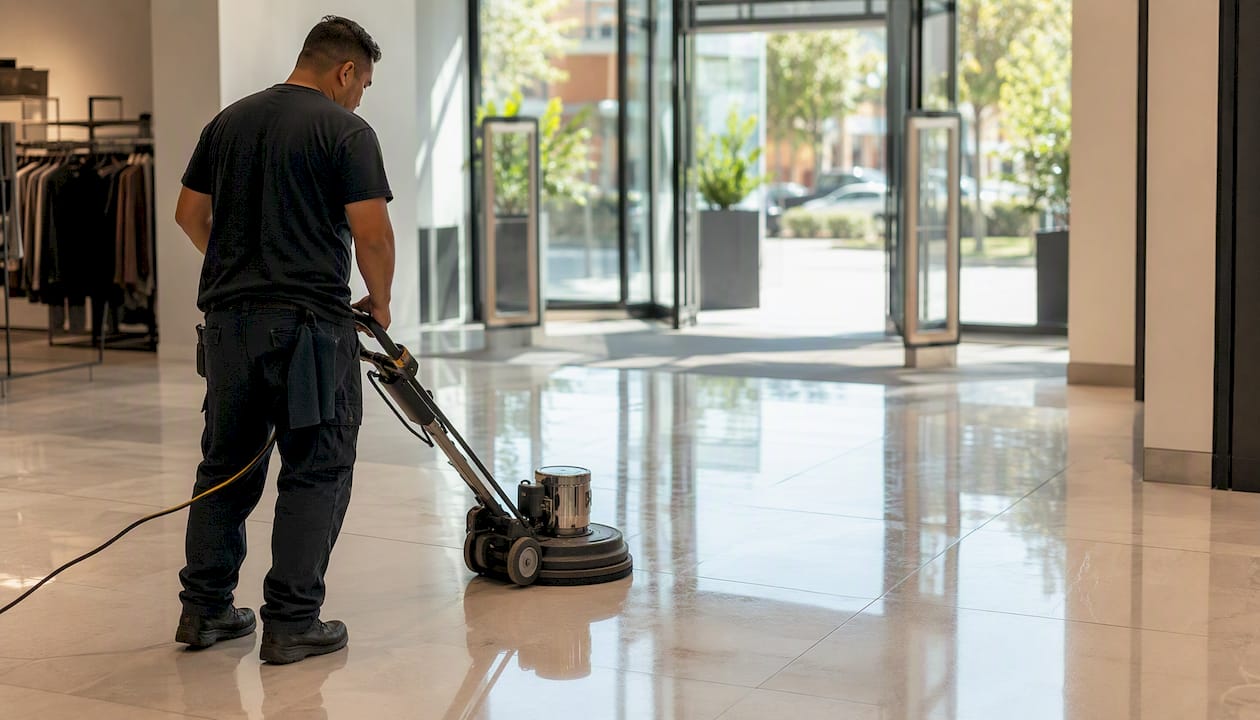
Schedule rough cleans after framing and MEP rough-in, before drywall. Schedule the final clean after the last trade clears the floor, not before. Schedule touch-up the day before or the morning of turnover. Trying to compress these windows to save time almost always creates rework. Coordinate the cleaning contractor's access with your punch-list trades so they are not working the same areas simultaneously.
Prequalification questions to ask every bidder
- What OSHA training do your crew leads hold, and can you provide certificates?
- Who is your on-site supervisor, and what is their direct contact?
- Are you bonded, and can you provide a surety bond if required by the contract?
- Provide two commercial references from projects of comparable size and type.
- What is your written process for handling scope changes discovered during the walkthrough?
Contract red flags
Verbal scopes with no written exclusions. Insurance certificates that list the contractor but do not add your entity as additional insured. A price that is 30–40% below competing bids with vague language about what is included. No written safety plan. Any of these should trigger a clarification request before you sign. A low price on a vague scope is not a deal. It is a setup for a change order.
The contractor cleaning compliance checklist provides a ready-made template for tracking these items across multiple bids.
Key Takeaways
Hiring the right post-construction cleaning contractor requires phased scoping, verified OSHA compliance, and a written contract with explicit exclusions before any crew sets foot on site.
| Point | Details |
|---|---|
| Hire OSHA 29 CFR 1926-trained crews | Construction-site cleaning requires different training and PPE than general janitorial work. |
| Require a site walkthrough before final quote | Walkthroughs surface exclusions and access conflicts that square-footage pricing misses. |
| Get itemized phase scope with exclusions | Separate line items for rough, final, and touch-up cleans prevent disputed invoices. |
| Collect insurance documentation upfront | Request a COI with named insured endorsement before mobilization begins. |
| Sparkleprocommercialcleaning | Offers nationwide post-construction cleaning with a four-step engagement process and documented safety compliance. |
What a phased approach actually prevents on a real project
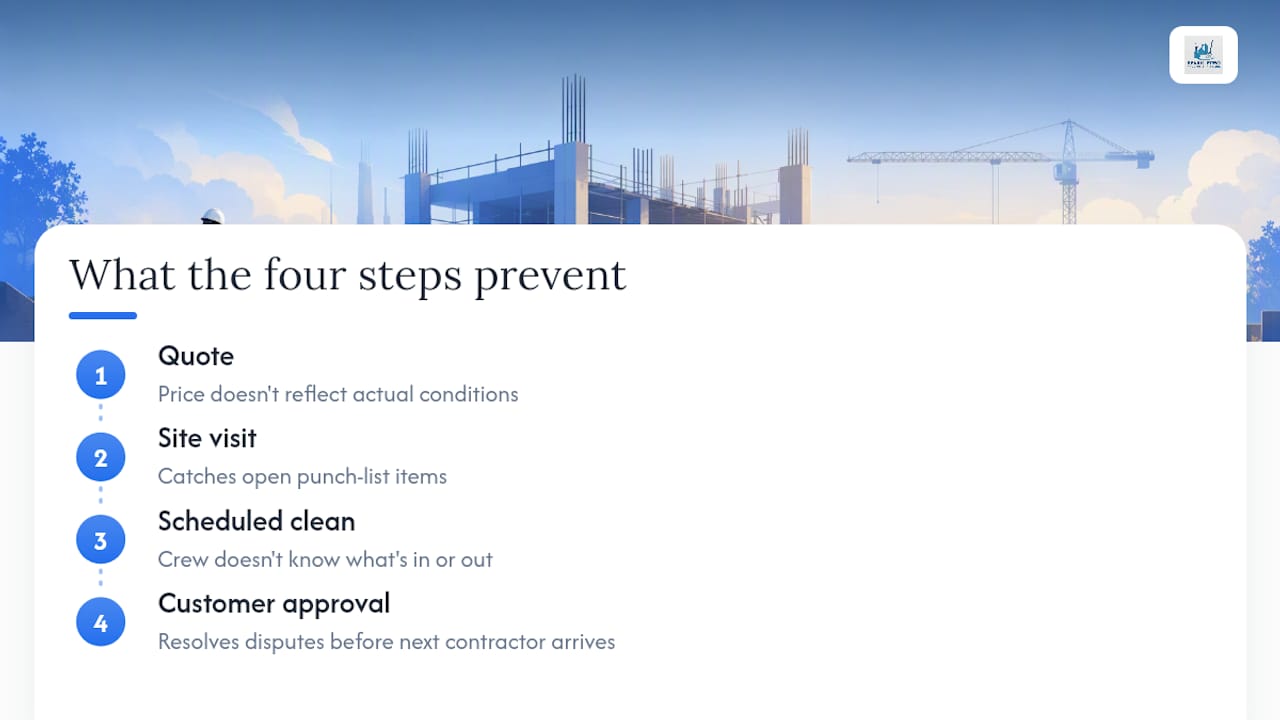
The four-step process, quote, site visit, scheduled cleaning, customer approval, exists because post-construction cleaning fails in predictable ways when any step is skipped. A quote without a site visit produces a price that does not reflect actual conditions. A scheduled clean without a confirmed scope produces a crew that does not know what is in and what is out. A completed clean without a customer approval walkthrough leaves disputes unresolved until the next contractor is already on site.
On a recent commercial office fit-out, a property manager brought in a cleaning crew after the GC's punch list was still open. The crew cleaned surfaces that trades then re-worked, requiring a second final clean. The cost was not the cleaning fee. It was the two-day delay to turnover. Enforcing the four-step sequence, and specifically the site visit before scheduling, would have caught the open punch-list items and held the clean until the right moment.
The crew supervision guide covers how to coordinate cleaning access with active punch-list trades so this overlap does not happen.
Sparkleprocommercialcleaning handles post-construction cleans nationwide
Post-construction cleaning done right means a crew that knows the difference between a rough clean and a final clean, carries the right insurance, and will not start work without a signed scope. Sparkleprocommercialcleaning delivers exactly that across the United States, with documented OSHA awareness, phased scope capability, and general liability and workers' compensation coverage.
Service features:
- Nationwide coverage with local staffing
- OSHA 29 CFR 1926-aware crews with documented training
- Fully insured with GL and workers' comp; named insured endorsements available
- Phased scope capability: rough, final, and touch-up cleans
- Written scope with explicit exclusions provided before work begins
Four-step engagement process:
- Quote — submit your project details for a preliminary estimate
- Site visit — a Sparkleprocommercialcleaning representative walks the space and finalizes scope
- Scheduled cleaning — crew mobilizes per the agreed phase timeline
- Customer approval — final walkthrough with your team before the job is closed
Get a quote for your project at sparkleprocommercialcleaning.com or contact the team to schedule a site visit.
Authoritative sources and further reading
| Source | What it supports |
|---|---|
| OSHA 29 CFR 1926 Standards | Construction-site safety requirements, PPE, and training obligations |
| Post-Construction Cleaning: OSHA 29 CFR 1926 Safety — Opora | Phase definitions, staffing guidance, and per-phase pricing bands |
| Sparkleprocommercialcleaning | Four-step engagement process and nationwide service overview |
| Construction Cleaning Safety Requirements | Prequalification safety checklist: orientations, PPE lists, training documentation |
| Step-by-Step Post-Construction Cleaning Process | Walkthrough requirements, itemized scope, and exclusion documentation |
| HVAC System Cleaning After Construction | Why HVAC duct cleaning is typically excluded from standard final clean scopes |