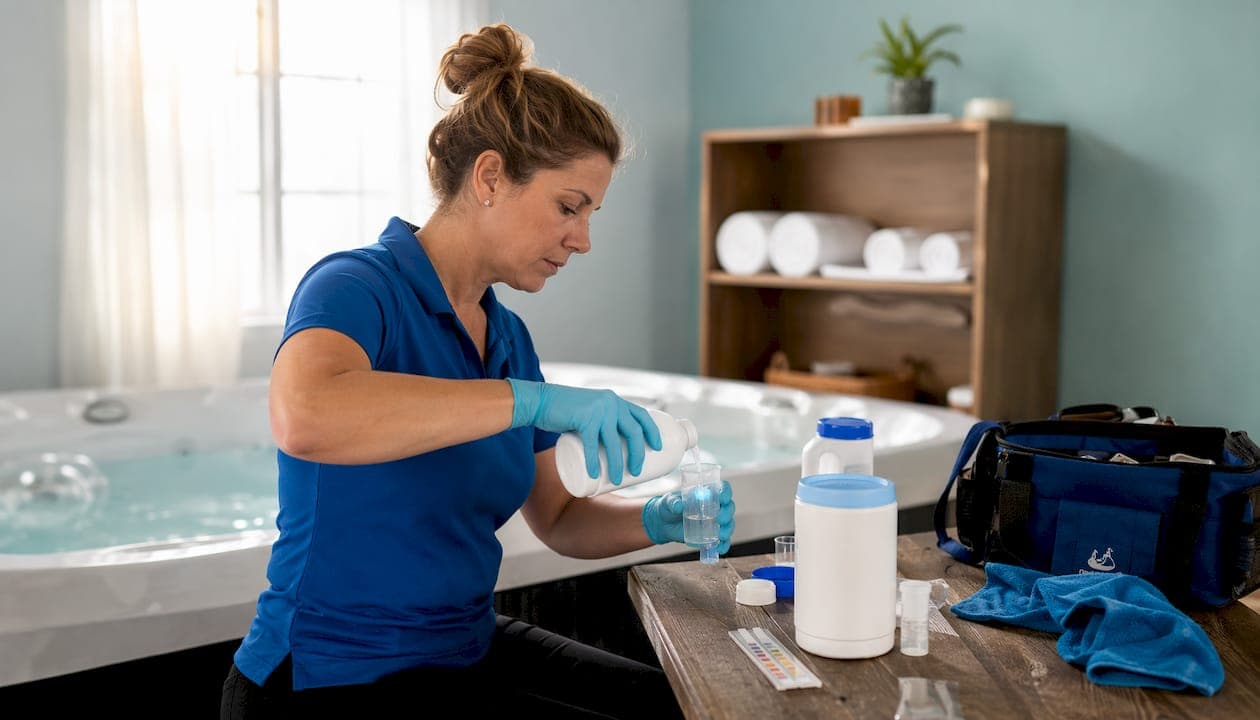
A complete spa cleaning essentials list covers water testing kits, sanitizers, pH and alkalinity adjusters, soft scrub brushes, oil-absorbing sponges, filter cleaning solutions, handheld vacuums, cover cleaners, and plumbing flush agents. Pair those supplies with a structured routine and your water stays clear, safe, and easy on equipment.
Core supplies at a glance:
- Water test strips or a digital tester
- Chlorine or bromine sanitizer
- pH increaser and pH decreaser
- Alkalinity adjuster
- Clarifier and anti-foam agent
- Soft-bristled scrub brush and cleaning mitt
- Oil-absorbing sponge (scum bug)
- Filter cartridge cleaner and spare filter
- Handheld spa vacuum
- Cover cleaner and UV protectant
- Plumbing flush agent (used quarterly)
Basic maintenance timing:
- Daily: Test water chemistry and adjust chemicals as needed
- Weekly: Rinse filter, skim surface, wipe down shell and high-touch areas
- Quarterly: Drain spa, flush plumbing lines, deep-clean shell, soak filter overnight
Skipping any one of these categories creates problems fast. A spa is a closed-loop water system, and contaminants accumulate quickly without consistent care.
What does your spa cleaning essentials list need for water chemistry?
Water chemistry is where most spa problems start. Ideal spa pH sits between 7.2 and 7.8. Below that range, water turns corrosive and eats at metal fittings and pump seals. Above it, scale builds on heater elements and jets, and chlorine loses much of its sanitizing power.
Testing tools:
- Test strips: Fast and affordable. AquaChek 7-Way strips check pH, alkalinity, sanitizer, and hardness in one dip.
- Digital testers: More accurate for owners who use their spa daily or run a commercial facility.
Test 2–3 times per week, and always after heavy use or a rainstorm if the spa is outdoors.
Chemical balancers you need on hand:
| Chemical | Target Range | Adjustment Frequency |
|---|---|---|
| pH | 7.2–7.8 | As needed after testing |
| Total alkalinity | — | Weekly or when pH drifts |
| Sanitizer (chlorine) | 1–3 ppm | Daily or after each use |
| Sanitizer (bromine) | 3–5 ppm | Daily or after each use |
| Calcium hardness | — | Monthly |
| Clarifier | As directed | When water appears hazy |

Industry experts frame spa maintenance around the "3 C's": Circulation, Cleaning, and Chemistry. Let any one slip and water quality drops fast, regardless of how often you scrub the shell.
Which physical tools do you actually need to clean a spa?
The right tools protect acrylic surfaces while getting the job done. Household scrubbers and general-purpose cleaners are too aggressive for spa shells. Here is what belongs in your kit, and why each item earns its place.
Scrub brushes and mitts:
- Soft-bristled spa brush: Designed specifically for acrylic surfaces. A curved spa brush, like the Poolmaster 18115, reaches the contoured seats and footwell without scratching.
- Cleaning mitt: Gentler than a brush for polishing the shell between deep cleans.
Surface and water cleaning:
- Oil-absorbing sponge (scum bug): Floats in the water and pulls body oils and lotion residue off the surface. Wringing it out and reusing it weekly saves money and keeps the waterline clean.
- Handheld spa vacuum: Suctions debris from the floor and corners between full drains. The Aura 6250 Paradise Wand is a widely used option for residential spas.
- Water skimmer net: Catches leaves, insects, and hair before they sink and clog the filter.
Filter care:
- Filter cartridge cleaner: Deep cleaning spa filters requires an overnight chemical soak monthly to remove embedded oils and scale that rinsing alone cannot reach. Neglect this step and you get cloudy water even when your chemical readings look perfect.
- Spare filter cartridge: Rotate a second filter in while the first one soaks. No downtime, no guessing.
Cover care:
- Cover cleaner and UV protectant: A product like 303 Aerospace Protectant shields vinyl covers from UV degradation and cracking. A well-maintained cover also holds heat better, cutting energy costs.
Safety gear:
- Chemical-resistant gloves when handling pH adjusters or sanitizers
- Safety glasses for mixing or pouring concentrated chemicals
- Store all chemicals in a cool, dry location away from direct sunlight and never mix products in the same container
How often should you clean your spa? A practical schedule
A structured maintenance checklist breaks tasks into daily, weekly, and quarterly work. That structure prevents the most common failure mode: owners who clean reactively instead of routinely.
Daily tasks
- Test pH, sanitizer level, and alkalinity with test strips
- Add chemicals as needed and run jets for 15–20 minutes to circulate
- Replace the spa cover securely after each use
Weekly tasks
- Rinse the filter cartridge with a garden hose to remove loose debris
- Skim the water surface and wipe down the waterline with a spa-safe cleaner
- Wipe jets, headrests, and control panels with a damp microfiber cloth
- Check the cover for tears, waterlogging, or mold on the underside
Quarterly tasks
- Add a plumbing flush agent and run jets for 30 minutes before draining
- Drain the spa completely
- Scrub the shell with a soft brush and spa-approved cleaner
- Soak the filter cartridge overnight in a chemical filter cleaner solution every month, not just quarterly.
- Rinse the shell thoroughly, refill with fresh water, and rebalance chemistry
Why the quarterly plumbing flush matters: Biofilm, a thin bacterial layer, builds inside plumbing lines where sanitizers cannot reach during routine maintenance. Flushing the lines before each drain breaks that biofilm loose and removes it with the old water.
Pro Tip: Soak your filter in a dedicated cartridge cleaning solution overnight every month, not just quarterly. Rinsing every two weeks handles loose debris, but only a chemical soak dissolves the oils and mineral scale that cause persistent cloudiness.
What mistakes do spa owners make most often?
Most spa problems trace back to a handful of repeatable errors. Knowing them upfront saves you from cloudy water, damaged surfaces, and expensive repairs.
Using household cleaners on the shell: Ammonia-based or abrasive cleaners create micro-scratches in acrylic that harbor bacterial biofilm. That biofilm resists sanitizers, which means you end up adding more chemicals to fight a problem the wrong cleaner created. Use only spa-rated, non-abrasive formulations.
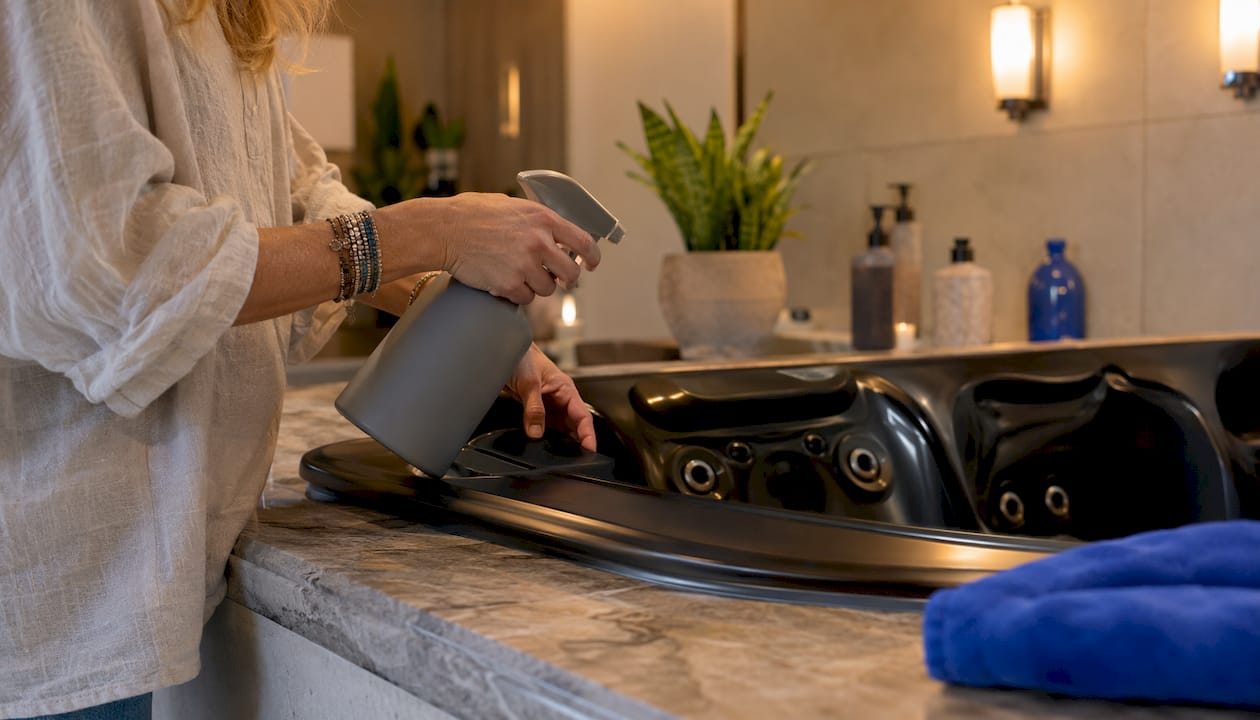
Treating foam with more additives: Persistent foam signals chemical saturation, not a surface problem. Anti-foam agents suppress it temporarily, but the real fix is a full drain and refill. Foam usually comes from residual soaps in swimsuits or body care products that accumulate faster than sanitizers can break them down.
Skipping the pre-soak shower: Body oils, lotions, and detergents from swimwear hit the water and immediately challenge sanitizer effectiveness. A quick rinse shower before entering the spa reduces the chemical load significantly, extending the time between water changes.
Over-sanitizing: Adding extra chlorine or bromine when water looks off is a common instinct, but chemical overload is itself a cause of foam, skin irritation, and equipment wear. Test first, then dose precisely.
Pro Tip: Keep a dedicated set of spa cleaning tools separate from your household cleaning supplies. Cross-contamination from residual household cleaners on a shared sponge or brush is enough to damage acrylic or disrupt water chemistry.
How should you dispose of spa cleaning waste?
Spa waste disposal is straightforward when you follow local guidelines, but getting it wrong can damage plumbing, harm the environment, or violate municipal codes.
Drained spa water: Most municipalities allow spa water to be discharged onto a lawn or garden, provided the sanitizer level has dropped to near zero before draining. Let the water sit uncovered for 24–48 hours after your last chemical addition, then test before releasing it. Never drain directly into a storm drain if your local code prohibits it. Check with your city or county water authority for specific rules.
Spent chemical containers: Rinse empty plastic containers thoroughly and recycle them according to your local recycling program. Never pour leftover concentrated chemicals down a household drain or mix them before disposal.
Used filter cartridges: Spent filters go in the regular trash in most jurisdictions. If a filter has been treated with heavy chemical cleaners, allow it to dry fully before disposal to reduce chemical off-gassing in a closed waste bin.
Old spa water with high chemical concentration: If you need to drain before sanitizer levels drop naturally, dilute the water with a garden hose while draining to reduce chemical concentration at the discharge point.
How often should you replace your spa water?
Most spa owners should drain and refill every 3–4 months, though actual timing depends on bather load and water quality. A spa used by four people daily needs more frequent changes than one used by one person twice a week.
A simple formula used by many spa technicians: divide the spa's water volume in gallons by 3, then divide again by the average number of daily bathers. The result gives you a rough number of days before the water becomes chemically saturated. For a 400-gallon spa with two daily bathers, that works out to roughly 67 days, or about every two months.
Signs you need a water change sooner than scheduled: persistent cloudiness despite correct chemical readings, foam that returns within hours of treatment, a strong chemical odor even at normal sanitizer levels, or water that feels slippery or leaves a film on skin. Those are all signs of total dissolved solids building up beyond what chemistry can correct.
For routine facility cleaning in commercial spa environments, water replacement schedules should be documented and tracked, since high bather loads can push that interval to monthly or even more frequently.
Key Takeaways
A complete spa maintenance routine combines the right supplies, correct water chemistry targets, and a consistent schedule to keep water safe and equipment lasting.
| Point | Details |
|---|---|
| Core supply list | Stock water testers, sanitizers, pH and alkalinity adjusters, scrub brush, oil-absorbing sponge, filter cleaner, and cover protectant. |
| pH target range | Keep spa water between 7.2 and 7.8 to prevent corrosion, scale, and skin irritation. |
| Testing frequency | Test water 2–3 times per week and always after heavy use to maintain stable chemistry. |
| Filter deep-cleaning | Soak filter cartridges in chemical cleaner overnight every month; rinsing alone leaves embedded oils and scale behind. |
| Water replacement | Drain and refill every 3–4 months under normal use, or sooner when water shows persistent cloudiness or foam. |
Managing a commercial spa, wellness center, or multi-unit facility? Sparkleprocommercialcleaning provides fully licensed and insured commercial cleaning in Massachusetts and across the country, including specialized spa and facility maintenance services. Contact Sparkleprocommercialcleaning for a quote tailored to your property.