
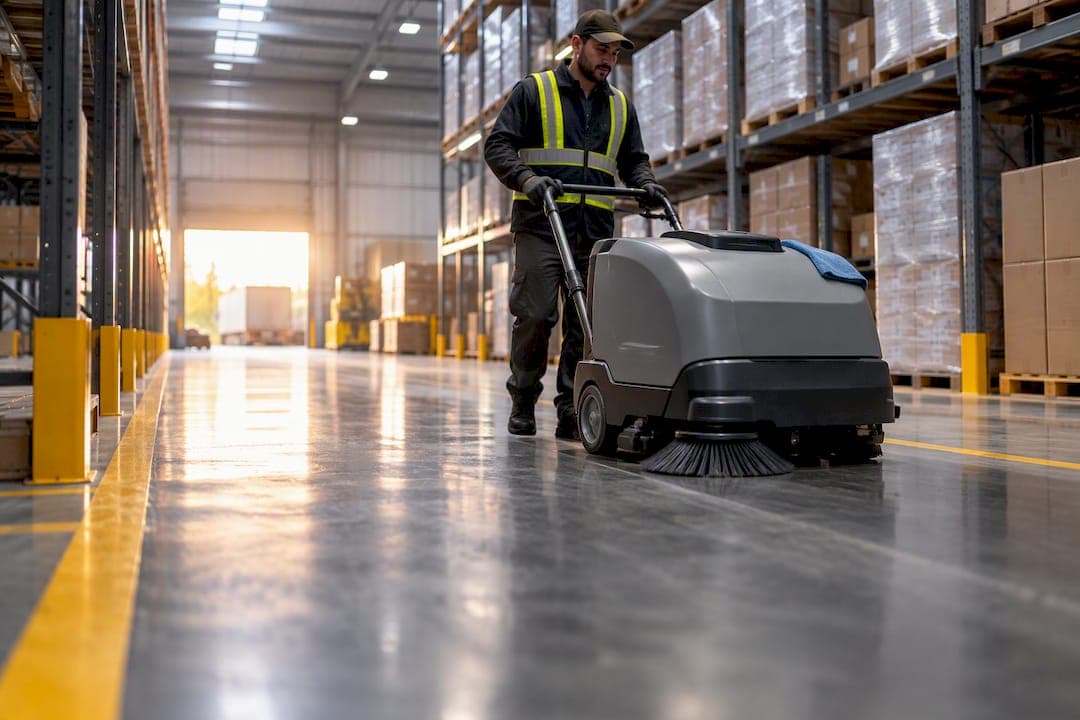
A usable warehouse cleaning plan is a zone-by-zone schedule that pairs daily, weekly, monthly, and quarterly tasks with named owners, a repeatable SOP, and documented sign-off. Start today with three moves: clear every aisle and exit, put high-touch surfaces on a daily wipe-down rotation, and set up a sign-off sheet before you touch anything else. Everything else in this plan builds on OSHA's housekeeping rules and CDC's cleaning and disinfection guidance.
TL;DR:
- Cleaning and disinfecting high-touch surfaces daily is essential, but disinfection is only necessary after contamination or illness outbreaks.
- A zone-based schedule with clearly assigned owners and documented sign-offs ensures consistency and accountability in warehouse cleaning tasks.
- Immediate escalation is required for blocked aisles, spills, or uncontained waste, as these pose safety hazards and violate OSHA standards.
- Equipment such as autoscrubbers, HEPA vacuums, and microfiber cloths should be maintained regularly to ensure effective cleaning across different zones.
- External professional cleaning support is often necessary for complex tasks like post-construction cleanup and disinfection, especially when internal resources are insufficient.
Table of Contents
- Building Your Warehouse Cleaning Schedule By Zone
- What SOP Steps Belong In Every Cleaning Task?
- Cleaning Vs. Disinfecting: When Do You Need Which?
- Equipment And Consumables Your Program Actually Needs
- How Should You Staff And Time The Cleaning Work?
- What Belongs On A Cleaning Checklist Template?
- What Do Professional Cleaning Crews Notice That Managers Miss?
- Why Routines And Records Matter More Than Any Single Deep Clean
- How Sparkleprocommercialcleaning Supports Your Cleaning Plan
- Sources
- FAQ
Building Your Warehouse Cleaning Schedule By Zone
A warehouse isn't one space. It's eight or nine different environments stacked under one roof, and each one collects a different kind of mess at a different speed. A cleaning schedule that treats the whole building the same way is why most plans fail within a month. Break it down by zone first, then assign frequency.
Receiving and loading docks. This zone takes the worst abuse: cardboard debris, pallet fragments, tracked-in grit, and the occasional oil drip from lift trucks. Sweep and remove trash daily. Pressure-wash dock plates and apron areas weekly. Inspect dock seals and bumpers monthly for wear that lets in pests or weather.
Main aisles and travel paths. These are your safety lanes, not storage. Daily sweeping and spot-mopping keep them clear. Weekly, run an autoscrubber over the full aisle network. OSHA's warehouse safety guidance is blunt about this: aisles and exits must stay accessible at all times, and spills get removed immediately, not at the end of a shift.
Picking and packing stations. Dust, shrink-wrap scraps, and product residue build fast here. Wipe down tables and surfaces daily. Empty and reline trash and recycling bins daily. Deep-clean conveyor components and packing equipment monthly.
Racking and shelving. Dust accumulates on beams and top-of-rack surfaces where nobody looks. Do a visual inspection weekly for damage or overloaded shelves. Full dust removal from racking, especially above eye level, belongs on a monthly or quarterly rotation depending on your ceiling height and HVAC airflow.
Mezzanines and elevated storage. Same dust problem as racking, worse because it's harder to reach. Quarterly deep cleans, with monthly spot checks for anything obviously accumulating faster than expected.
Restrooms. Daily cleaning and restocking, full stop. These are high-touch, high-complaint zones, and CDC guidance on cleaning and disinfecting facilities treats daily attention to high-touch surfaces as baseline, not optional.
Break rooms. Daily wipe-down of tables and high-touch surfaces (microwave handles, refrigerator doors, coffee stations). Weekly deep clean of appliances and floors.
Offices. Daily trash removal and desk-surface wiping. Weekly vacuuming and dusting. Monthly deeper attention to shared equipment like printers and phones.

Exterior and grounds. Weekly trash and debris sweep around dumpsters and entrances. Monthly pressure washing of exterior walkways. Quarterly gutter and drainage checks.
Three things deserve escalation the moment you spot them, not the next scheduled pass:
- Blocked aisles or exits, which violate basic egress requirements and create an immediate fall or fire hazard.
- Any spill, especially oil, hydraulic fluid, or chemical residue, which needs immediate containment per OSHA's warehouse safety guidance.
- Flammable or combustible waste that isn't in a covered, fire-resistant container by the end of the shift.
What SOP Steps Belong In Every Cleaning Task?
Every cleaning task, no matter how small, should run through the same seven-step sequence. It's what separates a real industrial cleaning procedure from someone just wiping things down until it looks better.
- Prepare. Confirm the task, gather PPE and supplies, and check the Safety Data Sheet for any chemical you'll use.
- Isolate hazards. Cone off wet floors, coordinate with forklift traffic, and confirm no one is working directly above or below the zone.
- Remove debris. Sweep, vacuum, or pick up loose material before any liquid touches the surface.
- Clean. Apply detergent or general-purpose cleaner to lift soil and grime.
- Disinfect if required. Only when the situation calls for it (more on that below), apply an EPA-registered product per label instructions.
- Manage waste. Sort trash, recyclables, and hazardous waste into their designated containers immediately.
- Inspect and sign off. Walk the zone, confirm it meets standard, and log it.
That sign-off step is what makes a plan auditable instead of just aspirational. Without it, you have no record of what got done, when, or by whom.
OSHA's 1915.81 housekeeping standard requires clear walkways free of tools, hoses, and cords, proper storage of materials, and covered, fire-resistant containers for flammable or combustible waste by the end of every shift. Build these into your SOP as non-negotiable checkpoints, not afterthoughts. Every task involving powered equipment or forklift-adjacent zones needs a coordination check first. Cleaning crews and lift operators sharing the same aisle at the same time is a preventable collision waiting to happen.
Pro Tip: Keep a laminated SDS binder and a PPE station at the entrance to every major zone. Crews that have to walk back to a supply closet for gloves or goggles skip that step half the time. Removing the friction removes the shortcut.
Cleaning Vs. Disinfecting: When Do You Need Which?
Cleaning removes dirt, dust, and grime from a surface. Sanitizing lowers germ counts to a safe level. Disinfecting kills specific pathogens on a surface and is the strongest of the three. Most of your warehouse cleaning schedule only needs the first one.
CDC guidance draws a clear line: clean high-touch surfaces at least once a day, and reserve disinfection for situations involving bodily fluid contamination, a confirmed illness in the facility, or an active outbreak. Cleaning first isn't a formality either. It physically removes the soil load that would otherwise block a disinfectant from reaching the surface, which is why CDC frames cleaning as what makes disinfection effective in the first place.
When you do disinfect, the EPA-registered product's label is the rulebook, not a suggestion. Labels specify exact dilution ratios, application methods, and contact or wet time, meaning the minimum time a surface has to stay visibly wet for the product to actually kill the pathogens it claims to. Wipe it dry too early and you've cleaned, not disinfected, no matter what the bottle says on the label. Follow the SDS for ventilation and PPE requirements, and skip fogging or blanket spraying unless the label specifically calls for it. It's a common overreaction that wastes product and increases chemical exposure for no real benefit. A closer look at dwell time rules breaks down exactly how contact time gets misjudged on the floor.

Equipment And Consumables Your Program Actually Needs
The gear matters less than how consistently it's maintained. A warehouse maintenance guide is only as good as the equipment behind it.
- Autoscrubbers for main aisles and dock areas, with weekly pad and squeegee checks and monthly battery inspections.
- HEPA vacuums for dust-sensitive zones like racking and mezzanines, filters checked monthly.
- Floor buffers for polished concrete or coated floors, blades and pads inspected before each use.
- Consumables: EPA-registered disinfectants, neutral detergents, microfiber cloths (color-coded by zone to prevent cross-contamination), PPE, spill kits, and wet-floor signage.
Store chemicals in a ventilated, labeled cabinet away from heat sources, and keep cords routed away from foot traffic. A frayed cord on an autoscrubber isn't a minor maintenance item. It's a shock and trip hazard sitting in the middle of your main aisle.
How Should You Staff And Time The Cleaning Work?
Every task on your warehouse hygiene checklist needs one owner, not a vague "the crew" assignment. Typical structures split responsibility three ways:
- A day porter handles high-touch surfaces, restrooms, and break rooms throughout operating hours.
- A nightly crew runs floor scrubbing, trash removal, and aisle deep-cleaning after shipments stop.
- A contracted vendor handles quarterly deep cleans, post-construction cleanup, and specialized work like disinfecting after an incident.
For smaller facilities, one cross-trained crew covering all zones on a rotation usually works. Larger operations do better with dedicated zone crews, one team owning the docks, another the racking and aisles, so nobody's spreading contamination across zones with the same mop bucket.
Timing matters more than most managers plan for. Schedule labor-intensive weekly tasks, like full autoscrubbing or racking dust removal, into shift-change windows or slow periods rather than peak picking hours. It cuts disruption and keeps crews out of the way of active forklift traffic.
Pro Tip: Single-task your crew during quiet windows. Have one team run trash removal across every zone, then a second pass for surface wiping, instead of one person doing both zone by zone. It cuts setup time and stops workers from re-soiling a surface they already cleaned an hour earlier.
What Belongs On A Cleaning Checklist Template?
A checklist that doubles as your SOP record needs six fields at minimum: zone, task, frequency, owner, time completed, and a sign-off line for issues found. That's it. Overbuilt templates get abandoned within a week.
Printable PDFs work for small single-shift operations. Spreadsheets suit multi-zone facilities tracking trends over time. Larger operations often move to mobile checklist apps or CMMS platforms that timestamp entries automatically and flag overdue tasks.
The real value shows up over weeks, not days. When the same "dock seal cracked" note appears three days running, that's your trigger to escalate from a cleaning task to a maintenance ticket, before it becomes a pest or weather problem.
What Do Professional Cleaning Crews Notice That Managers Miss?
A typical site-visit process for commercial cleaning services follows a straightforward four-step engagement: quote, site visit, scheduled cleaning, and customer approval. That site visit alone catches things an internal walkthrough usually misses.
- Dust accumulation on top-of-rack surfaces and HVAC returns that never show up on a floor-level inspection.
- Coordination gaps between cleaning windows and shift changes that create bottlenecks nobody planned for.
- Areas where a routine mop-and-wipe schedule isn't enough, like post-construction debris or a confirmed contamination event requiring disinfecting services.
Professional support tends to earn its cost fastest on deep cleans, post-construction cleanouts, and disinfecting jobs, the work that internal crews aren't equipped or staffed to handle well on top of daily routines.
Why Routines And Records Matter More Than Any Single Deep Clean
Most injury and near-miss reports trace back to a routine that slipped, not a one-time failure. A blocked aisle sits for two days because nobody owned the task. Sign-off sheets fix that by creating accountability that a verbal "someone will handle it" never does. The common mistake is building an elaborate plan nobody sustains. Fix it by shrinking the checklist to what a crew will actually finish every single day.
— Sales
How Sparkleprocommercialcleaning Supports Your Cleaning Plan
Running this plan internally works fine until you hit the jobs your crew isn't built for: a post-construction cleanout full of concrete dust, a quarterly deep clean that needs equipment you don't own, or a disinfecting job after a contamination event where getting it wrong means doing it twice. That's when a contractor stops being optional and starts being the faster, cheaper path.
A professional commercial cleaning company can serve as a practical alternative to stretching your own team thin. Licensed and insured crews may handle post-construction cleaning, disinfecting services, deep cleans, and facility services on a schedule that fits around your existing routine, not instead of it. Coverage can run nationwide with local crews, so the same standard applies whether you're running one facility or several across different states. If you're in New Jersey, there's a dedicated state team ready to schedule a walkthrough.
The process starts simple: request a quote and site visit so a crew can look at your actual zones, not a generic estimate. From there, cleaning gets scheduled around your operation, and you sign off once it meets standard. Reach out today to get a site visit on the calendar.
Sources
For direct rules and guidance, consult CDC facility disinfection guidance and OSHA's 1915.81 housekeeping standard directly.
- When and How to Clean and Disinfect a Facility | CDC
- EPA disinfectant product label (example)
- Warehouse safety: OSHA guidance
FAQ
What Is The 5-5-5 Rule For Cleaning?
The decluttering method is a general approach involving timed phases of clearing, cleaning, and organizing a space. In a warehouse setting, it works best as a quick end-of-shift habit for workstations and break areas rather than a substitute for your full zone-based schedule.
How Much Does It Cost To Clean A Warehouse?
Cost depends on square footage, cleaning frequency, and the scope of work, from routine janitorial visits to a full post-construction cleanout. Sparkleprocommercialcleaning does not publish flat pricing since every facility's quote is based on a site visit, but you can request a quote tailored to your zones and schedule.
What Is The 20/10 Rule For Cleaning?
The pacing technique divides cleaning into active work periods followed by short breaks to prevent burnout during longer cleaning sessions. It's more common in home organizing than industrial settings, but crews tackling a full quarterly deep clean sometimes use a similar work/rest split to maintain quality over long shifts.
What Are The 7 Stages Of Cleaning?
A standard cleaning sequence runs: prepare, isolate hazards, remove debris, clean, disinfect if required, manage waste, then inspect and sign off. Following these seven steps in order on every task is what makes a warehouse cleaning plan auditable instead of just a to-do list.
How Often Should High-Touch Surfaces Be Cleaned?
High-touch surfaces like door handles, light switches, and shared equipment should be cleaned at least once daily, according to CDC guidance. Disinfection on top of that daily cleaning is only necessary during illness outbreaks or after contamination, not as a routine step.