
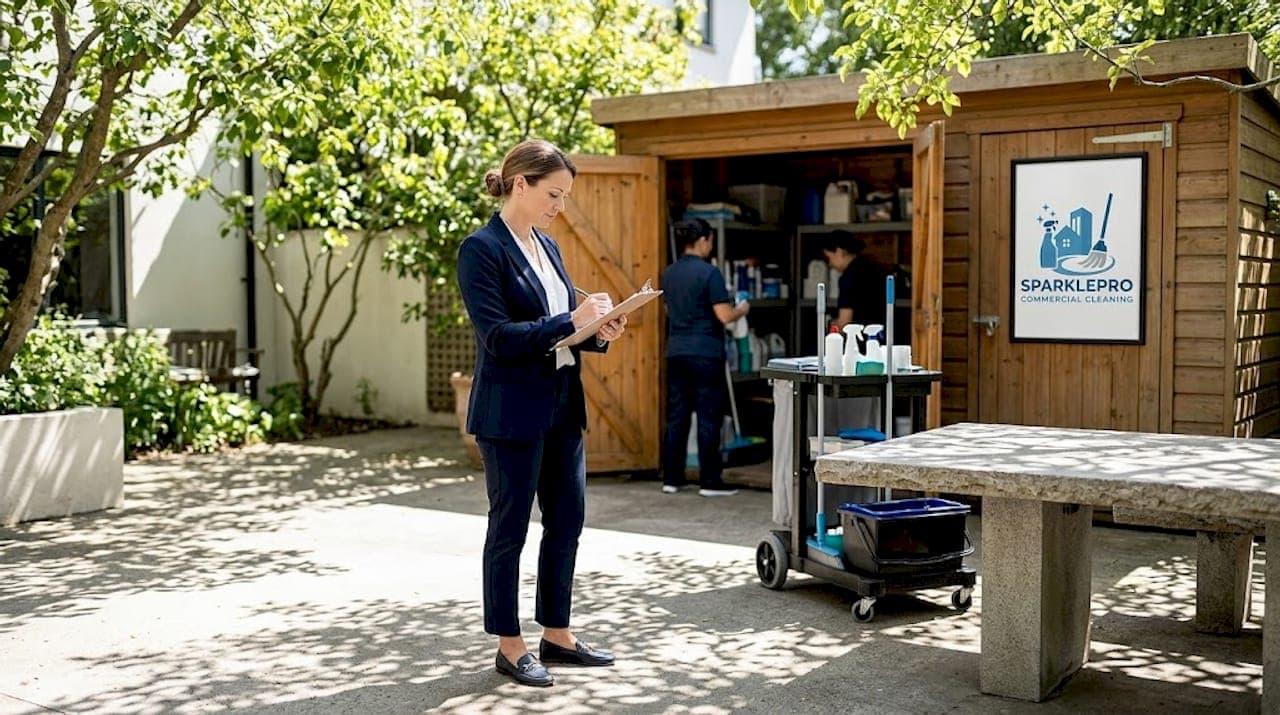
Most property managers treat a cleaning site visit as a box to check before signing a contract. That assumption costs money. A site visit is the single event that separates a cleaning agreement that performs from one that generates disputes, rework, and eroding service quality. Understanding why site visits for cleaning are non-negotiable gives you leverage at every stage of the vendor relationship, from the initial bid to the monthly inspection report. This article breaks down exactly what happens during a cleaning site visit and why skipping it is never worth the time saved.
Table of Contents
- Key takeaways
- Why site visits for cleaning are worth your time
- How site visits improve pricing accuracy
- Site visits as an ongoing quality control tool
- Operational benefits during onboarding and multi-site management
- Practical steps to get the most from a cleaning site visit
- My perspective on site visits in commercial cleaning
- How Sparkleprocommercialcleaning puts site visits to work for you
- FAQ
Key takeaways
| Point | Details |
|---|---|
| Site visits define accurate scope | Zone-by-zone walkthroughs replace vague square footage figures with task-specific labor estimates. |
| Visits prevent contract disputes | Documented exclusions and cleaning priorities captured on-site reduce post-contract misunderstandings. |
| Onboarding quality depends on them | The first 30 to 60 days set service standards; structured site visit documentation prevents early complaints. |
| Quality control starts at the walkthrough | The visit creates a baseline for inspection reports, defect logs, and supervisory visit schedules. |
| Scaling requires visit-based systems | Multi-site operators need standardized SOPs and digital verification built from site visit data. |
Why site visits for cleaning are worth your time
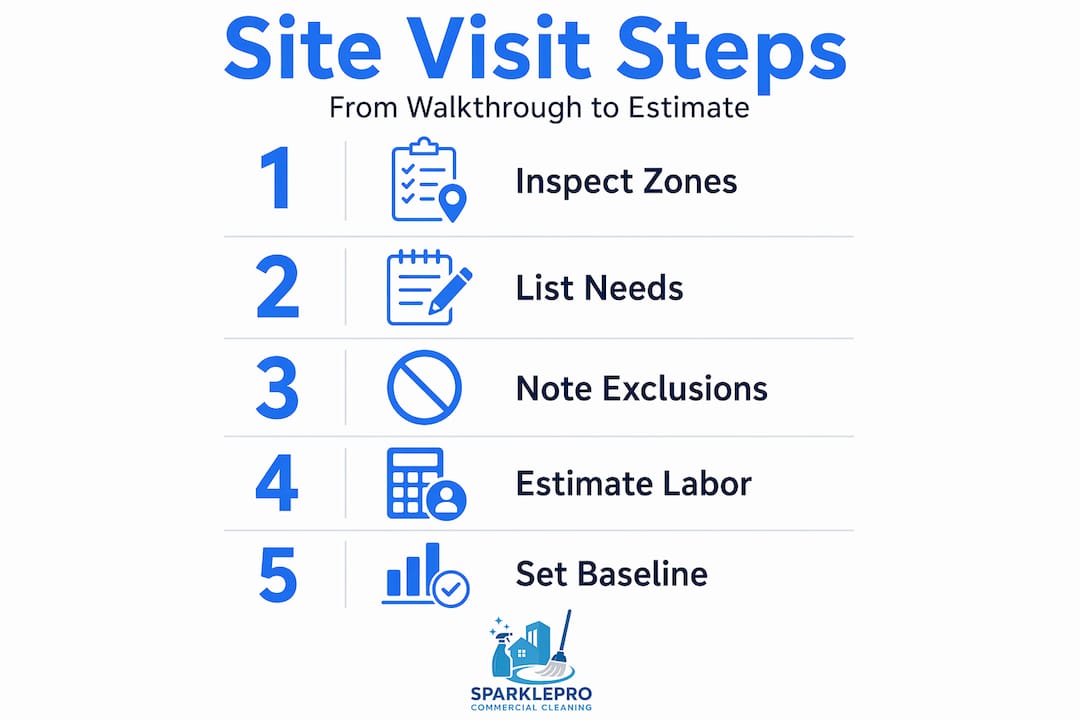
A cleaning site visit is a structured, in-person walkthrough of a facility conducted before a cleaning contract is written or renewed. That definition sounds simple. The execution is anything but.
During the visit, a cleaning professional or supervisor documents:
- Total floor area broken down by zone type, including offices, restrooms, kitchens, and high-traffic corridors
- Surface materials across each zone, such as sealed concrete, carpet, tile, or hardwood
- Frequency requirements and any time-of-day access restrictions
- Specific problem areas, including cluttered workstations, crowded restrooms, or equipment that complicates routine cleaning
- Client priorities and pain points, meaning what specifically bothers the tenant or property manager about current cleaning performance
That last point matters more than most vendors acknowledge. A janitorial walkthrough checklist functions as a sales conversation tool that surfaces client-specific priorities a generic proposal will always miss. When a client tells you during a walkthrough that the elevator cab never looks clean or the break room always smells by Thursday afternoon, you have information no square footage figure can give you. Those details shape the final scope and set a realistic service expectation from day one.
The site visit also initiates the labor estimation process. Without it, any quote is an educated guess.
How site visits improve pricing accuracy
Square footage is the most misleading number in commercial cleaning. A 50,000-square-foot building that is mostly open office space cleans very differently than one with 40 private offices, six multi-stall restrooms, a commercial kitchen, and a loading dock. Restrooms are slower to clean per square foot than open floor areas. Kitchens carry health and compliance requirements that add time. Zone-level labor distinctions using ISSA production rates allow accurate pricing models that hold up over the life of a contract.
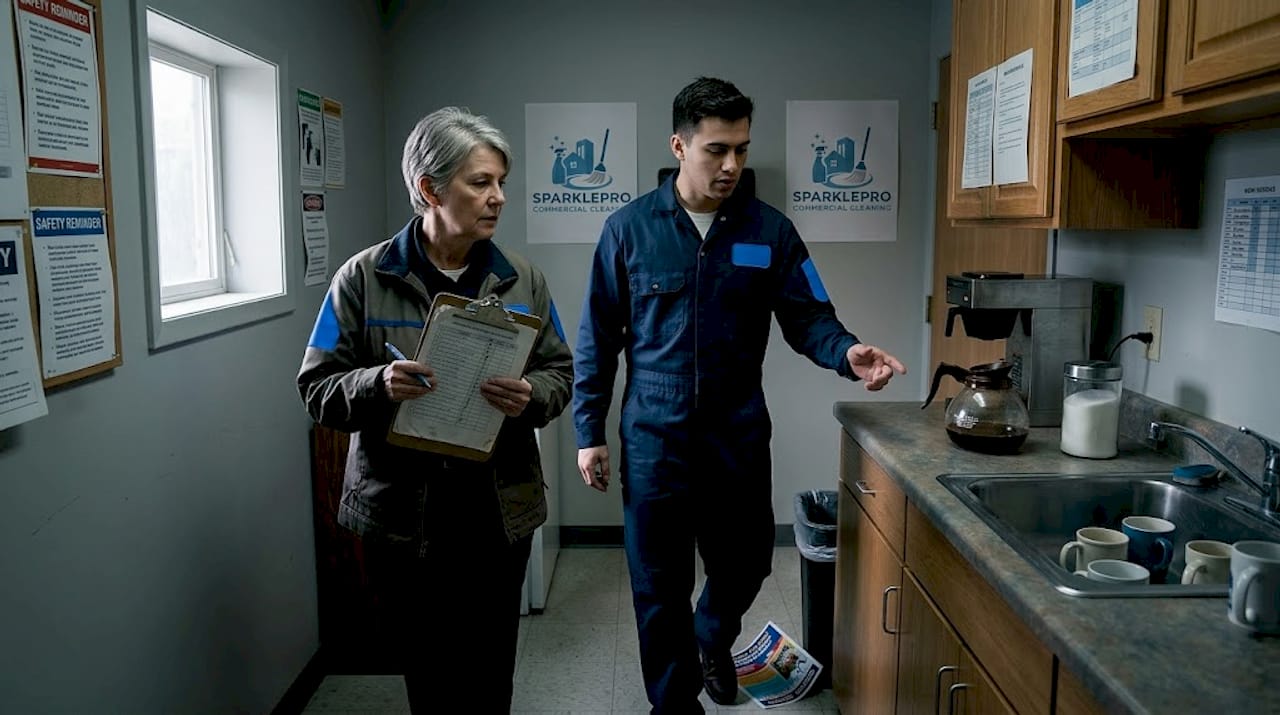
Skipping that level of detail creates predictable problems. You get underpriced bids that become unprofitable within 60 days, overpriced bids that lose the contract, and scope disputes because neither party defined what was included.
A comparison of the two approaches makes this concrete:
| Approach | What you get | What you risk |
|---|---|---|
| Square footage only | Fast quote, rough number | Underpricing, scope disputes, rework |
| Zone-specific walkthrough | Accurate labor hours per task | Defensible bid, clear exclusions |
The walkthrough also surfaces exclusions, which are equally important. Alarm codes, parking restrictions, access schedules, and areas that are off-limits during business hours all affect labor planning. Getting these on record during the visit, not mid-contract, is how you avoid being charged for work that was never agreed upon or arguing about why a space was not cleaned when your crew could not access it.
Pro Tip: Build a site visit checklist tailored to your building type before any vendor walkthrough. For office buildings, include questions about after-hours access, alarm procedures, and frequency of deep-cleaning tasks like carpet extraction. For retail, focus on footfall zones, exterior entry cleaning, and restroom turnaround. A property-specific checklist turns a casual tour into a contractually useful document.
Site visits as an ongoing quality control tool
The initial walkthrough is not a one-time event. It is the foundation of a quality control system that should operate for the life of the contract.
Here is how that system builds from the site visit baseline:
- Assign a named site supervisor. The walkthrough identifies who is responsible for oversight at that specific location. A named supervisor prevents accountability gaps when service quality slips.
- Establish supervisory visit frequency. Monthly inspection reports with photo evidence and defect logs are baseline expectations in a professional cleaning contract. Agree on visit frequency during the initial assessment.
- Document a before-condition baseline. Photographs taken during the walkthrough give you something to compare against during quarterly inspections. Without a baseline, every defect is a matter of opinion.
- Create a defect log protocol. When deviations occur, written defect logs tied to the site visit documentation create a clear corrective action trail. This protects you and creates accountability for the vendor.
- Schedule recurring supervisory walkthroughs. Supervisory visits should occur at defined intervals, not just when complaints arise. Reactive oversight is always more expensive than proactive inspection.
The practical benefit here is significant. Regular visits that trace back to a documented baseline let you catch cleaning drift before a tenant notices it. That protects your relationship with tenants, your vendor, and the facility's reputation. Cleaning for contractors and commercial tenants in complex environments depends on this inspection report structure to function consistently over time.
Operational benefits during onboarding and multi-site management
The first 30 to 60 days after a new cleaning contract begins are the highest-risk window in any service agreement. Most complaints at 90 days trace back to problems that appeared around week two. What that means practically is that if your cleaning team does not have documented standards from day one, those early failures become entrenched habits.
A thorough site visit at onboarding creates the documentation that prevents this:
- Written SOPs by zone and task type that cleaning staff can reference without supervisor interpretation
- Photo-documented baseline conditions so deviations are visible and objective
- Frequency schedules and access protocols that eliminate guesswork on the crew's first night
- A client communication channel defined during the visit so concerns have a clear path to resolution
For property managers overseeing multiple buildings, the stakes compound quickly. Companies managing more than five to ten sites face operational breakdowns without standardized SOPs, centralized scheduling, and digital quality controls built from site visit data. You cannot supervise your way out of that complexity. You need systems, and those systems start with what your site visits capture.
Digital verification matters here too. Evidence-based quality control, which means GPS-timestamped check-ins, digital checklists, and photo documentation, scales across properties in a way that physical supervision cannot. But that technology is only as useful as the site-level data it tracks against. The visit creates the standard. The digital system measures compliance with it.
Pro Tip: When managing multiple properties, schedule site visits for all locations within the same contract cycle rather than staggering them by months. This lets you compare site conditions consistently and identify whether underperformance is vendor-wide or location-specific. Pair visits with your contract evaluation process to make vendor decisions based on real data.
Practical steps to get the most from a cleaning site visit
Knowing why site visits matter is one thing. Using them effectively is another. Here is how to prepare and follow through:
- Prepare a zone-based checklist before the walkthrough. Group questions by area type, covering floor surfaces, access restrictions, frequency requirements, and any specialized cleaning needs in each zone.
- Involve operations staff in the walkthrough. Bring whoever manages day-to-day tenant complaints. They know where the problems actually are, not just where the square footage is.
- Document everything during the visit. Take your own photographs alongside the vendor's. Note conditions in writing, not just verbal agreements. If it is not written, it did not happen.
- Ask cleaning site assessment questions about exclusions explicitly. Which areas are off-limits? Are there alarm codes, biometric access points, or equipment storage areas that affect access? What does the vendor not cover?
- Request a written scope document within 48 hours of the visit. Skipping thorough walkthroughs is one of the most common mistakes in commercial cleaning sales, and the damage shows up in contract disputes months later. A post-visit scope document closes that gap.
- Use the visit findings in vendor selection. A vendor who walks your property with a checklist, asks specific questions, and produces a zone-detailed scope is demonstrating operational competence. A vendor who quotes from a floor plan is guessing.
The importance of cleaning site visits is not theoretical. Every one of these steps translates directly into cleaning quality, budget predictability, and fewer escalations.
My perspective on site visits in commercial cleaning
I have seen every version of how this plays out. The property manager who insists on a thorough walkthrough before signing anything, and the one who approves a quote from a spreadsheet because the visit "takes too much time." The outcomes are not comparable.
What I have learned is that the site visit is not a vendor formality. It is the moment where you, as the property manager or facility director, define the terms of accountability. Without a documented baseline, you have no objective standard to hold anyone to. With one, every cleaning dispute becomes a facts-based conversation rather than a back-and-forth about whose memory is correct.
The false economy of skipping visits is real. You save 90 minutes once. You spend that time back in complaints, rework conversations, and contract renegotiations over the next six months. I have watched high annual turnover in the cleaning industry, which runs around 200%, destroy service quality at sites where documentation was never built properly. New crew members arrive with no standards to follow and no baseline to work from. The site visit is what makes onboarding repeatable rather than reactive.
The property managers who get the most from their cleaning contracts are the ones who treat the walkthrough as their contract. They ask specific questions, document every answer, and use that record to govern the relationship from month one to month thirty-six.
— Sales
How Sparkleprocommercialcleaning puts site visits to work for you
At Sparkleprocommercialcleaning, every engagement begins with a structured onsite assessment because a quote without a walkthrough is not a quote. It is a guess. The team conducts thorough zone-by-zone walkthroughs that produce detailed scope documents, defined exclusions, and a quality baseline before a single crew member steps on-site.
Whether you manage commercial properties in Delaware, operate facilities in Massachusetts, or oversee multiple buildings across Washington, Sparkleprocommercialcleaning brings location-specific knowledge to every assessment. Contact the team today for a no-obligation walkthrough and a scope-specific cleaning proposal built from what your property actually needs.
FAQ
What is a site visit in commercial cleaning?
A cleaning site visit is a structured walkthrough of a facility conducted before a contract is written. It documents zone types, surface materials, access conditions, and client priorities to produce accurate labor estimates and scope definitions.
Why conduct cleaning site inspections before signing a contract?
Site inspections prevent scope disputes, underpricing, and misaligned expectations. Without one, both the client and the vendor are working from assumptions that rarely survive the first month of service.
How do site visits improve cleaning quality over time?
Site visits establish a documented baseline for supervisory inspections, defect logs, and before-and-after photo comparisons. That documentation is what turns recurring cleaning into a managed, measurable service rather than a recurring expense with no accountability.
What questions should I ask during a cleaning site assessment?
Ask about zone-specific frequencies, access restrictions, alarm and security protocols, areas excluded from the scope, and what the vendor considers a defect. Get answers in writing as part of the post-visit scope document.
How often should site inspections happen after a contract begins?
At minimum, monthly supervisory visits with written inspection reports are standard practice for professional cleaning contracts. During the first 60 days, bi-weekly visits significantly reduce the risk of early service failures becoming entrenched problems.