
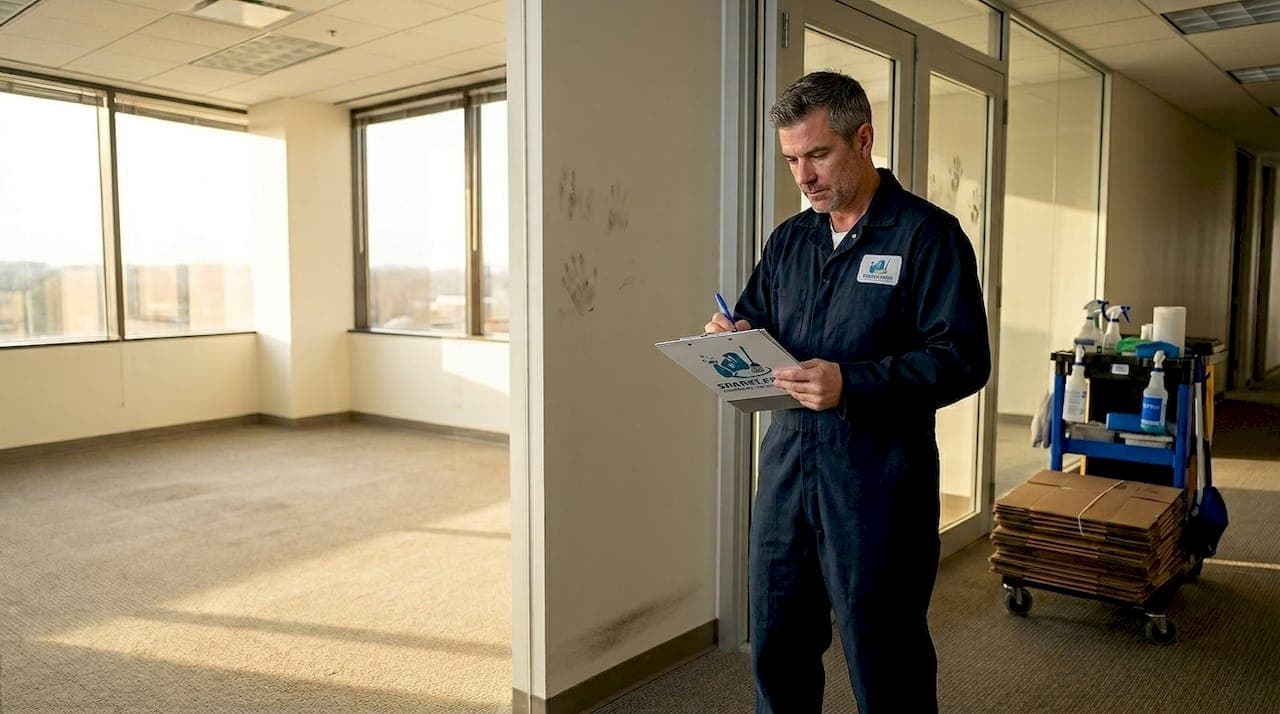
A quick vacuum and wipe-down might look fine on the surface, but it doesn't come close to what a commercial space actually needs before a new tenant walks through the door. Property managers who treat move-in cleaning as an afterthought are taking a real risk, from lease compliance failures to tenant complaints on day one. This article breaks down exactly what move-in cleaning involves for commercial properties, how it differs from other cleaning types, and why getting it right the first time protects your reputation, your tenants, and your bottom line.
Table of Contents
- What is move-in cleaning? A property manager's must-know
- Move-in vs. move-out cleaning: What's the actual difference?
- Move-in cleaning essentials for empty spaces after construction
- Health, safety, and compliance: Why thorough move-in cleaning matters
- Move-in cleaning timeline and coordination for smooth turnovers
- What most property managers miss about move-in cleaning
- Find reliable move-in cleaning for your next commercial turnover
- Frequently asked questions
Key Takeaways
| Point | Details |
|---|---|
| Move-in cleaning defined | It’s an in-depth cleaning process that prepares a commercial space for new occupants by prioritizing sanitation and detail. |
| Move-in vs. move-out | Move-in cleaning focuses on sanitation and tenant readiness, while move-out aims to restore the property to its original condition. |
| Importance for health | A thorough move-in cleaning helps ensure a safe, compliant environment for every new tenant. |
| Plan for smooth turnover | Proper scheduling and communication with cleaning teams minimizes downtime and ensures flawless transitions. |
| Boost reputation | Excellent move-in cleaning can boost your property’s reputation and attract long-term tenants. |
What is move-in cleaning? A property manager's must-know
Move-in cleaning is a specialized service performed on a vacant commercial space immediately before a new tenant takes occupancy. It's not routine maintenance, and it's not the same thing as a standard deep clean. The entire focus is on readiness: making sure every corner of the space is safe, sanitized, and professionally presented for the incoming occupant.
According to industry cleaning experts, move-in cleaning emphasizes new occupant readiness through interior sanitization and dust removal across all surfaces, fixtures, and systems. That includes places most routine cleaners skip entirely, like the inside of ventilation ducts, behind appliances, inside storage closets, and along window tracks.
What makes move-in cleaning distinct is its baseline assumption: the space is empty, and every surface must be treated as if it has never been properly cleaned. Whether the unit was previously occupied or was just built out from scratch, the standard is the same. It's about building cleaning benefits that go beyond cosmetics and directly affect tenant health and satisfaction.
Here's what a proper commercial move-in clean typically covers:
- Sanitizing all hard surfaces, counters, shelving, and workstations
- Dusting and wiping down light fixtures, ceiling fans, and vents
- Deep cleaning all restrooms, including grout, fixtures, and drains
- Cleaning interior windows and glass partitions
- Scrubbing and treating all floor types: tile, hardwood, carpet, and concrete
- Wiping down door handles, light switches, and all high-touch points
- Cleaning inside cabinets, closets, and storage areas
"Move-in cleaning can be more detailed than deep cleans in occupied spaces, because every inch of the unit needs to be addressed without working around furniture or active operations."
This level of detail matters because incoming commercial tenants, whether they're a medical practice, a law firm, or a retail brand, form their first impression of your property within hours of taking the keys. That impression directly influences how they feel about the lease, the landlord, and whether they refer others to your building.
Move-in vs. move-out cleaning: What's the actual difference?
The confusion between move-in and move-out cleaning is one of the most common mistakes property managers make during turnover planning. Both are intensive cleaning services performed on vacated spaces, but their goals are completely different.
Move-out cleaning is focused on restoration. Its purpose is to return the space to its original or baseline condition after a tenant has left. That means removing traces of the previous occupant, addressing scuffs, stains, and wear marks, and essentially undoing the evidence of tenancy. The move-out cleaning workflow is driven by what was there before and what needs to be corrected.
Move-in cleaning, by contrast, is focused on preparation. Once the space is cleared and restored, tenant move-out cleaning steps hand the baton to the move-in team, whose job is to sanitize, refresh, and certify the space is ready for a brand-new occupant. As cleaning specialists note, move-out focuses on restoring to original condition while move-in emphasizes sanitization and readiness for new tenants.
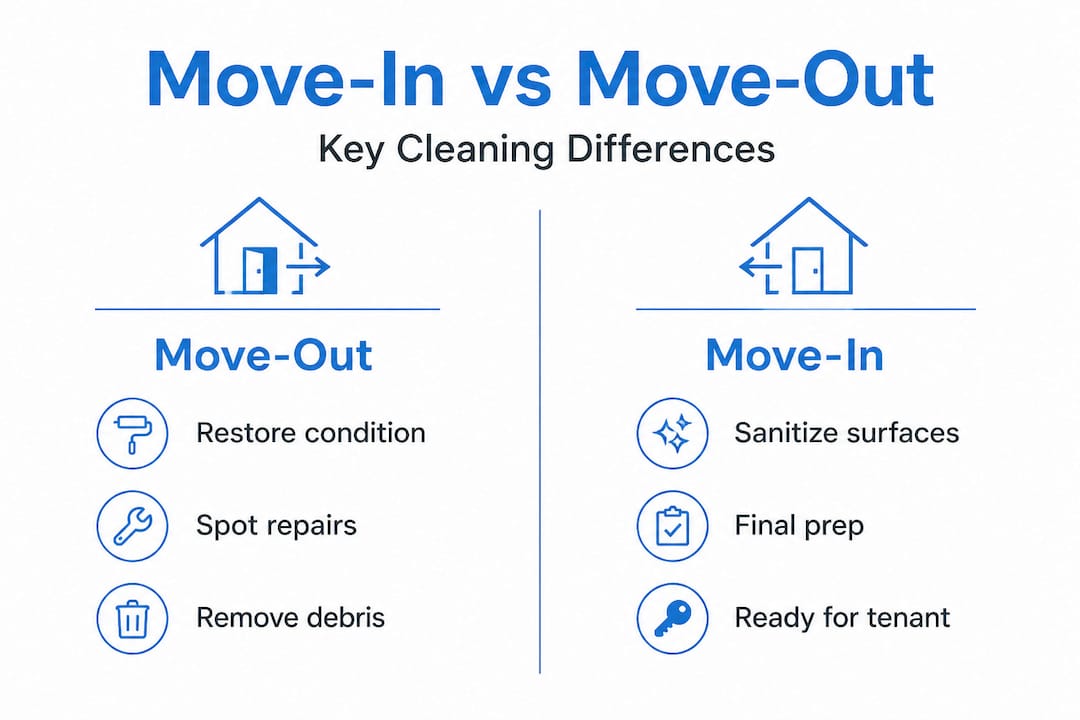
Here's a quick comparison to make the distinction clear:
| Aspect | Move-out cleaning | Move-in cleaning |
|---|---|---|
| Primary goal | Restore space post-tenancy | Prepare space for new occupants |
| Key tasks | Remove stains, marks, tenant debris | Sanitize, disinfect, polish |
| Timing | After tenant vacates | Before new tenant arrives |
| Focus area | Reversing wear and damage | Health and occupant readiness |
| Who benefits | Departing tenant/landlord | Incoming tenant |
| Typical spaces | Occupied, furnished, or cleared | Fully vacated or newly built |
Pro Tip: Never assume move-out cleaning replaces the need for a move-in clean. Even if your outgoing tenant left the space spotless, a dedicated move-in cleaning from a professional team ensures the space meets health and safety standards and gives your new tenant a truly fresh start.
Move-in cleaning essentials for empty spaces after construction
Post-construction commercial turnovers require an entirely different level of effort compared to spaces that were previously occupied by a standard tenant. When a space has been built out, renovated, or significantly modified, construction residue is everywhere: fine dust in the ductwork, drywall particles on surfaces, adhesive residue on floors, and debris in corners that standard crews routinely overlook.
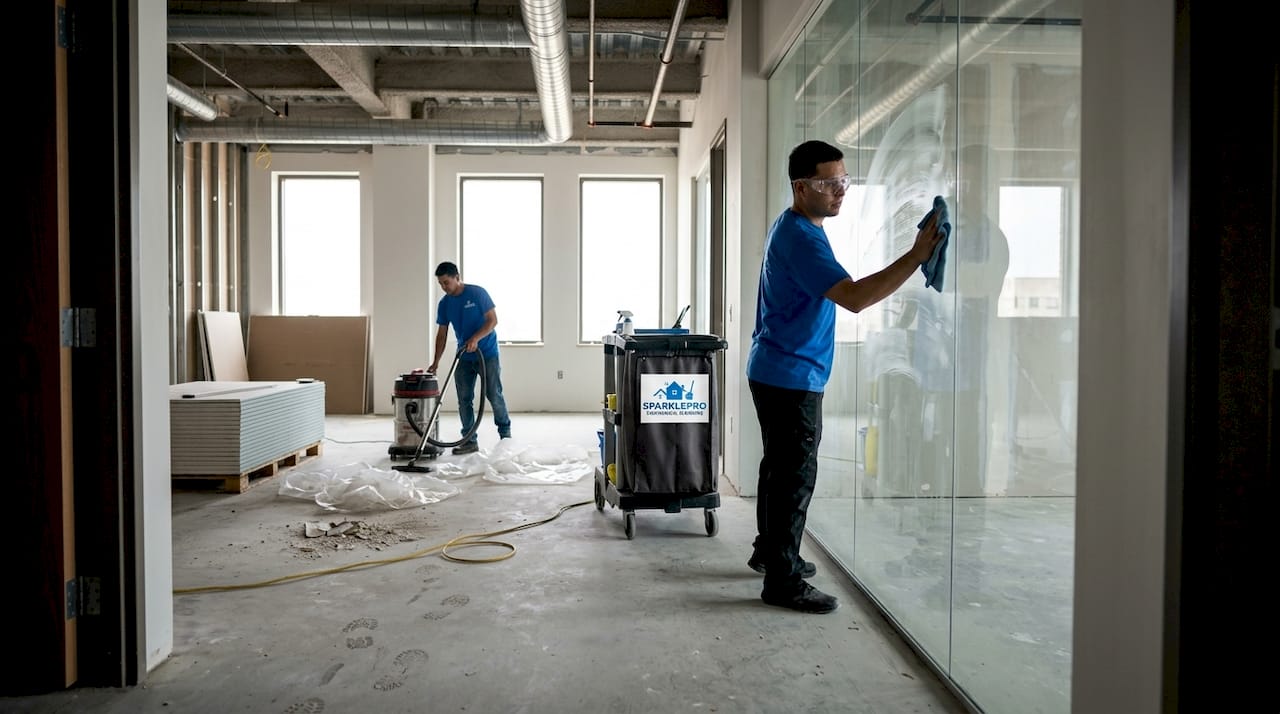
Deep cleaning solutions for commercial buildings designed for post-construction environments go far beyond what a standard mop-and-bucket team can handle. As industry professionals confirm, move-in cleaning for empty spaces often requires more attention than deep cleaning for occupied areas, especially after construction. The reason is straightforward: construction dust is ultra-fine, settles in HVAC systems, inside cabinets, and behind fixtures, and can trigger respiratory issues if not properly removed before tenants occupy the space.
Here's a breakdown of the essential tasks for a post-construction or vacant commercial move-in clean:
Structural surfaces:
- Remove all visible construction debris and packaging
- Wipe down walls, baseboards, and window sills
- Clean all interior glass, mirrors, and partitions
Mechanical systems:
- Clean and inspect HVAC vents and air returns
- Wipe down all light fixtures and electrical cover plates
- Flush and clean drains in bathrooms and kitchens
Floors:
- Remove adhesive residue and protective film from new flooring
- Machine-scrub tile and grout
- Steam-clean or hot-water extract carpets if installed
Bathrooms and break rooms:
- Sanitize all fixtures, including toilets, sinks, faucets, and partitions
- Clean tile walls and grout from floor to ceiling
- Disinfect countertops and cabinet interiors
| Space type | Key cleaning challenge | Recommended approach |
|---|---|---|
| Open office floor plan | Fine dust on every surface | HEPA vacuum, then damp wipe all surfaces |
| Retail unit | Adhesive on floors, dust in display areas | Solvent removal, machine floor scrub |
| Medical or clinical | Sterile readiness required | Hospital-grade disinfectant, full sanitization |
| Industrial/warehouse | Heavy debris, dust in rafters | Industrial vacuum, pressure wash where needed |
| Restaurant or kitchen | Grease residue, drain buildup | Degreaser, enzyme drain treatment |
The commercial cleaning benefits for property managers are most visible at this stage. A professionally executed move-in clean directly reduces the likelihood of tenant complaints, maintenance requests linked to cleanliness, or lease disputes over space condition. When evaluating cleaning contracts, make sure the scope explicitly covers post-construction detail work if your turnover involves any buildout activity.
Pro Tip: Always request a written scope of work that lists each zone of the building and the specific tasks to be completed in each. A vague "deep clean" agreement won't protect you if the new tenant finds drywall dust on the HVAC vents on their first day.
Health, safety, and compliance: Why thorough move-in cleaning matters
Here's where the stakes get serious. Move-in cleaning isn't just about appearance. It directly intersects with legal compliance, occupant health, and your liability as a property manager.
Commercial leases in most jurisdictions require premises to be delivered in a specific condition. That condition is generally described as "broom clean" or "move-in ready," but what that means in practice often involves a higher standard of sanitation than a literal sweep. Skipping or rushing move-in cleaning can put you in breach of your delivery obligations before the tenant even unpacks.
Commercial cleaning standards for property managers make clear that the stakes extend well beyond aesthetics. The industry consensus is that a thorough move-in clean is a non-negotiable requirement for health, first impressions, and lease compliance.
Here are the top reasons move-in cleaning has real compliance and safety consequences:
- Allergen and pathogen control. Dust, mold spores, and bacteria left behind from construction or prior tenancy can trigger allergic reactions and respiratory issues for new occupants, especially in healthcare, childcare, or food service facilities.
- OSHA and local health codes. Certain commercial uses require a certifiably clean environment before operations begin. Failing to provide one can expose you to regulatory citations.
- Lease delivery requirements. Most commercial leases specify the physical condition in which the premises must be delivered. Inadequate cleaning is a documented breach.
- First impressions and tenant retention. Tenants who move into a dirty or poorly prepared space lose confidence in property management immediately. That erosion of trust is very difficult to repair and significantly increases the risk of early lease termination.
- Liability reduction. If an employee of your new tenant suffers a health reaction traceable to conditions in the space at move-in, you may face liability. Professional, documented move-in cleaning creates a protective paper trail.
"A first-day move-in experience sets the entire tone of the landlord-tenant relationship. Tenants who feel respected and well-prepared at the start tend to communicate better, renew leases more often, and refer other quality tenants."
The business case is straightforward. A professional move-in clean costs far less than one lease dispute, one HVAC repair driven by construction dust buildup, or one negative review from a new tenant who felt the space wasn't ready.
Move-in cleaning timeline and coordination for smooth turnovers
Even the best cleaning team can't do their best work under chaotic scheduling. Timing and coordination are just as important as the scope of work itself.
The ideal window for move-in cleaning is after the space is completely vacated or construction is fully finished, and far enough before the new tenant's possession date to allow for inspection and any needed touch-ups. A rushed cleaning performed the same day the keys are handed over is a recipe for missed areas and tenant frustration.
Here's a step-by-step coordination approach that property managers should follow:
- Confirm the vacate or completion date. Get a hard date from the outgoing tenant or general contractor and build your cleaning schedule around it.
- Schedule the cleaning window immediately. Don't wait until the space is clear. Book your move-in cleaning team in advance so there's no gap between completion and cleaning.
- Use a detailed office cleaning checklist to align your cleaning team with the specific expectations for each zone of the space.
- Allow buffer time for inspection. Build in at least 24 to 48 hours between cleaning completion and tenant possession for a walkthrough, documentation, and any corrections.
- Communicate with your new tenant. Share a cleaning scope summary so they know what was done and feel confident about the condition of their new space.
- Document everything. Photographs before and after cleaning, along with a signed completion checklist, protect you legally and professionally.
The 2026 office cleaning guide for property managers reinforces that the coordination piece is where many turnovers fall apart. Scheduling gaps, miscommunication between contractors and cleaning crews, and insufficient inspection time are the most common causes of move-in complaints. When you're managing effective cleaning solutions across multiple properties, standardizing this process is critical.
Pro Tip: Build a turnover timeline template for your property management team that auto-schedules move-in cleaning 72 hours before possession. That buffer gives you room to address surprises without pushing back the tenant's move-in date.
As cleaning experts emphasize, move-in cleaning demands close attention to detail and precise timing to ensure the space is genuinely ready for new occupant readiness. No amount of good intention substitutes for a well-planned schedule.
What most property managers miss about move-in cleaning
We've seen a lot of commercial turnovers across a wide range of property types, from suburban medical offices to downtown retail spaces to large industrial campuses. And we'll say this plainly: most property managers understand move-in cleaning in theory, but undervalue it in practice.
The most common mistake is treating it as a checkbox. Get it done, move on. But move-in cleaning is actually one of the most visible signals you send to a new tenant about how you intend to operate. It says: we care about this property, and we care about you as a tenant. The unseen cleaning benefits that ripple out from a great move-in experience include higher tenant satisfaction scores, faster lease renewals, and stronger word-of-mouth referrals from tenants to other businesses in their networks.
The financial argument against cutting corners here is just as strong. A tenant who starts with complaints about cleanliness tends to keep complaining. Every future maintenance issue gets filtered through that initial negative lens. Contrast that with a tenant who walks into a spotless, professionally prepared space and the entire relationship dynamic is different from day one.
Smart property managers treat move-in cleaning as a strategic investment in tenant retention, not a line item to minimize. The cost difference between a rushed job and a thorough professional clean is minimal compared to the cost of a lease dispute, early vacancy, or a negative online review that discourages the next prospect from even touring your building.
Find reliable move-in cleaning for your next commercial turnover
Move-in cleaning done right takes experience, proper equipment, and a team that understands the specific demands of commercial properties. Getting it wrong is a risk no property manager needs to take on a tight turnover schedule.
At Sparkle Pro Commercial Cleaning, we specialize in exactly this kind of detailed, high-stakes work. Whether you're turning over an office suite, a retail unit, or a freshly built-out commercial space, our teams are trained to deliver cleaning that meets professional standards and tenant expectations. We serve property managers across multiple states, including Massachusetts commercial cleaning, Delaware commercial cleaning, and South Carolina commercial cleaning. Reach out to your local Sparkle Pro team for a custom quote and to schedule your next commercial move-in clean with confidence.
Frequently asked questions
What does a typical commercial move-in cleaning include?
A typical commercial move-in cleaning covers sanitizing high-touch areas, dusting vents, cleaning all floor types, wiping down surfaces, and ensuring every part of the space is ready for immediate occupancy. It goes well beyond routine janitorial tasks to address areas that haven't been touched since construction or the previous tenant's departure.
How is move-in cleaning for a new tenant different from regular janitorial service?
Move-in cleaning is a thorough, one-time service performed on empty spaces with a focus on sanitation and preparation, while regular janitorial service maintains occupied spaces through surface-level tasks. As industry experts confirm, move-in cleaning can be far more detailed than anything done in an actively occupied building.
When should move-in cleaning take place during a property turnover?
Move-in cleaning should happen immediately after the space is fully vacated or construction is completed, with enough buffer time before the new tenant's possession date for inspection and corrections. Precise timing is critical to ensure the space meets the required readiness standard on possession day.
Why is move-in cleaning important for lease compliance?
Many commercial leases legally require that premises be delivered in a clean, sanitized, and move-in ready condition to satisfy health codes and contract obligations. Lease compliance experts consistently identify proper move-in cleaning as a fundamental requirement for meeting delivery standards and avoiding disputes at the start of a tenancy.