
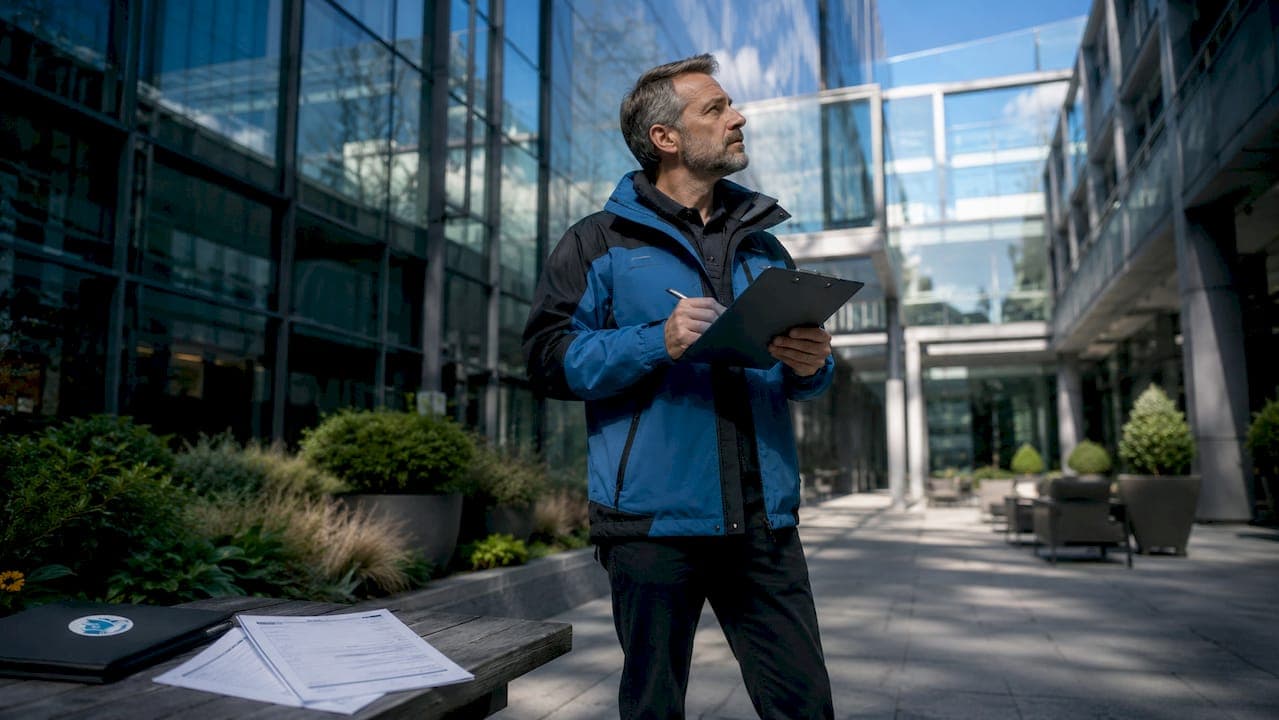
A building acquisition cleaning assessment is a targeted evaluation that identifies deferred cleaning liabilities and sanitation deficiencies in a commercial property before the transaction closes. Most property managers know to order a Property Condition Assessment (PCA) under ASTM E2018 standards, but that standard focuses on structural and systems conditions. It does not flag mold in HVAC ducts, stained grout, or biohazard residue left by previous tenants. Skipping a dedicated cleaning evaluation means those costs land on your balance sheet after closing, often without warning. A single missed foundation repair averages $5,165 in remediation costs. Deferred cleaning liabilities compound that risk further.
What does a building acquisition cleaning assessment cover?
A thorough acquisition cleaning assessment maps 8 major building systems for sanitation and deferred maintenance: structural, building envelope, mechanical/HVAC, electrical, plumbing, fire/life safety, interior finishes, and site/exterior. Each system carries specific cleaning checkpoints that a standard PCA will not capture. The goal is to convert what you see into a dollar figure you can use at the negotiating table.
Cleaning-specific checkpoints go beyond surface appearance. The areas that generate the most costly surprises include:
- HVAC ductwork: Mold from neglected filters is one of the most common hidden liabilities in commercial acquisitions. Years of deferred filter changes allow biological contaminants to colonize duct systems, affecting air quality and building valuation.
- Restrooms: Grout breakdown, scale buildup on fixtures, and failing caulk seals signal years of deferred deep cleaning. These defects are cosmetic at first glance but expensive to restore properly.
- Carpets and hard flooring: Staining, odor saturation, and subfloor damage from spills indicate whether replacement or professional restoration is needed.
- High-touch surfaces: Door handles, elevator panels, and reception counters accumulate grime that standard janitorial schedules often miss.
- Common areas and lobbies: Ceiling tiles, light fixtures, and wall surfaces reveal the true cleaning history of a building faster than any maintenance log.
- Loading docks and mechanical rooms: These areas collect grease, debris, and chemical residue that create both safety and compliance concerns.
Pro Tip: Request the building's HVAC maintenance log before the walkthrough. If filter change records are missing or irregular, budget for a full duct inspection and air quality test before closing.
The financial stakes are real. Cleaning restoration costs for HVAC ducts, carpets, and bathrooms must be quantified before closing to avoid post-sale price disputes. Buyers who skip this step often absorb costs that should have been negotiated down from the purchase price.
How to prepare for a building acquisition cleaning assessment
Preparation separates a useful assessment from a wasted site visit. You need the right documentation, the right people, and a clear scope before anyone sets foot in the building.

Gather these documents before the assessment begins:
| Document | Purpose |
|---|---|
| Previous PCA reports | Identify structural findings that overlap with cleaning scope |
| HVAC maintenance logs | Flag deferred filter changes and duct service history |
| Janitorial service contracts | Reveal cleaning frequency and scope gaps |
| Tenant complaints records | Surface recurring hygiene or odor issues |
| Environmental reports | Identify prior mold, asbestos, or biohazard incidents |
Qualified personnel matter as much as documentation. A general property inspector cannot assess HVAC duct contamination. Bring a cleaning auditor for interior finishes and common areas, an HVAC specialist for ductwork and air quality, and a licensed environmental consultant if prior mold or biohazard incidents appear in the records. Coordinating the cleaning site visit with your broader due diligence timeline prevents delays and ensures findings feed directly into your financial model.
Communicate with the seller's team before the assessment. Ask for access to mechanical rooms, roof areas, and any spaces that were recently renovated. Sellers sometimes repaint or recarpet problem areas before showings. A cleaning auditor trained in acquisition work will recognize fresh cosmetic work that masks underlying deferred maintenance.
Pro Tip: Schedule the cleaning assessment at least two weeks before your due diligence deadline. Mold testing and lab analysis take time, and rushed results lead to missed liabilities.
Step-by-step process for conducting the assessment
A systematic approach produces findings you can act on. Skipping steps or combining phases creates gaps that become expensive after closing.
-
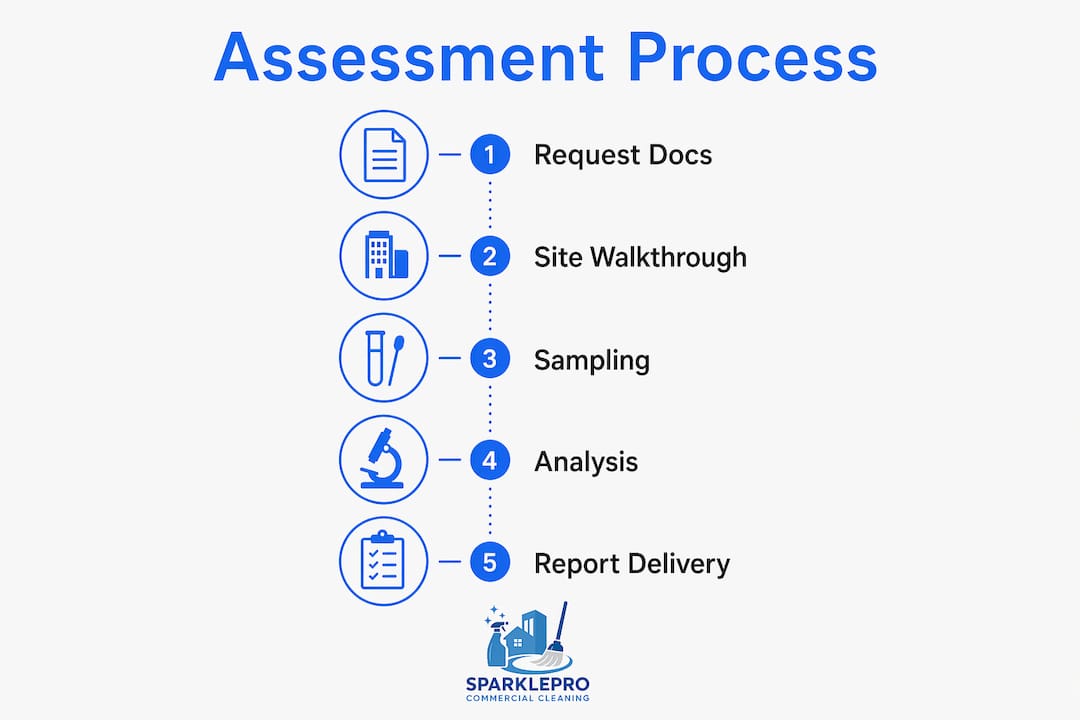
Initial walkthrough. Walk every occupied and unoccupied space with a building inspection checklist in hand. Note general cleanliness levels, odors, visible staining, and any areas that appear recently cleaned or renovated. This pass sets the scope for targeted inspections.
-
Targeted system inspections. Focus on HVAC ductwork, flooring, restrooms, and common areas. Use a borescope camera for duct interiors. Pull back carpet edges at walls to check for subfloor moisture or mold. Test grout and caulk integrity in restrooms with a probe tool.
-
Sampling and laboratory analysis. Where visual inspection suggests contamination, collect samples. Mold swab tests, air quality measurements, and surface ATP (adenosine triphosphate) testing quantify biological contamination. ATP testing gives a rapid cleanliness score for high-touch surfaces and food preparation areas.
-
Photo documentation and condition ratings. Photograph every deficiency with a timestamp and GPS tag. Rate each finding on a three-tier scale: immediate action required, action within 90 days, and monitor at next inspection. This rating system feeds directly into your capital expenditure forecast.
-
Reporting and cost estimation. Compile findings into a written report that links each deficiency to an estimated remediation cost. Categorize items by urgency and assign responsibility. This report becomes your negotiation document.
The table below shows how to structure findings for maximum clarity:
| Area | Finding | Urgency | Estimated Cost |
|---|---|---|---|
| HVAC ductwork | Mold growth, three zones | Immediate | Not publicly listed without lab results |
| Restroom tile | Grout failure, two floors | 90 days | Varies by square footage |
| Lobby carpet | Odor saturation, full replacement needed | 90 days | Varies by area |
| Loading dock | Grease accumulation, compliance risk | Immediate | Varies by scope |
Commercial building assessment costs range from $500 to over $10,000 depending on scope, building size, and testing requirements. That range reflects the difference between a basic walkthrough and a full multi-system assessment with lab analysis. For acquisition purposes, the full scope is always worth the investment.
For properties undergoing renovation alongside acquisition, the post-construction cleaning process adds another layer of assessment that must be integrated into the overall scope. Renovation dust, construction debris, and adhesive residue create cleaning liabilities that overlap with deferred maintenance findings.
Common mistakes that undermine cleaning assessments
The most expensive mistake is treating a standard PCA as a substitute for a cleaning assessment. ASTM E2018 PCAs flag structural and safety code violations. They do not assess normal uncleanliness, sanitation gaps, or biological contamination. Buyers who rely on PCA findings alone routinely inherit cleaning liabilities worth tens of thousands of dollars.
Other frequent errors include:
- Overlooking HVAC contamination. Biological contaminants from years of neglected filters are a latent liability. They affect building health, tenant satisfaction, and valuation. Visual inspection of supply vents is not sufficient. A borescope inspection and air quality test are the minimum standard.
- Skipping financial integration. Cleaning findings that never reach the financial model do not affect the purchase price. Every remediation cost estimate must flow into your capital expenditure budget and your offer.
- Relying on visual inspection alone. Surface appearance is misleading. Fresh paint, new carpet tiles in isolated areas, and recently cleaned restrooms can mask years of underlying neglect. ATP testing and mold swabs reveal what eyes cannot.
- Rushing the timeline. Lab results for mold and air quality take days. Compressing the assessment into a single day forces you to close without complete data.
- Ignoring compliance and hygiene gaps. Unresolved hygiene deficiencies create legal and reputational exposure after acquisition. Identifying them before closing gives you leverage and time to plan remediation.
Property managers who treat the cleaning assessment as a standalone, specialized evaluation, rather than an afterthought to the PCA, consistently negotiate better terms and face fewer post-closing surprises. The preparation guide for property managers covers how to build this process into your standard acquisition workflow.
For properties in markets with strict renovation compliance requirements, the NYC commercial renovation compliance guide provides useful context on regulatory expectations that intersect with cleaning and sanitation assessments.
Key Takeaways
A building acquisition cleaning assessment is a non-negotiable step in commercial due diligence that directly protects your purchase price and post-closing capital budget.
| Point | Details |
|---|---|
| Cleaning assessments differ from PCAs | ASTM E2018 PCAs do not cover sanitation; a dedicated cleaning assessment is required. |
| HVAC ductwork is the highest-risk area | Mold from deferred filter changes is a common hidden liability that affects valuation. |
| Documentation drives negotiation | Photo evidence and cost estimates convert findings into purchase price leverage. |
| Lab testing is non-negotiable | ATP tests and mold swabs reveal contamination that visual inspection misses. |
| Timeline matters | Schedule the assessment at least two weeks before your due diligence deadline. |
What I've learned from watching buyers skip this step
I've seen the pattern repeat more times than I can count. A buyer orders a thorough PCA, reviews the structural findings, negotiates a credit for the roof, and closes feeling confident. Then the HVAC system gets turned on in summer, and the building fills with the smell of mold. The duct inspection that would have cost $800 before closing now triggers a $40,000 remediation project, a tenant complaint, and a potential lease dispute.
The cleaning assessment is not a luxury add-on. It is the part of due diligence that protects you from the costs that don't show up in structural reports. Buyers who treat it as a standalone evaluation, with its own checklist, its own specialists, and its own budget line, consistently close with fewer surprises. Those who bolt it onto the end of a PCA walkthrough consistently don't.
The other thing I've learned: sellers know what they're not showing you. A freshly painted mechanical room and suspiciously new carpet tiles in isolated spots are signals, not improvements. A trained cleaning auditor reads those signals correctly. A general inspector often doesn't.
Treat the cleaning assessment as a required deliverable, not an optional add-on. Build it into your acquisition timeline from day one. The cost is always lower than the alternative.
— Sales
Sparkleprocommercialcleaning for acquisition cleaning support
Property managers who need a reliable partner for acquisition cleaning evaluations and post-closing remediation work with Sparkleprocommercialcleaning. The company provides fully licensed and insured commercial cleaning services across the United States, with specialized expertise in post-acquisition cleanouts, HVAC-adjacent sanitation, and tenant transition cleaning.
Sparkleprocommercialcleaning serves commercial properties in Massachusetts, Delaware, Washington, and New Jersey, among other markets. The four-step engagement process covers quotes, site visits, scheduled cleaning, and customer approval, making it straightforward to integrate Sparkleprocommercialcleaning into your acquisition timeline. Contact the team for a customized proposal tied directly to your assessment findings.
FAQ
What is a building acquisition cleaning assessment?
A building acquisition cleaning assessment is a specialized evaluation of deferred cleaning liabilities and sanitation deficiencies in a commercial property before purchase. It is a separate scope from a standard Property Condition Assessment and focuses on hygiene risks that affect valuation and post-closing costs.
How is a cleaning assessment different from a PCA?
ASTM E2018 PCAs focus on structural and systems conditions and do not assess sanitation or normal uncleanliness. A dedicated cleaning assessment covers HVAC duct contamination, flooring condition, restroom hygiene, and biological risks that a PCA will not flag.
How much does a commercial building cleaning assessment cost?
Commercial building assessment costs range from $500 to over $10,000 depending on scope, building size, location, and testing requirements. Full assessments with lab analysis cost more but provide the data needed for accurate financial modeling and negotiation.
When should the cleaning assessment happen in the acquisition process?
Schedule the cleaning assessment at least two weeks before your due diligence deadline. Lab results for mold and air quality testing take several days, and compressed timelines force buyers to close without complete findings.
What is the biggest risk of skipping a cleaning assessment?
The biggest risk is inheriting HVAC mold, biohazard residue, or widespread deferred cleaning costs that were never priced into the purchase. These liabilities do not appear in PCA reports and can cost tens of thousands of dollars to remediate after closing.