
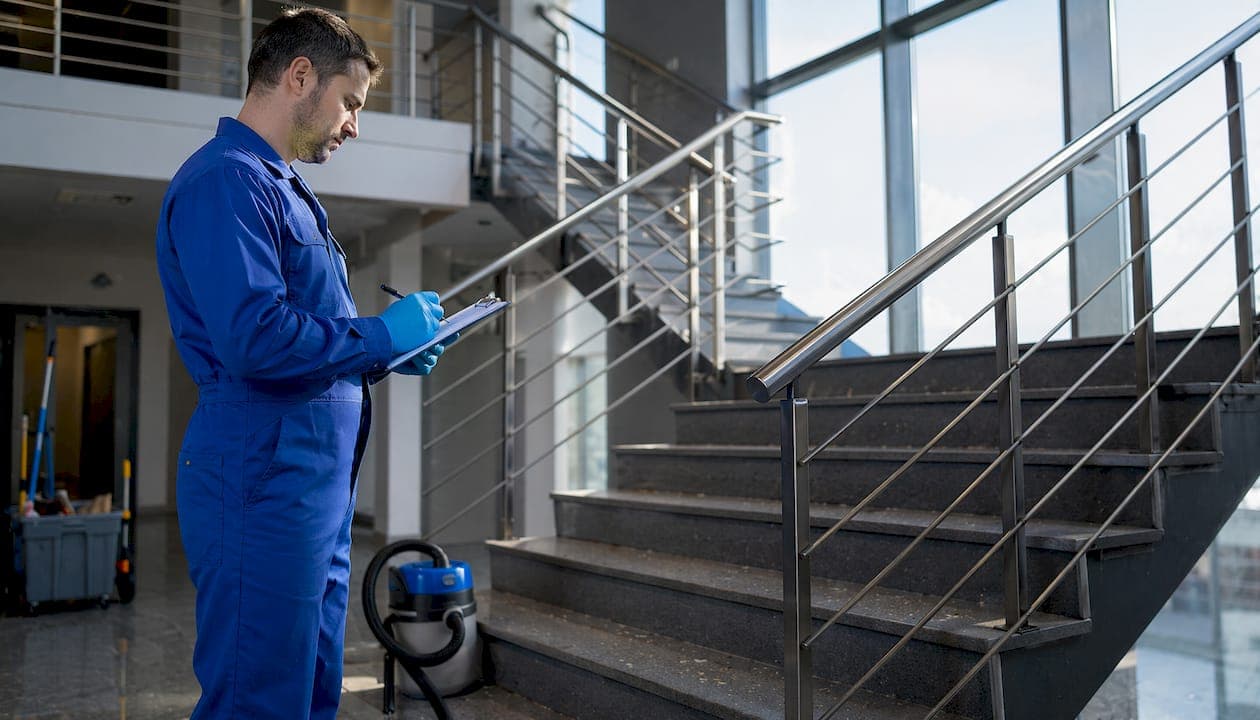
Cleaning standards for new commercial builds are defined as the structured protocols, quality benchmarks, and regulatory requirements that ensure a newly constructed commercial property is safe, presentable, and ready for occupancy before handover. These standards cover everything from phased cleaning sequences and scope of work documentation to compliance with OSHA HazCom, EPA disinfectant rules, and ISSA CIMS management frameworks. For property developers and construction professionals, meeting these standards is not optional. A failed handover clean triggers rework, delays occupancy, and damages client relationships before the building ever opens its doors.
What phases and scope define cleaning standards for new commercial builds?
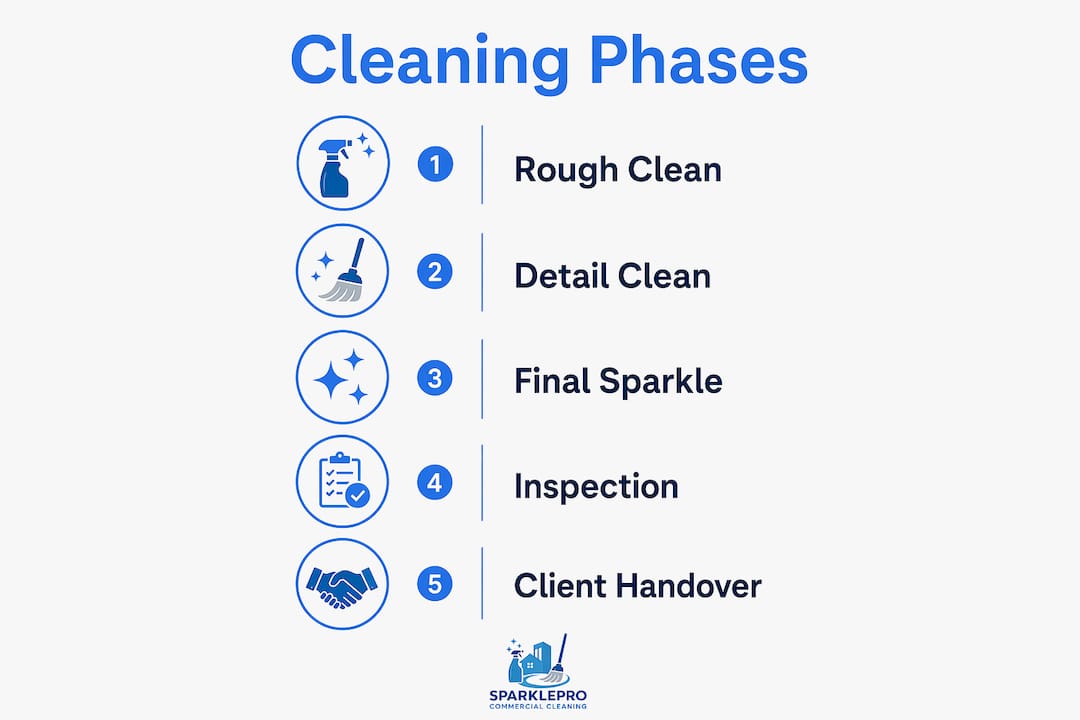
Post-construction cleaning in commercial projects follows three distinct phases: rough clean, detail clean, and final sparkle clean. Each phase builds directly on the previous one, and skipping or compressing any stage creates compounding problems that surface at the worst possible time.
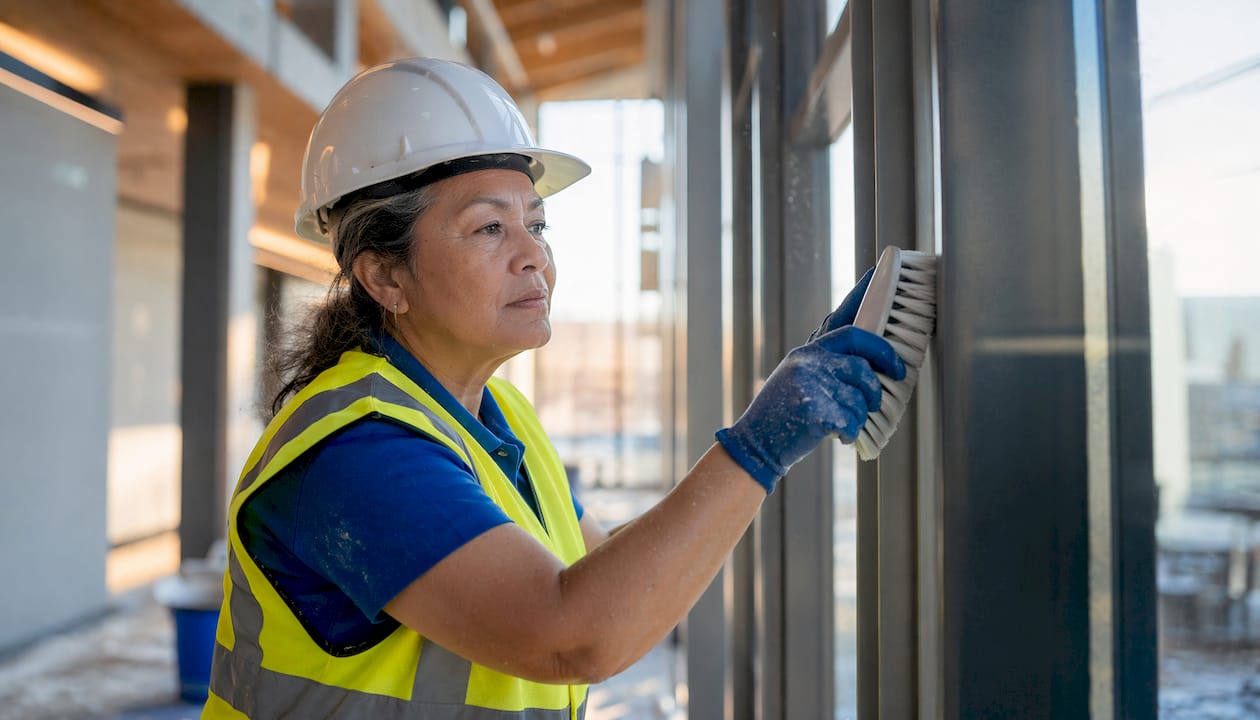
Rough clean removes the bulk of construction debris. This includes sweeping floors, clearing waste materials, removing adhesive labels from windows and fixtures, and vacuuming large debris from surfaces. The goal is to make the site safe and accessible for the next trade or cleaning crew.
Detail clean addresses the finer contamination left after rough work. This phase covers:
- Wiping down all hard surfaces, cabinetry, and millwork
- Cleaning inside cupboards, drawers, and storage units
- Removing paint overspray, grout haze, and adhesive residue
- Cleaning HVAC vents, light fixtures, and switch plates
- Washing windows and glass partitions inside and out
Final sparkle clean is the non-negotiable stage that delivers the building to the client. The sparkle clean functions as the visual and functional equivalent of system commissioning. It confirms that every surface, fixture, and floor meets the agreed quality standard before keys change hands.
A detailed Scope of Work (SOW) governs all three phases. Omitting key SOW details such as chemical dilution ratios or zone-specific KPIs frequently causes disputes between contractors and project managers. A complete SOW defines tasks, exclusions, equipment requirements, scheduling windows, and who is responsible for each deliverable.
Pro Tip: Include a dedicated "exclusions" section in your SOW. Listing what the cleaning crew will not do prevents last-minute scope creep and protects both parties from misunderstandings at handover.
What are the critical quality and safety standards to implement?
Quality and safety in commercial build cleaning are not separate concerns. They operate together, and both require documented procedures to hold up under inspection.
The following standards form the baseline for any compliant post-construction clean on a commercial site:
- Use HEPA-filter vacuums for all dry debris removal. Dry-first, top-to-bottom workflow with HEPA-filter vacuums is industry best practice. Wet cleaning applied too early smears drywall dust across surfaces rather than removing it.
- Require full PPE for all cleaning personnel. Gloves, eye protection, and respiratory protection are mandatory when crews handle chemical cleaning agents, silica dust, or adhesive removers on active construction sites.
- Document all cleaning SOPs before work begins. Cleaning SOPs that document sequences, products, PPE, and methods ensure consistent service and compliance with OSHA, EPA, and industry standards.
- Embed Safe Work Method Statements (SWMS) into task descriptions. SWMS integrated into cleaning workflows make health and safety compliance part of the process, not an afterthought appended to a checklist.
- Apply EPA-registered disinfectants in the correct dilution ratios. Using the wrong concentration either fails to disinfect or damages surfaces. Both outcomes create liability.
Aligning your cleaning scope with ISSA CIMS provides a structured management-system backbone that improves tender evaluations and builds client confidence. ISSA CIMS is the Cleaning Industry Management Standard, a widely recognized framework that covers quality systems, human resources, health and safety, and environmental stewardship. Developers who require ISSA CIMS alignment from their cleaning contractors signal to clients that quality is managed, not assumed.
For projects in regulated environments such as healthcare facilities or food-service spaces, local building codes and state-level regulations add further requirements. Reviewing commercial renovation compliance requirements early in the project prevents costly late-stage corrections.
Pro Tip: Request a copy of your cleaning contractor's SOP library before signing any contract. If they cannot produce documented procedures for each cleaning phase, that is a reliable indicator of how they will perform on site.
How should cleaning schedules integrate with construction timelines?
Scheduling post-construction cleaning as an afterthought is one of the most common and costly mistakes on commercial build projects. Cleaning must be planned into the project program from the start, not booked in the final week before handover.
Effective scheduling integration follows these principles:
- Align each cleaning phase to subcontractor completion milestones. Rough clean begins after structural trades clear the floor. Detail clean starts after fit-out trades finish. Sparkle clean is booked only after all snagging work is confirmed complete.
- Book professional cleaning teams early. Scheduling cleaning early in the project program and protecting final clean site access post-cleaning prevents rushed work and delayed handovers. Quality cleaning crews have full schedules. Last-minute bookings result in less experienced teams or compressed timelines.
- Protect the sparkle clean from re-contamination. After the final clean, control site access strictly. Any trade returning to complete snagging work must be escorted and must cover completed surfaces. One unchecked subcontractor can undo an entire day of sparkle cleaning.
- Build buffer time into multi-plot or large-footprint projects. Standard project timelines for residential new-build cleaning range from 1 to 5 days. Commercial projects require significantly more time to avoid rushed sparkle stages that cause rework and occupancy delays.
- Communicate schedule changes to the cleaning team immediately. Construction timelines shift. A cleaning crew arriving to a floor still occupied by electricians loses a full day and may not be rescheduled before the handover date.
The financial logic here is straightforward. A delayed handover on a commercial lease costs the developer in penalty clauses, lost rent, and client goodwill. Investing in proper scheduling costs a fraction of that exposure.
How do you measure and verify cleaning quality on a commercial build?
Measuring cleaning quality requires objective methods, not a walkthrough with a finger on a dusty shelf. Repeatable inspection protocols protect both the developer and the cleaning contractor by removing subjectivity from the handover conversation.
Inspection checklists and scoring
A structured inspection checklist assigns pass or fail criteria to every zone in the building. Each area receives a score based on defined criteria, and any zone scoring below the threshold triggers a corrective action before sign-off. This approach makes the handover audit repeatable and defensible.
Photographic benchmarks
Photographic standards establish a visual reference for what "clean" means in each zone type. Before work begins, the developer and cleaning contractor agree on reference images for floors, glass, fixtures, and surfaces. Photographic benchmarks and ATP readings make cleaning audits repeatable and reduce disputes at handover. This removes the most common source of handover conflict: differing interpretations of acceptable cleanliness.
Zone-based risk matrices
Zone-based color-coded risk matrices using red, amber, and green classifications communicate cleaning priorities and measurable expectations to crews. Red zones such as restrooms, food preparation areas, and reception spaces require the highest cleaning frequency and the strictest pass criteria. Green zones such as plant rooms or storage areas carry lower thresholds.
| Zone type | Risk level | Key quality metric |
|---|---|---|
| Restrooms and wet areas | Red | ATP bioluminescence threshold |
| Reception and client-facing areas | Red | Visual benchmark + surface wipe test |
| Open-plan office floors | Amber | Dust-free surfaces, streak-free glass |
| Storage and plant rooms | Green | Debris-free, no chemical residue |
Tracking facility cleaning KPIs across these zones gives project managers a clear record of performance. That record matters when a client raises a dispute weeks after handover.
Pro Tip: Use ATP bioluminescence testing in high-risk zones before signing off the sparkle clean. The test takes under two minutes per surface and gives you a documented, instrument-based reading that no client can argue with.
Key Takeaways
Meeting cleaning standards for new commercial builds requires phased cleaning, documented scopes, integrated scheduling, and objective quality verification working together from project start to handover.
| Point | Details |
|---|---|
| Three-phase cleaning structure | Rough, detail, and sparkle clean phases must each be completed in sequence to avoid rework. |
| SOW documentation prevents disputes | A detailed Scope of Work with zone-specific KPIs and exclusions protects both contractors and developers. |
| Schedule cleaning into the program early | Booking cleaning teams late causes rushed sparkle cleans, re-contamination, and delayed occupancy. |
| HEPA vacuums and dry-first workflow | Applying wet cleaning before dry removal smears dust and fails quality benchmarks. |
| Objective QA reduces handover conflict | Photographic benchmarks, inspection checklists, and ATP testing make quality measurable and defensible. |
What most developers get wrong about the sparkle clean
The sparkle clean is treated as a finishing touch on most commercial projects. That framing is wrong, and it costs developers money every time.
A sparkle clean is economic insurance. Sparkle cleans prevent costly project delays, dissatisfied clients, and failed inspections far more reliably than any last-minute touch-up. The problem is that most project managers treat it as the last item on a long list rather than as a milestone with its own dependencies and protection requirements.
The single biggest failure I see on commercial handovers is wet cleaning applied before dry debris is fully removed. Crews under time pressure skip the HEPA vacuum stage and go straight to mop and wipe. The result is smeared drywall dust across every surface, which then requires a full re-clean. That mistake alone can add a full day to a handover timeline.
The second most common failure is a vague scope. When the SOW does not specify who cleans inside HVAC vents, who removes construction stickers from glazing, or who is responsible for external window cleaning, those tasks fall through the cracks. The client notices every single one of them on walkthrough.
Early engagement with a professional cleaning contractor changes both outcomes. When the cleaning team reviews the project drawings before construction starts, they can flag access issues, identify high-risk zones, and build a realistic schedule. That conversation costs nothing. Fixing a failed handover costs significantly more.
The developers who get this right treat their cleaning contractor the same way they treat their structural engineer: as a specialist whose input shapes the project plan, not a vendor called in at the end.
— Sales
Sparkleprocommercialcleaning: post-construction cleaning built for your timeline
Sparkleprocommercialcleaning delivers post-construction cleaning services built around the phased standards and scheduling requirements that commercial builds demand. Every engagement starts with a site visit, a customized scope of work, and a schedule aligned to your project program.
Sparkleprocommercialcleaning teams are fully licensed and insured, trained in HEPA-based dry-first workflows, and equipped to handle everything from rough clean through sparkle clean on office buildings, retail centers, and healthcare facilities. Quality checks are built into every phase, not added at the end. Developers working on projects in Massachusetts can review regional cleaning services tailored to multi-site commercial builds. For New Jersey projects, dedicated construction cleaning support covers compliance and handover readiness from day one.
FAQ
What are the three phases of post-construction cleaning?
Post-construction cleaning follows rough clean, detail clean, and final sparkle clean phases. Each phase must be completed in sequence, with the sparkle clean serving as the final quality validation before client handover.
What does a cleaning Scope of Work for a new commercial build include?
A complete SOW defines tasks, exclusions, zone-specific KPIs, chemical dilution ratios, equipment requirements, scheduling windows, and assigned responsibilities. Omitting these details is the leading cause of disputes between cleaning contractors and project managers.
Why is the sparkle clean considered non-negotiable?
The sparkle clean provides visual and functional confirmation that every surface meets the agreed quality standard. Skipping or compressing it leads to failed inspections, client dissatisfaction, and costly rework before occupancy.
What safety standards apply to commercial build cleaning crews?
Crews must follow OSHA HazCom requirements, use appropriate PPE including gloves, eye protection, and respiratory protection, and apply EPA-registered disinfectants at correct dilution ratios. Documented SOPs and embedded SWMS are required for regulatory compliance.
How early should cleaning be scheduled into a commercial build program?
Cleaning should be integrated into the project program from the planning stage. Booking professional teams late forces compressed timelines, increases re-contamination risk, and is a direct cause of delayed handovers on large-footprint commercial projects.