
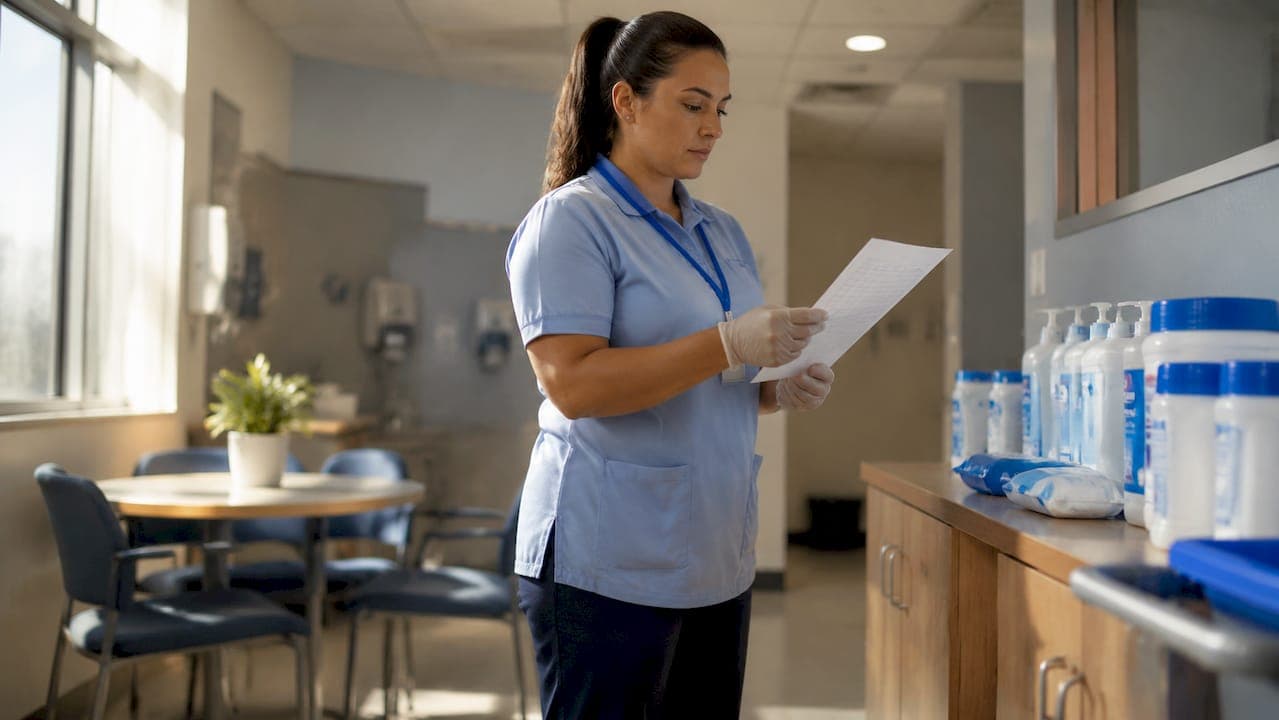
Consistent cleaning is defined as the repeated, standardized application of cleaning and disinfection protocols that reduce infection risk, protect occupants, and preserve facility integrity over time. The importance of consistent cleaning extends well beyond surface appearances. Research published in Frontiers in Medicine (2025) and BMC Health Services Research (2026) shows that structured, repeatable cleaning programs produce measurable health outcomes that sporadic or reactive cleaning simply cannot match. For property managers, facility directors, and building owners, understanding what drives those outcomes is the first step toward building a program that actually works.
Why consistent cleaning reduces infections and protects facilities
The evidence linking regular cleaning protocols to infection control is direct and quantifiable. A hospital study found that implementing a cleaning quality traceability system improved protocol adherence from 78.5% to 96.4% and reduced healthcare-associated infections by 42.6%. That single improvement in consistency cut surgical site infections from 1.8 to 1.0 per 1,000 patient-days and catheter-associated urinary tract infections from 1.5 to 0.9. The numbers make the case plainly: adherence to a repeatable process, not simply cleaning more often, drives the result.
The core finding from the 2025 Frontiers in Medicine study: a 17.9-percentage-point increase in cleaning compliance produced a 42.6% reduction in healthcare-associated infections. Consistency, not frequency, is the operative variable.
Multimodal approaches amplify these gains further. Research in BMC Health Services Research (2026) confirmed that integrated nursing interventions combining environmental disinfection with hand hygiene and education reduced infection incidence more effectively than isolated cleaning measures. Daily chlorhexidine bathing and care bundles produced the most sustained improvement. The lesson for facility managers is clear: cleaning works best when it is part of a coordinated, documented program rather than a standalone task.
CDC guidance reinforces this at the practical level. Cleaning before disinfection with soap and water, followed by EPA-approved disinfectants on high-touch surfaces, reduces viral load and infection risk in any setting. Skipping the cleaning step before disinfection leaves organic matter that neutralizes the disinfectant. That sequencing error is one of the most common and most costly failures in facility cleaning programs.
Does procedure fidelity matter more than cleaning frequency?
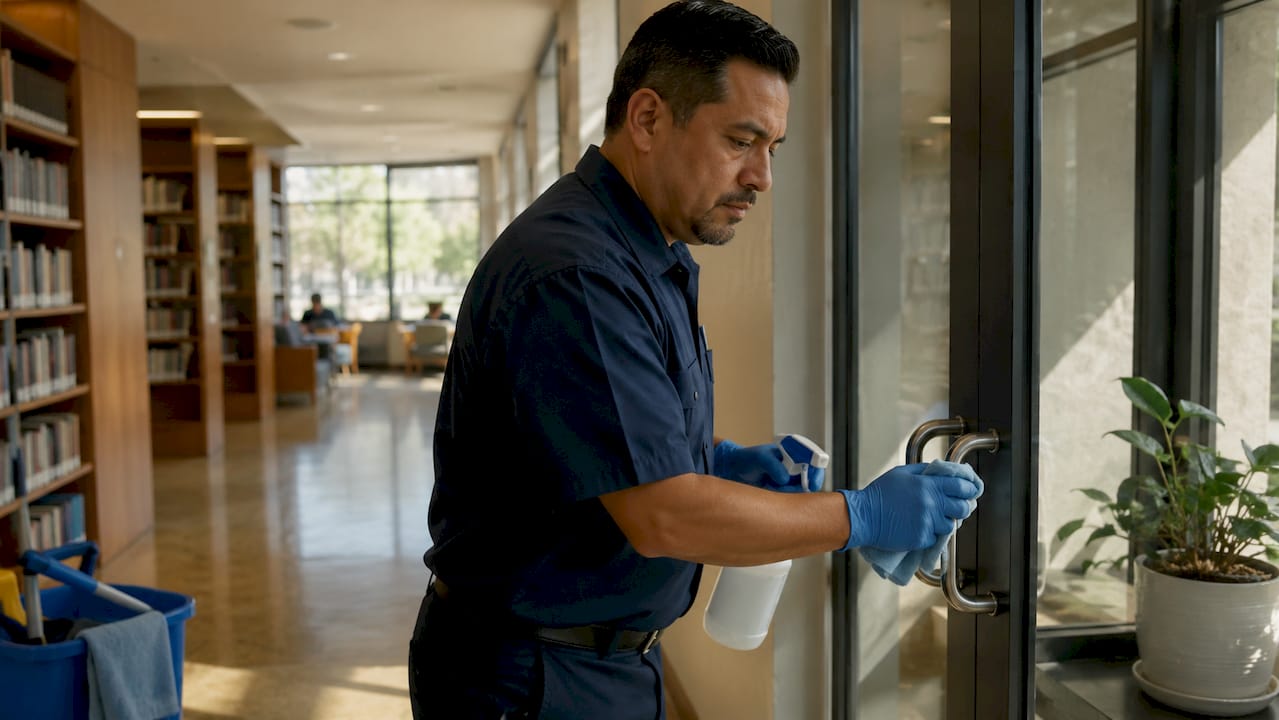
Procedure fidelity is the degree to which a cleaning task is executed exactly as the protocol specifies, covering every surface, using the correct pattern, and reaching every high-touch point. Research shows that fidelity in cleaning tasks matters more than how often cleaning happens. An AI-assisted training program studied in 2026 found that environmental service staff achieved 100% pass rates on competency assessments compared to just 30% in the control group. The largest gains appeared in edge cleaning, S-pattern mopping, and disinfecting high-touch surfaces.
Here is what procedure fidelity looks like in practice for a commercial facility:
- Edge cleaning: Mops and cloths must reach wall-floor junctions and corners, where pathogens accumulate and standard passes miss.
- S-pattern mopping: A consistent S-pattern prevents cross-contamination by moving soiled material in one direction rather than spreading it across the floor.
- High-touch point disinfection: Door handles, light switches, elevator buttons, and shared equipment require dedicated attention with an EPA-approved product and correct contact time.
- Sequence adherence: Cleaning must precede disinfection every time. Reversing the order reduces disinfectant effectiveness.
- Documentation at each step: Logging completion creates accountability and surfaces gaps before they become compliance failures.
Pro Tip: Audit your facility's cleaning logs monthly. If a step is never marked incomplete, the form is not being used honestly. Real compliance data shows variation.
Traceability systems convert cleaning from a best-effort activity into a validated, auditable process. When every step is logged and reviewable, managers can identify which tasks are consistently skipped, which staff need additional training, and where protocols need adjustment. That feedback loop is what separates a cleaning program that improves over time from one that simply repeats the same gaps.
What are the broader benefits of regular cleaning routines?
The benefits of regular cleaning extend well past infection control. Facility managers who treat cleaning as a health and safety function rather than a maintenance cost see returns across several dimensions.
- Allergen and pest reduction: Dust, mold spores, and food debris accumulate in facilities that lack consistent tidying schedules. Regular removal of these materials reduces respiratory triggers and eliminates conditions that attract pests. A single missed week in a food-service or healthcare environment can create a pest entry point that takes months to resolve.
- Physical hazard prevention: Spills, debris, and clutter on floors are leading causes of slip-and-fall incidents. Consistent cleaning schedules address these hazards before they become liability events.
- Mental health and cognitive load: Predictable cleaning schedules reduce decision fatigue by replacing daily judgment calls with fixed routines. Staff and occupants in consistently clean environments report lower stress and better focus. The environment signals order, which reduces cognitive friction.
- Asset longevity: Grout, flooring, HVAC filters, and restroom fixtures all degrade faster without regular maintenance cleaning. Replacing a commercial floor covering costs significantly more than a scheduled stripping and refinishing program. Consistent cleaning is a capital preservation strategy.
- Regulatory compliance: Healthcare facilities, food-service operations, and schools face inspection standards that require documented cleaning protocols. Consistent programs produce the records that satisfy auditors and protect operating licenses.
The role of cleanliness in health is not limited to pathogen removal. A clean facility signals to occupants, clients, and inspectors that the organization takes its obligations seriously. That perception has real operational value.
How do you build and sustain consistent cleaning practices?
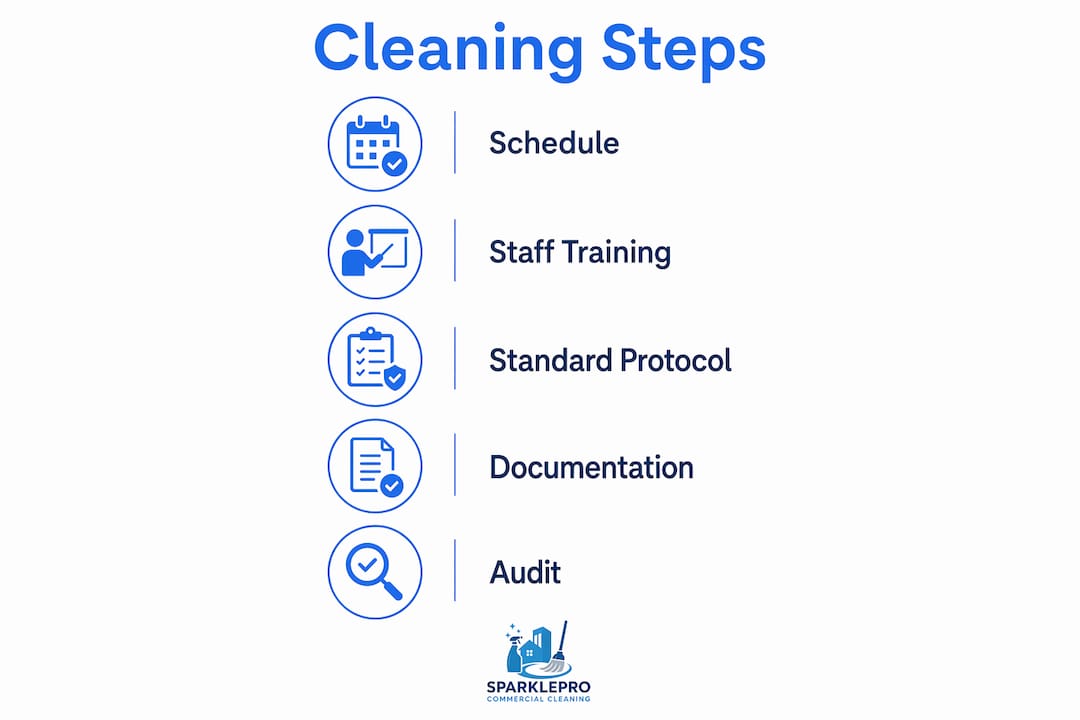
Building a cleaning program that holds up over time requires three components: a structured schedule, trained staff, and a monitoring system. The table below compares reactive cleaning (cleaning when something looks dirty) against protocol-driven cleaning (cleaning on a fixed, documented schedule).
| Factor | Reactive Cleaning | Protocol-Driven Cleaning |
|---|---|---|
| Trigger | Visible soil or complaint | Fixed schedule and checklist |
| Consistency | Variable, staff-dependent | Standardized across all staff |
| Documentation | Minimal or none | Logged and auditable |
| Infection risk | Higher due to gaps | Lower due to adherence |
| Training requirement | Low | Moderate to high |
| Audit readiness | Poor | Strong |
Protocol-driven cleaning wins on every dimension that matters for facility management. The routine facility cleaning process for most commercial buildings starts with a written scope of work that assigns tasks, frequencies, and responsible parties to every area of the facility.
Staff training is the most common failure point. AI-assisted training programs address the risks created by high turnover and inconsistent apprenticeship models by delivering standardized instruction with real-time feedback. Conventional on-the-job training passes on both good habits and bad ones. Technology-assisted programs deliver the same protocol every time, regardless of who is doing the training.
Documentation and traceability close the loop. Cleaning documentation creates a record that managers can review, auditors can verify, and staff can reference. Without it, a cleaning program is only as reliable as the memory of the person who performed the task last. With it, the program becomes an institutional asset rather than an individual effort.
Pro Tip: Start with your highest-risk areas. Map every high-touch surface in your facility, assign a cleaning frequency and product to each one, and build your schedule outward from there. Trying to overhaul everything at once produces short-term compliance and long-term drift.
Key takeaways
Consistent cleaning reduces infections, protects assets, and sustains compliance because it replaces variable, reactive effort with standardized, documented, and trainable protocols.
| Point | Details |
|---|---|
| Adherence drives outcomes | Raising cleaning compliance from 78.5% to 96.4% cut healthcare infections by 42.6%. |
| Fidelity beats frequency | Edge cleaning, S-pattern mopping, and high-touch disinfection matter more than cleaning more often. |
| Traceability creates accountability | Logged, auditable cleaning records enable continuous improvement and regulatory compliance. |
| Integrated programs outperform isolated ones | Combining cleaning with hand hygiene and device bundles produces more reliable infection control. |
| Schedules reduce operational stress | Predictable cleaning routines lower decision fatigue and preserve facility assets over time. |
What i've learned from watching cleaning programs succeed and fail
After working with property managers and facility directors across dozens of commercial sites, the pattern is consistent. The facilities with the fewest complaints, the cleanest inspection records, and the lowest maintenance costs are not the ones that spend the most on cleaning. They are the ones that clean the same way every time.
The most common mistake I see is treating cleaning as a task to complete rather than a process to manage. A task gets done and forgotten. A process gets documented, reviewed, and improved. When a facility switches from task-based to process-based cleaning, the results show up within weeks in complaint logs and inspection scores.
The second mistake is underinvesting in training. High turnover in cleaning staff is a real challenge, but it is not an excuse for inconsistency. The facilities that hold their standards through turnover are the ones that have written protocols, training materials, and verification steps that do not depend on any single person. When a new hire starts, the process teaches them. They do not have to rely on whoever trained them last.
The third thing I would tell any facility director is to start measuring. You cannot improve what you do not track. Even a simple paper log of completed tasks, reviewed weekly, will surface gaps that no one knew existed. Add a building cleanliness improvement review to your quarterly operations meeting and watch how quickly the conversation changes from reactive to proactive.
Consistent cleaning is not complicated. It is disciplined. The discipline is the hard part, and the right systems make it manageable.
— Sales
How Sparkleprocommercialcleaning supports consistent facility cleaning
Maintaining a cleaning program that holds its standards week after week is where most in-house teams struggle. Sparkleprocommercialcleaning delivers commercial cleaning services built on documented protocols, trained staff, and scheduled accountability across office buildings, healthcare facilities, retail centers, and industrial spaces nationwide.
Every engagement starts with a site assessment and a written scope of work, so your facility gets a cleaning program matched to its actual risk profile, not a generic schedule. Whether you manage a single building or a portfolio of properties, Sparkleprocommercialcleaning brings the standardization and traceability that turn cleaning from a recurring expense into a measurable operational asset. Explore Massachusetts commercial cleaning or Washington state services to see how consistent cleaning works at scale.
FAQ
What is consistent cleaning and why does it matter?
Consistent cleaning is the repeated application of standardized protocols covering the same surfaces, sequences, and products on a fixed schedule. It matters because adherence to a repeatable process, not cleaning frequency alone, produces measurable reductions in infections and facility hazards.
How much can consistent cleaning reduce infection rates?
A 2025 hospital study found that improving cleaning adherence from 78.5% to 96.4% reduced healthcare-associated infections by 42.6%. The reduction applied to both surgical site infections and catheter-associated urinary tract infections.
What is procedure fidelity in cleaning?
Procedure fidelity means executing each cleaning task exactly as the protocol specifies, including edge coverage, correct mopping patterns, and full disinfection of high-touch surfaces. Research shows that fidelity gaps in cleaning are more responsible for infection risk than cleaning frequency.
Why are cleaning schedules better than reactive cleaning?
Predictable cleaning schedules replace daily judgment calls with fixed routines, reducing decision fatigue and keeping facilities maintained without reactive scrambles. Protocol-driven schedules also produce the documentation needed for regulatory audits.
How does documentation improve cleaning consistency?
Cleaning logs and traceability systems convert each task into a verifiable record, allowing managers to identify gaps, verify compliance, and support continuous improvement. Without documentation, cleaning quality depends entirely on individual memory and motivation rather than institutional process.