
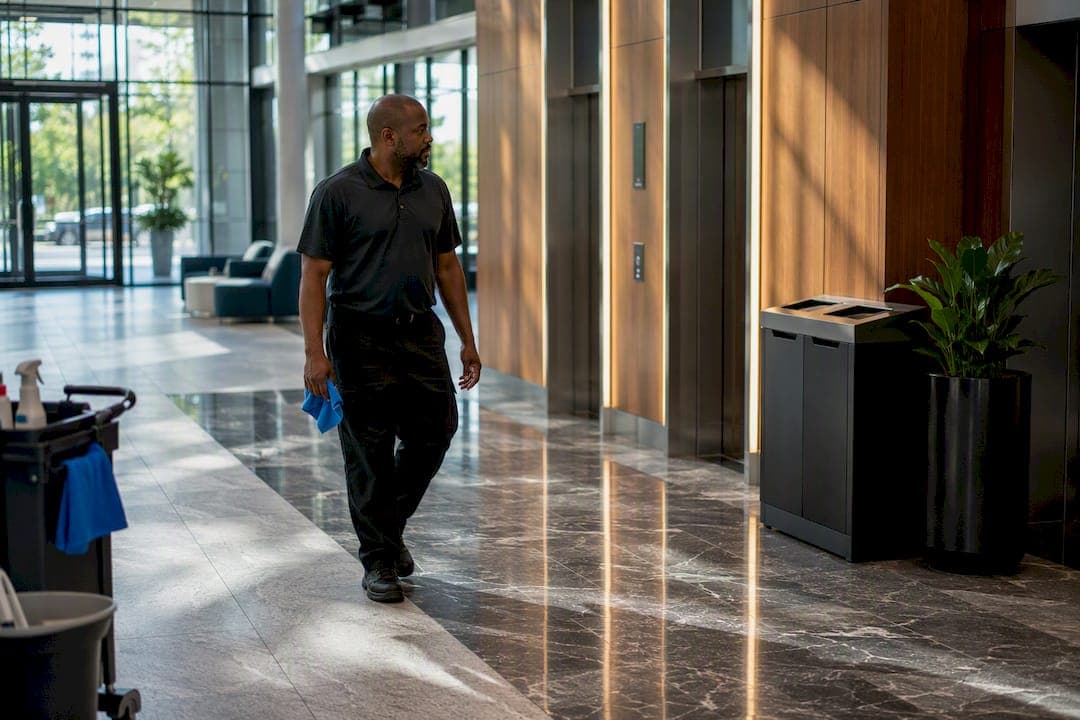
A day porter is an on-site, daytime facility professional who maintains appearance, responds to spills, and restocks high-traffic areas while occupants are present. The role complements the nightly janitorial reset by handling what happens between those scheduled deep cleans: real-time upkeep, guest-facing presence, and fast response when something goes wrong. Facilities that add day porter coverage typically see better appearance scores, fewer slip-and-fall incidents, and less disruption during business hours.
TL;DR:
- Day porters respond rapidly to spills and hazards during business hours, reducing slip-and-fall risks and minimizing disruption in high-traffic areas.
- Scheduling should align staffing with building traffic peaks, with full-time coverage for busy facilities and split shifts for smaller or less trafficked spaces.
- Proper training and safety protocols, including hazard communication and chemical handling, are crucial to maintaining compliance and preventing accidents.
- Clear job descriptions, KPIs, and separate contracts for porter and janitorial work ensure accountability and scope clarity.
- A nationwide provider typically scopes services through site visits, detailed proposals, and flexible staffing to match specific building needs.
Table of Contents
- What Do Day Porter Duties Cover Area by Area?
- Day Porter vs. Janitor: How the Roles Split
- What Benefits Does Day Porter Coverage Deliver?
- How Should You Schedule Day Porter Hours?
- What Training and Safety Rules Apply to Day Porters?
- What Belongs in a Day Porter Job Description?
- How Does a Nationwide Provider Structure Day Porter Work?
- Ready to Request Day Porter Service?
- Sources
- FAQ
What Do Day Porter Duties Cover Area by Area?
Day porter responsibilities break down by zone, and each zone has its own rhythm. A well-run program assigns specific checkpoints rather than vague "keep things tidy" instructions.
Restrooms get inspected roughly every 30 to 60 minutes in high-traffic buildings, with porters checking soap, paper towels, toilet paper, and floor conditions each pass. Lobbies and entrances need mat checks after rain or snow, glass door cleaning to remove fingerprints, and furniture straightening, all aimed at removing trip and slip hazards before a visitor finds them first.
Spill response follows a set sequence:
- Isolate the area and place warning signage immediately.
- Contain the spill before it spreads to adjacent flooring.
- Select the correct cleaning agent for the surface and substance.
- Allow proper contact time if disinfectant is involved.
- Remove signage only once the floor is fully dry.
Break rooms and food-service points need wipe-downs after peak meal windows, trash and recycling separation, and appliance spot-checks. High-touch disinfection of door handles, elevator buttons, and handrails should happen multiple times per shift in busy buildings. Day porters also handle event and meeting room setup, plus ad-hoc requests like a spilled coffee cart or a jammed door.
Not every mess is a porter's job. Bulk chemical leaks, mold discovery, or biohazard incidents need escalation to licensed remediation, not a mop and a paper towel.
Day Porter vs. Janitor: How the Roles Split
The core difference is timing and purpose. Day porters work occupied hours, focused on spill mitigation, restocking, and visible upkeep. Janitors typically work off-hours, running the scheduled deep-clean reset that day porters don't have time for during business hours, floor stripping, deep carpet extraction, high dusting.
- Day porter: responds to a spilled drink in the lobby at 2 p.m.
- Janitor: strips and waxes that same lobby floor at 11 p.m.
- Day porter: restocks restroom supplies hourly.
- Janitor: deep-scrubs grout and disinfects the whole restroom nightly.
To avoid scope creep, write separate line items in the contract for porter and janitorial work, even when the same vendor provides both. That keeps accountability clear when something gets missed.
What Benefits Does Day Porter Coverage Deliver?
The appearance case is obvious: a lobby that looks clean at 9 a.m. and still looks clean at 4 p.m. changes how tenants and customers perceive the building. The safety case is less obvious but arguably more important.
A spill sitting unaddressed for hours is a liability claim waiting to happen. Day porters cut that exposure window from hours to minutes.
- Faster response to hazards means fewer slip-and-fall incidents during business hours.
- Continuous presence reduces disruption, since issues get handled quietly rather than piling up for the night crew.
- Distributing work between day and night staff is often more cost-efficient than simply adding more nightly janitorial hours.
According to the Bureau of Labor Statistics, janitors and building cleaners earn a median annual pay that provides a useful baseline when budgeting a blended day porter and janitorial staffing model.
How Should You Schedule Day Porter Hours?
Staffing decisions should follow occupancy patterns, not a default 9 to 5 assumption. The Occupational Outlook Handbook frames day porter work as continuous, occupied-hours coverage, but "continuous" doesn't have to mean a full eight hours if traffic is concentrated.
- Map your building's peaks, arrival rush, lunch hour, shift changes, and align coverage windows to those spikes.
- Compare full-time porter coverage against split shifts or on-call arrangements. Full-time works best for high-traffic lobbies and healthcare facilities; peak-hour coverage often suffices for smaller retail or office spaces.
- Set staffing ratios by facility type: multi-tenant office lobbies often need one porter per building during business hours, retail centers may need coverage tied to store hours, and clinics typically need continuous presence given higher hygiene demands.
- Decide between a contracted porter and a direct hire, and write contract clauses that define exact scope, so "day porter" doesn't quietly expand into unpaid janitorial work.
What Training and Safety Rules Apply to Day Porters?
Day porters handle cleaning chemicals daily, and OSHA doesn't treat that lightly. The Hazard Communication Standard requires employers to keep Safety Data Sheets accessible and to train workers on chemical hazards before they ever use those products, not after.
- Never mix incompatible chemicals, especially bleach and ammonia, a combination that produces dangerous fumes.
- Follow correct dilution ratios, use proper PPE, and keep work areas ventilated.
- Escalate biohazard spills, sharps, or bulk chemical leaks to licensed remediation instead of attempting cleanup with standard supplies.
- Keep training logs and daily incident reports as documented proof of compliance.
Lack of hazard training is one of the most common findings in workplace safety inspections involving cleaning staff, which makes SDS access and pre-use training a baseline requirement rather than a nice-to-have.
Pro Tip: Post laminated spill-response cards at supply closets listing exact contact times for your disinfectant brand. Porters under time pressure skip steps they can't remember, not steps they disagree with.
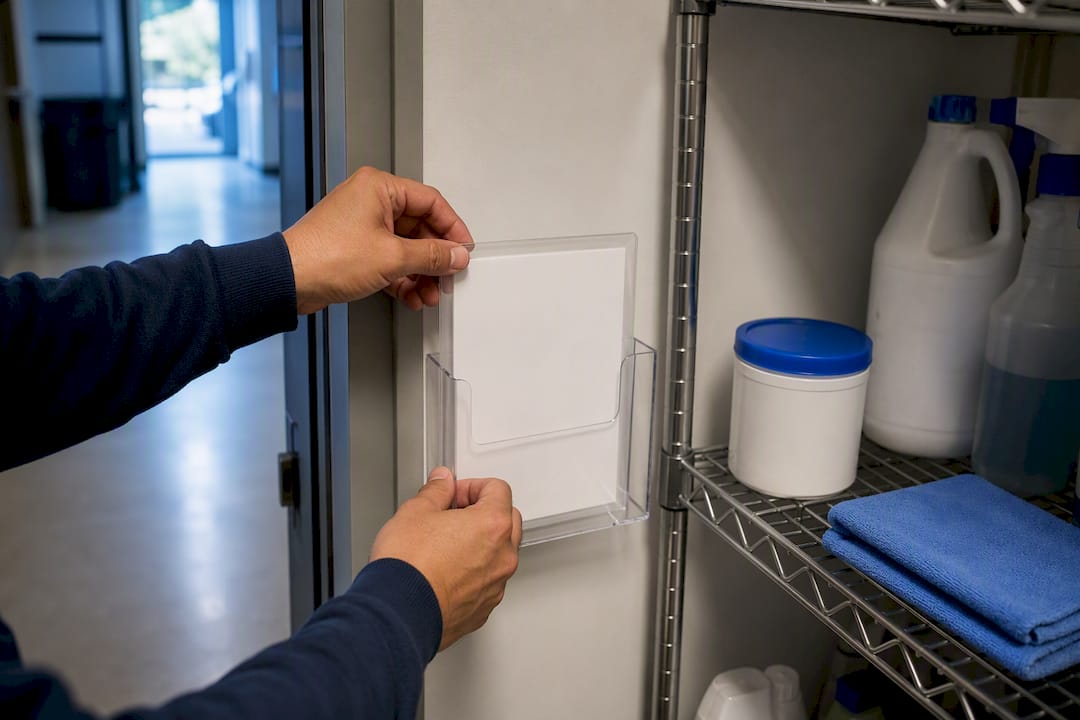
For sites with healthcare or lab exposure, add explicit language requiring immediate escalation of blood or sharps incidents to trained environmental teams. See our construction cleaning safety guide for chemical handling protocols that translate directly to porter training.
What Belongs in a Day Porter Job Description?
A hire-ready job description needs four parts: a role summary, essential duties, qualifications, and required training (HazCom certification at minimum).
Track performance with these KPIs:
- Average response time to reported spills or incidents.
- Restroom checks completed per hour during occupied hours.
- Stockout incidents (running out of supplies before the next restock).
- Completed rounds versus scheduled rounds per shift.
A basic hourly checklist should include restroom status, lobby condition, spill log, supply requests, and maintenance referrals, each with a field for notes. Municipal class specifications for day porter roles commonly list hourly restroom inspections and reporting duties as core, measurable expectations. Uniforms and visible ID badges matter too. Occupants trust a porter they can identify on sight.
| Element | What it tracks |
|---|---|
| Response time | Minutes from report to resolution |
| Restroom checks | Inspections completed per shift |
| Stockouts | Supply shortages caught before running out |
| Round completion | Scheduled vs. actual rounds finished |
How Does a Nationwide Provider Structure Day Porter Work?
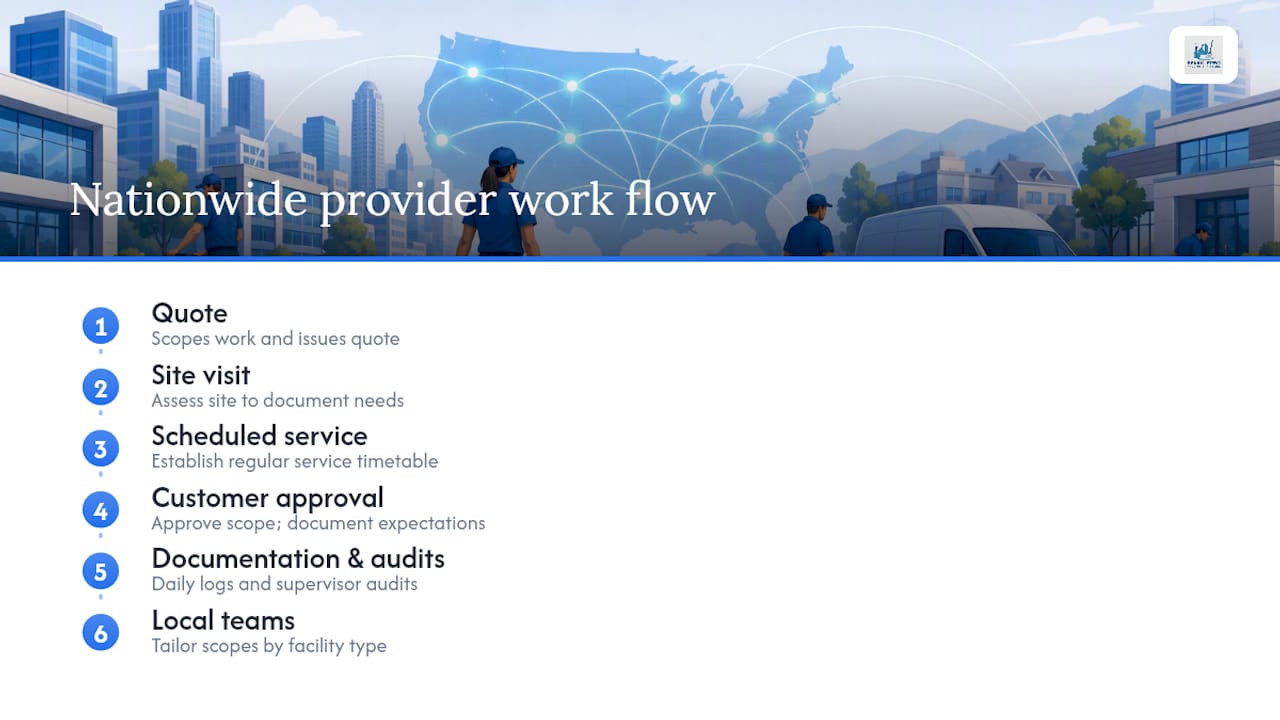
A nationwide provider scopes day porter work through a process including quotes, site visits, scheduled service, and customer approval to document expectations clearly before service begins. Daily logs and supervisor audits create a paper trail that protects property and crew. Local teams with experience across various facility types enable flexible service scopes tailored to building needs.
Ready to Request Day Porter Service?
Before requesting a quote, gather three things: your building's square footage, your peak occupancy windows, and any special compliance needs, like healthcare bloodborne pathogen protocols or LEED cleaning requirements. That information lets a provider scope the visit accurately instead of guessing.
During the site visit, expect a walkthrough of high-traffic zones, restrooms, and any problem areas you flag, followed by a written proposal that separates day porter line items from any janitorial contract you already run. That separation matters. It lets you scale daytime coverage up or down seasonally without renegotiating your whole cleaning agreement. The provider operates licensed and insured crews with local knowledge in multiple states, backed by fast response capabilities to adapt during the contract period. If your building fits this description, request a quote through the service page or review how local crews are structured on the New Jersey regional page before you reach out.
Sources
The figures and compliance rules in this guide come from federal labor and safety agencies, not industry marketing copy.
FAQ
What Are the Main Duties and Responsibilities of a Porter?
A porter handles restroom inspections and restocking, lobby and entrance upkeep, spill response, high-touch disinfection, and event setup during occupied hours. The role also covers reporting maintenance issues before they become bigger problems.
Is a Day Porter a Janitor?
No. A day porter works during business hours doing responsive, visible upkeep, while a janitor typically works off-hours running scheduled deep cleans like floor stripping and heavy disinfection, per the Bureau of Labor Statistics.
What Is the Difference Between a Day Porter and a Janitor?
The difference is timing and task depth: day porters respond in real time to spills, restocking, and appearance issues, while janitors handle scheduled, frequency-based deep cleaning after hours. Many facilities run both roles together for full coverage.
What Are the Challenges of Being a Day Porter?
Common challenges include juggling constant interruptions, staying compliant with chemical safety rules under time pressure, and knowing when to escalate a spill instead of handling it directly. Clear checklists and documented spill protocols reduce most of these issues.
Does Sparkleprocommercialcleaning Offer Day Porter Services?
Yes, Sparkleprocommercialcleaning provides day porter services as part of its facility service offerings, scoped through a quote and site visit before service begins. Current pricing details are available directly on the company site.