

Walking into your facility and finding it half-cleaned, or discovering your vendor swapped out trained staff for untested temps, is a frustration most property managers know firsthand. Knowing how to hire commercial cleaners the right way means the difference between a facility that reflects your standards and one that creates liability. This guide covers exactly what to assess before you sign anything, how to vet providers like a pro, and how to set up contracts that actually protect you over time.
Table of Contents
- Key takeaways
- What to know before hiring commercial cleaners
- How to vet and select commercial cleaning providers
- Setting up and managing your cleaning contract
- Common pitfalls to avoid when hiring
- My take on what actually separates good vendors from great ones
- Sparkleprocommercialcleaning: built for property managers who need it done right
- FAQ
Key takeaways
| Point | Details |
|---|---|
| Vet workforce quality first | High turnover in commercial cleaning directly impacts service consistency, so ask providers how they retain staff. |
| Demand itemized bids | Lump-sum pricing hides costs; always request line-item breakdowns covering restrooms, floors, and supplies. |
| Define your scope in writing | Detailed task lists prevent frequency creep and protect you when service quality slips. |
| Require proof of service | Documentation of completed visits reduces disputes and gives you leverage in quality conversations. |
| Use site walks before signing | A physical facility assessment leads to more accurate pricing and fewer contract surprises later. |
What to know before hiring commercial cleaners
Before you request a single bid, you need a clear picture of what you actually need. Commercial cleaning is not one service. It covers routine janitorial work, post-construction cleanouts, floor care programs, disinfecting services, and tenant move-out cleaning. A provider that excels at nightly office maintenance may be completely unqualified for industrial-grade floor restoration or biohazard protocols.
Start by categorizing your needs:
- Frequency: What requires daily attention versus weekly or monthly service?
- Facility type: Office buildings, healthcare spaces, and retail environments each carry different compliance expectations.
- Specialized tasks: Hard floor stripping and refinishing, carpet extraction, and exterior cleaning require specific equipment and training.
- Regulatory requirements: Some facilities must meet OSHA standards or industry-specific guidelines that not every vendor can satisfy.
On pricing, commercial cleaning rates typically range from $0.10 to $0.25 per square foot monthly, depending on facility type, cleaning complexity, and frequency. Most reputable operators also target 15 to 25% profit margins and avoid monthly contracts below $800 to $1,000 because the overhead makes smaller accounts economically unsustainable. Knowing this upfront helps you spot bids that are suspiciously low and likely to erode in quality fast.
One factor most property managers underweight is workforce stability. The commercial cleaning industry sees turnover exceeding 200% annually, which means vendors with no retention strategy will cycle through staff constantly. The person who cleaned your facility last Tuesday may not be the one showing up next week. That inconsistency compounds into real problems: missed tasks, security concerns from unknown personnel, and declining standards over time.
Pro Tip: Ask every prospective vendor directly: "What is your current employee turnover rate, and what specific programs do you have for retaining staff?" Their answer reveals more about service quality than any sales brochure.
How to vet and select commercial cleaning providers
Once you understand your needs, the actual selection process requires a structured approach. Moving too fast here is where most hiring mistakes happen.
Step 1: Write a detailed scope of work before requesting bids. Do not ask vendors to quote from a vague description. Create a document listing every space, task, and frequency. A Facility Needs Assessment that distinguishes daily, weekly, and monthly tasks allows vendors to price accurately and gives you an apples-to-apples comparison across proposals.
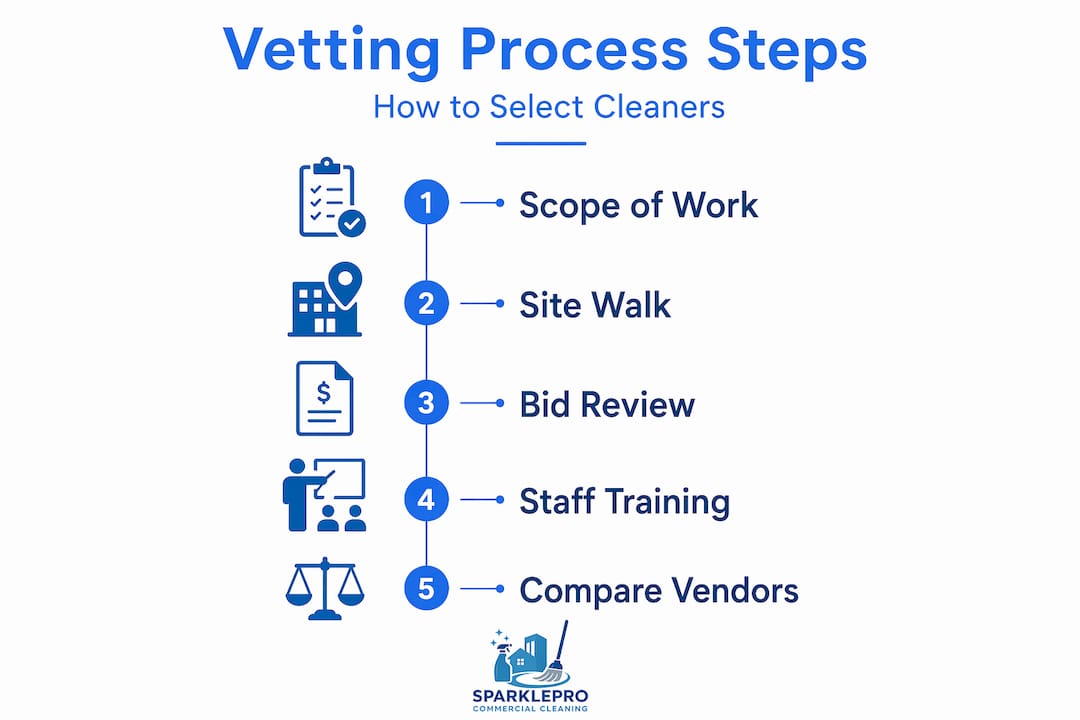
Step 2: Require a site walk before any bid is submitted. Providers that bid remotely without seeing your facility are guessing on scope. Site assessments before bidding identify details that significantly affect pricing: specialty flooring, the number of restrooms, high-traffic zones, and any access restrictions. Vendors who skip this step tend to either overbid to cover unknowns or underbid and cut corners later.
Step 3: Evaluate bids for structure and specificity. A detailed cleaning bid should include a clear scope, pricing breakdown, equipment and supply plan, and a proposed schedule. Any bid that presents only a flat monthly number without explanation should be treated as a red flag. Ask yourself: how will you verify the work if there is no task list to reference?
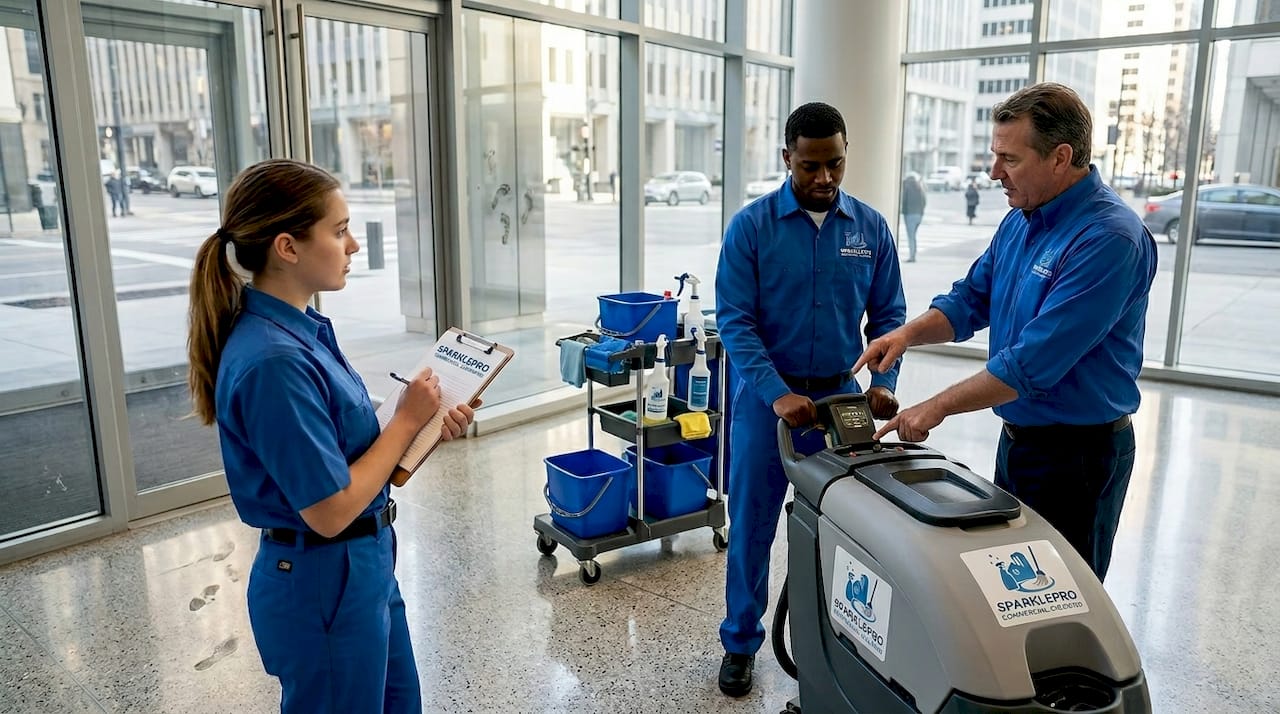
Step 4: Assess workforce quality and training programs. Workers who receive career development and technical training stay longer. Companies with structured advancement programs deliver better service because their staff builds actual expertise over time. Ask vendors about their training programs, certifications held, and whether they use subcontractors or direct employees. The role of licensed cleaning professionals in maintaining facility standards is significant and worth verifying before you commit.
Step 5: Compare vendors with a structured table.
| Evaluation factor | What to look for |
|---|---|
| Bid format | Itemized pricing with task list and schedule |
| Workforce stability | Retention programs, direct employees vs. subcontractors |
| Insurance and licensing | General liability, workers' comp, and state licensing |
| References | At least two verifiable commercial accounts similar to yours |
| Communication responsiveness | How quickly do they respond during the bid process? |
Pro Tip: The speed and clarity of a vendor's communication during the bid process is your best preview of how they will handle issues once the contract starts. Slow or vague responses before you sign predict the same behavior after.
Setting up and managing your cleaning contract
Winning bids should lead to written contracts with no ambiguity. This is where many property managers lose ground they gained during vetting.
Your contract needs to address several areas explicitly:
- Scope and frequency: List every task, every space, and how often it gets done. Do not leave anything to interpretation.
- Pricing transparency: Itemized pricing covering restrooms, floor care, and supplies eliminates the hidden costs that show up as surprise add-ons in lump-sum contracts.
- Cancellation terms: Most cleaning contracts specify a minimum term with 30-day notice for cancellation. Negotiate this clearly so you are not locked in if quality drops.
- Scope change procedures: Define how scope adjustments get requested, priced, and approved.
- Proof of service: Require documentation of completed visits. Signed checklists, digital logs, or supervisor sign-offs all work.
The biggest contract risk for property managers is frequency creep. This happens when the detailed schedule you agreed to in month one quietly erodes by month six. Tasks get skipped, frequency drops, and the vendor is still billing you at the original rate. Frequency creep damages service quality in ways that are hard to track unless your contract gives you a documented baseline to reference.
Here is what a basic scheduling framework looks like for a mid-size office building:
| Task | Frequency | Verification method |
|---|---|---|
| Trash removal and surface wipe-down | Daily | Digital log sign-off |
| Restroom deep clean | Daily | Supervisor checklist |
| Vacuuming and mopping | 3x per week | Site supervisor sign-off |
| Window interior cleaning | Monthly | Photographic record |
| Hard floor strip and refinish | Quarterly | Written scope confirmation |
Proof of service systems that document completed cleaning visits reduce disputes and give you real data when you need to have a quality conversation with your vendor. Treat this as non-negotiable in your contracts.
Learning how to evaluate cleaning contracts for quality and cost before signing protects you from the most common long-term partnership failures.
Common pitfalls to avoid when hiring
Even experienced property managers make these mistakes. Recognizing them before you start saves significant time and money.
- Choosing based on price alone. A low monthly rate means nothing if the vendor cannot keep consistent staff. You end up managing constant quality issues instead of managing your property.
- Accepting lump-sum bids. Flat pricing without itemization makes scope enforcement nearly impossible. If you cannot point to a line item, you cannot hold a vendor accountable for it.
- Skipping the insurance verification step. Always request a certificate of insurance naming your company as an additional insured. One slip-and-fall without proper coverage creates serious liability for you.
- Ignoring subcontractor practices. Some vendors win your account and immediately hand it to a subcontractor you never vetted. Ask directly whether any portion of your work will be performed by a third party.
- No cancellation protection. Contracts with no clear exit terms trap you in poor-performing relationships. Always negotiate cancellation terms before signing.
Pro Tip: Request a 90-day performance review clause in any new contract. This gives both parties a structured checkpoint to address concerns before they become deal-breakers, and it signals to your vendor that you are paying attention.
Knowing how to improve building cleanliness in 2026 also means recognizing when a current vendor is no longer serving your needs and having the contractual flexibility to make a change.
My take on what actually separates good vendors from great ones
I've watched property managers get burned by the same pattern repeatedly: they hire on price, ignore workforce questions, and end up managing vendor problems as a second job.
What I've learned after working in and around commercial cleaning procurement is that the vendors delivering consistent quality share one trait. They treat cleaning as skilled, technical work and treat their workers as professionals with career paths, not as interchangeable labor. Viewing cleaning as skilled work attracts workers who stay longer and build genuine expertise in your facility. That continuity is what keeps your building actually clean versus just appearing cleaned on paper.
I've also seen what happens when scope clarity is missing from the start. Within six months, both sides are operating on different assumptions. The vendor believes they are delivering what was promised. The client sees a facility that has declined. Neither party is lying. The contract just never defined the truth.
My honest advice: budget 10% more than the lowest bid you receive and use that room to negotiate for itemized pricing, retention clauses, and documented service verification. It is not glamorous advice. It is just what works. The vendors willing to accept those terms are usually the ones worth keeping.
— Sales
Sparkleprocommercialcleaning: built for property managers who need it done right
When you are ready to stop managing cleaning problems and start managing your property, Sparkleprocommercialcleaning delivers the structure you need. Every engagement starts with a site visit, a detailed itemized proposal, and a scope built around your specific facility requirements. The workforce is trained, retained, and accountable. No surprise subcontractors, no vague billing.
Sparkleprocommercialcleaning operates across the country with commercial cleaning in Delaware, services in Massachusetts, and coverage in New Jersey, Washington, and beyond. Whether you manage an office building, retail center, or healthcare facility, the process is designed to make hiring straightforward and keep quality consistent long after the first visit.
Request your custom bid today and get a response within 48 hours.
FAQ
What questions should I ask a commercial cleaning service before hiring?
Ask about employee turnover rates, training programs, insurance coverage, subcontractor use, and whether they provide itemized bids. These questions surface the workforce and contract risks that most vendors will not volunteer on their own.
How do I schedule routine janitorial services for my facility?
Start by categorizing tasks into daily, weekly, and monthly frequencies based on traffic and facility type, then build a written schedule into your contract. Including this schedule as a contract exhibit prevents frequency creep and gives you a clear baseline for quality verification.
How much does commercial cleaning typically cost?
Commercial cleaning typically costs between $0.10 and $0.25 per square foot monthly, depending on facility type, cleaning scope, and frequency. Most operators avoid contracts below $800 to $1,000 per month, so factor that into your budget planning.
Why does scheduling routine cleaning matter so much?
Facilities that lack a documented cleaning schedule experience gradual service erosion because there is no agreed baseline to enforce. A written schedule tied to your contract creates accountability and gives you the documentation needed to address quality issues before they become permanent.
How do I protect myself from poor service after signing?
Require itemized pricing, a documented task schedule, a proof of service system, and a 30-day cancellation clause in your contract. These four elements together give you visibility into service delivery and the flexibility to make changes if quality declines.