
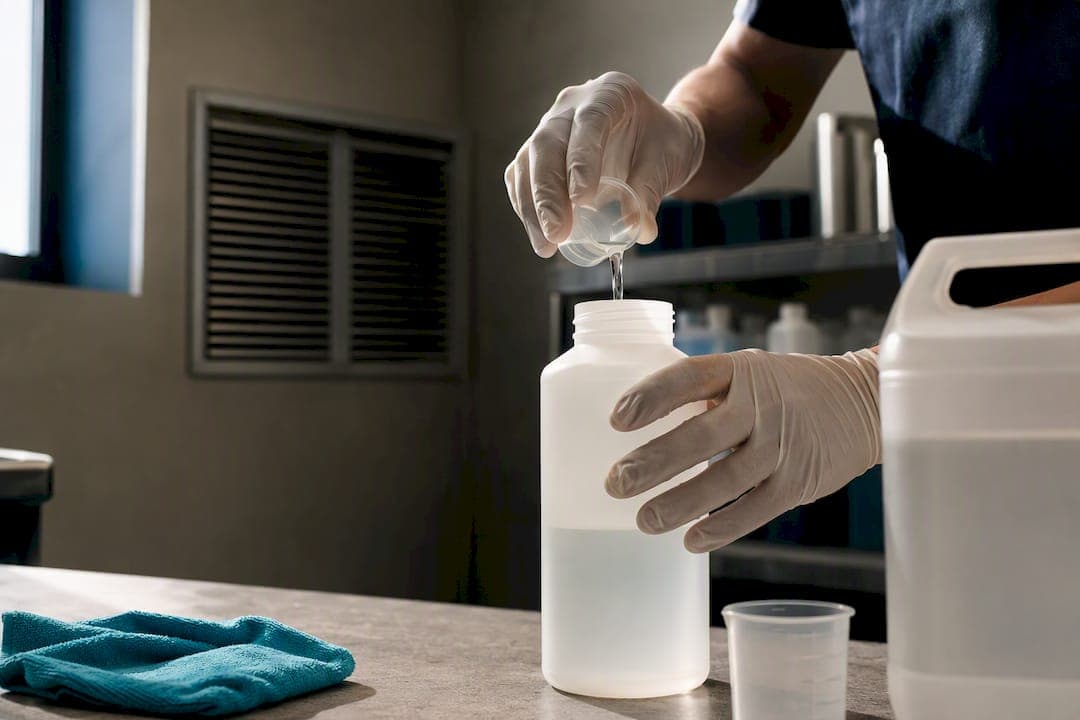
Yes, low-VOC and fragrance-free cleaners clean most household surfaces just as well as conventional products, while cutting the chemical fumes you breathe indoors. Prioritize swapping toilet bowl cleaners, oven cleaners, furniture polish, and dishwasher or laundry detergents first. Those categories carry the heaviest VOC loads. Use third-party certifications and a fragrance-free label as your fastest filter when comparing brands.
TL;DR:
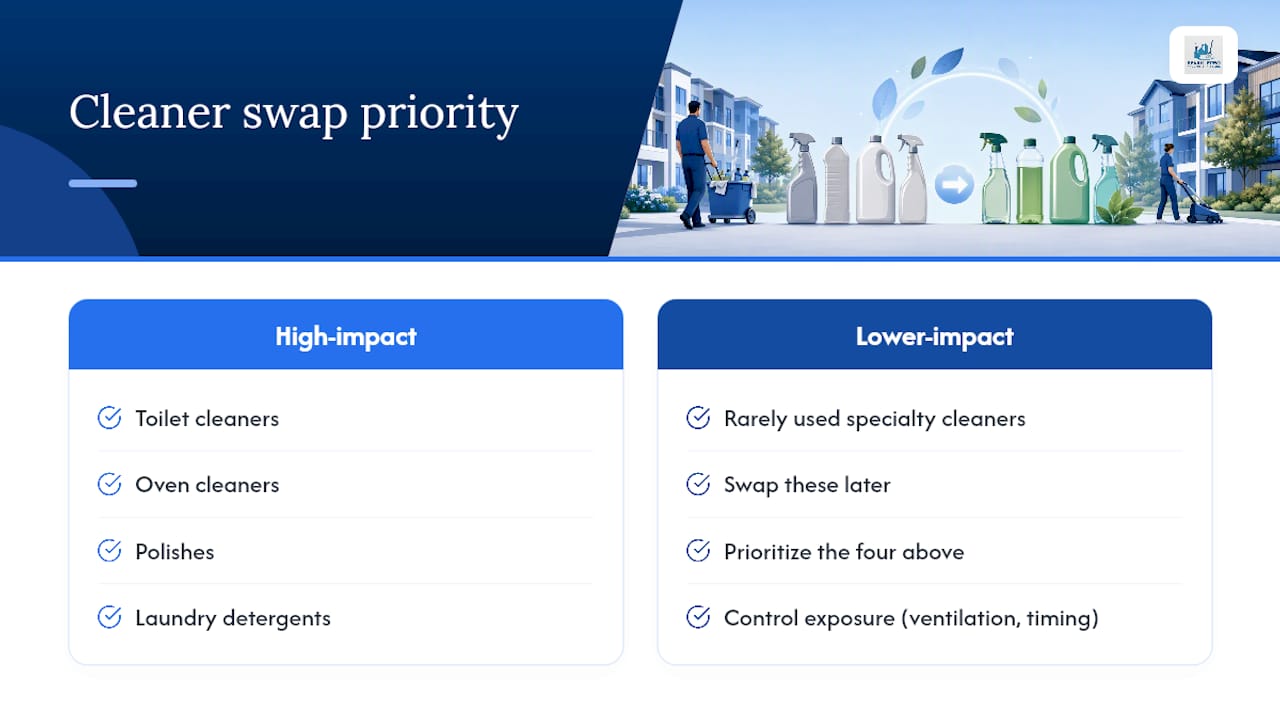
- Replacing toilet cleaners, oven cleaners, furniture polish, and laundry detergents with low-VOC or fragrance-free options offers the largest reduction in indoor VOC exposure.
- Fragrance-free products are more effective in lowering emissions because added scents, whether synthetic or natural, contribute to VOC load.
- Certification labels like EPA Safer Choice and EWG VERIFIED provide quick identification of safer, low-VOC cleaning products, especially when full ingredient disclosure is present.
- DIY solutions such as vinegar, baking soda, and castile soap are effective for routine cleaning but do not provide disinfection, requiring EPA-registered disinfectants during illness outbreaks.
- Commercial cleaning services focused on low-VOC standards typically use certified, fragrance-free concentrates and prioritize ventilation control to maintain indoor air quality.
Table of Contents
- What Low VOC Cleaners Are and Why Fragrance Matters
- How VOCs From Cleaners Affect Indoor Air and Your Health
- How to Spot Genuinely Safer Products in 60 Seconds
- Which Products to Replace First for the Biggest Impact
- Ingredients Worth Seeking Out (and Ones Worth Skipping)
- Low-VOC DIY Recipes That Actually Work
- How Commercial Cleaning Crews Apply Low VOC Standards at Scale
- Where the Advice Usually Goes Wrong
- When It Makes Sense to Bring in a Professional Low VOC Cleaning Crew
- Sources
What Low VOC Cleaners Are and Why Fragrance Matters
A volatile organic compound is any carbon-based chemical that evaporates into the air at normal room temperature. That's the whole definition. It's why a bottle of glass cleaner smells strong the second you open it: the compounds responsible for that smell are already leaving the liquid and entering your lungs.
Cleaning products build up VOC loads mostly through solvents, propellants, and fragrance. Fragrance deserves special attention because it's the piece most consumers overlook. Whether a scent comes from a synthetic compound or a "natural" essential oil, it's still a volatile organic compound the moment it evaporates. The EPA's guidance on identifying greener cleaning products makes this point directly: even natural fragrances count toward VOC emissions, so a product labeled "made with essential oils" isn't automatically a low-VOC choice.
Marketing language on these bottles isn't standardized, and that's where a lot of shoppers get misled:
- "Low-VOC" usually means a reduced VOC content compared to a conventional formula, but there's no single legal ceiling that applies to every product category.
- "No-VOC" implies negligible volatile content, though trace amounts can still exist below detection thresholds.
- "Fragrance-free" means no scent was added at all, which is different from "unscented," where masking agents sometimes cover other smells.
Manufacturer transparency varies a lot here. Seventh Generation's Free & Clear line explicitly states that its unscented formulas skip fragrance-related VOCs entirely, while its scented counterparts still emit them. That's a useful model for reading any label: assume the scented version of any product emits more than its unscented sibling, even from the same brand.
How VOCs From Cleaners Affect Indoor Air and Your Health
The EPA identifies reducing VOC sources as one of the most direct ways to improve indoor air quality, and cleaning products sit near the top of that source list for most homes. Indoor air often carries a denser concentration of these compounds than outdoor air, because a closed house or office traps what a chemical would otherwise disperse outside.
Short-term exposure shows up as eye and throat irritation, headaches, or dizziness, especially in a room with poor airflow. For people with asthma or chemical sensitivities, certain VOCs act as direct triggers rather than mild annoyances. Beyond the walls of your home, these same compounds react with sunlight and other pollutants outdoors to form ground-level ozone, a major ingredient in smog.
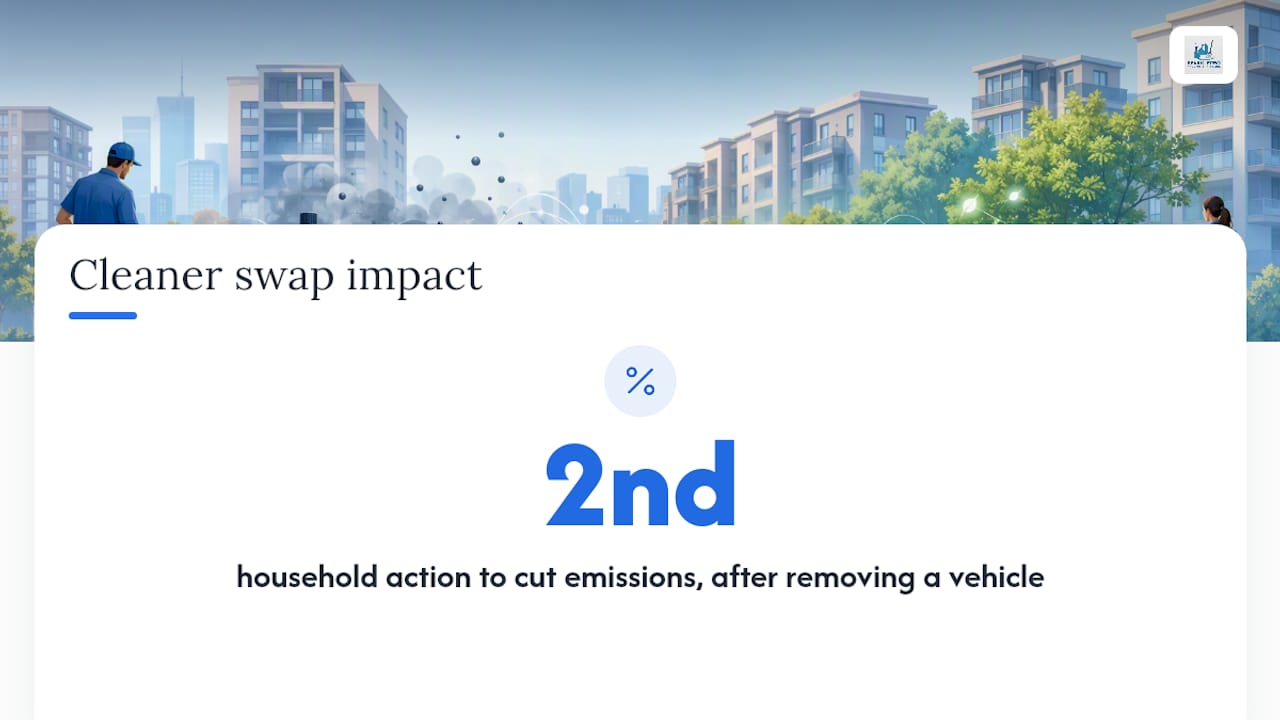
The scale of the impact: According to the EPA, switching to low- or no-VOC cleaning products can cut more emissions than almost any other single action a household can take to reduce its environmental footprint, second only to removing a vehicle from the road.
That's a striking comparison for something as mundane as a bottle of all-purpose spray. It reframes a routine grocery decision as a real lever, rather than a symbolic gesture. The reason it works out that way is volume: cleaning products get used repeatedly, in enclosed rooms, often without much ventilation, so their cumulative emissions add up in a way that a single high-VOC purchase, like a can of paint used once, doesn't.
Health agencies don't suggest eliminating cleaning altogether, obviously. The practical takeaway is source reduction: choose formulas that emit less in the first place, and pair that with ventilation, which the next section covers as part of a shopping and use routine.
How to Spot Genuinely Safer Products in 60 Seconds
Certification logos exist because most shoppers don't have time to research individual chemical names on a busy store trip. Four labels currently carry the most weight in the U.S. market:
- EPA Safer Choice reviews every ingredient in a formula, not just the active ones, against human health and environmental safety criteria. The EPA recently strengthened this standard for both household and commercial products, tightening what qualifies.
- UL ECOLOGO certifies products against a multi-attribute life cycle standard, covering everything from raw materials to packaging.
- Green Seal sets performance and safety benchmarks specifically for cleaning products used in institutional and commercial settings.
- EWG VERIFIED requires full ingredient disclosure and screens out a specific list of chemicals of concern; the EWG's Guide to Healthy Cleaning lets you search individual products and ingredients by name.
None of these labels are perfect. A certification tells you a product passed a specific set of criteria; it doesn't tell you the formula is chemical-free or that it will out-clean everything on the shelf. Plant-based surfactants, for instance, show up constantly in "green" marketing, but plant-derived doesn't automatically mean low-toxicity or low-VOC. Fragrance-free remains a stronger single signal than any plant-based claim on its own.
Here's the checklist worth keeping on your phone for the store:
- Flip the bottle and look for a certification logo you recognize.
- Check whether the ingredient list is fully disclosed, not just "surfactants" and "fragrance."
- Scan for glycol ethers, petroleum distillates, or anything in the benzene family, and skip products that list them.
- Choose the fragrance-free version over the scented version when both exist.
- Cross-reference the product name on the EWG database if you're unsure.
Pro Tip: Keep a photo of your go-to certification logos saved on your phone. Store lighting and cramped label print make tiny logos easy to miss, and a quick zoomed-in comparison saves you from guessing at the shelf.
Which Products to Replace First for the Biggest Impact
Not every cleaner in your cabinet deserves equal attention. A small number of categories drive most of a household's VOC exposure, so replacing those first gets you disproportionate results compared to swapping everything at once.
Four categories consistently show up as the highest-impact targets:
- Toilet bowl cleaners often rely on strong solvents and heavy fragrance to mask harsh chemical odors; a fragrance-free, certified formula or a citric acid based cleaner handles most residential toilet cleaning without that load.
- Oven cleaners are some of the most solvent-heavy products sold for home use; a baking soda paste left overnight, combined with mechanical scrubbing, removes most baked-on grease without aerosol fumes.
- Furniture polish frequently uses petroleum distillates for shine; a small amount of diluted vinegar or a plant-oil based polish gets a comparable result on most wood surfaces.
- Dishwasher and laundry detergents, especially scented pods and liquids, contribute VOCs with every wash cycle; enzyme-based, fragrance-free formulas clean comparably while cutting that repeated exposure.
Local sustainability guidance, including Homer Glen, Illinois's household cleaning brief, points to the same substitutions: baking soda, vinegar, and biodegradable surfactants cover a surprising share of routine cleaning tasks without synthetic solvents.
A few operational habits matter as much as the product itself. Always dilute concentrated cleaners according to label directions rather than eyeballing it. Crack a window or run an exhaust fan while cleaning, even with a low-VOC product, since concentration still builds up in a sealed room. Test any new formula on a small hidden area before using it on a prized surface, and don't assume a "natural" swap works identically to the chemical version you're replacing.
| Category | Highest-impact swap | What to look for |
|---|---|---|
| Toilet bowl cleaner | Citric acid or certified fragrance-free formula | No glycol ethers, EPA Safer Choice logo |
| Oven cleaner | Baking soda paste + mechanical scrubbing | Skip aerosol propellants entirely |
| Furniture polish | Diluted vinegar or plant-oil polish | No petroleum distillates listed |
| Dishwasher/laundry detergent | Enzyme-based, fragrance-free formula | Full ingredient disclosure on label |
Ingredients Worth Seeking Out (and Ones Worth Skipping)
Reading a cleaning label gets a lot easier once you recognize a handful of recurring names on each side of the ledger.
Safer ingredient families worth looking for include:
- Sodium percarbonate, an oxygen-based bleach alternative used in stain removers and all-purpose powders.
- Citric acid, effective against soap scum, hard water deposits, and toilet rings without harsh solvents.
- Baking soda (sodium bicarbonate), a mild abrasive that handles grease and odor without off-gassing.
- Vegetable-derived surfactants, which lift dirt and oils similarly to petroleum-based ones in most everyday formulas.
Ingredients worth avoiding, or at least researching further before buying, include:
- Glycol ethers, common solvents in glass and multi-surface cleaners linked to respiratory irritation.
- Certain petroleum distillates, frequent in polishes and degreasers.
- Nonylphenol ethoxylates, surfactants flagged for environmental persistence.
- Phthalates, often hidden inside undisclosed "fragrance" listings rather than named directly.
- Unnecessary fragrance additives, natural or synthetic, when a fragrance-free version of the same product exists.
The essential oil point is worth repeating because it trips up a lot of well-intentioned shoppers: lavender, citrus, and tea tree oils are natural, but they're still volatile compounds that evaporate into your air the same way a synthetic fragrance does. A cleaner scented entirely with essential oils isn't automatically lower-VOC than one using synthetic fragrance; the source is different, the mechanism of exposure isn't. Ingredient databases like EWG's Skin Deep entries let you check individual compounds like this one by one if a label leaves you unsure.
Low-VOC DIY Recipes That Actually Work
A handful of pantry staples cover most routine cleaning without any synthetic solvent load at all.
- All-purpose spray: a few drops of castile soap diluted in a spray bottle of water handles counters, sinks, and most hard surfaces.
- Glass cleaner: a diluted vinegar and water solution, wiped with a lint-free cloth, cuts streaks without ammonia.
- Abrasive scrub: baking soda mixed into a paste with a small amount of water tackles tubs, sinks, and stovetops.
- Stain pre-treatment: a citric acid solution loosens mineral deposits and some organic stains before a regular wash.
A few safety rules matter more than the recipes themselves. Never combine bleach and vinegar. That mix produces chlorine gas, and it's one of the most common accidental poisoning risks in home cleaning. Label every homemade mixture clearly, store it out of reach of children and pets, and never transfer a cleaning solution into an old food or drink container.
DIY also has a real limit: disinfection. Vinegar, castile soap, and baking soda clean surfaces but aren't registered disinfectants, meaning they haven't been proven to kill specific pathogens at a validated rate. During an illness outbreak in the household, or when disinfecting is genuinely required, reach for an EPA-registered disinfectant instead of substituting a homemade recipe. Some newer systems, including electrolyzed water devices that generate an EPA-registered disinfectant from salt, water, and vinegar, give you that registered efficacy without stockpiling synthetic disinfectant chemistry.
Pro Tip: Keep your DIY sprays in glass or vinegar-safe plastic bottles, not repurposed containers that held petroleum-based products. Residue from the original contents can react unpredictably with your new mixture.
How Commercial Cleaning Crews Apply Low VOC Standards at Scale
Professional cleaning teams don't have the luxury of trial and error across hundreds of rooms, so they lean on certified, fragrance-free concentrates as their default rather than the exception. Specialized chemistry still gets used for genuinely stubborn soils, like grease buildup after post-construction debris removal, but it's reserved for the job, not applied as a blanket habit across every surface.
Exposure control matters as much as product choice in a commercial setting. That means scheduling ventilation around when a space gets cleaned, controlling dilution ratios precisely rather than estimating, and allowing rooms to air out before occupants return, particularly in healthcare and multifamily buildings where sensitive populations are present.
Sparkleprocommercialcleaning applies these controls across its indoor air quality practices on a nationwide basis, and its four-step process, quote, site visit, scheduled cleaning, and client approval, gives property managers a way to specify low-VOC product requirements up front rather than discovering after the fact what a crew used. For facility managers overseeing occupied buildings, that kind of specification matters more than any single product swap a homeowner might make.
Where the Advice Usually Goes Wrong
Most guidance on this topic treats every cleaning product the same way, telling readers to "go green across the board." That's inefficient advice. The evidence points somewhere more specific: a handful of categories, toilet cleaners, oven cleaners, polishes, and laundry detergents, drive most of a household's VOC exposure, so those are the swaps that pay off first. Spending energy replacing a rarely used specialty cleaner before touching your everyday laundry detergent gets the priority backward.
The bigger blind spot is fragrance. Plenty of shoppers assume "natural" ingredients settle the safety question, and that assumption is where certifications earn their keep. A fragrance-free, third-party certified product beats an uncertified "plant-based" one with essential oils almost every time, on emissions if nothing else. That's a harder truth for the natural-products aisle than most marketing wants to admit.
For property managers and larger households, the real gap isn't product selection. It's exposure control: ventilation timing, dilution accuracy, and reentry scheduling matter as much as what's in the bottle. A perfect product used carelessly in a sealed room still creates a bigger air quality problem than a good product used well.
— Sales
When It Makes Sense to Bring in a Professional Low VOC Cleaning Crew
Swapping a few bottles under your sink is one thing. Managing indoor air quality across an office building, a post-construction site, or a healthcare facility with sensitive occupants is a different scale of problem entirely, and it's usually where DIY solutions and single-product swaps stop being enough. Some commercial cleaning companies work with property managers and facility directors in that gap, applying certified, fragrance-free concentrates as the default rather than the exception, and controlling ventilation and dilution the way a large occupied space actually requires.
If you're evaluating a vendor for this kind of work, ask direct questions: What's your full product list, and can you share it? Which certifications do your cleaning products carry? How do you handle ventilation and reentry timing after a deep clean? Those three questions filter out vendors who treat "eco-friendly" as a marketing line rather than an operational standard.
A typical four-step commercial cleaning process—quote, site visit, scheduled cleaning, client approval—gives you a chance to specify requirements before a single surface gets touched. If your property is in Delaware, you can request a quote for Delaware cleaning services to start that conversation, or check the Massachusetts service page or Washington service page if your building sits in either of those states.
Sources
- EPA strengthens Safer Choice standard for commercial and household cleaning products | US EPA
- EWG's Guide to Healthy Cleaning
- Clean up your act with low‑VOC cleaning products (Homer Glen IL)