
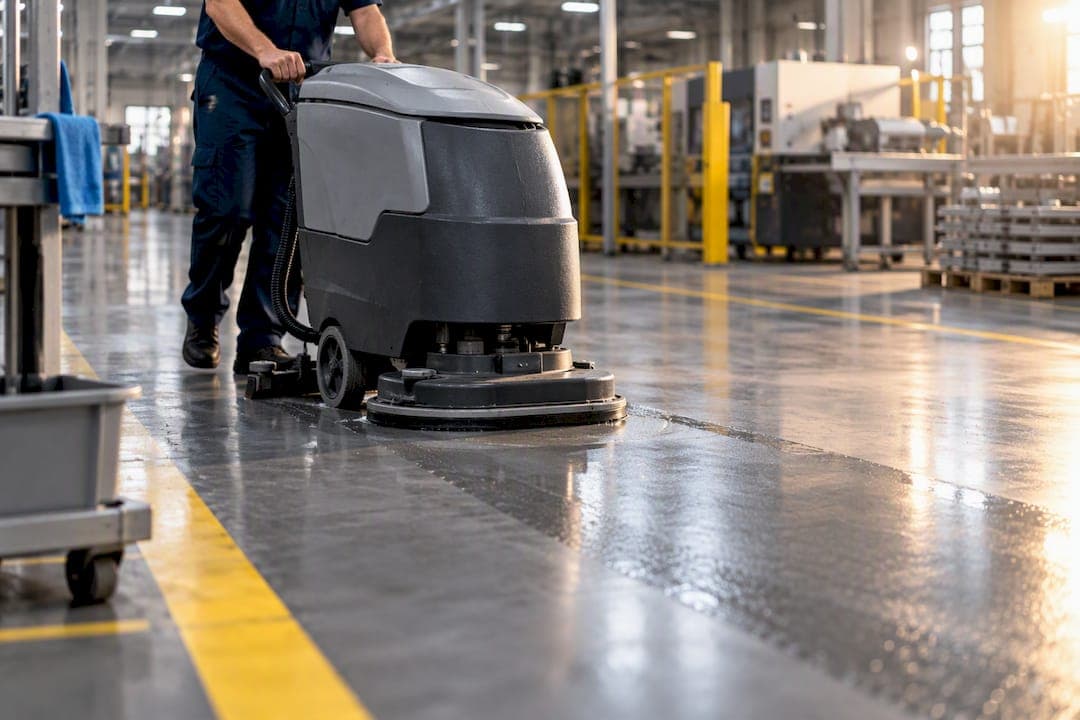
The most effective manufacturing floor cleaning approach is a daily sweep followed by scheduled auto-scrubbing, using walk-behind or ride-on machines for standard shifts and autonomous scrubbers for round-the-clock operations. Pair this with targeted degreasers for oil and metal-dust zones, and specify products carrying the EPA Safer Choice or DfE label. Start by inspecting your floor type, then build a daily sweep plus scrub rotation, or request a site quote to get one built for you.
TL;DR:
- Daily sweeping before scrubbing is essential for extending floor life and preventing accidents, particularly in high-traffic or oily zones.
- The choice of cleaning equipment depends on floor size and contaminant type, with autonomous scrubbers ideal for 24/7 operations and tight spaces needing walk-behind units.
- Match cleaning methods and products to floor surfaces and soils, using alkaline degreasers for concrete and neutral cleaners for coated floors, avoiding damage.
- Certified, eco-friendly chemistries with Safer Choice or DfE labels ensure safety and effectiveness, with proper dilution being crucial to avoid residue buildup.
- Regular cleaning schedules should be based on contamination levels, not just calendar days, with autonomous equipment helping maintain consistency during off-hours.
Table of Contents
- Which Equipment and Methods Actually Clean Manufacturing Floors?
- How Should Cleaning Methods Change by Floor Surface?
- What Cleaning Products and Chemistries Actually Work?
- What's a Realistic Cleaning Schedule That Won't Disrupt Production?
- What Safety Standards Apply to Industrial Floor Cleaning?
- How Do You Keep Cleaning Equipment Running Without Downtime?
- How SparklePro Approaches Manufacturing Floor Cleaning
- What Does Floor Cleaning Actually Cost to Budget For?
- How Often Should Different Manufacturing Floors Be Cleaned?
- Does Floor Cleanliness Actually Affect Production and Safety?
- Which Cleaning Method Actually Performs Best in Practice?
- What Actually Matters in a Floor Cleaning Program
- Ready to Get Your Manufacturing Floor Professionally Cleaned?
- Sources
- FAQ
Which Equipment and Methods Actually Clean Manufacturing Floors?
Every effective program starts with dry removal. Sweeping or vacuuming before scrubbing keeps grit from grinding into the floor surface and turning your scrubber water into an abrasive slurry. Daily sweeping before scrubbing is consistently listed among the top best practices for extending floor life and preventing accidents, and it's the cheapest insurance you'll buy all year.
From there, the right machine depends on scale and labor:
- Walk-behind auto-scrubbers work well for tight aisles, mezzanines, and facilities under roughly 50,000 square feet where an operator can cover the space in a shift.
- Ride-on scrubbers make sense once floor plans stretch past that, cutting scrubbing time dramatically on open warehouse and assembly floors.
- Autonomous scrubbers run scheduled routes without an operator, which matters most for 24/7 plants or sites where labor is already stretched thin. Autonomous units bring onboard safety sensors and fleet-reporting tools that let a facility manager track coverage without walking the floor.
- Manual spot cleaning with mops, scrub pads, and degreasers still handles edges, tight corners, and machine bases that scrubbers can't reach.
Adjust water flow, down pressure, and brush type based on soil load. Heavy oil calls for stiffer brushes and slower pass speeds. Dust-only zones can run lighter pressure and higher speed. The real decision isn't which machine is "best," it's matching contaminant type and available labor to a tool that can keep up without babysitting.
How Should Cleaning Methods Change by Floor Surface?
Treating every floor the same way is how facilities end up stripping a $40,000 epoxy coating with the wrong pad. Match the method to the material:
- Sealed concrete tolerates heavier brush agitation and alkaline degreasers, which cut through oil and grease without breaking down the surface. Avoid acidic cleaners, which etch concrete over repeated use.
- Epoxy and other coated floors need neutral pH cleaners and low-abrasion pads. Aggressive chemistry or stiff brushes will dull the finish and shorten the recoat interval.
- Tile and terrazzo respond best to moderate agitation followed by a thorough rinse. Skipping the rinse leaves cleaner residue that attracts more soil and can leave visible haze or staining.
- Rubber mats and anti-fatigue flooring should be dry-swept first, then spot-cleaned with low-pressure washing. High-pressure jets can lift edges and shorten mat life.
Soil type matters as much as surface type. Oil-based residue needs degreasing chemistry regardless of floor material, while metal dust and fine powders often just need better dry capture before any wet step happens at all.
What Cleaning Products and Chemistries Actually Work?
Chemistry choice should follow the soil, not the marketing copy on the jug. Alkaline degreasers handle hydrocarbon residue from machining and assembly lines, while neutral detergents protect finished floors like epoxy and terrazzo from long-term dulling. Always follow the manufacturer's dosing guidance for your auto-scrubber. Overdosing doesn't clean better, it just leaves more residue and more rinse cycles.
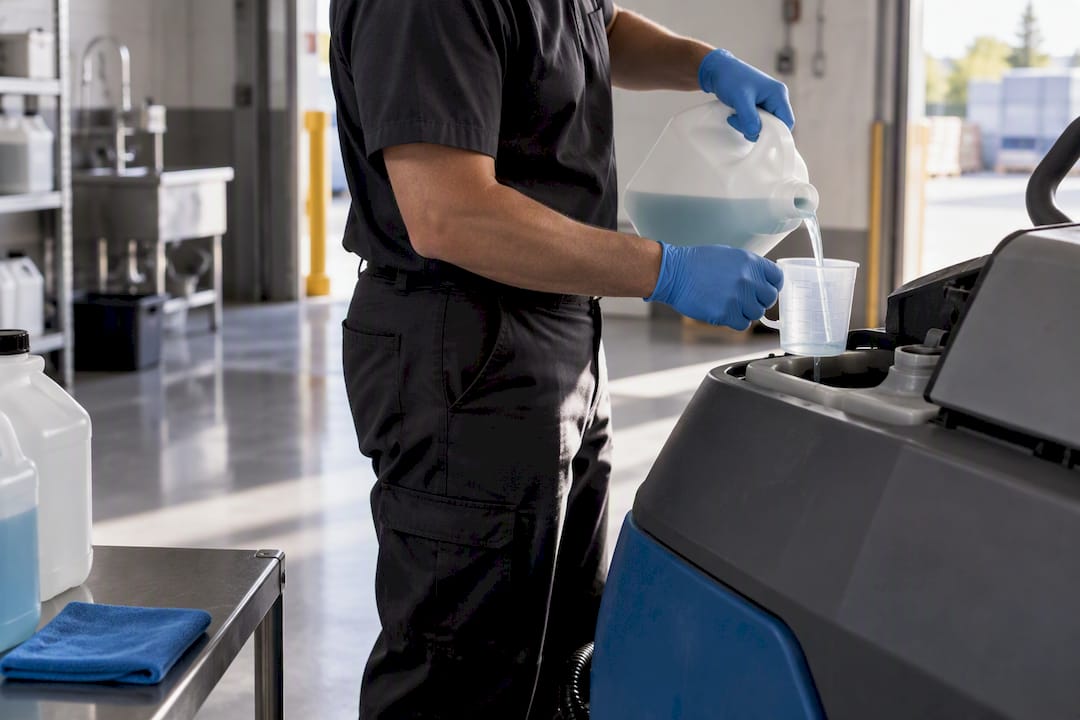
On the eco-friendly side, the EPA runs the Safer Choice program specifically because so many "green" cleaning claims turn out to be unverified. Safer Choice and DfE certification mean a third party actually evaluated the ingredient profile for human and environmental safety, not just the label copy.
Pro Tip: Keep a laminated dilution chart taped inside every scrubber's chemical compartment. Operators who eyeball concentrations are the number one cause of residue buildup and streaking on sealed floors.
Before approving any product, check that it:
- Carries Safer Choice or DfE certification, or an equivalent verified standard
- Has a current SDS on file and matches your ventilation and PPE setup
- Specifies compatible flooring types so you don't damage epoxy or rubber
- Meets your scrubber manufacturer's dosing and dilution guidance
Probiotic and biobased cleaners are worth considering for odor control in high-traffic zones, but verify their regulatory approvals and check the SDS before rolling them out plant-wide, since claims about extended enzyme activity vary widely between brands.
What's a Realistic Cleaning Schedule That Won't Disrupt Production?
The schedule that actually holds up under production pressure looks like this:
- Daily: Sweep high-traffic aisles and workstations, respond to spills immediately, and run a quick visual inspection at shift start.
- Weekly: Run auto-scrubber passes through high-traffic zones and any work cells generating consistent grease or dust buildup.
- Monthly or quarterly: Burnish sealed floors, reseal as needed, and clean floor drains before they become a bottleneck during a spill.
Timing the scrub around shift changes, rather than fighting for floor space during production hours, is what separates a program that sticks from one that gets skipped every time the line runs behind. Autonomous scrubbers are particularly useful here since they can run their routes during low-traffic overnight windows without pulling anyone off a shift.
Pro Tip: Track machine utilization hours alongside slip-and-fall incident reports. A drop in scrubber hours almost always shows up as a spike in near-miss reports within two to three weeks.
Facility managers building out a full plan can find more detail in this industrial cleaning strategy guide and this field guide to industrial site cleaning plans.
What Safety Standards Apply to Industrial Floor Cleaning?
Wet floors are the single biggest controllable slip hazard on a production floor, and the fix is procedural, not just chemical:
- Respond to spills immediately with wet-floor signage and a designated response kit at each work cell
- Consult the SDS before handling any degreaser or disinfectant, and confirm ventilation matches the chemical's exposure limits
- Require PPE (gloves, eye protection) for concentrated chemical handling, not just diluted use
- Document every cleaning shift and incident, since audit trails matter when insurance or OSHA questions come up
- Choose autonomous machines with sensors, e-stop controls, and exclusion zones for shared floor space with forklifts and foot traffic
ISO 45001 gives facilities a formal framework for managing occupational health and safety risk, and ISO 14001 covers the environmental management side, useful reference points when building out documented cleaning procedures for an audit. For a deeper walkthrough, see this industrial cleaning safety guide.
How Do You Keep Cleaning Equipment Running Without Downtime?
Uptime lives or dies on daily checks, not annual service contracts:
- Inspect brushes, pads, squeegees, and tank filters before every shift starts
- Follow manufacturer battery charging cycles for ride-on and autonomous units to avoid premature capacity loss
- Replace consumables on schedule rather than waiting for visible wear, since worn pads scratch finishes long before they look damaged
- Call professional service before small issues become downtime, and track repair turnaround against your own uptime targets
Snap-on consumable designs and automated docking stations are increasingly common on newer machines specifically because they cut routine service time. Keeping a simple maintenance log turns "the scrubber's been acting weird" into a pattern you can actually diagnose.
How SparklePro Approaches Manufacturing Floor Cleaning
Professional commercial cleaning services bring licensed, insured crews experienced with the conditions manufacturing floors create: oily spills, metal dust, production schedules that don't pause for cleaning. The engagement process is simple: request a quote, schedule a site visit, get a cleaning plan built around your shift pattern, and sign off once it's running. That process is built around minimizing disruption on floors where downtime has a real cost, and it's the same reasoning behind why routine floor cleaning protects safety and uptime.
What Does Floor Cleaning Actually Cost to Budget For?
Budgeting for floor cleaning breaks into three buckets: labor, equipment, and consumables, and the mix shifts depending on whether you own machines or contract the work out.
Owning equipment means upfront capital for scrubbers, sweepers, and eventually a robotics investment if you go autonomous, plus ongoing costs for pads, chemicals, batteries, and repairs. Labor is the biggest recurring line item, especially if you're running manual scrubbing on large floors. A contracted cleaning service shifts most of that into a predictable recurring fee, which is easier to forecast against a facilities budget than fluctuating equipment repair costs.
The variable most facility managers underestimate is chemical waste from improper dilution. Overdosing degreaser doesn't just waste product, it forces extra rinse passes and more scrubber water use, which adds labor hours you didn't budget for. A dilution control system or trained operator protocol pays for itself within a few months on a large floor plan.
Frequency also drives cost more than most managers expect. A facility running three shifts needs a cleaning cadence that fits between production windows without overtime premiums, while a single-shift operation has far more flexibility to schedule scrubbing during off-hours at standard rates. When comparing a capital equipment purchase against a service contract, model both against your actual square footage and shift pattern, not a generic per-square-foot estimate, since soil load and floor type swing real costs more than raw size does.
A quote and site-visit process can provide facility managers a number tied to actual floor conditions rather than a generic estimate.
How Often Should Different Manufacturing Floors Be Cleaned?
Cleaning frequency should track contamination rate, not a calendar default. A metal fabrication floor generating swarf and cutting fluid daily needs scrubbing far more often than a light assembly floor handling clean electronic components.
As a starting framework: high-contamination environments (machining, food processing, automotive assembly) generally need daily sweeping and scrubbing multiple times per week in high-traffic zones. Moderate environments (general assembly, warehousing with forklift traffic) typically hold up on daily sweeping with weekly scrubbing passes. Low-contamination environments (clean assembly, packaging) can often run on daily sweeping with scrubbing every one to two weeks, adjusted upward if foot traffic tracks in outdoor debris.
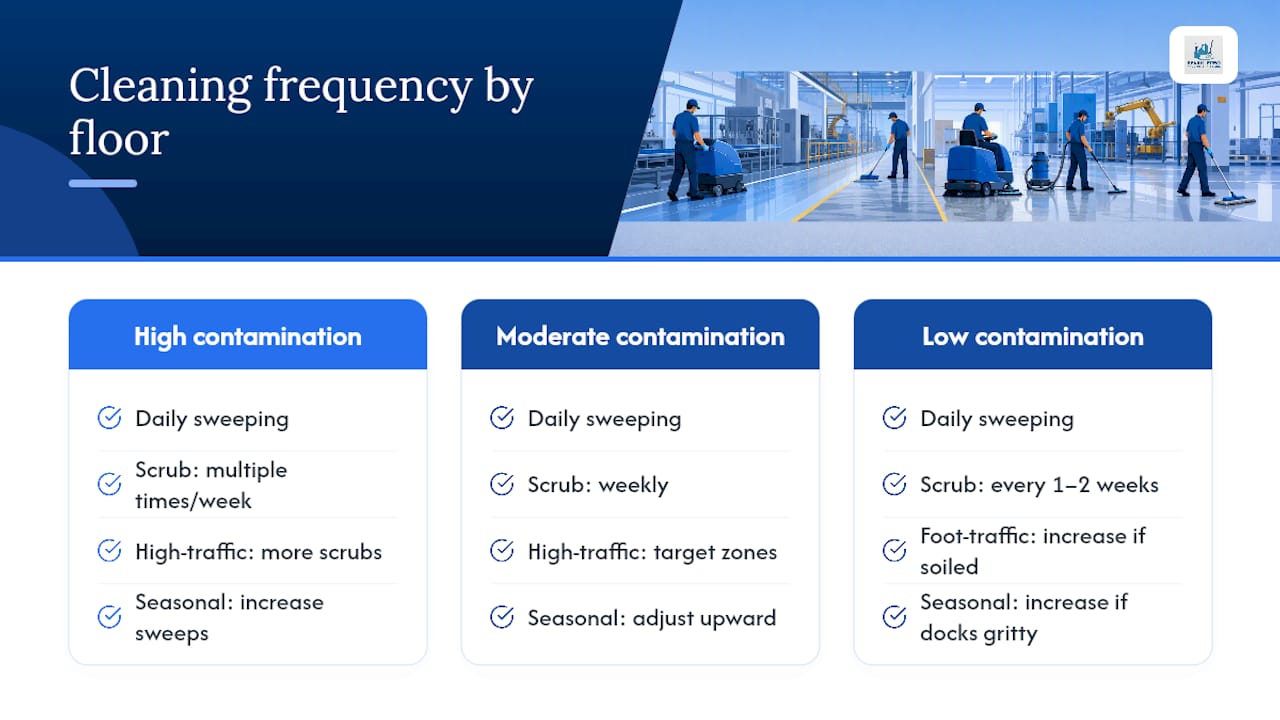
Seasonal shifts matter too. Facilities near loading docks see more tracked-in grit during wet months, which justifies temporarily increasing sweep frequency rather than waiting for the monthly schedule to catch up. The facilities that get this wrong usually aren't cleaning too little, they're cleaning on a fixed calendar instead of watching actual soil accumulation and adjusting the cadence to match it.
Autonomous scrubbers make frequency easier to manage since they can run additional passes during off-hours without adding labor cost, which is part of why 24/7 facilities increasingly lean on them to hold a consistent standard rather than letting cleanliness slide between shift-based manual passes.
Does Floor Cleanliness Actually Affect Production and Safety?
Yes, and the connection is more direct than most operations teams assume. Slip hazards from oil, coolant, or tracked-in debris are among the most preventable causes of workplace injury on a production floor, and every incident carries downstream costs beyond the immediate injury: workers' comp claims, OSHA reporting, lost shift time, and morale damage on the floor.
Dirty floors also slow production in less obvious ways. Debris and dust accumulation around machinery contributes to equipment wear, and forklift operators moving cautiously over a visibly soiled floor lose time on every pass. A floor that looks and performs consistently clean lets material handling move at full speed with less hesitation.
There's also a compliance angle that gets overlooked until an audit happens. Documented cleaning schedules and incident logs, tied to frameworks like ISO 45001, give facilities a paper trail that matters when insurance carriers or safety auditors ask how a slip incident was prevented or handled. Facilities without that documentation are making the same safety claims with none of the backup.
Which Cleaning Method Actually Performs Best in Practice?
Manual mopping alone consistently underperforms machine scrubbing on any floor larger than a small office restroom, mainly because mops redistribute dirty water rather than extracting it, leaving a thin residue film that attracts more soil. Auto-scrubbers solve that by applying solution, agitating it, and vacuuming it back up in a single pass.
The comparison that matters most for manufacturing floors is walk-behind versus autonomous scrubbing at scale. A walk-behind unit run by a trained operator can hit tight coverage and adjust to visible problem spots in real time. An autonomous unit trades that flexibility for consistency, it runs the same route on the same schedule regardless of staffing gaps or shift turnover, which is exactly why continuous-operation manufacturing sites increasingly rely on them to avoid the coverage gaps that show up when cleaning depends entirely on available labor that week.
Facilities running both approaches together, autonomous scrubbers for scheduled base coverage plus manual spot cleaning for machine bases and edges, tend to report the fewest missed zones. Relying on one method exclusively almost always leaves either the corners dirty or the schedule inconsistent.
What Actually Matters in a Floor Cleaning Program
Safety and consistent scheduling matter more than cosmetic shine. The right tool depends on your contaminant profile and production tempo, not on what looks impressive in a demo. Certified chemistries and documented schedules aren't paperwork, they're what protects you when an incident gets reviewed.
— Sales
Ready to Get Your Manufacturing Floor Professionally Cleaned?
Commercial cleaning companies can provide facility managers with licensed, insured crews that operate on documented schedules built around production tempos. Services relevant to manufacturing floors include routine janitorial cleaning, deep cleans for buildup that daily sweeping can't touch, post-construction cleanup after equipment installs, disinfecting services for high-contact zones, and day porter services for facilities that need on-site presence through shifts.
The process typically starts with a quote, followed by a site visit where the floor type, soil load, and shift pattern are assessed before building a cleaning plan. The schedule is reviewed and approved before work starts, and crews operate under licensed and insured standards nationwide. If your current cleaning setup is leaving corners dirty or eating into production hours, request a quote or schedule a site visit to see what a documented plan looks like for your facility. Facilities in New Jersey can also start directly through the New Jersey service page.
Sources
- Identifying greener cleaning products | US EPA
- Neo 2W industrial manufacturing brochure | Avidbots
- Industrial floor cleaning best practices | DARR Equipment
- ISO 45001 — Occupational health and safety management | ISO
- PUDU BG1 Series scrubber-dryer robot | PUDU Robotics
FAQ
What Are Industrial Floor Cleaners Called?
They're generally called auto-scrubbers, floor scrubbers, or scrubber-dryers, with subtypes including walk-behind, ride-on, and autonomous or robotic scrubbers. Sweepers and industrial vacuums handle the dry pre-cleaning step before any wet scrubbing happens.
How Is Industrial Floor Cleaner Made?
Industrial floor cleaners are formulated chemistries, typically alkaline degreasers for oil and grease or neutral pH detergents for finished floors like epoxy and terrazzo. Facilities don't manufacture these themselves; they procure certified products and should confirm Safer Choice or DfE certification to avoid unverified green claims.
Who Makes Floor Scrubbers for Manufacturing Facilities?
Several manufacturers produce industrial-grade scrubbers, ranging from traditional walk-behind and ride-on machines to newer autonomous robotic scrubbers built specifically for continuous-operation facilities. Rather than picking equipment blind, most facility managers work with a cleaning service that already has the right machine for their floor type and soil load.
What's the Best Cleaner for Industrial Floors?
There's no single best cleaner. Alkaline degreasers work best on oil and grease from machining or automotive work, while neutral detergents protect sealed and coated floors from finish damage. The consistent factor across both is choosing a certified product and following the manufacturer's dilution guidance exactly.
How Much Does Manufacturing Floor Cleaning Cost?
Costs vary by square footage, soil load, and cleaning frequency, so there's no flat rate that applies across facilities. Sparkleprocommercialcleaning provides a free quote after a site visit assesses your specific floor conditions, with current details available on its main service page.