
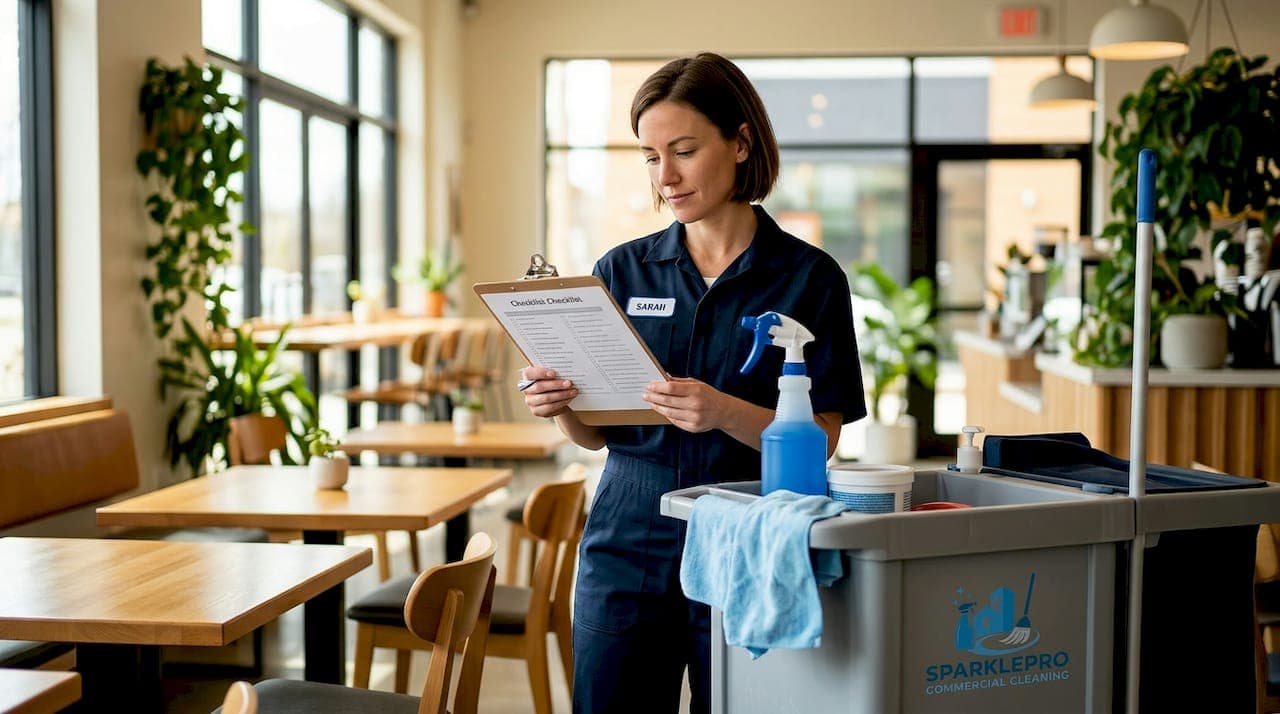
Not every cleaning company that calls itself "professional" can prove it. The professional cleaning certifications list has grown considerably over the past decade, and knowing which credentials actually matter separates credible operations from those just using the word. Whether you manage a commercial facility, run a cleaning company, or work as an independent technician, the right certifications signal competence, safety compliance, and operational consistency to clients who have every reason to be skeptical. This guide breaks down the most recognized cleaning industry credentials available today, how they compare, and which ones fit your specific role.
Table of Contents
- Key takeaways
- Professional cleaning certifications list: what to know before you choose
- 1. Professional House Cleaning (PHC) certification
- 2. IICRC House Cleaning Technician (HCT) certification
- 3. Cleaning Industry Management Standard (CIMS)
- 4. GBAC STAR™ accreditation
- 5. Certified Cleaning Technician (CMI) program
- 6. Green Seal certification
- 7. Bloodborne Pathogens certification
- 8. Carpet Cleaning Technician (CCT) certification
- Comparing the top cleaning certification programs
- Choosing the right certifications for your role
- My take on certifications and what actually moves the needle
- Work with a team that takes certifications seriously
- FAQ
Key takeaways
| Point | Details |
|---|---|
| Certifications signal real credibility | Recognized credentials from ISSA, IICRC, and GBAC distinguish professional operations from unverified ones. |
| Individual vs. organizational credentials | Technician certifications like HCT and CMI serve individuals; CIMS and GBAC STAR™ validate entire organizations. |
| Recertification is a lifecycle commitment | Credentials like IICRC HCT require ongoing education, not just a one-time exam. |
| Match credentials to your role | Property managers benefit from CIMS and GBAC STAR™; frontline cleaners gain most from CMI and PHC. |
| Green certifications are growing in demand | Green Seal and CIMS Green Building credentials are increasingly requested by sustainability-focused clients. |
Professional cleaning certifications list: what to know before you choose
Before you invest time and money into any certification program, you need a framework for evaluating what you are actually getting. Not all cleaning certifications carry equal weight, and some are more relevant to specific sectors than others.
Here are the key factors worth examining:
- Certification type. There is a meaningful difference between individual training credentials and organizational accreditation. A technician certificate proves a person's skills. An organizational standard like CIMS or GBAC STAR™ certifies that an entire company or facility meets defined operational benchmarks. Understanding this distinction between credential types helps you invest in the right category.
- Residential vs. commercial relevance. Some certifications, like the PHC and HCT, are designed for residential cleaning professionals. Others, like CIMS and GBAC STAR™, apply directly to commercial operations. Knowing your cleaning environment type narrows the field quickly.
- Industry recognition. Certifications backed by ISSA (the worldwide cleaning industry association), IICRC, or GBAC carry broad market recognition. Credentials from lesser-known bodies may not hold the same weight with clients or regulators.
- Scope of coverage. Look at what the certification actually teaches: technical cleaning skills, chemical safety, infection control, sustainability practices, or operational management. The best programs cover more than one area.
- Recertification requirements. A credential that expires without continuing education is a one-time cost. A credential that requires ongoing learning is a lifecycle investment. Both have value, but you need to plan for the difference.
- Cost and format. Programs range from free online modules to multi-day in-person courses costing several hundred dollars. Virtual options have expanded access significantly.
Pro Tip: Before enrolling in any certification program, ask vendors whether their credential is recognized by ISSA, IICRC, or another major industry body. Recognition by a known trade organization is the fastest proxy for real-world credibility.
1. Professional House Cleaning (PHC) certification
The PHC certification from ISSA is the starting point for residential cleaning professionals. It covers cleaning chemistry, safety, and workflow in a structured format designed for those new to the field or looking to formalize existing skills.
The PHC is general in scope, making it accessible for solo operators and small cleaning businesses. It does not require an exam at the same level as the HCT, which makes it a lower barrier entry point. For property managers evaluating residential cleaning vendors, seeing a PHC credential is a reasonable baseline indicator of foundational training.
2. IICRC House Cleaning Technician (HCT) certification
The HCT sits one level above the PHC on what ISSA describes as a residential cleaning credential ladder. It is a two-day virtual class followed by a formal exam. Passing requires demonstrated knowledge, not just attendance.
The October 2026 HCT class is priced at $399 for ISSA members and $649 for non-members, with a $149 manual included in the curriculum. Recertification requires continuing education credits, making this a credential that demands ongoing commitment. For cleaning professionals who want to stand out in a competitive residential market, the HCT is one of the most credible individual credentials available.
3. Cleaning Industry Management Standard (CIMS)
CIMS is not a technician credential. It is an operational excellence benchmark for cleaning organizations, covering quality systems, human resources, health and safety, environmental stewardship, and customer service. Think of it as an ISO-style management standard built specifically for the cleaning industry.

CIMS also includes a Green Building and Sustainability tier for organizations that want to demonstrate environmental responsibility. For commercial cleaning companies bidding on contracts with large property managers or government facilities, CIMS certification is a significant differentiator. It tells clients that your operation runs on documented processes, not individual judgment calls.
4. GBAC STAR™ accreditation
GBAC STAR™ is the most rigorous facility-level accreditation in the cleaning industry for infectious disease prevention. It verifies that a facility meets 20 core elements for biorisk preparedness, covering outbreak prevention, response, and recovery protocols.
This accreditation became particularly relevant after 2020, when clients in healthcare, hospitality, and event management began demanding verifiable infection control standards. GBAC STAR™ is not a training certificate for individual cleaners. It accredits the facility itself, meaning the cleaning protocols, products, and procedures in place meet a defined scientific standard. Property managers overseeing healthcare facilities or high-traffic public spaces should treat GBAC STAR™ as a non-negotiable requirement for any cleaning vendor they hire.
5. Certified Cleaning Technician (CMI) program
The CMI Certified Cleaning Technician program from ISSA offers three tiered levels: Basic, Advanced, and Expert. Each level builds on the previous one, covering daily cleaning tasks, advanced techniques, and disinfection protocols respectively.
Basic and Advanced levels require an 80% passing score on their exams. The Expert level requires 20 hours of classroom instruction in addition to testing. This tiered structure makes the CMI program particularly well-suited for managing large cleaning teams. You can certify entry-level staff at the Basic level and track their progression toward Advanced and Expert credentials over time. For facility managers overseeing in-house custodial teams, the CMI program functions as a scalable training and competence validation system.
Pro Tip: Build the CMI certification levels into your onboarding and promotion structure. Tying pay increases or role advancement to certification milestones creates a tangible incentive for frontline staff to complete their training.
6. Green Seal certification
Green Seal certification focuses on sustainable cleaning products and practices. It is not a personnel credential. Instead, it certifies that cleaning products or service programs meet defined environmental standards covering ingredient safety, packaging, and performance.
For commercial cleaning companies serving clients with sustainability mandates, such as LEED-certified buildings or corporate campuses with environmental commitments, Green Seal certification on your product line or service program is a concrete proof point. Pairing Green Seal with CIMS Green Building creates a strong sustainability story for client proposals.
7. Bloodborne Pathogens certification
This certification is often overlooked in professional cleaning certifications lists, but it is one of the most practically important for any cleaner working in healthcare, schools, gyms, or any facility where exposure to blood or bodily fluids is possible.
OSHA mandates bloodborne pathogen training for workers with occupational exposure risk, and while OSHA does not issue a formal cleaning service certification, training programs aligned with OSHA standards carry real compliance weight. Any cleaning company operating in regulated environments should have documented bloodborne pathogen training for all relevant staff.
8. Carpet Cleaning Technician (CCT) certification
The IICRC Carpet Cleaning Technician certification is a specialized credential for cleaners working in environments with significant carpet maintenance needs, including offices, hotels, and retail spaces. It covers fiber identification, soil types, cleaning methods, and equipment operation.
For commercial cleaning companies offering carpet care as part of their service menu, the CCT adds a layer of technical credibility that generic cleaning credentials do not provide. Clients managing large carpeted office spaces or hospitality properties will notice the difference between a team with CCT training and one without it.
Comparing the top cleaning certification programs
| Certification | Type | Best for | Recertification | Approximate cost |
|---|---|---|---|---|
| PHC | Individual | Residential cleaners | No formal requirement | Low |
| IICRC HCT | Individual | Residential professionals | Yes, continuing education | $399 to $649 |
| CIMS | Organizational | Cleaning companies | Periodic review | Moderate to high |
| GBAC STAR™ | Facility accreditation | Healthcare, events, commercial | Annual renewal | Moderate to high |
| CMI Certified Cleaning Technician | Individual (tiered) | Custodial teams | Yes, per level | Moderate |
| Green Seal | Product or program | Sustainability-focused companies | Periodic | Varies |
| CCT | Individual | Carpet care specialists | Yes | Moderate |
A few things stand out when you look at this side by side. Individual credentials like HCT and CMI are built for people. Organizational standards like CIMS and GBAC STAR™ are built for operations. The most credible cleaning companies pursue both: certified staff working within certified systems.
Choosing the right certifications for your role
The right certifications depend on what you are trying to accomplish. Here is a practical breakdown:
- Cleaning professionals building their career: Start with PHC for foundational knowledge, then progress to HCT for a tested, recognized credential. Add CMI Basic and Advanced as you move into more complex environments.
- Property managers evaluating vendors: Prioritize vendors holding CIMS certification for operational consistency and GBAC STAR™ for facilities with infection control requirements. These commercial cleaning standards are the most meaningful signals of a serious operation.
- Commercial cleaning companies: Pursue CIMS for your organization, ensure all staff complete CMI training at appropriate levels, and add GBAC STAR™ if you serve healthcare or high-risk environments.
- Contractors in specialized environments: Bloodborne Pathogens training and CCT are worth adding for any team working in regulated or specialty spaces. For post-construction work specifically, review the post-construction cleaning process to understand what technical knowledge matters most.
- Sustainability-focused operations: Green Seal and CIMS Green Building together create a credible environmental story for clients with green building requirements.
Pro Tip: Budget for recertification from day one. Treating certifications as a one-time expense leads to lapsed credentials. Build continuing education costs into your annual training budget so credentials stay current.
My take on certifications and what actually moves the needle
I have seen cleaning companies win major facility contracts based almost entirely on their CIMS and GBAC STAR™ credentials. I have also seen highly certified individuals work for companies with no operational standards, and the result is inconsistent service that frustrates clients regardless of the technician's personal training record.
Here is what I have learned: individual certifications matter most for frontline credibility and technical skill. Organizational certifications matter most for winning and retaining commercial contracts. The companies that invest in both are the ones that grow.
The misconception I hear most often is that certifications are just marketing. They are not. CIMS is an operational management system that forces you to document your processes, train consistently, and measure outcomes. That discipline shows up in service quality whether or not the client ever asks to see the certificate.
What I have found is that continuing education requirements are actually a feature, not a burden. The lifecycle commitment of maintaining credentials keeps your team current on new cleaning science, updated safety protocols, and emerging standards. The cleaning industry evolves. A certification that expires and gets renewed forces you to keep up with it.
— Sales
Work with a team that takes certifications seriously
If you are a property manager or facility director searching for a cleaning partner that backs its work with trained, credentialed staff, Sparkleprocommercialcleaning is built for exactly that.
Sparkleprocommercialcleaning operates nationwide with teams trained to recognized industry standards, covering everything from routine janitorial services to post-construction cleanouts and specialized disinfecting. Whether you need certified cleaning services in Delaware, professional cleaning in Massachusetts, or commercial cleaning in Washington, Sparkleprocommercialcleaning brings the operational rigor that certified cleaning looks like in practice. Request a quote and see the difference that documented training standards make.
FAQ
What is the most recognized cleaning certification?
CIMS (Cleaning Industry Management Standard) and GBAC STAR™ are the most widely recognized organizational credentials in commercial cleaning. For individual technicians, the IICRC HCT is among the most credible tested credentials available.
How do I get certified as a cleaning professional?
Start with ISSA-backed programs like the PHC or IICRC HCT for individual credentials. Both require coursework and, in the case of HCT, a formal exam. Registration is available through ISSA's events and education portal.
Does OSHA offer a cleaning service certification?
No. OSHA does not issue a formal certification for cleaning services, though OSHA-aligned training programs cover safety compliance requirements that cleaning professionals working in regulated environments must meet.
How long does it take to get a cleaning certification?
It depends on the credential. The IICRC HCT is a two-day virtual course followed by an exam. CMI certifications vary by level, with the Expert level requiring 20 hours of classroom time. PHC can be completed in a shorter self-paced format.
Are cleaning certifications worth the cost for small businesses?
Yes, particularly CIMS and CMI-level credentials. They improve operational consistency, reduce liability exposure, and make your company more competitive when bidding on commercial contracts where clients require proof of professional standards.