
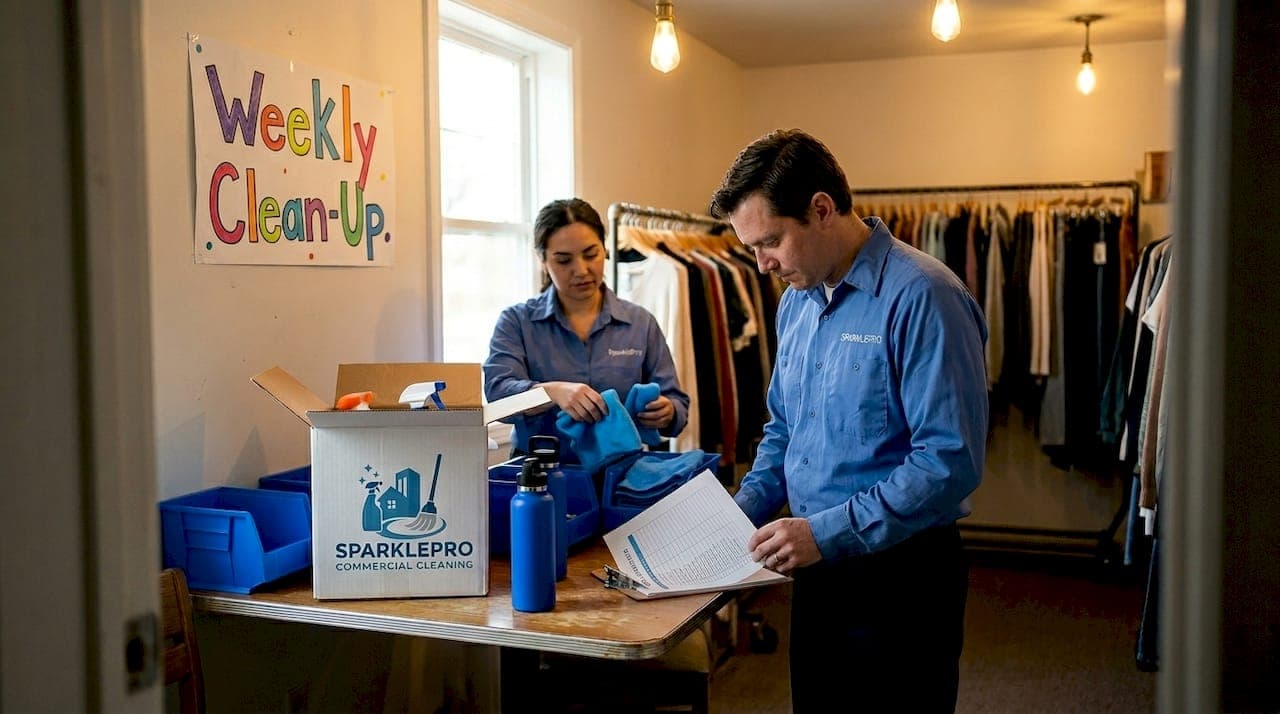
A poorly maintained retail space costs you customers before a single word is spoken. Studies show shoppers form impressions within seconds of entering a store, and visible dirt, odors, or sticky surfaces send them straight to a competitor. A solid retail cleaning procedure does more than satisfy health codes. It protects your brand, reduces liability, and keeps your staff working in a safe environment. This guide covers everything from tools and scheduling to step-by-step execution and audit methods, so you can build a cleaning program that actually holds up under daily retail conditions.
Table of Contents
- Key takeaways
- What a retail cleaning procedure actually requires
- Step-by-step retail cleaning procedure for all key areas
- Common mistakes that undermine retail cleaning
- Verifying and maintaining cleaning standards
- My honest take on retail cleaning management
- How Sparkleprocommercialcleaning supports retail businesses
- FAQ
Key takeaways
| Point | Details |
|---|---|
| Preparation drives results | Assign roles, stock the right supplies, and train staff before cleaning begins to avoid gaps. |
| Sequence tasks deliberately | Clean top to bottom, apply disinfectants before moving on, and return to wipe after contact time. |
| Contact time is non-negotiable | Disinfectants must stay wet on surfaces for the required dwell time or they simply do not work. |
| Checklists beat memory | Structured cleaning checklists prevent missed zones and create accountability across shifts. |
| Audits keep standards from slipping | Regular scored reviews catch declining hygiene before customers do. |
What a retail cleaning procedure actually requires
Before anyone picks up a mop, you need the right materials, the right people, and a clear plan. Skipping this step is why so many retail spaces look clean during opening week and deteriorate within a month.
Tools and supplies to stock
Your cleaning supply inventory should cover four categories: surface cleaning, floor care, disinfection, and personal protective equipment (PPE). Here is a practical starting list:
- Microfiber cloths (color-coded by zone to prevent cross-contamination)
- Mops and buckets with wringer systems for hard floors
- Vacuum cleaners with HEPA filters for carpeted areas
- EPA-registered disinfectants appropriate for retail surfaces
- Glass cleaner for display cases and entry doors
- Trash liners in multiple sizes
- PPE: gloves, eye protection, and disposable aprons for spill response
| Supply | Purpose |
|---|---|
| Microfiber cloths (color-coded) | Surface wiping without cross-contaminating zones |
| EPA-registered disinfectant | Killing pathogens on high-touch surfaces |
| HEPA vacuum | Removing allergens from carpet and upholstery |
| Mop and wringer bucket | Wet mopping hard floors without spreading dirty water |
| PPE kit | Protecting staff during spill response and chemical use |
Scheduling and staff roles
Structured daily schedules that assign specific staff members to specific zones with defined times are far more effective than general "clean as needed" instructions. Assign a lead cleaner per shift who signs off on completed tasks. Post the schedule visibly in the break room and require staff to initial each completed task on a physical or digital checklist.
Pro Tip: Color-code your zone assignments on a store map so every staff member can see their area at a glance. Visual clarity removes the "I thought someone else was doing that" excuse.
Training matters as much as supplies. Staff need to know which chemicals cannot be mixed, how to read a disinfectant label, and what to do when a spill involves bodily fluids. A 30-minute onboarding session covering safety data sheets (SDS) and spill protocols is not optional. It is the baseline.


Step-by-step retail cleaning procedure for all key areas
This is the core of any retail space cleaning guide. Follow this sequence every day, and adapt timing to your store's traffic patterns. High-traffic stores may need mid-day cleaning passes in addition to opening and closing routines.
-
Remove trash first. Empty all trash receptacles throughout the store, including fitting rooms and restrooms. Replace liners and take bags to the designated waste area. Proper waste management includes segregating recyclables and disposing of hazardous materials correctly to prevent odors and pest attraction.
-
Dust and wipe from top to bottom. Start with shelving units, display fixtures, and signage. Work downward so debris falls to the floor rather than landing on already-cleaned surfaces. Use dry microfiber cloths before applying any liquid cleaner.
-
Apply disinfectant to high-touch surfaces. Checkout counters, door handles, card readers, fitting room hooks, and light switches all need disinfectant applied and left to dwell. This is the step most retail teams rush. Disinfectant contact time is the most critical variable in effective disinfection. Surfaces must stay visibly wet for the required period, which ranges from one to several minutes depending on the product.
-
Clean glass and mirrors. Entry doors, display cases, and fitting room mirrors should be sprayed and wiped using a lint-free cloth or squeegee. Work in one direction to avoid streaking.
-
Return to wipe disinfected surfaces. After the dwell time has passed, return to the surfaces you treated in step 3 and wipe them down. Using timers or sequencing other tasks between application and wiping is the most reliable way to meet contact time requirements without slowing down operations.
-
Clean restrooms thoroughly. Restrooms require their own dedicated supplies that never cross over to the sales floor. Scrub toilets, sinks, and floors. Restock soap, paper towels, and toilet paper. Inspect for any maintenance issues such as dripping faucets or broken dispensers.
-
Mop or vacuum floors. For hard floors, sweep or dry mop first to collect loose debris, then wet mop using the appropriate cleaner for your floor type. For carpeted areas, vacuum in overlapping passes. Review the commercial floor cleaning process for surface-specific techniques that protect floor finishes over time.
-
Handle spills immediately and safely. Any spill response must isolate the area first. For biohazardous spills, PPE is required per OSHA, and staff must absorb bulk material before applying any disinfectant. Wiping a biohazardous spill without absorbing first spreads contamination rather than containing it.
-
Inspect fitting rooms. Check for left merchandise, debris on floors, and smudges on mirrors. Wipe down seating, hooks, and door handles. Fitting rooms are frequently overlooked during busy shifts and become a hygiene liability quickly.
-
Final walkthrough and sign-off. The shift lead walks the entire floor before opening or closing, checking for missed areas and signing the cleaning log. This step creates accountability and catches problems before customers do.
Pro Tip: Apply disinfectant to checkout counters and card readers at the start of your cleaning sequence, then complete other tasks while the product dwells. You will meet contact time requirements without adding any extra time to your routine.
Common mistakes that undermine retail cleaning
Even well-intentioned cleaning programs fail when certain habits go uncorrected. Here are the most damaging mistakes retail managers see in practice:
- Wiping disinfectant too soon. This is the single most common failure in retail facility cleaning steps. Skipping or shortening contact times means the product never reaches its labeled kill rate, regardless of brand or cost.
- Cleaning without a checklist. Ad-hoc cleaning produces inconsistent results. Zone-based routines with checklists consistently outperform unstructured approaches, especially in multi-shift environments.
- Cross-contaminating zones. Using the same cloth or mop in the restroom and on the sales floor is a hygiene failure that color-coding prevents entirely.
- Neglecting waste management timing. Trash left too long attracts pests and creates odors that customers notice immediately. Build trash removal into the opening, midday, and closing routines.
- No accountability structure. Without sign-off logs or photo documentation, there is no way to know whether cleaning was completed correctly or at all.
"The difference between a clean store and a consistently clean store is not the products you use. It is the system you build around using them."
Reinforce accountability through weekly spot audits rather than waiting for a customer complaint or health inspection to reveal gaps. A structured office cleaning checklist adapted for retail use gives you a ready-made framework for these reviews.
Verifying and maintaining cleaning standards
Executing a cleaning procedure is only half the work. Verifying that it is being done correctly, consistently, is what separates stores that maintain standards from stores that gradually let them slide.
Retail cleanliness audits run on daily to quarterly cycles with scored reviews, making it easy to identify which areas or shifts are underperforming. Here is how to build a practical verification system:
- Daily spot checks: A manager walks five to ten high-traffic areas and scores them on a simple 1 to 3 scale. Takes under ten minutes.
- Weekly full audits: Every zone is inspected against the cleaning checklist. Missed items are documented and addressed in the next shift briefing.
- Photo documentation: Staff photograph completed areas before opening. Photo evidence and digital tools create a timestamped record that supports both accountability and compliance.
- Quarterly deep clean reviews: Assess areas that daily routines do not cover, such as behind fixtures, inside display cases, and ceiling vents.
| Audit type | Frequency | Purpose |
|---|---|---|
| Spot check | Daily | Catch immediate hygiene failures fast |
| Full zone audit | Weekly | Verify checklist compliance across all areas |
| Photo documentation | Per shift | Create accountability records |
| Deep clean review | Quarterly | Address areas missed by daily routines |
Digital inspection apps let you generate reports automatically and flag recurring problem areas. This data is especially useful if you manage multiple locations, because it shows you which stores need additional training or staffing support before standards become a customer-facing problem.
My honest take on retail cleaning management
I have seen retail managers invest in premium disinfectants, expensive equipment, and elaborate cleaning schedules, only to find their stores still failing basic hygiene audits three months later. The products are rarely the problem. The system is.
What actually works is boring and simple: assign specific people to specific zones, give them a checklist they cannot skip, and have a manager verify the work. That is it. Every store I have seen maintain genuinely consistent cleanliness does these three things without exception. The ones that struggle are usually relying on verbal reminders and good intentions.
The other thing I would push back on is the idea that outsourcing cleaning is only for large retailers. Smaller stores often benefit more from professional support because they lack the staff bandwidth to do deep cleaning properly. Supplementing your in-house routine with scheduled professional visits, especially for floors, restrooms, and disinfection protocols, closes the gaps that daily routines inevitably miss.
Build the structure first. The products will do their job once the system is in place.
— Sales
How Sparkleprocommercialcleaning supports retail businesses
Maintaining a retail space to a consistent standard takes more than good intentions. Sparkleprocommercialcleaning works with retail business owners and facility managers across the country to deliver scheduled, professional cleaning that fits your operation. Whether you need recurring janitorial support or a deep clean after a high-traffic season, the team brings fully licensed, insured service with documented quality checks built in. Sparkleprocommercialcleaning serves retail locations in Delaware, Massachusetts, Washington, and New Jersey. Get a quote and see what a professional cleaning program looks like for your space.
FAQ
What is a retail cleaning procedure?
A retail cleaning procedure is a structured, step-by-step system for cleaning and disinfecting all areas of a retail space, including floors, fixtures, restrooms, and high-touch surfaces, on a scheduled basis to maintain hygiene and presentation standards.
How often should retail spaces be cleaned?
High-touch surfaces like checkout counters and door handles should be disinfected at least once per shift. Full floor cleaning, restroom servicing, and fixture wiping should happen daily, with deep cleaning scheduled on a weekly or quarterly basis.
Why does disinfectant contact time matter so much?
Disinfectants only work when surfaces stay visibly wet for the required dwell time. Wiping too soon means the product never reaches its labeled kill rate, making the entire disinfection step ineffective regardless of which product you use.
What is a retail cleaning service?
A retail cleaning service is a professional cleaning provider that handles scheduled or one-time cleaning of retail spaces, typically covering floor care, surface disinfection, restroom maintenance, and waste removal to meet commercial hygiene standards.
How do I verify my retail cleaning procedure is working?
Use a combination of daily spot checks, weekly zone audits with signed checklists, and photo documentation per shift. Scored cleanliness reviews run on regular cycles make it easy to identify which areas or shifts are consistently underperforming.