
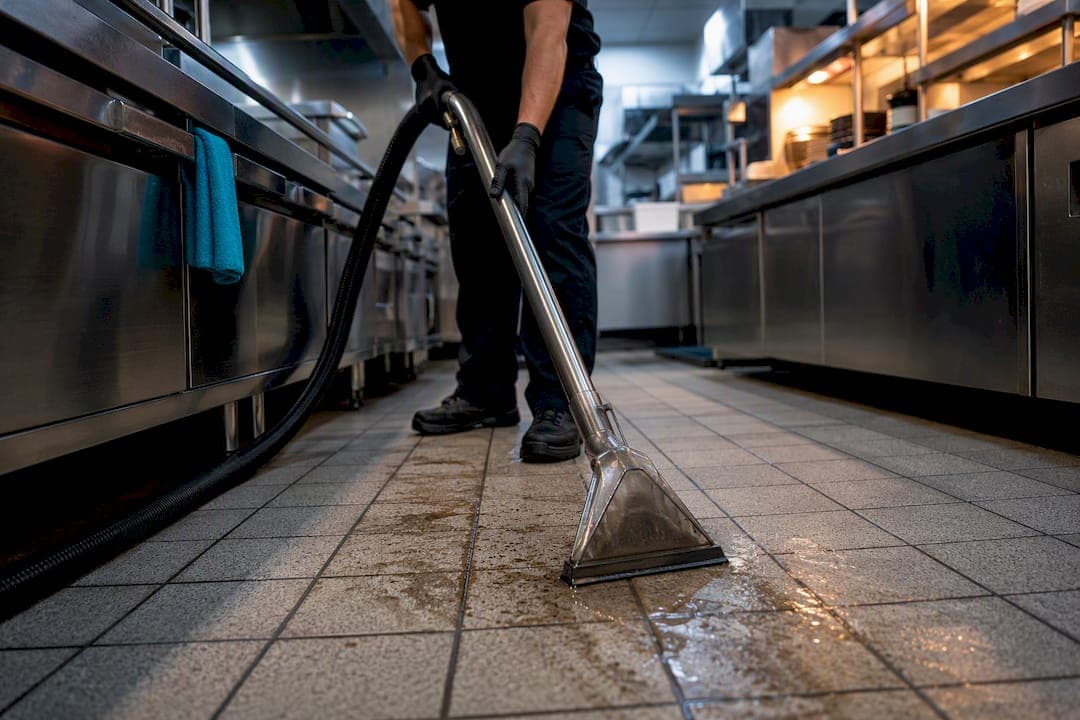
Hiring a professional for commercial tile and grout cleaning is the fastest way to restore worn floors, cut slip risk, and stretch the life of your surfaces. Deep extraction pulls contaminants out of porous grout in a way mopping never can, which lowers bacterial buildup and improves hygiene scores. Expect restored appearance, faster dry times than a mop-and-bucket job, and easier upkeep afterward. Professional commercial cleaning companies handle this work nationwide for facility teams who can't afford long floor closures.
TL;DR:
- Professional extraction methods, such as spray-and-vac systems, deliver faster drying times and more effective contaminant removal than traditional mopping.
- Heavy-duty tools like extractor wands with high PSI are essential for grease and embedded soil in commercial kitchens, requiring tailored chemistry to match soil types.
- A proper site assessment and transparent communication about equipment and chemicals are critical for selecting a contractor capable of handling specific tile and soil conditions.
- Sealing grout after cleaning enhances resistance to re-soiling and simplifies ongoing maintenance, especially in high-traffic or hygiene-sensitive environments.
- Choosing contractors that prioritize advanced equipment over cheap pricing ensures more thorough cleaning and long-term floor health.
Table of Contents
- Why Professional Tile and Grout Cleaning Matters for Commercial Spaces
- What Equipment and Methods Do Professional Cleaners Use?
- What Happens During a Commercial Tile and Grout Cleaning Service?
- How Do You Choose a Commercial Tile and Grout Cleaning Contractor?
- How Should You Prepare a Facility Before Service, and What Comes After?
- Commercial tile and grout cleaning services typically run on a four-step process built around common facility manager concerns: a quote based on actual square footage and soil conditions, a site visit to confirm scope before scheduling, cleaning performed on the client's timeline, and a final walkthrough for approval before the job closes out.
- What Do Successful Commercial Tile and Grout Projects Look Like?
- What Should Facility Managers Actually Prioritize Here?
- Get a Commercial Tile and Grout Cleaning Quote
- Sources
Why Professional Tile and Grout Cleaning Matters for Commercial Spaces
Grout is porous. That single fact explains most of the trouble facility managers deal with on tile floors. Grease, food residue, mineral deposits, and organic soil work their way into those pores, and once they're in, a mop just pushes dirty water around the surface without pulling anything out. Mopping can actually redistribute contaminants across a wider area instead of removing them, which is why a floor can look "cleaned" and still smell off by afternoon.
That matters more in some rooms than others. Commercial kitchens and restrooms carry health-code scrutiny and real slip-and-fall exposure, and grease-laden grout lines are exactly the kind of thing an inspector or an injury attorney will notice. A restaurant with grimy grout under the fryer line isn't just an aesthetics problem. It's a liability sitting on the floor.
There's a business case here too, not just a compliance one. Clean tile changes how a lobby, retail floor, or clinic waiting room reads to the people walking through it. Restored grout lines signal a well-run building the same way a fresh coat of paint does.
Professional cleaning also reduces the ongoing workload on your janitorial staff, since:
- Deep extraction removes soil that daily mopping physically can't reach.
- Restored grout resists re-soiling faster than heavily stained, porous grout.
- Sealed surfaces need less aggressive scrubbing to maintain.
- Lower ambient odor and bacterial load support health-code compliance in food service and healthcare settings.
Regular attention to floor maintenance in commercial buildings pays off in fewer emergency deep-cleans and a longer usable life for the tile itself.
What Equipment and Methods Do Professional Cleaners Use?
Commercial tile and grout cleaning comes down to three things: the right machine, the right chemistry, and the right technique for the tile in front of you. Get any one of those wrong and you either waste time or damage the surface.
Spray-and-vac (no-touch) systems. Machines built on the Kaivac UniVac/No-Touch approach apply a metered cleaning solution, agitate it mechanically to break contaminants loose from the grout pores, then vacuum the resulting slurry straight off the floor. The advantage of this design is that soil leaves the floor instead of getting smeared around it, and the surface comes out noticeably drier than after a traditional mop-and-rinse job. That matters a lot in kitchens and restrooms where you need the room back in service fast.
Extractor wands and high-pressure hot water extraction. For heavier production work, contractors reach for extractor wands like the EDIC Revolution, which runs at up to 1,500 PSI to blast grease and embedded soil out of grout lines before vacuuming it away. This is the tool of choice for heavy commercial kitchen work and large production jobs where speed and grease-cutting power matter more than a gentle touch.
Steam and rotary scrubbers. These work well on glazed ceramic and porcelain but need caution on natural stone. High heat and harsher acidic cleaners can etch or discolor marble, travertine, and limestone, so a contractor who treats every tile the same way is a red flag, not a time-saver.
Chemistry has to match the soil:
- Degreasers and spray-and-vac systems for grease and organic buildup in kitchens.
- Mild acid cleaners for mineral scale on ceramic or porcelain, but never on natural stone, which acid can permanently etch.
- pH-neutral cleaners for routine maintenance between deep cleans.
Professional extraction pressures typically vary depending on machine and job requirements, with a range that can be moderate to high pressure to effectively clean grout, with drying time driven mostly by vacuum performance and how well the room ventilates afterward. A well-run spray-and-vac job on a mid-size restroom can leave floors dry enough to walk on relatively quickly, often within a short period post-cleaning. A heavily grease-soiled kitchen floor cleaned with high-PSI extraction will take longer simply because of how much moisture goes down before it comes back up.
What Happens During a Commercial Tile and Grout Cleaning Service?
A professional job follows a fairly predictable sequence, and knowing the stages helps you plan around it instead of getting surprised mid-project.
Most reputable providers walk through these steps:
- Assessment and quote. A tech inspects tile type, grout condition, and soil load, then tests a small area to confirm the chemistry won't damage the surface. This mirrors the testing-first approach that established tile and stone cleaning services use before committing to a full-floor treatment.
- Prep. Furniture and equipment get moved or protected, and the work area gets blocked off from foot traffic.
- Cleaning. Chemical application, mechanical agitation, and extraction happen in sequence, sometimes in multiple passes for heavily soiled grout.
- Optional sealing or recoloring. Some jobs include a protective sealant or a color sealant to restore uniform grout color after staining.
- Inspection and walkthrough. The tech reviews results with you before closing out the job.
Timeline depends heavily on square footage and soil type. A small restroom bank might take an hour or two from start to finish. A large lobby or a commercial kitchen with years of grease buildup can run a full day, especially if sealing is part of the scope.
Cost varies by region and job complexity, driven mainly by square footage, soil condition, scheduling needs, and optional sealing or recoloring services. Pricing can differ widely depending on these factors. Treat any number you get from a vendor as regional and job-specific rather than a fixed rate, and always confirm what's included before comparing bids side by side.
How Do You Choose a Commercial Tile and Grout Cleaning Contractor?
The gap between a mediocre contractor and a good one usually shows up in the questions they're willing to answer before you sign anything. Ask these directly during the quote process:
- What machines and brands do you use, and how do they differ from a standard mop-and-bucket service?
- What chemicals go on our floors, and can you provide safety data sheets for them?
- What are your insurance limits, and can you provide proof before the job starts?
- Have you handled properties similar to ours, and can you share references or before-and-after photos?
- What's the expected dry time, and can you schedule around our business hours?
Red flags are usually obvious once you know to look for them. A contractor who only offers mopping and light scrubbing isn't equipped for real extraction work. Hesitation about providing insurance documents or references is a bad sign no matter how good the sales pitch sounds. So is a vague scope of work with no mention of pre- and post-service photos.
Trust signals run the opposite direction: a written method statement describing exactly what chemicals and equipment they'll use, current insurance documentation, technicians who can explain their process without hand-waving, and a portfolio of comparable jobs. A clear pre-job assessment also protects you later, since it gives you something concrete to compare against when the job wraps up.
Pro Tip: Ask every bidder for a line-item breakdown of what's included versus optional, especially sealing. A quote that bundles everything into one number makes it nearly impossible to compare apples to apples against a competitor's itemized bid.
How Should You Prepare a Facility Before Service, and What Comes After?
Getting the site ready ahead of time keeps the job on schedule and avoids surprise delays once the crew arrives.
Before the crew shows up, your team should:
- Move or relocate furniture and equipment out of the work zone.
- Block off the area with signage so foot traffic doesn't track through wet floors mid-job.
- Secure sensitive equipment, especially in kitchens or medical settings where moisture near electronics is a concern.
- Confirm water and drain access, since extraction equipment needs both.
Immediately after service, keep warning signage up until the floor is fully dry, and hold off on rolling heavy carts or equipment back into place until the crew gives you the go-ahead. If sealing was part of the job, ask for the specific cure time. Most sealants need a defined window before they're ready for heavy foot traffic.
Maintenance frequency should match how hard the space gets used. Commercial kitchens and restrooms need attention far more often than a quiet office lobby, with cleaning frequency depending on use and soil levels. Lobbies and low-traffic common areas usually hold up fine on a regular deep-clean schedule, often about once or twice per year. In between professional visits, daily janitorial staff should stick to pH-neutral cleaners and microfiber mops rather than string mops, which tend to just move dirty water across the same grout lines you paid to have cleaned. Sticking to a consistent floor cleaning routine between professional visits is what actually protects the investment.
Commercial tile and grout cleaning services typically run on a four-step process built around common facility manager concerns: a quote based on actual square footage and soil conditions, a site visit to confirm scope before scheduling, cleaning performed on the client's timeline, and a final walkthrough for approval before the job closes out.
That structure matters because tile and grout work rarely happens in isolation. Facilities need it coordinated with:
- Post-construction cleanouts, where dust and debris settle into new grout before it's ever been sealed.
- Routine janitorial contracts, so tile maintenance fits into a broader cleaning schedule instead of competing with it.
- Disinfecting services for healthcare and food-service environments where hygiene standards are non-negotiable.
- Eco-friendly cleaning approaches for LEED-focused properties that need documented low-impact methods.
This range means having one point of contact for coordinating tile and grout work into other cleaning and maintenance activities already happening at your property nationwide.
What Do Successful Commercial Tile and Grout Projects Look Like?
The pattern across successful commercial jobs is consistent: the worst-looking floors are rarely the hardest to fix, they're just the ones that got ignored the longest. A restaurant kitchen with years of grease-darkened grout lines under the cook line usually responds dramatically to a single high-PSI extraction pass, because the contamination is sitting near the surface of the porous grout rather than baked permanently into the material. The visual transformation is often the most obvious win, but the more important one is what happens to slip risk once the greasy film is actually removed instead of pushed around by a mop.
Retail and lobby projects tend to follow a different logic. The tile itself is usually in decent shape, but years of foot traffic have ground soil so deep into the grout that it reads as a permanently different color from the surrounding tile. A deep extraction pass followed by a protective sealant restores uniform color and, more importantly, makes the next few years of daily maintenance dramatically easier, since sealed grout resists re-soiling far better than bare, porous grout.
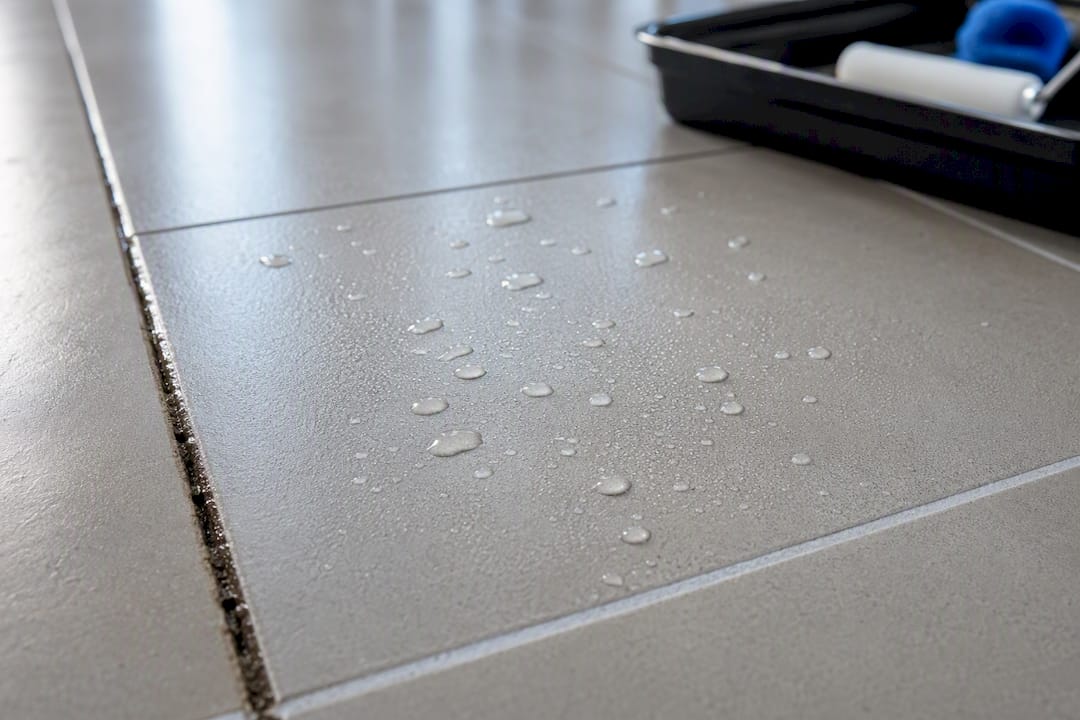
Healthcare and food-service properties add a hygiene dimension on top of appearance. Restoring tile in these settings isn't cosmetic. It's a direct response to bacterial load sitting in grout pores that daily mopping was never capable of reaching in the first place.
What Should Facility Managers Actually Prioritize Here?
Most of the advice floating around about tile and grout cleaning focuses on the wrong variable. It obsesses over chemical brands and miracle products when the real differentiator is almost always the extraction method. A no-touch spray-and-vac system paired with mediocre chemistry will consistently outperform premium chemicals applied with a mop and a prayer, because the failure point in most commercial cleaning isn't the solution. It's the fact that nothing is actually removing what the solution loosens.
The conventional advice to "just clean more often" also misses the operational reality facility managers deal with. Frequency doesn't fix a method problem. A kitchen mopped daily with the wrong tool will still have grease-packed grout in six months. The fix isn't more frequent mopping. It's the right extraction equipment on a sane schedule.
If you take one thing from this: judge a contractor by the machine they bring, not the price they quote. Ask what's doing the extraction before you ask what it costs.
— Sales
Get a Commercial Tile and Grout Cleaning Quote
Sparkleprocommercialcleaning skips the guesswork that comes with hiring a general cleaning crew for specialized floor restoration. Instead of a one-size-fits-all mop-and-bucket contract, you get a site visit that actually accounts for your tile type, soil load, and operating hours before any equipment shows up.
The process starts with a free assessment and quote, moves to scheduled cleaning around your business hours, and ends with a walkthrough you approve before the job closes. If your property is in Delaware, request a quote through the Delaware service page to get a site visit scheduled. Properties elsewhere can start the same process through Sparkleprocommercialcleaning's main site.