
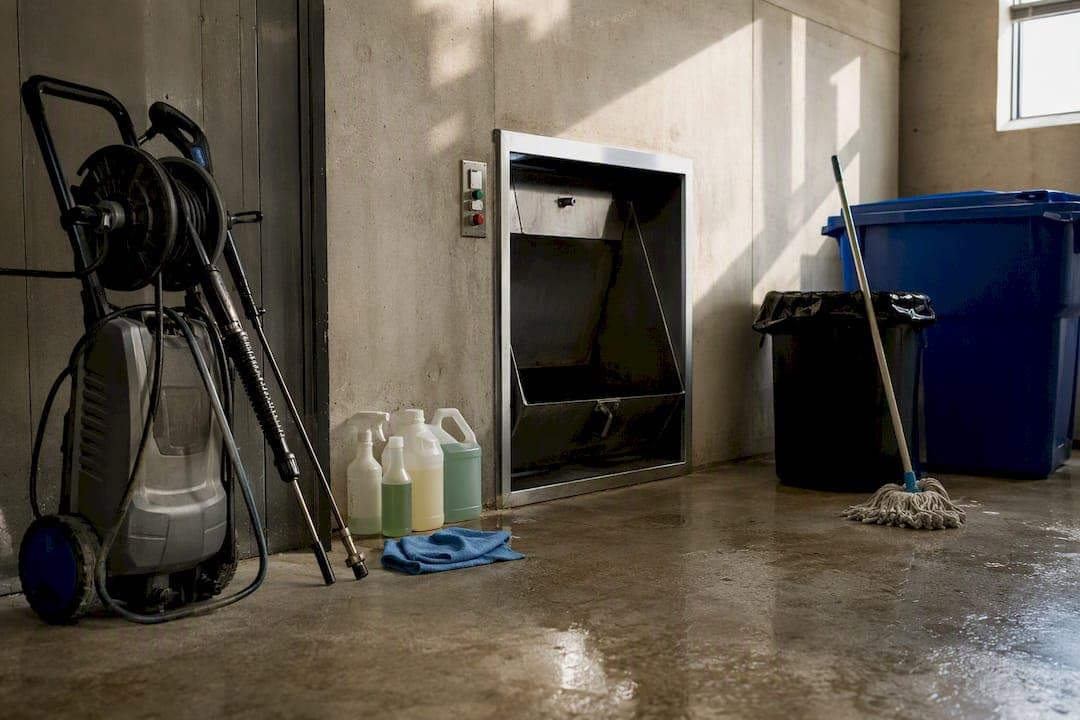
Yes, professional trash chute cleaning is necessary, and skipping it is one of the more expensive mistakes a property manager can make. It protects tenant health, cuts pest and fire risk, and keeps odor complaints off your desk.
- High-rise or multifamily buildings: quarterly to monthly
- Standard commercial properties: twice a year, per Multi-Clean's maintenance guidance
- High-traffic or food-service sites: monthly
Your next move: schedule a site visit and confirm you have working water and drainage at the chute base before a crew shows up.
TL;DR:
- Regular trash chute cleaning should be scheduled monthly or quarterly based on building type and usage, with high-traffic sites requiring monthly service.
- Proper cleaning includes comprehensive interior washing, degreasing, enzyme treatments, and odor neutralization, not just surface rinses.
- Confirm water supply, drainage, and access points before cleaning, and ensure thorough documentation with checklists and before-and-after photos.
- Certified vendors follow a detailed, multi-step process involving inspection, cleaning, enzyme application, deodorization, and post-cleaning checks.
- High-rise, healthcare, or infection-control facilities should always hire licensed specialists due to complex equipment and organic waste management needs.
Table of Contents
- What Does Professional Trash Chute Cleaning Include?
- How Often Should You Clean a Trash Chute?
- How Do Professionals Actually Clean a Trash Chute?
- What Do You Need to Prepare Before the Crew Arrives?
- What Does a Trash Chute Cleaning Contract Typically Look Like?
- What Should You Expect From a Trash Chute Vendor Like Sparkleprocommercialcleaning?
- When Should You Hire a Specialist Instead of Handling It In-House?
- Ready for a Quote on Trash Chute Cleaning?
- Key Takeaways
- Sources
What Does Professional Trash Chute Cleaning Include?
A real trash chute cleaning service isn't a quick hose-down. It covers the full interior of the chute shaft, the intake doors on every floor, the compactor, and the trash room floor and walls where debris and runoff collect.
Done right, the payoff shows up fast: odor complaints drop, pests lose their food source, and grease and biofilm that feed bacteria get scrubbed out before they turn into a bigger problem. Trash chute odor often signals something worse hiding behind the walls, from rodent activity to mold colonizing damp corners, which is why this work deserves budget priority rather than an afterthought.
Before you sign off, ask the vendor for:
- A written inspection checklist covering every access point
- Before-and-after photos of the chute, doors, and compactor
- Proof of technician training or certification
- A signed report you can file for your own records
Pro Tip: Request the inspection checklist as a template before the first cleaning, not after. That way you know exactly what "complete" looks like when the crew leaves.
How Often Should You Clean a Trash Chute?
Cadence depends on building type, tenant turnover, and local rules. Here's a starting framework:
- Monthly for high-rise residential towers, healthcare facilities, and any building running a compactor around the clock.
- Quarterly for mid-size multifamily or mixed-use properties with moderate foot traffic.
- Twice a year as the baseline most providers recommend for standard commercial buildings, based on Multi-Clean's cleaning guidance.
- Immediately, on an emergency basis, whenever you get repeated odor complaints, visible pest activity, or a jammed chute.
Some cities enforce their own sanitation rules on top of this. Chicago, for example, maintains a municipal sanitation ordinance that affects how waste systems must be maintained and documented. Check your local code, and hold onto signed cleaning checklists and dated photos. Fire marshals and building inspectors ask for this paperwork more often than most managers expect.
How Do Professionals Actually Clean a Trash Chute?
A competent crew follows a sequence, not a single spray-and-go step. Understanding that sequence helps you evaluate a vendor's proposal instead of just trusting the price on the page.
Inspection first. Technicians walk the chute floor by floor, checking doors, hinges, and the compactor for existing damage or blockages before any water touches the walls.
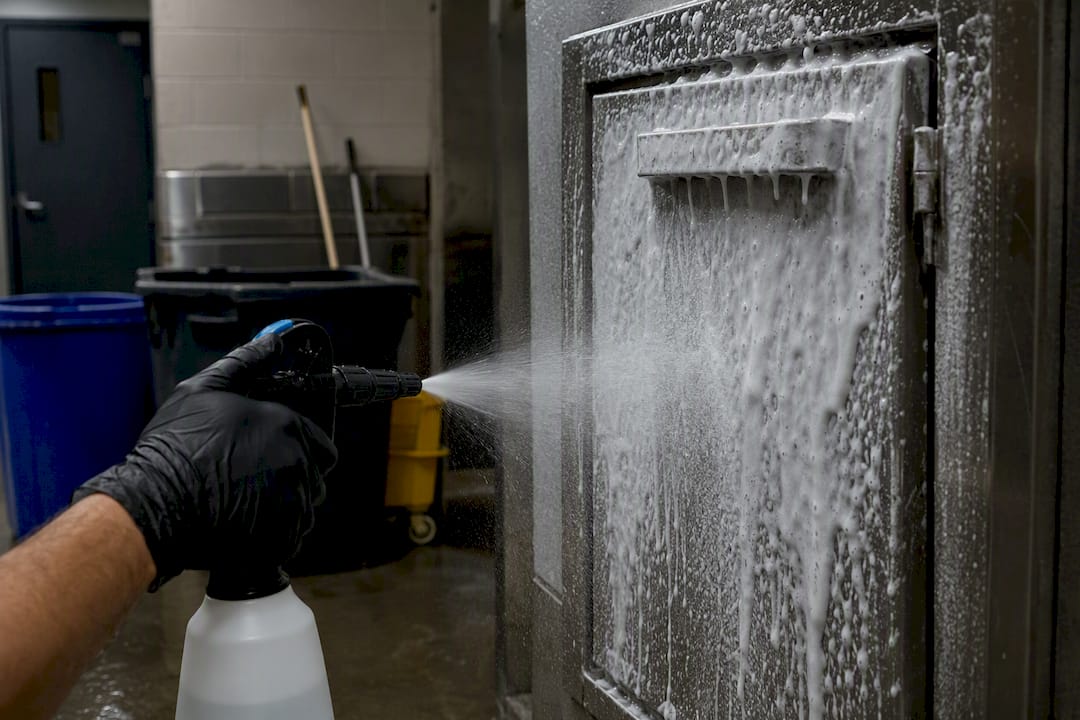
Degrease and foam. Foaming degreasers cling to vertical surfaces long enough to break down grease film that a quick rinse would miss.
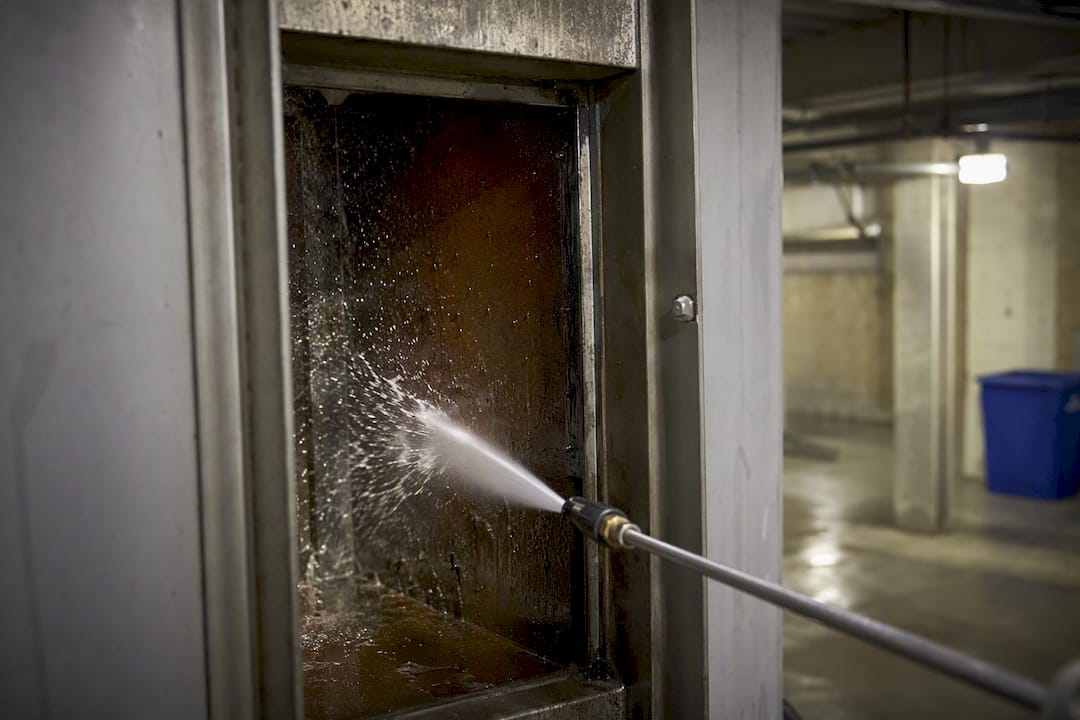
High-pressure or steam wash. This is the core scrub. Steam handles baked-on residue better in colder months; high-pressure water works for most routine cleans.
Enzyme or bacteria-based treatment. Enzyme-based products digest organic waste at the source rather than just masking the smell with fragrance, and they tend to hold odor control longer than a one-time deodorizing spray. Specialty formulas such as SHA-ZYME™ RTU are built specifically for this kind of ongoing organic breakdown, with manufacturer-specified dwell times that a good crew will actually follow rather than skip.
Deodorize and fog. A final treatment addresses odor in the air itself, not just on surfaces.
Post-inspection. The crew re-checks doors, drainage, and the compactor, then documents everything.
- Waterproof shielding goes over compactor control panels before washdown starts
- Nearby electrical circuits get disabled where the setup allows it
- Drainage capacity gets confirmed before any high-pressure water runs
Pro Tip: Ask any vendor whether they use enzyme treatments or just fragrance-based deodorizers. Fragrance covers the smell for a day. Enzymes actually break down the buildup causing it.
What Do You Need to Prepare Before the Crew Arrives?
A cleaning day can go sideways fast if the site isn't ready. Work through this list with your maintenance staff beforehand.
- Confirm active water supply and functional drainage at the chute base. Without it, high-pressure washing floods the trash room floor and damages flooring or nearby electrical panels.
- Empty the chute and post signage telling tenants to hold their trash for the day.
- Shield or disable compactor control panels and any exposed wiring near the wash zone.
- Provide keys or access codes for every floor's intake door ahead of time, not the morning of.
- Confirm the crew's lockout/tagout procedure and PPE plan for confined-space work inside the shaft.
Pro Tip: If your building has had drainage issues before, tell the vendor during the quote call, not on cleaning day. A crew that knows in advance can bring containment equipment instead of improvising.
What Does a Trash Chute Cleaning Contract Typically Look Like?
Pricing usually follows one of two shapes: per-floor rates for buildings with a lot of intake doors, or a flat rate for the whole system. Add-ons like compactor deep cleaning or standing odor-control systems usually cost extra, though many vendors bundle them into a recurring plan at a lower combined rate than booking each service separately.
Before you sign anything, your statement of work should spell out:
- Cleaning frequency and what triggers an emergency visit
- The exact inspection checklist the crew will complete and sign
- Proof of insurance and licensing
- A defined emergency response window, in hours, not "as soon as possible"
Acceptance criteria matter just as much as the scope. Don't sign off on a completed job without a post-clean checklist, dated before-and-after photos, and a written remediation timeframe if something gets missed. If a section of the chute still smells or a door doesn't latch right, you want a contractual answer for what happens next, not a shrug.
What Should You Expect From a Trash Chute Vendor Like Sparkleprocommercialcleaning?
Good vendor behavior follows a predictable pattern, and it's worth knowing what that looks like before you hire anyone. Sparkleprocommercialcleaning runs a four-step process: quote, site visit, scheduled cleaning, customer approval.
- A written quote based on your actual chute system, not a generic estimate
- A site visit to confirm water access, drainage, and compactor setup
- Licensed, insured crews trained on enzyme-based and high-pressure methods
- A signed inspection checklist and before-and-after photos you can keep on file
That paper trail is what separates a vendor you can trust with a recurring contract from one you're gambling on every visit.
When Should You Hire a Specialist Instead of Handling It In-House?
High-rise buildings, compactor-heavy systems, and infection-control settings like healthcare facilities need a specialist, full stop. The equipment protections and enzyme application know-how aren't things you want your maintenance tech improvising on a Tuesday afternoon.
Small, low-traffic properties can sometimes handle basic cleaning in-house if staff are trained and equipped with the right degreasers and PPE. But liability tips the scale for most managed properties. If a fusible link fails or a compactor floods because of a rushed DIY job, your insurance carrier will ask why you didn't use a licensed vendor. That question is a lot easier to answer when the answer is already on file.
— Sales
Ready for a Quote on Trash Chute Cleaning?
Skip the guesswork of managing chute cleaning as a one-off task tacked onto your janitorial contract. Sparkleprocommercialcleaning handles it as its own scoped service, with a site visit that confirms your water, drainage, and compactor setup before a single quote number gets written down.
You get a written statement of work with a signed inspection checklist, licensed and insured crews, and a documented timeline from quote to scheduled service, so you're not stuck chasing a vendor for paperwork after the fact. Coverage runs nationwide, with dedicated local pages for properties in Delaware, Massachusetts, and Washington. If you're weighing chute cleaning against other line items in your maintenance budget, our maintenance cleaning schedule process breaks down how to sequence recurring services without blowing your annual spend. Request a site visit today and get a written quote before your next inspection deadline.
Key Takeaways
Professional trash chute cleaning combines top-to-bottom washing, enzyme-based odor treatment, and documented inspections on a cadence matched to how heavily your building's chute gets used.
| Point | Details |
|---|---|
| Full scope matters | A real clean covers the chute shaft, floor doors, compactor, and trash room, not just a surface rinse. |
| Match cadence to use | Quarterly or monthly for high-rise and high-traffic buildings, twice a year for standard commercial properties. |
| Enzymes beat fragrance | Enzyme-based products digest organic buildup for longer-lasting odor control than masking sprays. |
| Confirm site readiness first | Active water supply and working drainage at the chute base prevent flooding during high-pressure washing. |
| Document everything | Signed inspection checklists and before-and-after photos protect you during fire marshal or insurance reviews. |
| Sparkleprocommercialcleaning's process | A quote-to-approval workflow with a site visit, signed checklist, and licensed, insured crews nationwide. |
Sources
Municipal rules vary by city, and the Chicago sanitation ordinance is a useful example of how local governments regulate waste system maintenance and recordkeeping. For method-level detail on chute maintenance and site requirements, Chutes.com's maintenance and repair guidance covers scope, equipment protection, and drainage needs in depth.
On the product side, Hillyard's guidance on restroom and drain odor control explains why enzyme treatments outperform fragrance-based deodorizers over time, and NCL's SHA-ZYME™ RTU product page shows what a manufacturer-specified enzyme application actually looks like in practice.
For scheduling this work alongside your broader janitorial plan, Sparkleprocommercialcleaning's janitorial schedule ideas for property managers and commercial building sanitation workflow guide both cover how to integrate specialized services like chute cleaning without disrupting daily operations. On the budgeting side, 360 Cleaning's guide to changing cleaning schedules offers a useful framework for deciding when it's time to adjust cadence and reallocate spend.
- Chute Maintenance, Repair and Cleaning
- A Guide to Properly Maintaining Trash Chutes: How to Keep Trash Chutes Clean
- Understanding Restroom Odors: Causes and Effective Solutions