

Janitorial schedule ideas are structured plans that assign cleaning tasks by area, frequency, and ownership to keep commercial facilities hygienic and operationally efficient. For property managers and facility directors, a poorly designed cleaning schedule means missed tasks, wasted labor hours, and hygiene gaps that tenants notice immediately. The best commercial cleaning schedules go beyond static checklists. They use task prioritization, digital tools, and traffic-based logic to match cleaning effort with actual facility demand. This article covers the most effective approaches, from foundational task structures to automation and adaptive cleaning loops.
1. What are the key components of effective janitorial schedule ideas?
Effective janitorial schedules assign ownership, frequency, and proof of completion for every task rather than relying on a static list. Top facilities treat their cleaning schedules as operating controls, not reminders. That distinction matters because it shifts accountability from assumption to documentation.
The four core components of any strong commercial cleaning schedule are:
- Task categorization by frequency: Separate tasks into daily, weekly, monthly, and seasonal buckets. Daily tasks typically include emptying trash, disinfecting restrooms, wiping high-touch surfaces, and vacuuming high-traffic floors.
- Zone-based assignment: Divide the facility into zones based on traffic volume and use type. Restrooms, lobbies, and break rooms need higher-frequency attention than storage rooms or conference rooms used once a week.
- Clear task ownership: Every task on your janitorial task list should have a named role or crew member responsible. Ambiguity creates gaps.
- Proof of completion: Digital sign-offs, timestamped photos, or QR code scans at each zone confirm work was done. This creates cross-shift visibility and protects you during audits or tenant complaints.
Pro Tip: Build your weekly cleaning checklist around your facility's actual use patterns, not a generic template. A healthcare waiting room and a law firm lobby both need daily cleaning, but the products, frequency, and documentation requirements are completely different.
A strong janitorial task list for a mid-size office building, for example, would include daily restroom disinfection, weekly floor scrubbing in common areas, monthly deep cleaning of HVAC vents, and quarterly carpet extraction. Layering these frequencies into one master schedule prevents both over-cleaning and neglect.
2. How can automation and digital tools transform janitorial scheduling?
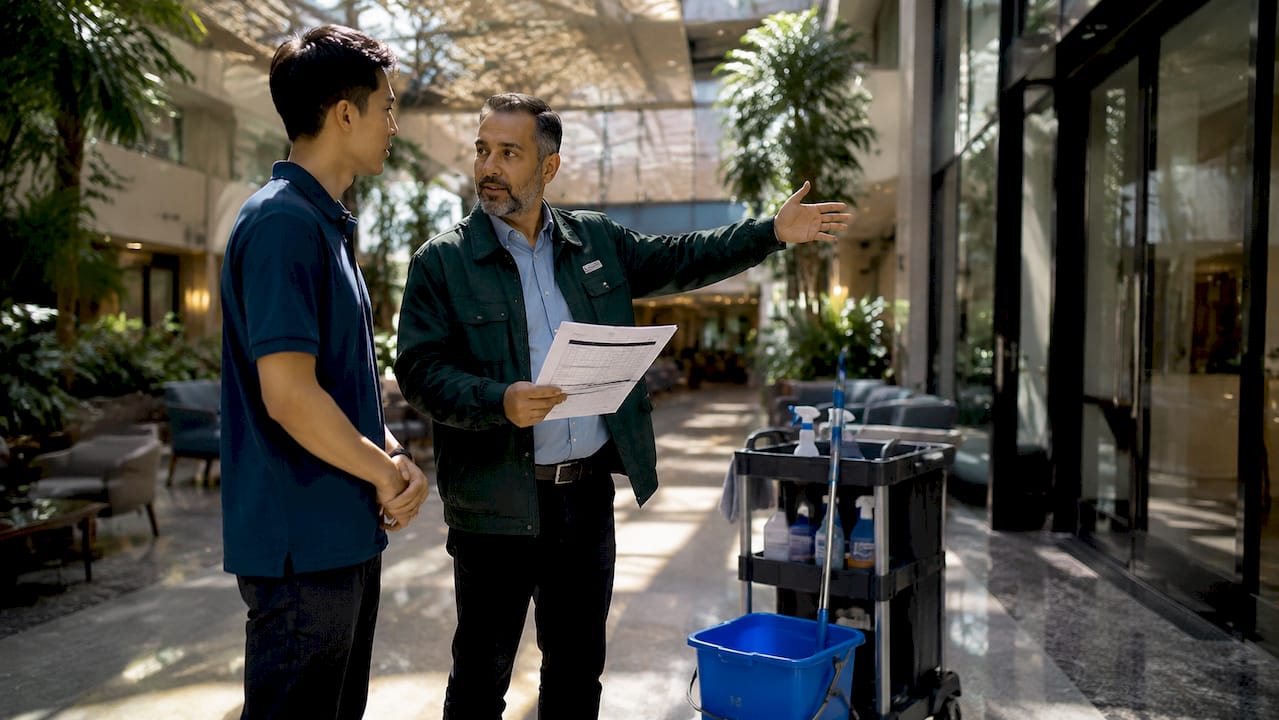
Automation is the single biggest efficiency gain available to facility managers running recurring cleaning programs. Automating recurring visit generation, invoicing, reminders, and route optimization saves 8–15 hours per week per dispatcher. For a 5-crew operation, that translates to a 20–37% reduction in manual administrative work.
The practical benefits break down into four areas:
- Recurring visit generation: Automated systems create future job entries based on frequency rules (daily, every Tuesday, first Monday of the month) without manual re-entry each cycle.
- Client reminders: Automated 24–48 hour reminders before each service reduce no-shows and last-minute cancellations, which cascade into scheduling gaps.
- Route optimization: Grouping client sites geographically and sequencing them by travel time cuts fuel costs and prevents crews from losing 30–45 minutes per day to inefficient routing.
- Digital checklists: Replacing paper logs with mobile-based checklists gives supervisors real-time visibility into task completion across all shifts and locations.
For smaller operations without enterprise software budgets, tools like Google Calendar and Google Keep provide consistent scheduling and communication at no cost. Consistency in the system matters more than the sophistication of the platform.
The best commercial cleaning scheduling ideas use centralized platforms to store client preferences, special instructions, and access requirements in one place. When that information lives in email threads or paper notes, service conflicts are inevitable.
3. What are proven scheduling ideas based on facility traffic patterns?
Static time-based schedules are the most common mistake in commercial cleaning. Cleaning a restroom every four hours regardless of how many people used it wastes labor during slow periods and creates hygiene failures during peak ones. High-traffic restrooms need dynamic cleaning loops that adjust to usage, such as 90-minute checks during peak hours and 3-hour intervals during off-peak times.
Traffic-based scheduling works by mapping your facility's actual usage patterns and building cleaning frequency around them. Here is how to apply it:
- Identify peak zones and peak hours: In an office building, lobbies and restrooms peak between 8–10 a.m. and noon–2 p.m. In retail, peak hours shift to evenings and weekends.
- Build flexible cleaning loops: Instead of fixed time slots, assign crews to loop through high-priority zones repeatedly during peak periods, then shift to lower-traffic areas during quiet hours.
- Use occupancy data: Badge access logs, foot traffic counters, or even reservation systems for conference rooms give you objective data to justify schedule changes to ownership or tenants.
- Adjust seasonally: A building with 60% summer occupancy needs a different cleaning plan than the same building at 95% capacity in the fall.
Pro Tip: Review your facility cleaning process every time a major tenant changes their hours or headcount. A single anchor tenant moving to hybrid work can cut restroom demand by 40%, freeing up labor for other priorities.
Dynamic loops also reduce unnecessary product use. Cleaning a surface that has not been touched since the last cycle wastes both time and supplies. Aligning cleaning effort with actual use is the core principle behind effective janitorial plans.
4. How to manage recurring janitorial jobs and prevent scheduling conflicts?
Recurring jobs are the backbone of any commercial cleaning schedule, and they are also the most common source of operational chaos when managed poorly. Centralizing client preferences for recurring jobs in a single system prevents conflicts and increases client retention. Fragmented communication across texts, emails, and verbal agreements creates service gaps that erode trust.
Here is a practical framework for managing recurring cleaning jobs without conflicts:
- Store all client requirements in one place. Every recurring client should have a profile that includes access codes, preferred service windows, special instructions, and contact names. This profile travels with every job entry.
- Use frequency rules, not manual date entry. Setting a job to recur every Monday and Thursday is more reliable than manually scheduling each visit. Manual entry introduces human error at every cycle.
- Build travel buffers into every route. Grouping sites within 10–15 minutes of each other and adding 15–30 minute buffers between jobs prevents domino-effect lateness. One delayed job should not derail the rest of the day.
- Send automated reminders 24–48 hours before service. This gives clients time to flag access issues or reschedule, rather than discovering a problem when the crew arrives.
- Flag conflicts before they happen. Good scheduling software surfaces double-bookings, crew availability gaps, and equipment conflicts before the day starts, not during it.
- Document every completed visit. Timestamped completion records protect you in disputes and give clients the transparency they expect from a professional operation.
For property managers overseeing multiple buildings, these steps apply at the portfolio level. A daily commercial cleaning routine that works for one building needs to be replicated with consistent documentation standards across every site you manage.
5. How often should you review and update your cleaning schedule?
Janitorial schedules should be reviewed and updated at least every six months to stay aligned with current facility operations. Building occupancy changes, tenant mix shifts, and equipment upgrades all affect what cleaning tasks are needed and how often. A schedule built for last year's occupancy is almost certainly over-servicing some areas and under-servicing others.
A biannual review should cover four things. First, compare current occupancy and usage data against the assumptions built into the existing schedule. Second, check whether any new high-touch surfaces or equipment have been added that require regular disinfection. Third, assess whether staff hours and task assignments still match the actual workload. Fourth, update documentation standards to reflect any new compliance requirements in your industry or jurisdiction.
The review process also creates a natural opportunity to identify cost savings. Labor is the largest line item in any janitorial budget. Realigning task frequency with actual need, rather than historical habit, often reveals 10–20% in recoverable labor hours without any reduction in cleanliness standards.
For office buildings, healthcare facilities, and retail centers, schedule reviews should also account for seasonal occupancy swings. A building cleanliness strategy that ignores seasonal variation will consistently underperform during peak periods.
6. What cleaning schedule tips improve staff accountability?
Staff accountability is the execution layer of any cleaning schedule. A well-designed schedule fails if the people running it have no clear way to confirm or report task completion. The most effective cleaning schedule tips for improving accountability focus on visibility, not surveillance.
Digital work-order platforms give supervisors real-time status on every task across every shift. When a crew member completes a zone, they log it in the system with a timestamp. Supervisors see the full picture without being physically present. This cross-shift visibility is especially valuable in facilities with overnight or weekend crews who operate without direct supervision.
QR codes placed at each cleaning zone are one of the most practical tools available. A crew member scans the code when they arrive and again when they finish. The system logs both timestamps automatically. This creates an auditable record that protects both the cleaning company and the property manager if a hygiene complaint arises.
Pairing digital accountability with a clear escalation path matters just as much. When a crew member identifies a maintenance issue, a supply shortage, or a safety hazard during their rounds, they need a fast way to report it. Building that reporting step into the digital checklist keeps issues from falling through the cracks between shifts.
Key takeaways
The most effective janitorial schedule ideas combine task frequency, zone-based ownership, traffic-responsive loops, and digital accountability into one integrated system.
| Point | Details |
|---|---|
| Categorize tasks by frequency | Separate daily, weekly, monthly, and seasonal tasks to prevent both neglect and over-cleaning. |
| Use traffic-based cleaning loops | Adjust cleaning frequency to actual facility usage rather than fixed time intervals. |
| Centralize recurring job data | Store all client preferences and access details in one system to prevent service conflicts. |
| Automate scheduling and reminders | Automation reduces manual dispatcher work by 20–37% for a 5-crew operation. |
| Review schedules every six months | Biannual reviews keep labor allocation aligned with current occupancy and facility changes. |
What I've learned from watching schedules succeed and fail
The most common mistake I see property managers make is treating the cleaning schedule as a one-time setup task. They build a solid plan, hand it off, and assume it runs itself. Six months later, the schedule reflects a building that no longer exists. Tenants have changed, occupancy has shifted, and the crew is still cleaning empty conference rooms at peak frequency while the new high-traffic break room gets serviced once a day.
The second mistake is confusing a checklist with a schedule. A checklist tells you what to do. A schedule tells you who does it, when, how often, and how you know it was done. Those are four different questions, and most static checklists only answer the first one.
The facilities I have seen run the cleanest operations share one habit: they treat the cleaning schedule as a living document. They review it formally twice a year, adjust it informally whenever occupancy changes, and use digital tools to maintain visibility without micromanaging staff. They also invest in effective cleaning solutions that match the specific demands of each zone rather than applying one-size-fits-all products across the building.
The cost argument for doing this well is straightforward. Labor is your biggest expense. A schedule aligned with actual facility use recovers wasted hours and redirects them where they matter. That is not a theoretical benefit. It shows up in your budget every month.
— Sales
How Sparkleprocommercialcleaning helps you build a smarter cleaning plan
Sparkleprocommercialcleaning works with property managers and facility directors across the country to design customized janitorial schedules that match the real demands of their buildings. Whether you manage a single office complex or a multi-site portfolio, the right schedule starts with a site visit and a clear understanding of your occupancy patterns, compliance requirements, and budget.
Sparkleprocommercialcleaning serves commercial properties in Delaware, Massachusetts, Washington, New Jersey, and South Carolina, with nationwide coverage for larger accounts. Contact Sparkleprocommercialcleaning today to schedule a consultation and get a cleaning plan built around your facility, not a generic template.
FAQ
What is a janitorial schedule?
A janitorial schedule is a structured plan that assigns cleaning tasks by area, frequency, and responsible party to maintain hygiene and operational standards in a commercial facility. Effective schedules include proof-of-completion mechanisms, not just task lists.
How often should commercial cleaning schedules be updated?
Commercial cleaning schedules should be reviewed and updated at least every six months to reflect changes in building occupancy, tenant mix, and equipment. Facilities that skip regular reviews typically over-service low-use areas and under-service high-traffic zones.
What tasks belong on a daily janitorial task list?
Daily janitorial tasks typically include emptying trash, disinfecting restrooms, wiping high-touch surfaces, and vacuuming high-traffic floors. These tasks address the areas with the highest hygiene risk and the most visible impact on tenant satisfaction.
How does automation improve commercial cleaning scheduling?
Automating recurring visit generation, reminders, and route optimization saves 8–15 hours per week per dispatcher and reduces manual work by 20–37% for a 5-crew operation. The biggest gains come from eliminating manual re-entry of recurring jobs and automating client reminders.
What is the difference between a static schedule and a dynamic cleaning loop?
A static schedule cleans areas at fixed intervals regardless of use. A dynamic cleaning loop adjusts frequency based on actual traffic patterns, such as 90-minute restroom checks during peak hours versus 3-hour intervals during off-peak times. Dynamic loops reduce wasted labor and improve hygiene outcomes.