
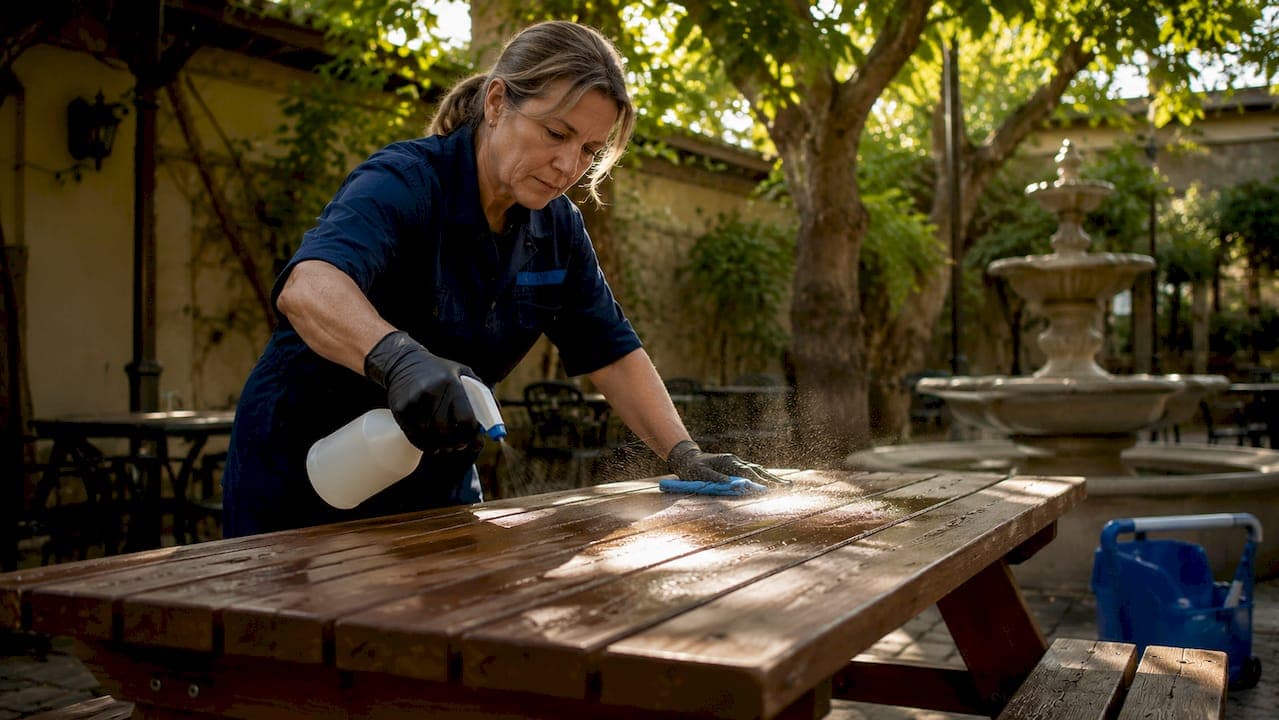
Disinfecting cleaning is the process of applying EPA-registered chemical agents to hard, non-porous surfaces to irreversibly kill bacteria, viruses, and fungi that cause illness. The EPA defines disinfecting as distinct from cleaning, which only removes visible dirt and contaminants without necessarily destroying pathogens. Sanitizing sits between the two: it reduces germs to levels considered safe, but does not eliminate them entirely. For property managers, facility directors, and business owners, understanding this difference is the foundation of any effective hygiene program. Getting it wrong means either under-protecting your space or wasting money on products used incorrectly.
What is the difference between cleaning, sanitizing, and disinfecting?
These three terms describe three different outcomes, and confusing them leads to real gaps in protection. Cleaning uses soap or detergent and water to physically remove dirt, grease, and organic matter from surfaces. It does not kill pathogens. Sanitizing reduces the number of bacteria on a surface to levels deemed safe by public health standards, and it is most commonly used on food-contact surfaces like kitchen counters and cutting boards.
Disinfecting goes further. EPA-registered disinfectants use chemical agents to irreversibly inactivate bacteria, viruses, and fungi on surfaces. The EPA regulates these products as antimicrobial pesticides, which means they must meet rigorous efficacy standards before reaching the market. That regulatory bar is what separates a true disinfectant from a general-purpose cleaner.
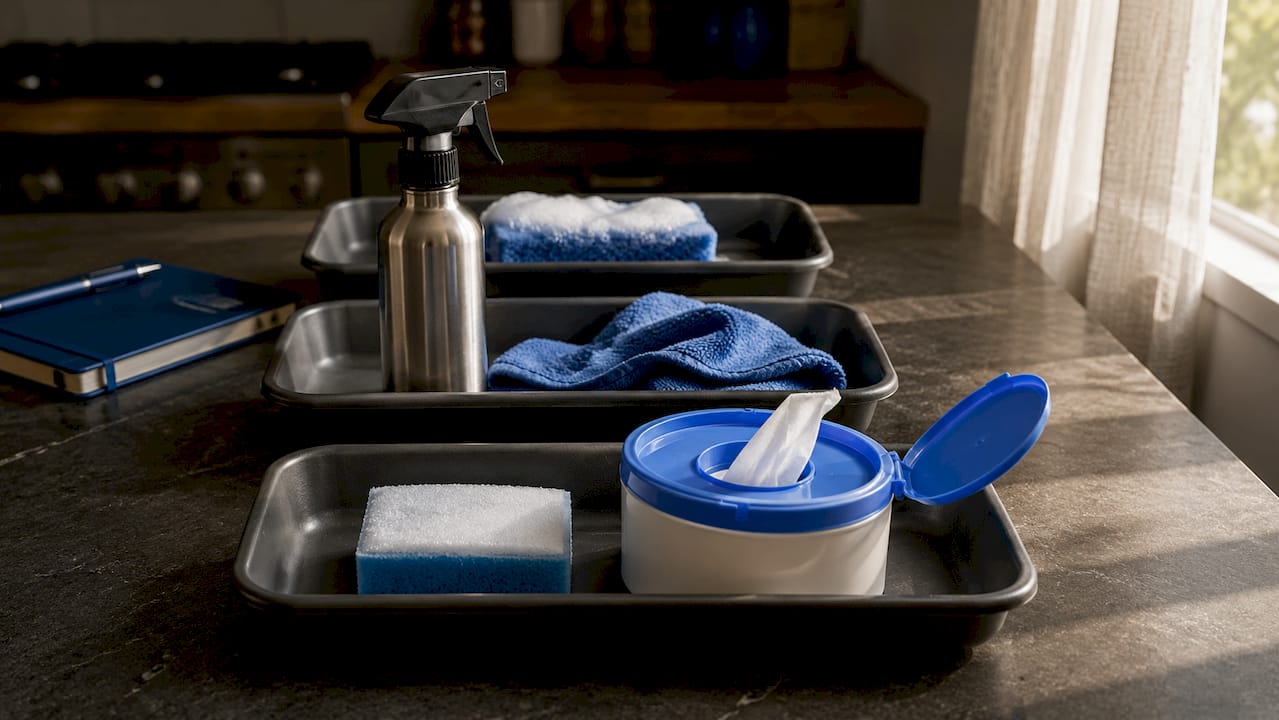
The CDC and EPA both recognize these as separate categories with separate purposes. Cleaning prepares a surface. Sanitizing reduces risk on food-contact areas. Disinfecting eliminates pathogens in higher-risk environments like healthcare facilities, commercial kitchens, and offices where illness can spread quickly.
| Process | Method | Outcome | Best used for |
|---|---|---|---|
| Cleaning | Soap, detergent, and water | Removes dirt and organic matter | Everyday maintenance |
| Sanitizing | Chemical agents at lower concentrations | Reduces bacteria to safe levels | Food-contact surfaces |
| Disinfecting | EPA-registered chemical agents | Kills nearly all bacteria, viruses, fungi | High-risk or post-illness surfaces |
One critical point: cleaning must always come before disinfecting. Dirt and grime physically shield microorganisms from disinfectants, blocking their chemical action entirely. Skipping the cleaning step is one of the most common and costly errors in any hygiene protocol.
How to properly disinfect surfaces
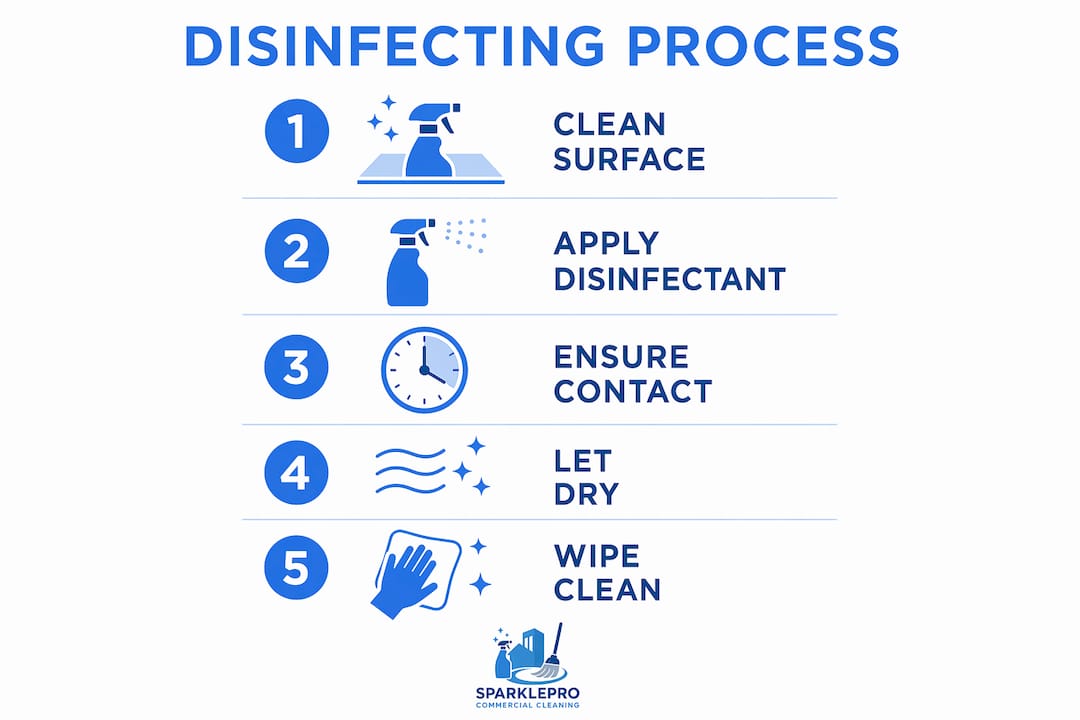
Effective disinfection follows a specific sequence. Rushing or skipping steps reduces the process to theater, not protection. Here is the correct procedure for hard, non-porous surfaces.
-
Clean the surface first. Use soap or detergent and water to remove visible dirt, grease, and organic matter. Rinse and allow the surface to dry or proceed to the next step while still damp.
-
Select the right EPA-registered disinfectant. Check the product label for its EPA registration number and the list of pathogens it is effective against. Not all disinfectants kill all germs. Common active ingredients include sodium hypochlorite (bleach), hydrogen peroxide, and quaternary ammonium compounds.
-
Follow dilution instructions exactly. Using too little active ingredient reduces efficacy. Using too much wastes product, increases chemical exposure, and can damage surfaces. The label is the legal document governing correct use.
-
Apply the disinfectant and keep the surface visibly wet. Disinfectants must remain wet on the surface for the full contact time listed on the label. Contact time can range from 1 to 10 minutes depending on the product and the target pathogen. Wiping the surface dry before that time is up cancels the disinfecting action entirely.
-
Rinse food-contact surfaces after contact time. Most disinfectants are not registered for food-contact surfaces and require rinsing to prevent chemical residue from reaching food. The label will specify this requirement.
-
Protect yourself during application. Wear gloves, and work in a well-ventilated area. Some disinfectants, particularly bleach-based products, release fumes that can irritate the respiratory system with prolonged exposure.
Pro Tip: The single most common mistake is wiping a disinfectant off too soon. Set a timer for the contact time listed on the label. If the surface dries before the timer goes off, reapply. The surface must stay wet for the full duration.
For commercial facilities managing disinfecting services at scale, contact time compliance and product selection become even more critical because the volume of surfaces and the variety of pathogens increase significantly.
When and why is disinfecting necessary?
Disinfecting every surface every day is not the goal, and public health guidance is clear on this point. The CDC states that routine cleaning with soap and water is sufficient for most homes and businesses under normal conditions. Daily disinfecting is generally unnecessary and can cause unnecessary chemical exposure and surface damage over time.
Disinfecting becomes necessary in specific, higher-risk situations. Knowing when to escalate from cleaning to disinfecting protects people without overloading surfaces or staff with chemicals.
Disinfect when:
- Someone is sick or has recently been ill in the space. Focus on surfaces the sick person touched.
- There has been a confirmed or suspected outbreak of a contagious illness in the facility.
- High-touch surfaces such as doorknobs, light switches, elevator buttons, shared phones, and keyboards have not been disinfected recently in a high-traffic environment.
- Healthcare, childcare, or food service settings are involved, where vulnerable populations are present or cross-contamination risk is elevated.
- Post-construction or post-renovation work has been completed and the space is being prepared for occupancy. Dust and debris from construction can carry pathogens and must be addressed before staff or clients return.
- A tenant has vacated a commercial or residential space, and the property is being prepared for the next occupant.
Over-disinfecting carries real risks. Repeated chemical exposure can degrade surface materials, irritate skin and airways, and contribute to chemical resistance in some microorganisms. Public health officials recommend targeted disinfection based on actual risk, not a blanket daily schedule.
For property managers overseeing multiple facilities, a written cleaning and disinfecting protocol tied to specific risk triggers is the most defensible and cost-effective approach. Sparkleprocommercialcleaning works with facility managers to build exactly these kinds of tiered protocols across commercial properties nationwide.
How do you choose and use disinfecting cleaning products safely?
Product selection is where most facility managers and homeowners make avoidable mistakes. The market offers hundreds of disinfectant products, and not all of them do what their labels imply. Here is how to select and use them correctly.
Check the EPA registration number. Every legitimate disinfectant sold in the United States carries an EPA registration number on its label. Verifying EPA registration confirms which pathogens the product is effective against and which surfaces it is safe to use on. Products without this number are not legally classified as disinfectants.
Match the product to the pathogen and surface. A disinfectant effective against bacteria may not be registered to kill certain viruses. Surface compatibility also matters. Some disinfectants corrode metal, degrade rubber, or discolor fabrics. Always check the label for surface restrictions before applying.
Key safety practices for using disinfecting cleaning products:
- Store disinfectants in their original containers, away from heat and direct sunlight.
- Never mix disinfectants. Combining bleach with ammonia-based cleaners produces toxic chloramine gas.
- Use gloves and eye protection when handling concentrated formulas.
- Work in ventilated spaces, particularly with bleach or alcohol-based products.
- Keep products out of reach of children and away from food preparation areas.
- Rinse food-contact surfaces after the contact time has elapsed, as most disinfectants leave chemical residue that is unsafe for ingestion.
Common active ingredients include sodium hypochlorite (household bleach), isopropyl or ethyl alcohol at concentrations above 70%, hydrogen peroxide, and quaternary ammonium compounds. Each has different strengths, surface compatibility profiles, and contact times. Alcohol-based products evaporate quickly, which can make maintaining contact time difficult on large surfaces.
Pro Tip: Read the entire product label before first use, not just the directions. The precautionary statements section tells you exactly what the product can damage and what protective equipment you need. Most people skip this section and pay for it later.
For facilities managing biohazard cleaning or specialized environments, product selection and application protocols require an additional layer of regulatory compliance beyond standard disinfectant labels.
Key Takeaways
Effective disinfecting cleaning requires cleaning surfaces first, selecting an EPA-registered product matched to the target pathogen, and maintaining full contact time before wiping or rinsing.
| Point | Details |
|---|---|
| Clean before disinfecting | Dirt and organic matter block disinfectant action; always clean surfaces first. |
| Contact time is non-negotiable | Surfaces must stay visibly wet for the full label-specified time, up to 10 minutes. |
| EPA registration confirms efficacy | Only products with an EPA registration number are legally verified disinfectants. |
| Disinfect based on risk, not habit | CDC guidance says daily disinfecting is unnecessary; target high-risk situations instead. |
| Food-contact surfaces need rinsing | Most disinfectants require rinsing after contact time to prevent chemical ingestion. |
What I've learned from years of disinfecting commercial spaces
The gap between knowing how to disinfect and actually doing it correctly is wider than most facility managers expect. I have seen well-intentioned cleaning crews spray a surface, wipe it immediately, and move on, genuinely believing they have disinfected it. They have not. They have cleaned it, at best. The contact time requirement is the most consistently ignored step in commercial disinfection, and it is the one that matters most.
The other pattern I see constantly is product overuse. Facilities that disinfect every surface every day, regardless of risk level, are not safer. They are spending more money, exposing staff to more chemicals, and degrading their surfaces faster. The CDC's guidance on targeted disinfection is not a cost-cutting suggestion. It is the scientifically supported approach.
What actually works is a tiered protocol: routine cleaning daily, disinfection of high-touch surfaces on a defined schedule, and full disinfection triggered by specific events like illness, outbreaks, or post-construction turnover. That structure gives you real protection without the waste. It also makes compliance audits far easier because every action is tied to a documented reason.
The hardest part of this work is convincing clients that doing less, done correctly, beats doing more, done wrong. A surface disinfected with proper contact time once a week is cleaner than one sprayed and wiped daily with no dwell time at all.
— Sales
Professional disinfecting services from Sparkleprocommercialcleaning
Disinfecting a single office is manageable. Disinfecting a multi-floor commercial building, a healthcare facility, or a post-construction site to regulatory standards is a different challenge entirely.
Sparkleprocommercialcleaning provides professional disinfecting services for commercial properties across the United States, using EPA-registered products and verified contact time protocols. Every service is performed by licensed, insured teams trained in correct application procedures for a wide range of facility types, from office buildings and retail centers to industrial spaces and healthcare environments. Property managers can request a quote, schedule a site visit, and confirm service details through a straightforward four-step process. Contact Sparkleprocommercialcleaning to schedule a consultation for your facility.
FAQ
What does disinfecting mean in cleaning?
Disinfecting means applying EPA-registered chemical agents to hard, non-porous surfaces to irreversibly kill bacteria, viruses, and fungi. It goes beyond cleaning, which only removes visible dirt without destroying pathogens.
What is the difference between cleaning and disinfecting?
Cleaning physically removes dirt and organic matter using soap and water. Disinfecting uses chemical agents to kill pathogens that remain on a surface after cleaning.
How often should you disinfect surfaces?
The CDC recommends disinfecting high-touch surfaces when someone is sick, during outbreaks, or in high-risk settings. Routine cleaning with soap and water is sufficient for most everyday situations.
What is contact time and why does it matter?
Contact time is the period a disinfectant must remain visibly wet on a surface to kill the target pathogen. Wiping too soon cancels the disinfecting action entirely.
Do you need to rinse after disinfecting?
Food-contact surfaces must be rinsed after the contact time has elapsed, because most disinfectants are not registered for food contact and leave chemical residue that poses ingestion risks.