
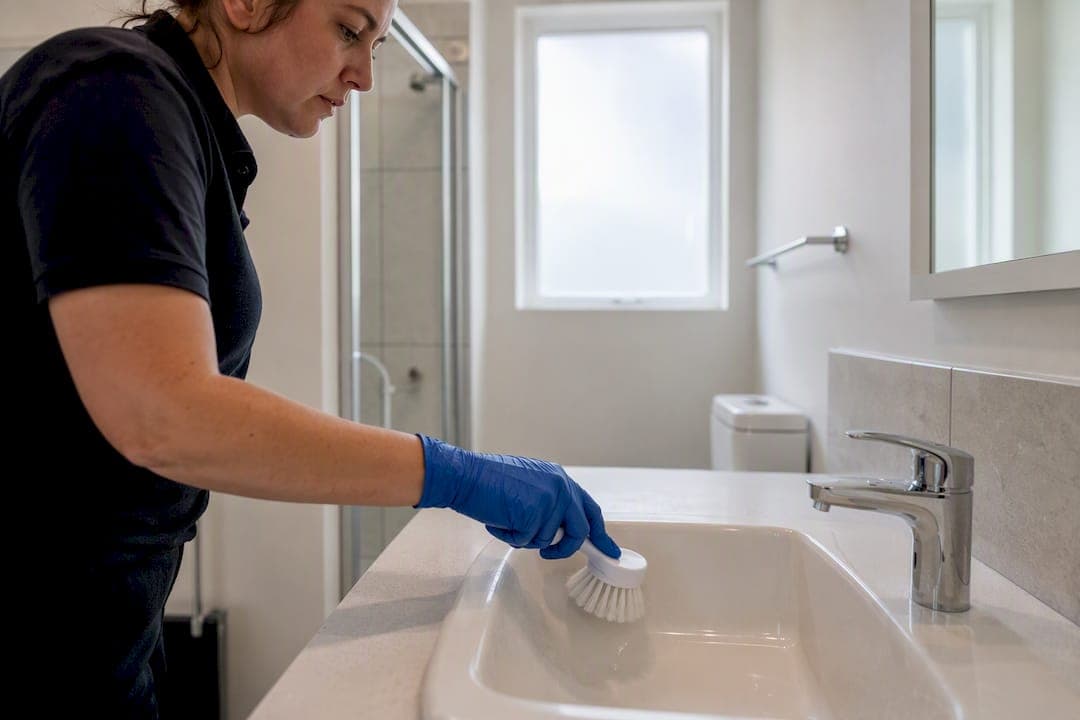
Occupancy turnover cleaning is the scheduled, complete reset of a rental unit that happens between one occupant leaving and the next one arriving. For short-term rentals, that typically means a 1 to 3 hour cleaning window costing somewhere between $150 and $300 per turn, depending on unit size and scope.
If you manage rentals, three habits separate reliable turnovers from chaotic ones:
- Document the process as a written standard operating procedure, not tribal knowledge in a cleaner's head.
- Require photo verification at final inspection before the unit gets marked guest-ready.
- Automate scheduling through your property management system so turns trigger the moment a checkout is logged.
Pro Tip: If you only fix one thing this month, fix the photo verification step. It costs nothing and it's the single fastest way to catch a missed task before a guest does.
Key Takeaways
Occupancy turnover cleaning succeeds when it's run as a documented, timed, photo-verified process rather than an ad hoc task assigned last minute.
| Point | Details |
|---|---|
| Define the scope | Turnover cleaning resets bedrooms, bathrooms, kitchen, and living areas, then restocks and stages the unit. |
| Separate service types | Run deep cleans quarterly and keep detail work off the regular turnover checklist. |
| Follow a fixed sequence | Clean bathrooms first, then kitchen, then bedrooms, then living areas, especially under time pressure. |
| Require photo proof | Document the final walkthrough with a consistent set of angles stored against the unit record. |
| Consider outsourcing at scale | Sparkleprocommercialcleaning offers a quote, site visit, and scheduled service model for managers who need reliable coverage across multiple properties. |
Table of Contents
- What Is Turnover Cleaning, Exactly?
- Turnover Cleaning vs. Deep Cleaning vs. Standard Cleaning
- Room-by-Room Turnover Checklist That Actually Works
- How Long Does a Turnover Actually Take?
- Supplies, Linens, and Laundry Logistics
- What Should You Charge for a Turnover Clean?
- Building a Quality Control Workflow That Holds Up
- Do You Need a PMS to Automate Turnovers?
- Cutting Costs While Scaling Turnover Operations
- What One Operational Change Actually Moves the Needle
- When It Makes Sense to Hand Turnovers to a Professional Team
- Frequently Asked Questions
- Sources
What Is Turnover Cleaning, Exactly?
A turnover clean covers every space a guest touches: bedrooms, bathrooms, kitchen, living areas, and the entry. It also includes trash removal, linen swaps, consumable restocking, and staging the unit to match your listing photos. This is what separates turnover cleaning from a basic tidy.
Responsibilities usually split across a few roles. The cleaner handles the physical work room by room. A linen service (in-house or contracted) manages laundering and delivery. The property manager sets par levels and standards. A maintenance technician gets looped in when something's broken, not just dirty.
- Restocking to par levels: toilet paper, coffee, dish soap, trash bags, hand soap
- Damage and left-item inspection: documented before the unit is marked ready
- Bed-making and towel staging to match listing photos
- Final walkthrough confirming nothing was missed
That restocking and inspection layer is what makes a turnover a turnover, not just a wipe-down.
Turnover Cleaning vs. Deep Cleaning vs. Standard Cleaning
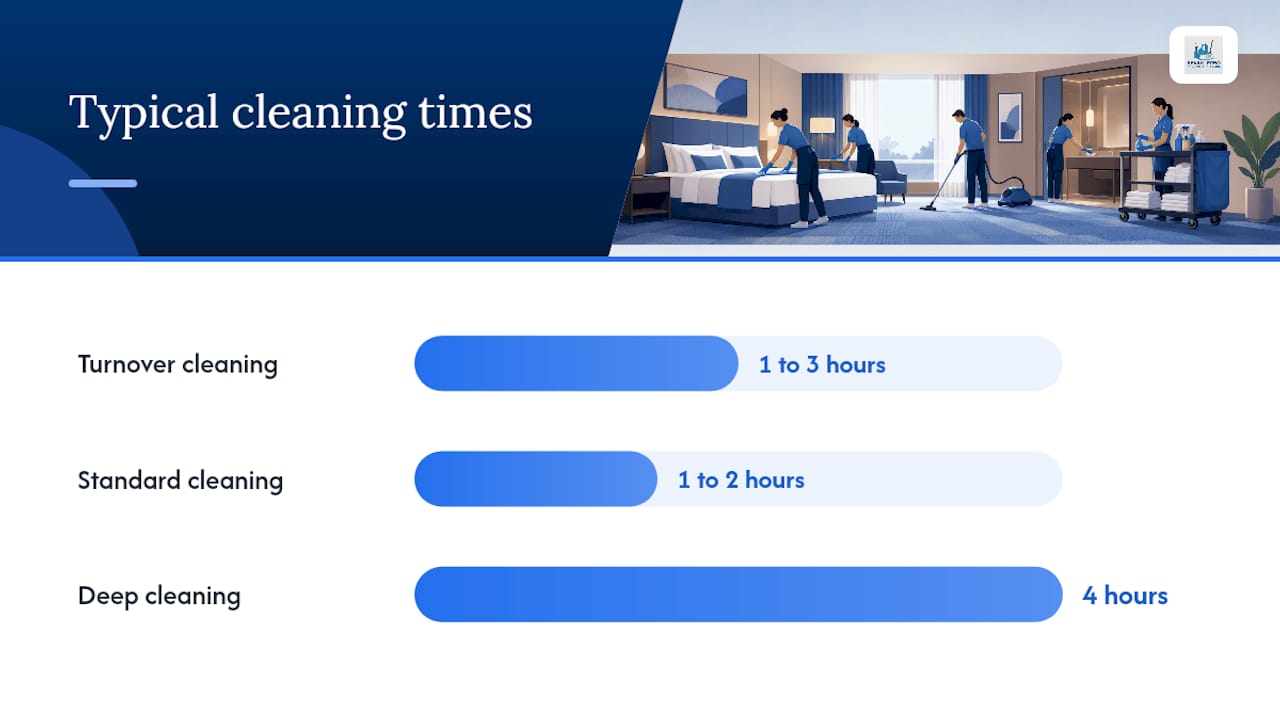
These three service types get confused constantly, and mixing them up is how turnovers start running long. A turnover happens every single guest changeover. A standard clean is what long-term tenants or owner-occupied units get on a recurring schedule without a full reset. A deep clean tackles what a turnover skips: baseboards, inside appliances, grout, window tracks, vent covers.
| Cleaning type | Frequency | Typical time | Core focus |
|---|---|---|---|
| Turnover cleaning | Every checkout/check-in | 1 to 3 hours | Reset, restock, stage, inspect |
| Standard cleaning | Weekly or biweekly | 1 to 2 hours | Surface maintenance, no full reset |
| Deep cleaning | Quarterly or seasonal | 4 hours | Detail work, appliances, buildup |
Run a deep clean every three to four months, or after a maintenance issue, a long-term tenant move-out, or a stretch of heavy bookings, following best practices outlined in a post construction cleaning near me approach. Put it on the calendar in advance instead of reacting to complaints.
- Trigger a deep clean after any plumbing or pest issue, regardless of schedule.
- Book deep cleans during natural vacancy gaps to avoid disrupting turnover flow.
- Keep deep-clean tasks off the turnover checklist entirely. Mixing them is what blows your timeline.
For properties with more layered maintenance needs, a post-build janitorial cleaning approach offers a useful model for how a heavier reset should be scoped separately from routine turns.
Room-by-Room Turnover Checklist That Actually Works
Turnovers fail for one predictable reason: cleaners wander instead of following a fixed sequence. A documented SOP structured around prepare, clean, sanitize, inspect, and reset turns an inconsistent task into a repeatable system, and it's the single biggest lever for training new staff fast.
Here's the sequence that holds up under time pressure, in priority order:
- Bathrooms first. Toilets, showers, sinks, mirrors, floor, and full restock of toiletries and towels. Budget 15 to 25 minutes per bathroom.
- Kitchen second. Counters, sink, stovetop, inside microwave, appliance exteriors, trash removal, and dish check. Budget 20 to 30 minutes.
- Bedrooms third. Strip and remake beds, dust surfaces, vacuum or sweep, check under furniture for left items. Budget 15 to 20 minutes per room.
- Living areas fourth. Dust, vacuum, straighten furniture, wipe remotes and light switches, check for trash. Budget 15 to 20 minutes.
- Entry and final pass. Sweep or mop entry, check locks and lights, do a full walkthrough with the checklist in hand.
This priority order isn't arbitrary. When a window gets tight, bathrooms and kitchens go first because guests notice those spaces fastest, and living areas can absorb a rushed pass better than a dirty toilet ever will.
For a typical one to two bedroom unit, total time runs 90 to 150 minutes for one cleaner working the full sequence. A three-bedroom-plus home scales up to 3 to 4 hours, and that's where a two-person team starts paying for itself rather than being a luxury.
Photo documentation belongs at two points: right after the final walkthrough (proof the unit is guest-ready) and immediately if any damage or missing item turns up. Timestamp both, and store them against the unit's record in your PMS, not in a random phone folder. When a guest disputes a damage charge six weeks later, that photo is your entire case.
Pro Tip: Have cleaners photograph the same five angles every single time: bed made, bathroom counter, kitchen counter, living room wide shot, and the entry. Consistent framing makes it fast to spot-check dozens of units at a glance.
How Long Does a Turnover Actually Take?
Timing depends heavily on team size and unit complexity. A single cleaner working a standard turnover often lands in the 119 to 149 minute range, while a two-person team cuts that closer to 70 to 85 minutes by parallelizing bathroom and kitchen work.
For same-day turns, where a checkout and check-in happen on the same date, build in a minimum cushion of 30 to 60 minutes beyond your estimated cleaning time before you commit to that check-in slot. Here's a workable sequence:
- Confirm checkout time and send an automated cleaner assignment the moment the guest checks out in your PMS.
- Run the bathroom, kitchen, bedroom, living area sequence in that fixed order.
- Assign one person to laundry swap while the other works surfaces, if you're staffing two.
- Complete the final walkthrough and photo documentation with at least 20 minutes to spare before check-in.
- Flag any issue immediately rather than trying to fix it and stay silent about the delay.
Role-splitting matters most on same-day turns. One person handling laundry while the other cleans typically saves 20 to 30 minutes versus one person doing both sequentially.
Supplies, Linens, and Laundry Logistics
Your linen strategy affects turnover speed more than almost any other decision you make. Three models exist: you handle laundry on-site, you contract a third-party linen service, or you keep a rotating inventory large enough that dirty linens never touch your cleaning timeline.
A dedicated linen program shifts laundry off the critical path entirely, which matters most for properties running frequent same-day turns. It adds a modest per-turn cost but meaningfully cuts the risk of a late check-in.
| Linen approach | Reliability | Time impact | Best fit |
|---|---|---|---|
| On-site laundry | Moderate | Adds to cleaning window | Low-turnover properties |
| Third-party linen service | High | Removes laundry from timeline | High-frequency, same-day turns |
| Rotating inventory (host-owned) | High | No laundry during turn | Multi-unit portfolios |
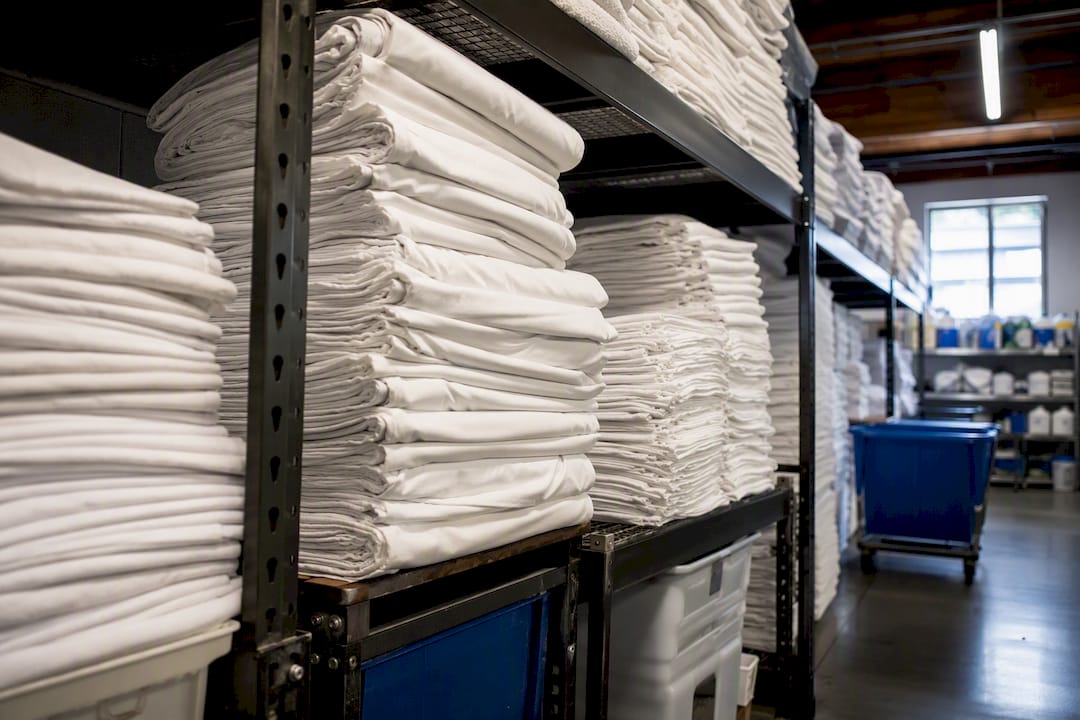
Keep a written par level for every consumable: two rolls of toilet paper per bathroom, one coffee pod per guest per stay, a spare towel set per bedroom. Track restocking in your PMS so a cleaner never arrives to an empty supply closet.
What Should You Charge for a Turnover Clean?
Turnover fees typically run $75 to $150 for a one-bedroom, $100 to $200 for a two-bedroom, and $150 to $350 or more for larger homes, and turnovers often account for 15% to 25% of total operating costs on a heavily booked property.
Price per turn, not per hour. Flat per-turn pricing is the industry standard, and it gives cleaners and owners predictable numbers to plan around instead of haggling over minutes.
Your fee calculation should account for:
- Labor time at your local hourly rate, based on actual average turnover minutes
- Laundry cost per load, whether in-house or contracted
- Consumables and restocking supplies, averaged across turns
- A rush premium of 15% to 30% for same-day or short-notice requests
- Travel time if you're clustering multiple properties in one route
Revisit your rates twice a year at minimum. A minimum-stay policy of two nights instead of one can meaningfully reduce your total number of turns without cutting revenue.
Building a Quality Control Workflow That Holds Up
Every reliable turnover operation runs some version of a four-step QC workflow: pre-arrival prep, in-turn checks, a final guest-ready inspection with photos, and maintenance logging for anything that needs follow-up.
- Pre-arrival prep confirms supplies and access before the cleaner even walks in.
- In-turn checks catch problems mid-clean instead of at the very end.
- Final inspection requires photo proof against your standard five-angle set.
- Maintenance logging routes anything broken, worn, or missing straight into your ticketing system.
A standard turnover follows a top-to-bottom, room-by-room sequence and ends with restocking and a final walkthrough with photo documentation. Working in a fixed order prevents missed spots and speeds the process. (Hostaway)
Pro Tip: Store every turnover photo against the unit's record, not the cleaner's personal device. When you switch cleaning providers or staff, that documentation history needs to stay with the property.
Do You Need a PMS to Automate Turnovers?
Not strictly, but you'll hit a ceiling fast without one. The features that matter most are checkout-triggered task assignment, instant notifications to your cleaning team, photo upload fields tied to each unit, and status updates that flow back to guests automatically.
Look at three tool categories: your core property management system, a task app with built-in photo verification, and a linen-service integration if you've outsourced laundry. The operational rule that keeps this from becoming a mess: automate the trigger and the proof, not the human inspection itself. A checklist app can confirm a photo was uploaded. It can't confirm the bathroom is actually clean. That judgment call stays with a person.
Cutting Costs While Scaling Turnover Operations
Growth exposes every weak spot in a turnover system that worked fine at three units but breaks at thirty. A few changes make the difference:
- Cluster jobs geographically so one cleaning team can hit multiple units in a single route without dead travel time.
- Build a standardized property card for each unit listing supply locations, WiFi passwords, and quirks specific to that space.
- Choose furnishings that clean fast: washable slipcovers, hard flooring over carpet, and durable finishes that resist scuffing.
- Lock in a linen-service contract once you cross roughly eight to ten units to stabilize laundry costs and timing.
- Set a hard rule for team sizing: one cleaner per 1 to 2 bedroom unit, two cleaners for anything larger or same-day.
These changes compound. A structured SOP paired with photo verification and clustered scheduling is what actually lowers per-turn cost, not cutting corners on any individual clean.
What One Operational Change Actually Moves the Needle
The biggest improvement I've seen in turnover operations rarely comes from hiring more cleaners. It comes from forcing a photo-verified final inspection into every single turn, no exceptions, even on the units that "always turn out fine."
That one habit catches the missed towel, the left-behind charger, the toilet that didn't quite get flushed clean. If you do nothing else this week, add that step and hold your team to it.
When It Makes Sense to Hand Turnovers to a Professional Team
Running turnovers in-house works fine until you're managing more units than your team can reliably cover on the same day, or a single missed reset tanks your listing rating. That's the point where outsourcing to a nationwide provider with documented SOPs, linen programs, and photo-based quality control starts saving more than it costs.
Sparkleprocommercialcleaning built its process around exactly the gaps that trip up growing rental operations: a formal quote and site visit before anything gets scheduled, a defined cleaning scope tied to your property type, and a customer approval step so nothing gets marked complete without your sign-off. That structure gives property managers in high-turnover markets a way to scale without gambling on whether a same-day turn gets covered.
If you manage properties in Massachusetts, request a quote for Massachusetts cleaning services and get a site visit scheduled to see how a documented turnover process fits your portfolio. Managers in Washington state can get started with a Washington cleaning assessment the same way.
Frequently Asked Questions
What is occupancy turnover cleaning? Occupancy turnover cleaning is the scheduled, complete reset of a rental unit between one occupant's departure and the next occupant's arrival, covering cleaning, restocking, linen swaps, and staging to a guest-ready standard.
How is turnover cleaning different from a standard clean? A standard clean maintains a unit on a recurring schedule without a full reset. Turnover cleaning happens at every changeover and always includes restocking, linen swaps, and a final inspection.
How much does turnover cleaning typically cost? Costs generally run $75 to $350 or more per turn depending on unit size, with most one to two bedroom units falling in the $150 to $300 range.
How long does a turnover clean take? A single cleaner typically needs 90 to 150 minutes for a one to two bedroom unit, while a two-person team can complete the same job in roughly 70 to 85 minutes.
Should I outsource turnover cleaning or keep it in-house? In-house cleaning works well at a small scale, but once same-day turns become frequent or missed resets start affecting your ratings, a professional provider with documented SOPs and photo verification often becomes the more reliable option.
Sources
- Vacation rental turnover cleaning: checklist + tips
- Turnover — AirROI glossary
- Airbnb Turnover Cleaning Playbook: SOP, Time | Opora
- Vacation Rental Turnover Cleaning Checklist (2026) | RapidEye