
Small post-construction projects typically wrap up cleaning in a short number of days, medium projects take a moderate number of days, and large commercial turnovers often need several weeks or more. The single biggest driver of delay is an unresolved punch list, so the final clean should only go on the calendar once that list is frozen and at least 24 to 72 hours have passed since the last trade left the site.
TL;DR:
- The duration of the final clean depends heavily on punch-list volume, project size, and complexity, with large commercial turnovers often taking several weeks.
- Booking the final clean too early without confirming the punch list is frozen leads to repeat visits and delays, as trades often return for last-minute fixes.
- Properly timing rough cleans aligns with the start of debris accumulation, typically when finish trades are still a week or two from completion.
- Final inspections must include a thorough walkthrough with documentation, ensuring surfaces are dust-free, fixtures function, and the punch list is officially closed.
- Use safety standards like OSHA's silica controls upfront to prevent delays caused by dust-related violations during cleaning.
Table of Contents
- The three phases of post-construction cleaning and how long each takes
- What makes a turnover cleaning timeline longer or shorter
- When to book rough and final cleans without causing rework
- Safety rules that shape cleanup methods and timing
- Turnover checklist before final sign-off
- Our approach to reducing turnover risk on cleaning schedules
- How to request a quote for your next turnover clean
- FAQ
- Sources
The three phases of post-construction cleaning and how long each takes
Builder turnover cleaning almost always happens in three distinct passes, and skipping one usually means paying for it twice. Each phase has its own scope, crew needs, and realistic timeline, and understanding the differences helps property managers and general contractors plan labor and sequencing instead of guessing.
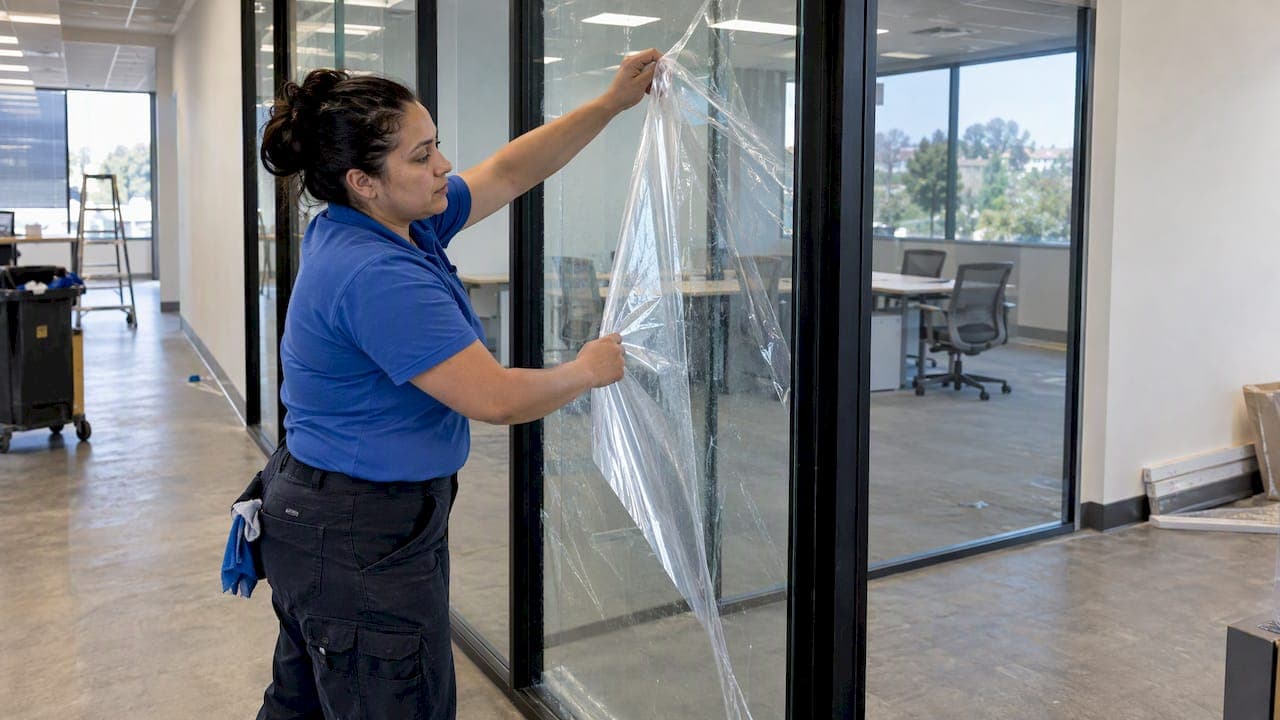
The rough or initial clean happens right after major construction work ends, while trades may still be finishing small items. This pass removes construction debris, stickers and protective film, heavy dust accumulation, and leftover materials so the space is safe to walk through. For small projects, rough cleaning usually takes about a day. Medium projects often need a few days, and large commercial sites can require a full week or more depending on how much debris remains. Our step-by-step guide to the post-construction cleaning process walks through what crews typically handle at this stage.

The light or detailed clean follows once most finish work, such as paint, flooring, and fixtures, is in place. This pass targets fine dust that settles into vents, light fixtures, cabinetry, and window tracks, along with spot-cleaning glass and wiping down surfaces that the rough clean missed. Small projects typically need 1 to 2 days for this phase, medium projects run 2 to 5 days, and large builds can take a week or longer, especially in spaces with extensive HVAC systems or intricate millwork.
The final or turnover clean is the last pass before occupancy and the one property managers inspect most closely. It covers polishing fixtures, detailing floors, cleaning all glass to a streak-free finish, wiping switch plates and baseboards, and confirming every room is move-in ready. Small spaces often finish this phase in a single day, medium projects take 1 to 3 days, and large commercial turnovers can need 3 to 7 days when multiple floors or units are involved.
A few patterns show up across most projects:
- Touch-up or spot cleaning often happens between the light and final cleans when trades return for punch-list fixes.
- Phases can overlap on large projects, with rough cleaning finishing in one wing while detailed cleaning starts in another.
- The gap between the light clean and the final clean tends to stretch longest, since it depends on how quickly trades close out remaining items.
Background industry reporting reflects this same spread: small commercial spaces often finish in days, while larger, more complex turnovers commonly stretch into multiple weeks depending on scope and the volume of outstanding punch-list items.
What makes a turnover cleaning timeline longer or shorter
Square footage sets the baseline, but it rarely tells the whole story. A 10,000 square foot open-plan warehouse cleans faster per square foot than a 10,000 square foot medical office with dozens of small rooms, sinks, and specialty flooring. Layout complexity and finish types (polished concrete versus natural stone, for example) change labor hours significantly, since harder or more delicate surfaces need slower, more careful techniques.
Punch-list volume is often the biggest variable of all. A short list of minor touch-ups adds almost no time, but dozens of open items mean trades keep returning to the site, which forces repeat cleaning visits. The sequence of trades matters too: if electricians or HVAC technicians finish last, ductwork and ceiling cleaning has to wait until they clear out, pushing the final clean later than planned. Exterior access, such as limited parking for equipment trucks or restricted loading dock hours, can also slow a crew's ability to move materials and debris efficiently.
A few practical heuristics help with estimating:
- A general benchmark for detailed cleaning is roughly 1,000 to 1,500 square feet per person per day, though dense layouts with lots of fixtures reduce that rate.
- Projects with HVAC or ductwork cleanup typically add 10 to 20% more time to the detailed phase.
- Multi-story buildings add coordination time beyond the square footage math, since crews and equipment have to relocate floor by floor.
Pro Tip: Size the crew to the space rather than the calendar: two people working five days on a large commercial floor usually finish faster and more thoroughly than eight people crammed into one rushed day.
When to book rough and final cleans without causing rework
Booking cleaning at the wrong moment is one of the most common reasons turnover slips. Rough cleaning should go on the schedule as soon as major construction debris starts accumulating, typically while finish trades are still a week or two from completion. Final cleaning is different: it should never be booked by a fixed calendar date alone. It should be triggered by project status, specifically by a frozen punch list and a buffer of 24 to 72 hours after the last trade has left the site. Our guide on how property managers book rough and final cleans covers this trigger-based approach in more depth.

Booking the final clean immediately after the last contractor leaves, without confirming that the punch list is actually frozen, is the single most common cause of repeat cleaning visits. Trades returning for last-minute fixes after the final clean track dust and debris right back into finished rooms.
Before confirming any final clean, walk through a short communication checklist:
- Confirm building access and keys or codes for every room, including mechanical and storage areas.
- Verify utilities, especially electricity and water, are active for cleaning equipment.
- Check that HVAC systems are running so dust settles and air quality stabilizes before the crew arrives.
- Make sure all areas are unlocked or that someone is on-site to grant access as needed.
A practical coordination sequence looks like this:
- Confirm the punch list is closed or formally frozen with the general contractor.
- Schedule the final clean 24 to 72 hours after the last trade's documented completion.
- Notify the cleaning crew of access details, utility status, and any remaining hazards.
- Walk the site with the crew lead before work begins to flag priority areas.
- Schedule the inspection or walkthrough immediately after cleaning finishes, while the space is still fresh.
Coordinating scheduling around trade completion rather than a fixed date, similar to how work order scheduling for service managers ties tasks to dependency status, reduces the odds of a wasted trip.
Safety rules that shape cleanup methods and timing
Construction cleanup often involves fine dust containing crystalline silica, generated by cutting, grinding, or sweeping concrete, drywall compound, and masonry. The OSHA respirable crystalline silica standard for construction requires a written exposure control plan, engineering controls, and specific housekeeping measures, and that plan has to be reviewed at least annually. Building these requirements into the cleaning scope from the start, rather than treating them as an afterthought, keeps a crew from being pulled off-site mid-project.
The OSHA standard sets clear limits on acceptable exposure, and understanding where those thresholds sit helps explain why certain cleanup methods are mandatory rather than optional. OSHA's standard establishes both an action level and a permissible exposure limit for respirable crystalline silica, and crossing those thresholds can trigger medical surveillance requirements for exposed workers.
Dust control methods that meet these standards include:
- Wet cleanup methods that suppress dust before it becomes airborne.
- HEPA-filtered vacuums instead of dry sweeping or compressed air.
- Vacuum dust collection systems (VDCS) attached directly to cutting and grinding tools.
OSHA guidance on handheld powered tools specifically discourages using compressed air for cleanup unless an effective ventilation system captures the dust, recommending HEPA vacuums and wet methods instead. These methods take longer than a quick dry sweep, but specifying them in the scope of work upfront avoids the much bigger delay of a stop-work order or a redo.
Turnover checklist before final sign-off
A rushed walkthrough is how small problems turn into reopened punch lists. Before signing off on a builder turnover clean, inspect the basics in person rather than relying on a verbal confirmation that the work is done.
Check for dust-free surfaces on sills, ledges, and above-eye-level trim, confirm HVAC vents and filters are clean, and inspect all glass for streaks or residue. Test fixtures to confirm they function, verify egress paths are clear, and examine flooring for leftover adhesive, paint, or scuffing.
Documentation matters as much as the visual inspection:
- A signed scope checklist confirming exactly what was cleaned and when.
- Photos documenting the completed space, useful for resolving any later disputes.
- Proof of insurance and licensing from the cleaning contractor.
- Any written guarantees covering re-cleaning if issues surface after move-in.
Before booking the crew, ask about crew size, whether HEPA vacuums and silica controls are part of their standard process, estimated hours on-site, and arrival time. Our property manager cleaning checklist expands on these questions in more detail. The one mistake to avoid above all others: never schedule the final clean before the punch list is formally frozen.
| Checklist item | What to confirm |
|---|---|
| Surfaces | Dust-free sills, trim, and above-eye-level areas |
| HVAC | Vents and filters cleaned, system running |
| Glass and fixtures | Streak-free glass, functioning fixtures |
| Documentation | Signed scope checklist, photos, insurance proof |
| Timing | Punch list frozen, 24 to 72 hour buffer observed |
Our approach to reducing turnover risk on cleaning schedules
An effective engagement model can follow four steps: quote, site visit, scheduled cleaning, and customer approval. That sequence exists to catch scope gaps before a crew ever shows up, not after. A documented pre-clean walkthrough and a written scope, including safety controls like HEPA vacuum use, shortens the final inspection because reviewers aren't guessing what was actually covered.
— Sales
How to request a quote for your next turnover clean
If you're planning a turnover clean, the fastest path to an accurate quote starts with a few details: approximate square footage, current punch-list status, finish types, and your target turnover date. Various providers handle post-construction cleaning, tenant turn cleans, and environmental services across commercial, healthcare, and multifamily properties.
What we need to build a quote:
- Square footage and general layout of the space.
- Whether the punch list is closed, nearly closed, or still open.
- Flooring and finish types that affect method and time.
- Your target completion date for turnover.
Request a site visit and quote to get a schedule that matches your actual project status rather than a generic estimate.
FAQ
What is the 5 5 5 rule for cleaning?
The 5 5 5 rule isn't a standard used in commercial post-construction cleaning timelines, and definitions of it vary widely depending on the source. For builder turnover projects, timing is better driven by project size and punch-list status rather than a fixed rule of thumb.
How long should it take to clean a 2,000 square foot house?
Small projects typically need 1 to 5 days total for rough, detailed, and final cleaning combined. The exact time depends on how much construction debris remains and how many finish details need detailed attention.
How much should I charge for a turnover clean?
Turnover cleaning pricing depends on square footage, scope, and finish complexity rather than a flat rate, so costs vary by project. For an accurate figure, request a quote based on your specific space; we price post-construction and turn cleans after a site visit confirms the scope.
What are the phases of post-construction cleaning?
Builder turnover cleaning generally follows three phases: a rough or initial clean that removes major debris, a light or detailed clean that handles fine dust and finish details, and a final or turnover clean that prepares the space for occupancy. Some projects also include a touch-up pass between the detailed and final cleans to handle punch-list fixes.
Why does the punch list affect the cleaning schedule?
An open punch list means trades keep returning to the site, and each return risks tracking dust and debris into areas that were already cleaned. Freezing the punch list before booking the final clean, with a 24 to 72 hour buffer after the last trade leaves, helps avoid the most common cause of repeat cleaning visits.