
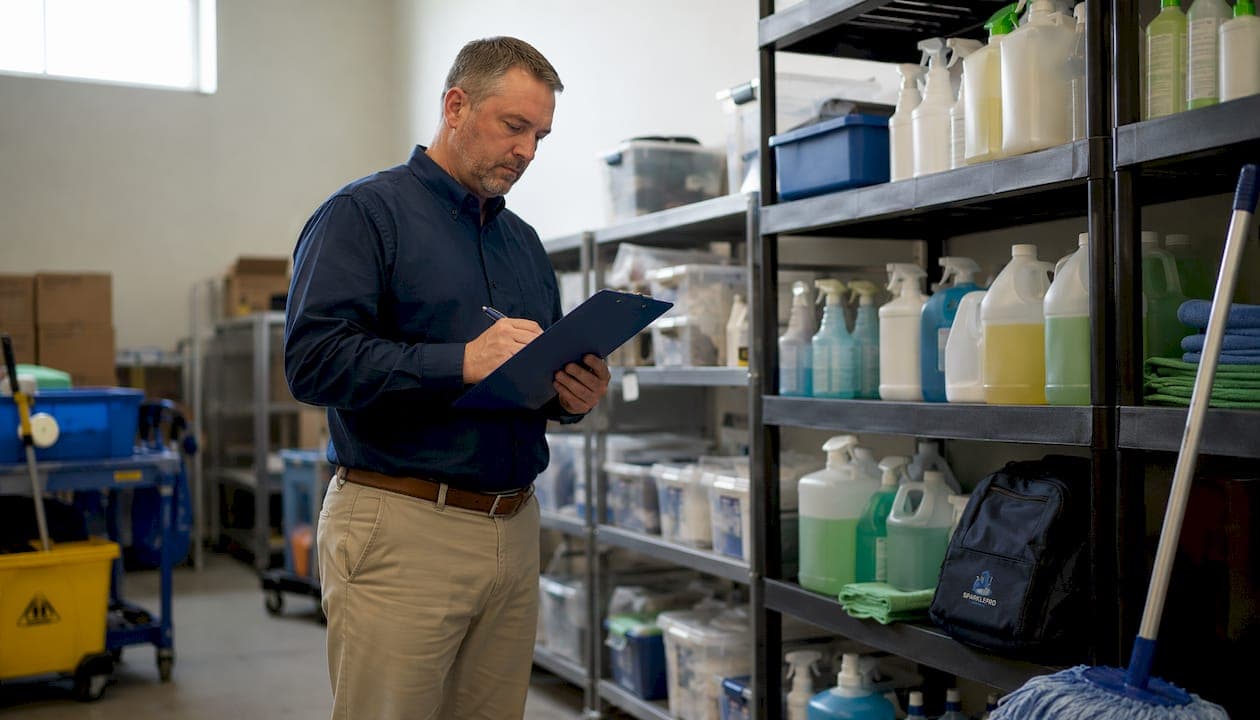
Effective building maintenance cleaning is defined as a structured, zone-based system that protects asset value, reduces tenant complaints, and controls operating costs. Building owner cleaning tips are not generic advice. They are specific protocols tied to traffic levels, surface types, and occupancy cycles. Systematic cleaning routines can increase tenant retention by up to 20% over five years. That number alone makes a disciplined cleaning program one of the highest-return investments a building owner can make. This guide covers zone prioritization, daily tasks, turnover sequencing, deep cleaning schedules, and quality control systems that work in real commercial properties.
1. Building owner cleaning tips start with zone-based prioritization
Zone-based cleaning is the practice of assigning cleaning frequencies to specific building areas based on foot traffic, health risk, and visibility. It replaces uniform schedules, which waste labor on low-traffic areas while under-serving high-risk zones. Structured zone-based schedules create reliability and measurably reduce tenant complaints in multi-tenant buildings.
The zones that demand daily attention are lobbies, elevators, shared restrooms, and break rooms. These areas carry the highest pathogen load and create the strongest first impression. Stairwells and secondary corridors need weekly service. Interior windows and light fixtures fall into a monthly cycle. Carpet extraction, floor stripping, and HVAC vent cleaning belong in a quarterly or semi-annual program.
| Zone | Recommended frequency |
|---|---|
| Lobbies and elevators | Daily |
| Shared restrooms | Daily |
| Break rooms | Daily |
| Stairwells | Weekly |
| Interior windows | Monthly |
| Carpets and hard floors (deep) | Quarterly or semi-annual |
| HVAC vents | Semi-annual |
Pro Tip: Map your building's zones on a simple floor plan and assign a color code to each frequency tier. This single document becomes the foundation for every vendor contract and inspection checklist you create.
2. What are the essential daily cleaning tasks for building hygiene?
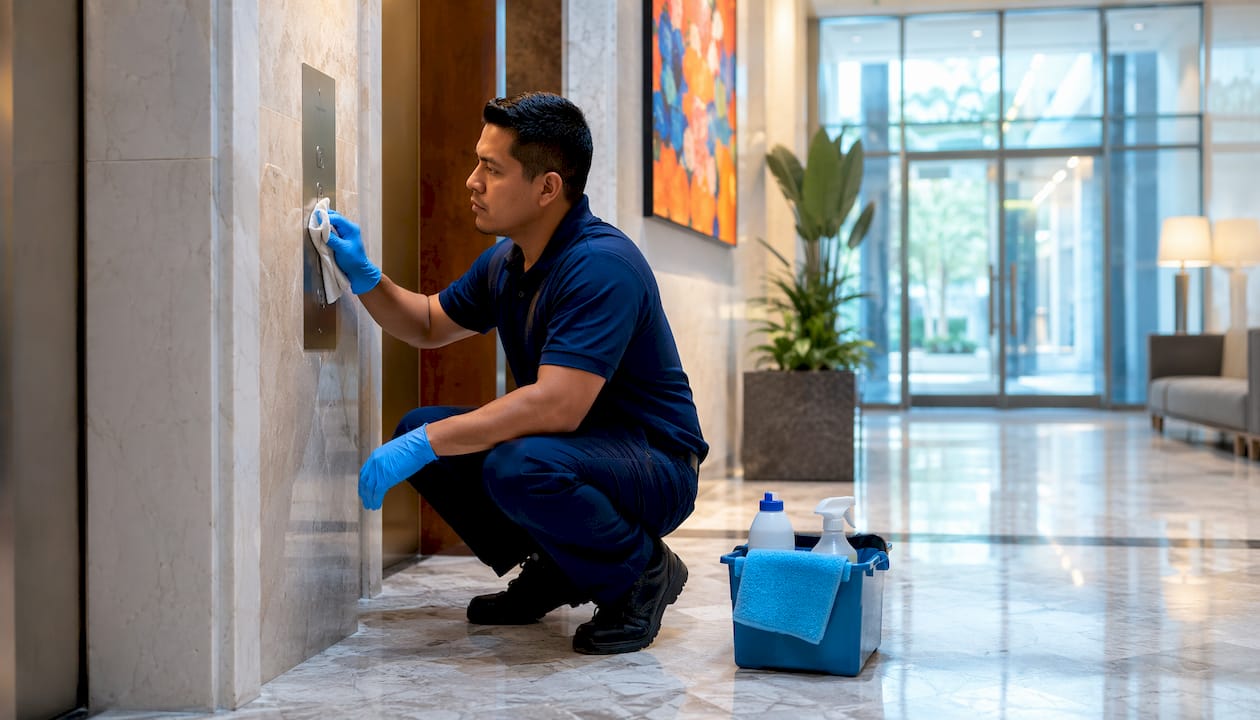
Daily cleaning tasks are the non-negotiable baseline that keeps a building safe, presentable, and legally defensible. The core tasks are trash and recycling removal, restroom cleaning and restocking, and high-touch surface disinfection. High-touch surfaces include door handles, elevator buttons, light switches, and reception counters.
Floor maintenance is equally critical. Vacuum carpeted areas and mop hard floors with cleaners matched to the surface material. Using a neutral pH cleaner on polished concrete and a pH-appropriate product on vinyl composite tile prevents surface degradation over time. Certified green cleaning products should cover 90% of daily tasks, with heavy-duty disinfectants reserved for targeted, high-risk moments.
Disinfectant dwell time is the single most misunderstood element of daily cleaning. Spraying and immediately wiping a disinfectant without letting it sit for the label-specified time does not kill pathogens. It only cleans the surface. Read the product label, apply the product, and let it remain wet for the full contact time before wiping.
Schedule noisy or disruptive tasks such as floor buffing and trash compactor runs during off-peak hours. Tenant disruption during business hours creates friction that erodes satisfaction faster than a dirty floor.
Pro Tip: Post a laminated daily task checklist in each janitor closet. Staff who can physically check off completed tasks make fewer errors and supervisors catch gaps faster.
3. How to handle turnover cleaning to protect tenant deposits
Turnover cleaning is a full property reset, not an extension of routine maintenance. It covers walls, baseboards, appliances, carpets, grout, and odor treatment. The scope is fundamentally different from daily janitorial work, and treating it as the same task is a costly mistake.
The correct sequence matters as much as the scope. Cleaning must follow maintenance repairs, not precede them. Cleaning a unit before patching drywall or replacing fixtures means the cleaning crew returns for rework, which doubles labor costs. The correct order is inspection and photo documentation, then repairs, then deep cleaning.
Photo documentation before any cleaning begins is the most important step for deposit protection. Pre-clean photo evidence creates a defensible baseline that resolves disputes without legal escalation. Capture every room, every appliance interior, and every wall surface. Repeat the photo set after cleaning is complete.
Vendor contracts for turnover cleaning should define scope, pricing per unit type, and quality acceptance criteria. A contract that says "clean the unit" is unenforceable. A contract that specifies "clean interior of all appliances, extract carpets, wipe all baseboards, and treat for odor" gives you grounds to reject substandard work.
Pro Tip: Block vendor scheduling slots immediately after a notice-to-vacate is received. A 48-hour reset window post-maintenance is the industry benchmark for getting units back on the market fast.
4. Best practices for scheduling periodic deep cleaning
Deep cleaning is a project-based cycle, not a scaled-up version of daily cleaning. It addresses surfaces and systems that routine janitorial work cannot reach: floor finish stripping and recoating, carpet hot-water extraction, high dusting above ceiling tiles, and HVAC vent cleaning. Each of these tasks requires specialized equipment and trained technicians.
Schedule deep cleaning projects around building usage patterns. Office buildings work best with weekend or holiday shutdowns. Retail properties need overnight windows. Healthcare facilities require coordination with facility managers to maintain sterile zones during the process. The goal is zero tenant disruption during the cleaning window.
A practical deep cleaning calendar looks like this:
- Quarterly: High-touch zone intensive cleans, restroom grout scrubbing, elevator cab detailing, and spot carpet extraction in high-traffic corridors.
- Semi-annual: Full carpet extraction, hard floor stripping and refinishing, and interior window washing.
- Annual: HVAC vent cleaning, ceiling tile inspection and replacement, and exterior entrance pressure washing.
Assigning cleaning frequencies based on usage and risk prevents the common error of over-cleaning low-traffic storage areas while neglecting high-soil zones like loading docks and break rooms. Labor follows risk, not habit.
For chemical selection in deep cleaning, use EPA-registered disinfectants on restroom surfaces and high-touch areas. Apply green-certified products everywhere else. This split approach balances health outcomes with environmental responsibility. You can review HVAC cleaning specifics for post-construction or renovation scenarios where duct contamination is a real risk.
Pro Tip: Schedule a "hot spot" walk-through 30 days after each deep clean. Identify which areas returned to a soiled state fastest. Those zones need a higher routine frequency, not more deep cleans.
5. How to build an inspection and documentation system
A cleaning program without documentation is a cleaning program that drifts. Quality degrades gradually, and without records, you cannot identify when or where the decline started. The foundation of any effective property maintenance cleaning system is a written scope of work tied to a zone map, supported by regular inspection records.
Inspection checklists should be zone-specific and tied to the cleaning frequency schedule. A daily restroom checklist looks different from a quarterly carpet inspection sheet. Both need a date, a staff signature, and a pass or fail rating for each line item. Inspections should occur before the final wet mop so corrections can be made without leaving footprints or re-soiling cleaned surfaces.
Spot checks by a supervisor or property manager catch quality drift before tenants notice. Conduct unannounced spot checks at least twice per month. Compare results against the signed checklists. Discrepancies between what staff reported and what you observe indicate a training gap or a staffing problem.
Training staff on chemical use, personal protective equipment, and cleaning sequences reduces rework and liability. A cleaner who uses the wrong product on a stone floor can cause permanent etching. That repair costs more than a full month of cleaning service. Invest in onboarding documentation and periodic refreshers.
Coordinate cleaning schedules with pest control and maintenance teams. A pest control treatment that follows a deep clean is far more effective than one applied to a soiled surface. Integrated property care means these teams share a calendar, not separate silos.
Pro Tip: Use a property manager's preparation guide to build your initial scope of work document. A well-structured scope cuts vendor onboarding time and eliminates ambiguity from day one.
6. How to use a cleaning checklist for buildings effectively
A cleaning checklist for buildings is only as useful as the system behind it. A checklist that lives in a binder no one opens is theater. A checklist tied to daily sign-offs, monthly audits, and vendor payment approvals is a management tool. Consistent checklists tied to custom zoning plans improve cleaning quality and tenant satisfaction in measurable ways.
Build your checklist in layers. The daily layer covers trash, restrooms, floors, and high-touch surfaces. The weekly layer adds stairwells, secondary corridors, and exterior entrance mats. The monthly layer includes interior windows, light fixtures, and elevator tracks. Each layer feeds into the next without duplication.
Tie checklist completion to vendor payment. Vendors who submit signed checklists with photo evidence get paid on schedule. Vendors who submit incomplete records get a follow-up inspection before payment releases. This single policy eliminates most quality disputes before they escalate.
Adjust your checklist based on tenant feedback and seasonal patterns. A building with a food service tenant on the ground floor needs daily grease trap area checks that a pure office building does not. Cleaning advice for building owners that ignores tenant mix is generic at best and expensive at worst.
Pro Tip: Review your janitorial schedule quarterly against actual complaint logs. If the same zone generates repeated complaints, the schedule frequency is wrong, not the cleaning crew.
Key takeaways
A zone-based cleaning program tied to documented inspection cycles is the most effective way to protect property value, retain tenants, and control operating costs.
| Point | Details |
|---|---|
| Zone-based scheduling | Assign cleaning frequencies by traffic and risk, not uniform schedules across all areas. |
| Dwell time compliance | Let disinfectants sit for the full label-specified contact time or disinfection does not occur. |
| Turnover sequencing | Always complete repairs before cleaning to avoid rework and wasted labor costs. |
| Photo documentation | Capture pre-clean and post-clean photos for every turnover to protect tenant deposits. |
| Checklist accountability | Tie vendor payment to signed, zone-specific checklists with photo evidence attached. |
What I've learned running cleaning programs for commercial buildings
The most expensive mistake building owners make is treating cleaning as a cost to minimize rather than a system to manage. I have seen properties where the cleaning budget was cut by 15% and tenant turnover costs rose by 40% in the following 12 months. The math is not complicated once you see it play out.
The second most common error is poor sequencing. Owners schedule cleaning before maintenance repairs are complete, then wonder why the unit still looks rough at move-in. Cleaning after repairs is not a preference. It is the only sequence that produces a finished result.
Chemical dwell time is the invisible failure point in most daily cleaning programs. Staff spray and wipe in one motion because it looks efficient. It is not. A surface that looks clean but was never properly disinfected is a liability, especially in restrooms and break rooms. Training on this single point produces a measurable improvement in hygiene outcomes.
The building owners who get this right share one habit: they treat their cleaning program like a financial system. They document it, audit it, and adjust it based on data. They do not react to complaints. They prevent them.
— Sales
Professional cleaning services built for building owners
Building owners who manage multi-tenant properties need a cleaning partner who understands zone-based programs, turnover timelines, and the documentation standards that protect deposits and reduce disputes.
Sparkleprocommercialcleaning works with building owners across the United States to build customized cleaning programs based on building size, tenant mix, and traffic patterns. Services cover daily janitorial, periodic deep cleaning, and full turnover cleaning with documented before-and-after records. If your property is in Massachusetts, the Massachusetts commercial cleaning team is ready to build a program around your specific building needs. For New Jersey properties, the New Jersey cleaning services page outlines available service tiers and scheduling options. Contact Sparkleprocommercialcleaning for a site-specific quote.
FAQ
How often should building owners schedule deep cleaning?
Deep cleaning should follow a quarterly, semi-annual, and annual cycle based on zone type. High-traffic areas like lobbies and restrooms need quarterly intensive cleans, while full floor stripping and carpet extraction fit a semi-annual schedule.
What is the correct dwell time for disinfectants?
Dwell time varies by product, but most EPA-registered disinfectants require the surface to remain visibly wet for 30 seconds to 10 minutes. Always follow the specific label instructions, as wiping immediately after application renders the product ineffective.
Why does cleaning sequence matter during tenant turnover?
Cleaning before maintenance repairs are complete forces a second cleaning pass after construction dust and debris settle. The correct order is inspection, then repairs, then cleaning, which eliminates rework and controls labor costs.
What should a building cleaning checklist include?
A building cleaning checklist should cover daily tasks such as trash removal, restroom service, and high-touch disinfection, plus weekly, monthly, and quarterly tasks tied to specific zones. Each entry needs a date, staff signature, and pass or fail rating.
How do green cleaning products fit into a commercial building program?
Certified green cleaning products are appropriate for 90% of routine and deep cleaning tasks. Reserve EPA-registered heavy-duty disinfectants for targeted high-risk surfaces such as restroom fixtures and shared kitchen equipment.