
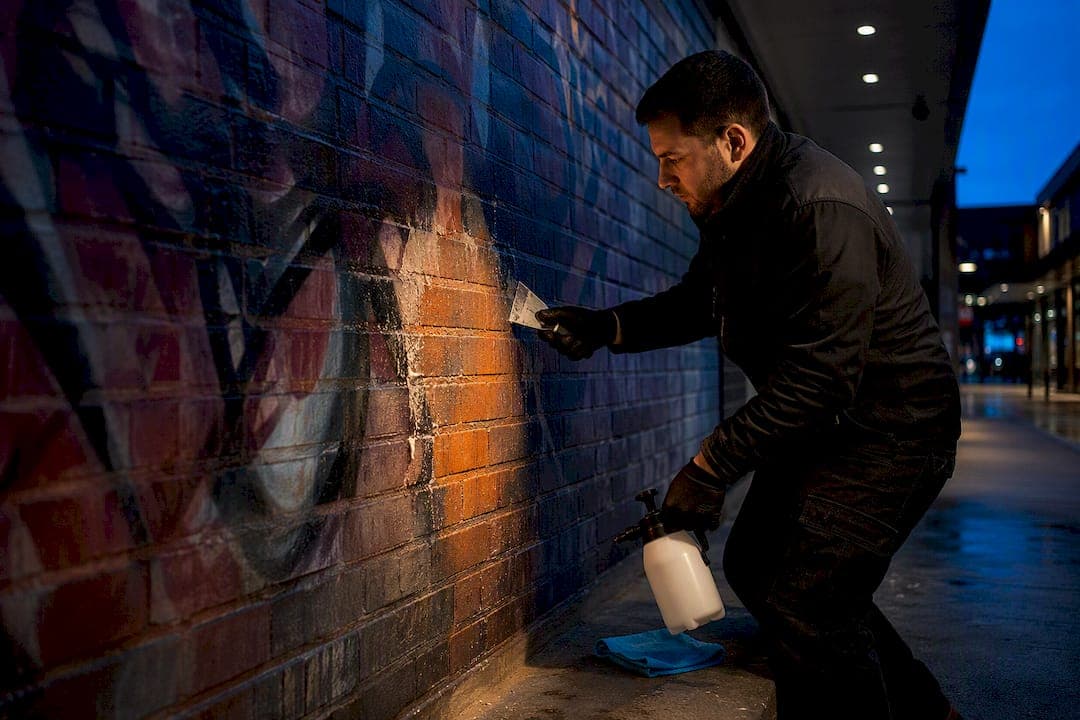
Start with the gentlest compatible method: solvent gels or poultices for porous masonry, mild solvents for painted metal, and a razor blade with solvent for glass. Test every method on a hidden 6-inch patch before scaling up, since National Park Service preservation guidance notes that poultices draw pigment out of pores rather than driving it deeper. Remove graffiti promptly whenever possible to maximize ease and reduce damage. Fresh paint hasn't cured into the substrate yet, which cuts both labor and cost.
TL;DR:
- Chemical and poultice methods are safest for porous masonry, but they require proper testing and careful application to prevent pigment smearing or substrate damage.
- Pressure washing and abrasive blasting are generally not recommended for delicate surfaces without professional oversight due to potential surface damage and safety risks.
- Dry-ice blasting and laser cleaning are effective for sensitive materials but are costly and usually require specialized contractor services.
- Testing on a small patch before full application is essential to avoid costly mistakes, especially on historic or sensitive surfaces.
- DIY removal costs under $75 for small tags but can escalate into thousands for large or complex jobs, making professional assessment and quoting advisable.
Table of Contents
- What Are the Main Graffiti Removal Options?
- Chemical Methods and Poultices: How to Apply Them Safely
- When Should You Use Pressure Washing or Abrasive Blasting?
- Are Dry-Ice Blasting and Laser Cleaning Worth It?
- Surface-by-Surface Removal Guide
- How Do You Handle Testing, Safety, and Cleanup?
- Should You DIY It or Call a Professional?
- How Do You Prevent Repeat Graffiti?
- What Does Graffiti Removal Cost?
- What Property Managers Get Wrong About Graffiti Removal
- How Sparkleprocommercialcleaning Handles Graffiti Removal for Property Managers
- Sources
- FAQ
What Are the Main Graffiti Removal Options?
Every graffiti removal method falls into one of two mechanical categories: dissolving the paint chemically or breaking its physical bond with the surface. Chemical methods, solvents, gel removers, and poultices, work by softening pigment until it lifts away without touching the substrate underneath. Abrasive and pressure-based methods work the opposite way: they strip a thin layer of the surface itself, paint and all.
Here's how the main categories break down:
- Chemical/solvent methods: gels, sprays, and poultices that dissolve paint on masonry, metal, and glass.
- Water and pressure washing: low to moderate PSI water, sometimes heated, for sealed or non-porous surfaces.
- Abrasive and dry blasting: soda, walnut shell, or sand media that physically strips paint, best left to trained crews.
- Specialty thermal methods: dry-ice and laser cleaning for sensitive or historic materials.
Cost and skill requirements climb in roughly that order. A gel remover and a scrub brush cost under $30 and require no special training. Blasting equipment and laser rigs belong to professional contractors almost every time.
Chemical Methods and Poultices: How to Apply Them Safely
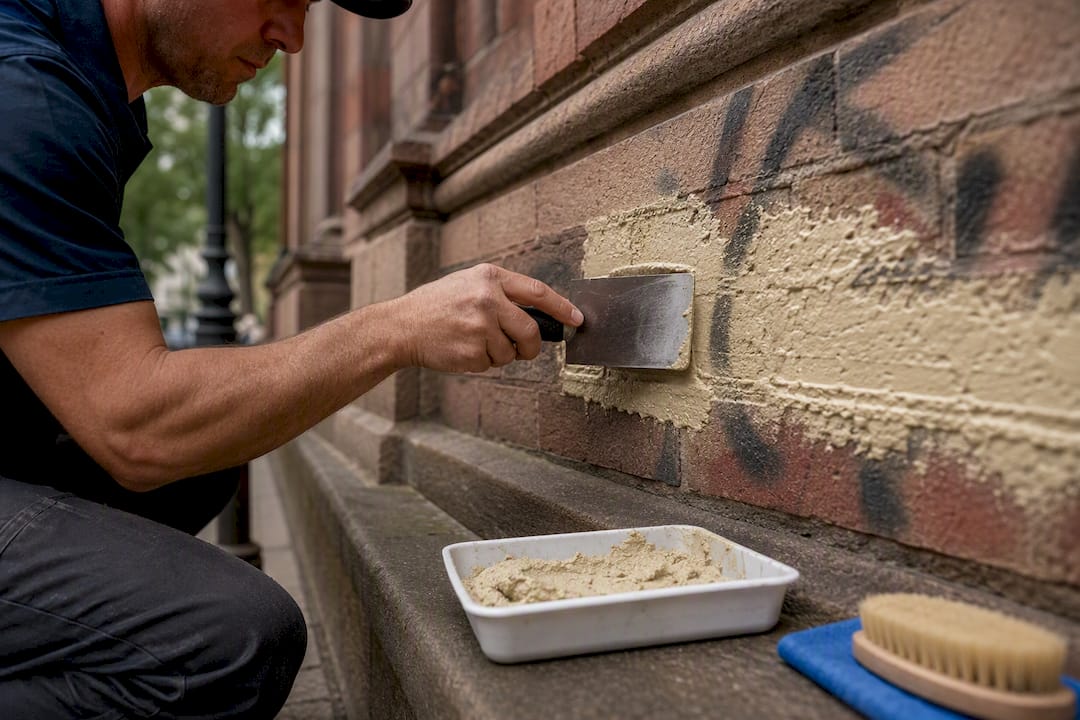
Poultices work because they hold a cleaning reagent against masonry long enough to pull pigment out of the pores instead of pushing it in with a scrub brush, according to the NPS. That dwell time is the whole mechanism. Wipe too fast and you're just smearing wet paint deeper into a porous surface.
Common solvents include acetone, mineral spirits, and lacquer thinner, but each carries a substrate risk. Acetone can cloud or melt plastics and some vinyl siding. Aggressive solvents can strip anodized aluminum finishes or lift factory paint on metal doors.
Follow this sequence:
- Identify the substrate before choosing a product.
- Apply a test patch and wait the recommended dwell time.
- Apply the gel or poultice to the full stain, then let it sit undisturbed.
- Remove with a clean-rag technique, using a fresh section of rag for every wipe, a method Milwaukee's public works guidance recommends specifically to prevent re-smearing softened paint.
- Rinse and neutralize with a pH check if the product data sheet calls for it.
Collect the rinse water rather than letting it run into a storm drain. Dissolved pigment counts as chemical waste in most municipalities, and the safety data sheet for whatever product you're using should specify disposal steps.
Pro Tip: Keep a laminated solvent-compatibility chart in your maintenance closet. Techs under time pressure default to whatever's on the shelf, and that's how a $40 poultice job turns into a $4,000 vinyl-siding replacement.
When Should You Use Pressure Washing or Abrasive Blasting?
Pressure alone rarely removes graffiti cleanly. The GSA's technical procedures point out that high pressure often strips the substrate surface along with the paint, leaving a lighter patch where the graffiti used to be, sometimes a worse look than the tag itself.
Work through these steps in order:
- Test a low-pressure setting first, staying within the psi range the GSA recommends for the specific masonry type.
- Use a wide fan-tip nozzle and keep the wand at least 12 inches from the surface.
- Reserve soda or walnut-shell blasting for durable surfaces; avoid it on soft brick, limestone, or historic stucco.
- Use hot water or light steam only on fresh, waterborne paints, since heat can set oil-based pigments harder.
- Contain and collect runoff before it reaches a storm drain, and bring in a licensed contractor for any actual blasting work.
Blasting isn't a DIY weekend project. The equipment, media disposal, and surface-damage liability all point toward hiring out. For general operator safety around pressurized equipment, see pressure washing safety guidance for U.S. operators.
Are Dry-Ice Blasting and Laser Cleaning Worth It?
Dry-ice blasting sublimates on contact, leaving no secondary media to sweep up, which makes it a strong fit for metal railings, glass, and non-porous surfaces where cleanup time matters. It costs more than solvent methods and isn't available from every regional contractor.
Laser cleaning is the most selective option on the market: it can strip paint from carved stone detail without touching surrounding patina, but it demands a certified operator and can subtly alter the surface's natural weathering. Reach for either option when the surface is too sensitive for solvents and too valuable to risk on a standard blast job, historic facades, ornamental metalwork, or storefront glass with etched branding.
Surface-by-Surface Removal Guide
Different substrates fail in different ways, so the "gentlest first" rule applies differently to each one:
- Masonry: Start with a poultice or gel, always on a test patch first. Skip pressure washing until you've confirmed the chemical approach isn't enough.
- Painted metal: Try a gel remover before anything abrasive. If the tag has eaten into the primer, budget for a repaint rather than chasing a perfect chemical match.
- Glass and polished stone: A razor blade with a compatible solvent lifts most paint cleanly. Abrasive pads will scratch the surface permanently.
- Vinyl and plastic composite (ACM) panels: Avoid acetone and strong solvents; they can cloud or warp the material. Test on an inconspicuous corner first.
- Wood: Start with mild detergent and water, then move to a targeted solvent only where needed. Refinishing is common afterward.
- Concrete: Combine low-pressure water with a chemical gel. Expect some residual staining even after a successful removal.
How Do You Handle Testing, Safety, and Cleanup?
Massachusetts state guidance recommends starting every job with the gentlest method available, confirmed through a documented test patch, before moving to anything stronger. Run the test on a 6-inch by 6-inch section, ideally with more than one person reviewing the result, and rank outcomes before committing to a full application.
Basic PPE for chemical or abrasive work includes:
- Chemical-resistant gloves rated for the specific solvent in use.
- Splash-proof goggles, not just safety glasses.
- A respirator when working with strong solvents in an enclosed area.
- Disposable or washable coveralls to keep overspray off street clothes.
Containment matters as much as the removal itself. Massachusetts guidance is explicit that rinse water carrying dissolved pigment can't go into storm drains and needs proper collection and disposal. Photograph the site before and after, and keep the product's safety data sheet on file. For a broader framework on PPE and containment procedures, see this construction cleaning safety guide. Larger sites with heavy debris or waste volume may also need dedicated demolition waste removal services to handle containment properly.
Should You DIY It or Call a Professional?
Weigh these factors before your team picks up a scrub brush:
- Substrate sensitivity: Historic masonry, natural stone, and anodized metal call for tested expertise, not trial and error.
- Scope and age: A small, fresh tag is a DIY job; a building-wide, week-old mural is not.
- Access and safety: Anything above ground level or near live utilities needs licensed crews with proper equipment.
- Disposal capability: If your team can't legally collect and dispose of chemical runoff, that alone pushes many property managers toward hiring licensed contractors.
When vetting a vendor, confirm licensing and insurance, ask for comparable substrate experience, and require a documented test-patch agreement before full-scale work begins.
How Do You Prevent Repeat Graffiti?
Sacrificial anti-graffiti coatings wash off along with the paint during removal and need reapplication each time, a tradeoff worth it on high-target walls. Permanent, breathable coatings suit non-porous surfaces but need caution on historic masonry, since trapped moisture can cause worse damage than the graffiti itself.
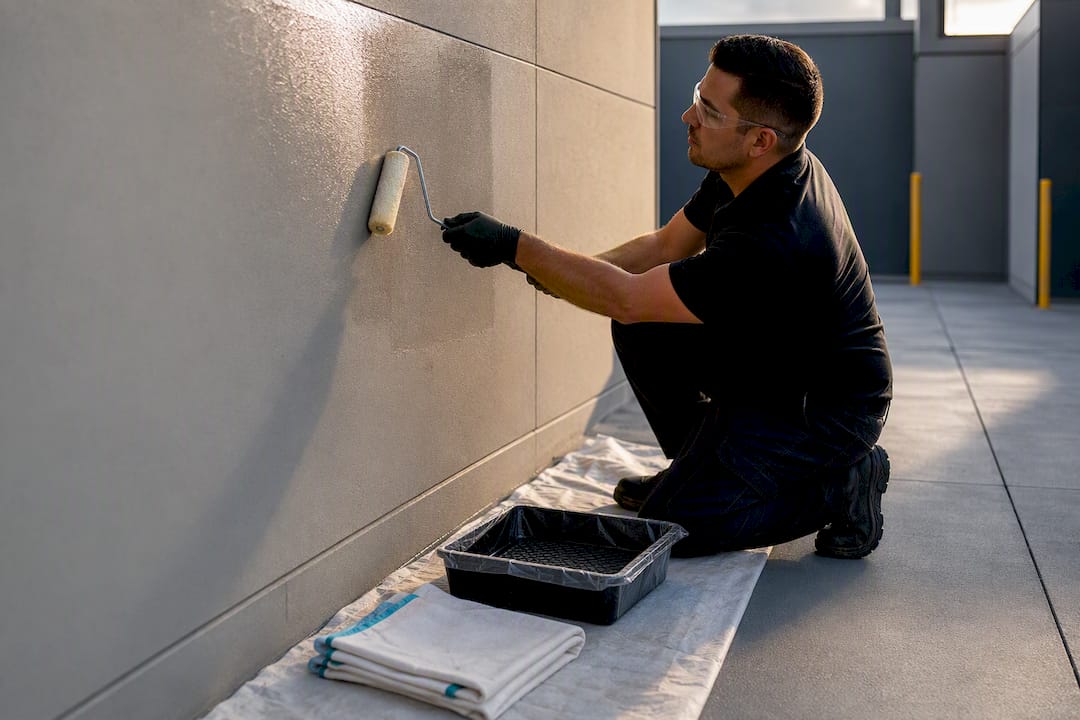
Build a rapid-response kit, gloves, gel remover, rags, contact info for your removal vendor, and set a 24 to 48 hour response goal. Log every incident with photos and dates to track recurrence and cost over time.
What Does Graffiti Removal Cost?
DIY removal on a single tag typically runs $20 to $75 in materials: a gel remover, a poultice product, rags, and basic PPE. That math works fine for a one-time, small, ground-level job on a forgiving surface.
Professional removal costs scale with square footage, surface type, and access difficulty. A small commercial storefront tag might run a few hundred dollars for a licensed crew, while a multi-story facade, especially one requiring lift equipment or specialty methods like dry-ice or laser cleaning, can run into the thousands. Abrasive blasting jobs price higher than chemical removal because of equipment rental and media disposal costs. Historic masonry restoration, where a specialist has to match mortar or repoint after removal, sits at the top of the range.
The hidden cost most property managers underestimate is repeat exposure. A building tagged repeatedly without a rapid-response plan racks up removal bills faster than one protected with an anti-graffiti coating and a same-day response policy. Factor in disposal fees, too. Licensed haulers charge for hazardous rinse water and spent media, a line item DIY crews often skip until a municipal inspector asks about it.
Getting a fixed quote after a site visit, rather than a rough phone estimate, is the only reliable way to compare DIY savings against professional pricing for your specific property.
What Property Managers Get Wrong About Graffiti Removal
Most damage isn't caused by the graffiti. It's caused by the second attempt to remove it, after someone reached for a pressure washer set too high or a solvent that wasn't tested first. Speed matters, but speed without a test patch is how a $200 job becomes a $2,000 repair. Trained crews on porous or historic material aren't overkill; they're the difference between a clean wall and a permanent stain. A documented, insured process protects the building and the budget.
— Sales
How Sparkleprocommercialcleaning Handles Graffiti Removal for Property Managers
Hiring the wrong crew for a chemical or blasting job usually costs more in damaged substrate than the removal itself would have cost done right the first time. Sparkleprocommercialcleaning runs a documented, four-step process built to avoid that: request a quote, schedule a site visit so a technician can assess the substrate and test patches in person, complete the scheduled cleaning, and sign off on final approval before the crew leaves.
As a provider serving multiple regions, the company brings trained crews and documented disposal practices to jobs that carry real liability, historic masonry, painted metal, glass storefronts, and everything in between. Property managers in Delaware can request a quote for commercial cleaning services, and teams in Massachusetts or Washington can reach their local landing pages for Massachusetts commercial cleaning or Washington commercial cleaning to get a site visit scheduled this week.
Sources
- Preservation Matters: Maintenance - Graffiti removal from historic features (NPS)
- Graffiti removal guidance (Massachusetts)
- GSA: Removing graffiti from historic masonry — technical procedures
- Graffiti removal techniques (City of Milwaukee)
FAQ
What Is the Most Effective Way to Remove Graffiti?
For porous masonry, a poultice that maximizes dwell time is the most effective approach, since it draws pigment out of the pores instead of scrubbing it deeper. For painted metal and glass, a compatible solvent gel paired with the clean-rag technique gets the best results without damaging the substrate.
What Is the Cheapest Way to Remove Graffiti?
A basic gel remover, rags, and PPE cost under $30 to $75 for a small, fresh tag on a forgiving surface. Acting fast keeps costs down since fresh paint lifts far more easily than paint that's had days to cure.
What Is the Most Effective Graffiti Remover?
There's no single best product across every surface. Gel-based poultices work best on masonry, while solvent gels suit painted metal, and a razor blade with solvent handles glass, always confirmed with a test patch first.
Does WD-40 Remove Graffiti?
WD-40 can loosen fresh spray paint on some non-porous surfaces like metal or glass, but it's not formulated for graffiti removal and won't perform reliably on masonry or cured paint. A purpose-built gel remover or poultice, tested on a small patch first, gets more consistent results.