
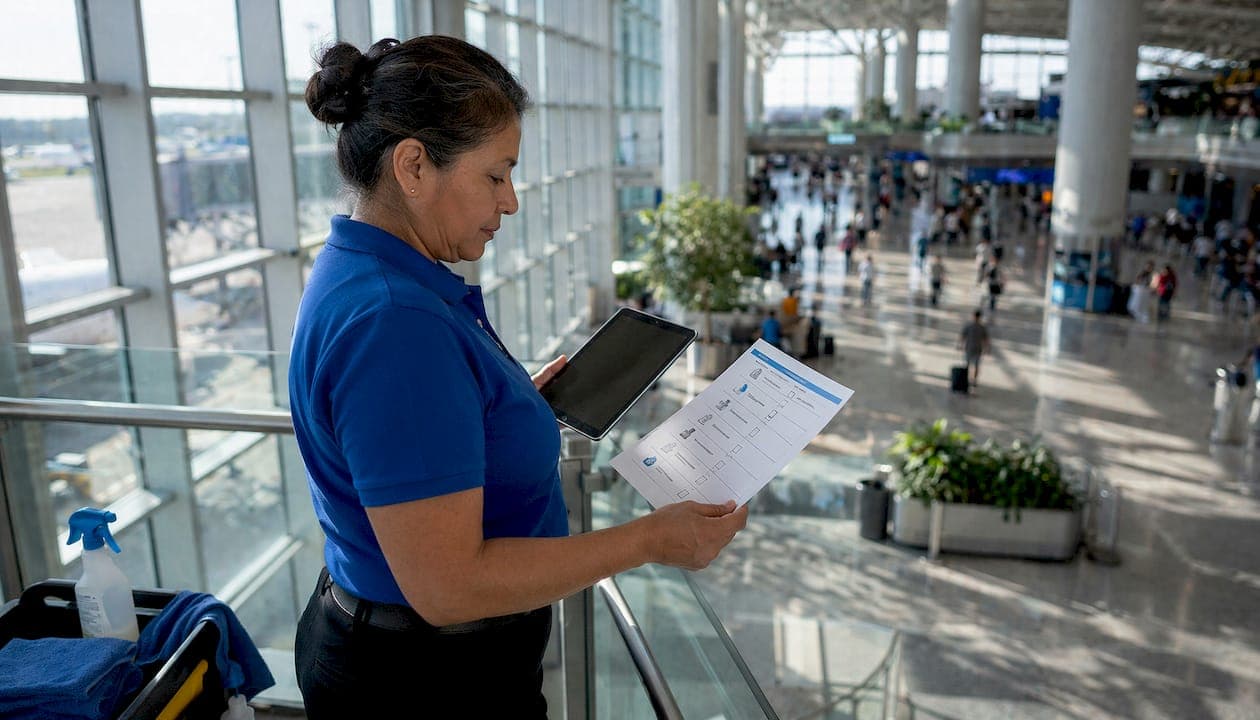
What are the core public area cleaning procedures?
Effective public area cleaning procedures follow a two-step sequence: clean first with soap and water to remove dirt and organic matter, then apply an EPA-registered disinfectant on high-touch surfaces. Skipping the first step is the most common mistake facility teams make. Disinfectants simply don't penetrate grime, so any product applied to a dirty surface is largely wasted.
The distinction between cleaning, sanitizing, and disinfecting matters operationally. Cleaning with soap or detergent removes germs and debris but doesn't kill them. Sanitizing reduces germs to safe levels. Disinfecting kills germs outright, but only after a surface has been cleaned first. For most public areas, routine cleaning is sufficient. Disinfection is reserved for high-touch surfaces and any area where someone has been visibly ill.
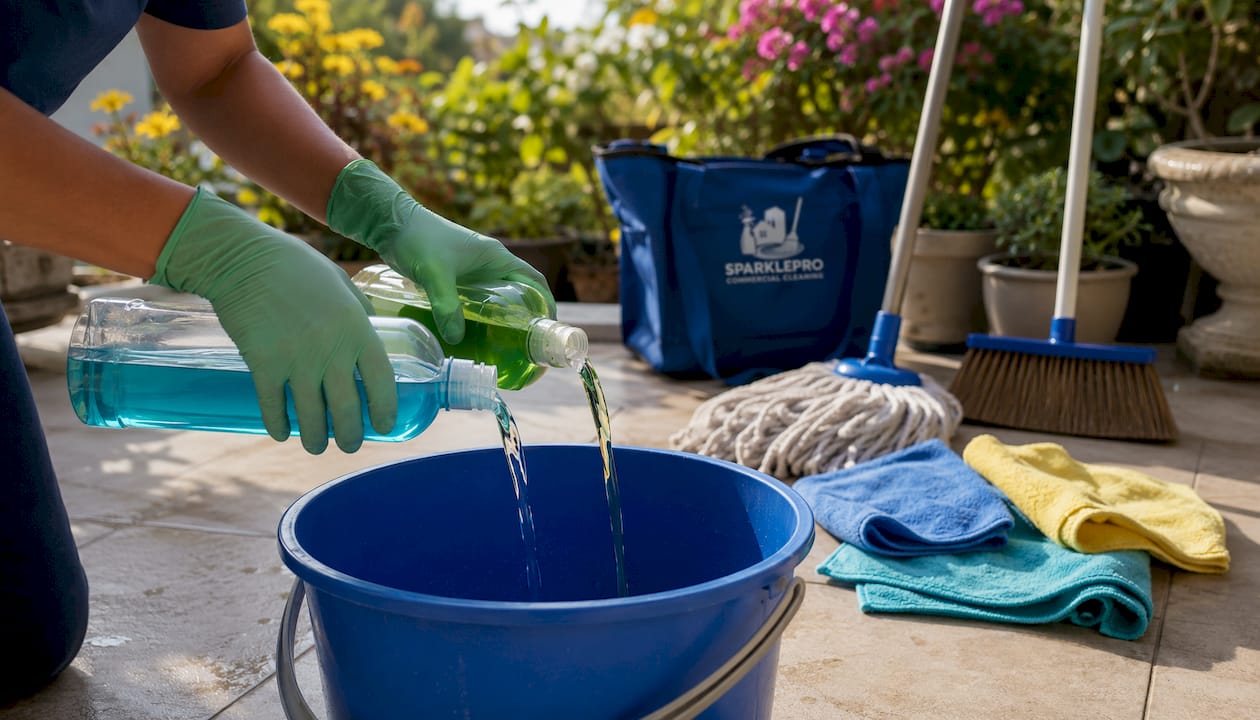
Scheduling is the other pillar that holds everything together. Public spaces can't be taken out of service the way a guest room can, so intensive tasks like floor polishing and carpet extraction happen during low-traffic hours, while day staff handle spot cleaning and tidiness throughout service hours.
Essential steps at a glance:
- Gather PPE, cleaning chemicals, microfiber cloths, mops, and wet-floor signs before starting
- Work from high surfaces to low, and from clean zones to dirty ones
- Clean all surfaces with soap and water before applying any disinfectant
- Apply an EPA-registered disinfectant and respect the product's wet contact time
- Use color-coded microfiber cloths to prevent cross-contamination between zones
- Dispose of waste properly and launder or disinfect reusable cleaning tools after each use
- Wash hands with soap and water for at least 20 seconds after removing PPE
How to follow a step-by-step cleaning process for public areas
A repeatable sequence keeps quality consistent across shifts and staff. The steps below reflect CDC guidance for community facilities and standard hospitality housekeeping practice.
Preparation checklist before you begin:
- Don appropriate PPE: gloves rated for the chemicals in use, eye protection if splashing is possible
- Stock your cart with microfiber cloths (color-coded by zone), mops, disinfectant, all-purpose cleaner, glass cleaner, trash liners, and wet-floor signs
- Review the Safety Data Sheet (SDS) for every chemical you'll use that shift
- Place wet-floor signs at entry points before mopping begins
Cleaning sequence:
- Remove trash and debris. Empty all waste bins, tie liners, and replace with fresh bags. Dispose of waste in designated receptacles, separating recyclables from general waste.
- High dusting. Use a lambswool wand or extension pole to clear ceiling corners, light fixtures, and vents before lower surfaces are cleaned. Dust falls down, so this step always comes first.
- Wipe high-touch surfaces. Door handles, push bars, elevator buttons, light switches, and handrails get cleaned with soap and water first, then disinfected. High-touch surfaces should be cleaned and disinfected at least daily, with frequency scaling up in busier areas.
- Clean furniture and fixtures. Wipe down counters, reception desks, seating frames, and glass surfaces. Use a separate area of the cloth for each surface to avoid spreading contamination.
- Clean glass and mirrors. Apply glass cleaner to a cloth rather than spraying directly onto the surface. Wipe in overlapping strokes to eliminate streaks.
- Vacuum soft surfaces. Carpets, rugs, and upholstered seating require vacuuming before any wet cleaning. Use a vacuum equipped with a HEPA filter where possible to capture fine particles rather than redistributing them.
- Mop hard floors. Dust-mop first to remove loose debris, then damp-mop in a figure-eight motion, rinsing the mop head every 6 feet to avoid spreading dirty water. Keep wet-floor signs in place until the floor is fully dry.
- Clean restrooms. Follow the dedicated restroom protocol (detailed in a later section). Restrooms always get their own dedicated mops and cloths, never shared with other zones.
- Final inspection. Walk the area and check floors, glass, bins, and fixtures. Anything that looks off gets addressed before the space reopens to traffic.
- Dispose of PPE and wash hands. Remove gloves and other disposable PPE into a tied bag before general disposal. Wash hands immediately with soap and water for at least 20 seconds.
What tools, supplies, and scheduling strategies work best?
The right equipment makes a measurable difference. Microfiber cloths outperform cotton and synthetic alternatives at removing dirt and microorganisms, and they can be laundered and reused, which reduces both cost and waste. A color-coded system, typically red for restrooms, blue for general areas, and yellow for kitchens or food-contact surfaces, prevents cross-contamination between zones without requiring staff to memorize complex rules.
Core supplies every public area cleaning program needs:
- Microfiber cloths and mop heads (color-coded by zone)
- EPA-registered disinfectant appropriate for the surfaces being treated
- All-purpose cleaner or neutral detergent for routine cleaning
- Glass cleaner
- HEPA-filter vacuum
- Wet mop and bucket with wringer
- Wet-floor signs and caution cones
- Trash liners and recycling bags
- Gloves, eye protection, and face coverings as required by product labels
Scheduling is where many facilities lose efficiency. Intensive cleaning tasks like vacuuming, floor polishing, and carpet extraction belong on the night or early-morning shift, when traffic is lowest. Day staff focus on maintaining appearance: emptying bins, wiping high-touch points, and handling spills as they occur. In hotels, the early-morning shift often starts at 4:00 AM or 5:00 AM to complete deep cleaning before guests begin moving through lobbies and corridors.
Pro Tip: Schedule your noisiest tasks, floor machines, vacuums, and carpet extractors, for the lowest-traffic window of the day. Guests notice noise as much as they notice dirt, and a well-timed schedule protects both the cleaning result and the guest experience.
For staff safety, chemical handling training is non-negotiable. Never mix bleach with ammonia-based products; the combination produces toxic fumes. Proper dilution, adequate ventilation, and correct PPE protect your team and preserve the effectiveness of the products they're using. Every facility must maintain an SDS for each chemical on-site, and staff should know where those sheets are before they ever open a bottle.
How should you clean lobbies, corridors, and restrooms?
These three zones drive guest perception more than any other area in a commercial or hospitality property. First impressions in hospitality are shaped by the cleanliness of lobbies, entrances, and restrooms, which means higher frequency and stricter standards apply here than anywhere else in the building.
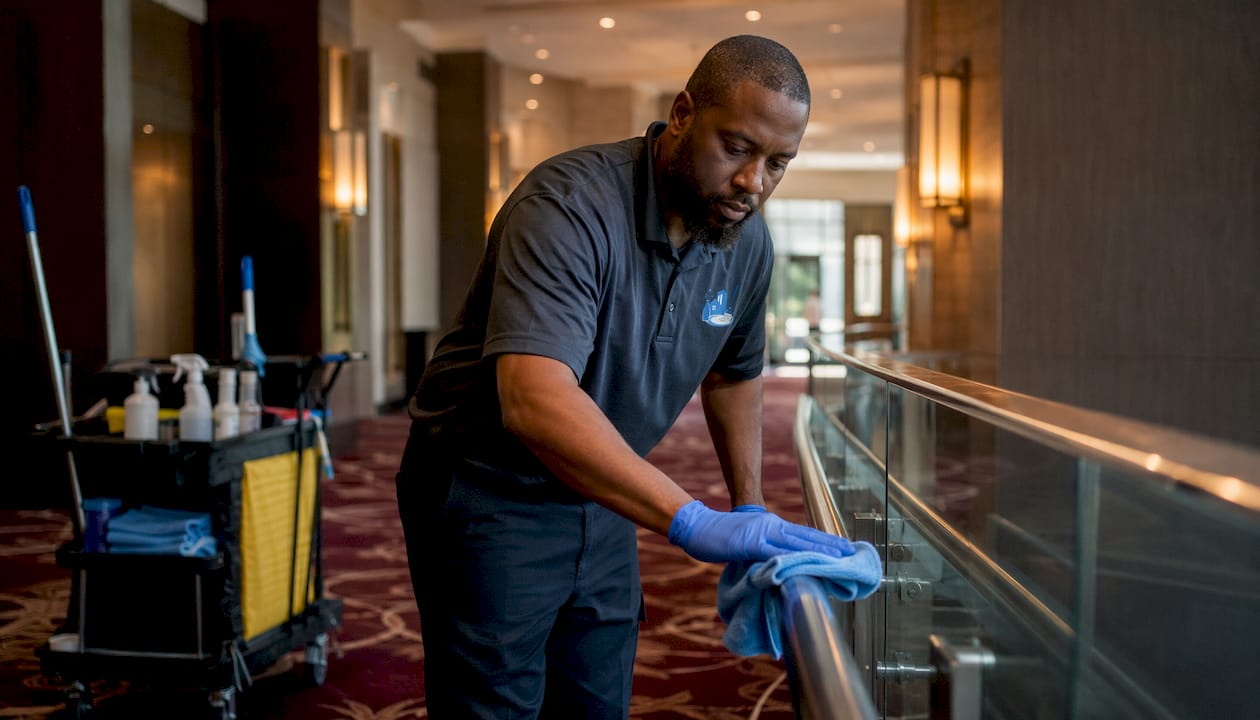
For a deeper look at frequency benchmarks and surface-specific methods, the facility manager's guide to high-touch surfaces covers the specifics in detail.
Lobbies and entrances:
- Entrance floors trap more dirt than any other surface in the building. Preventive matting at entry points reduces how much grit migrates inward.
- Reception counters, guest-facing desks, and seating frames get wiped and disinfected at least once per shift.
- Glass doors and mirrors are cleaned with a dedicated glass cloth, not a general-purpose wipe.
- Bins are emptied before they overflow, not on a fixed clock schedule.
Corridors and elevators:
- Long corridors are divided into sections for cleaning. One half stays open to traffic while the other is being cleaned, with caution signs placed clearly at the boundary.
- Elevator interiors are taken out of service during cleaning. Buttons and control panels are disinfected, mirrors wiped, and floors mopped. Elevator carpets, subjected to constant wear, often need more frequent attention than corridor carpets.
- Handrails on staircases are wiped and disinfected at least daily, more often during peak hours.
Restrooms:
Restroom cleaning always follows a clean-to-dirty, high-to-low sequence. Start at the walls and work down to the floor; start at the cleanest fixture and finish in the toilet.
- Stock soap dispensers and paper towels before beginning any surface cleaning.
- Disinfect flush handles, faucet handles, door handles, and light switches with every cleaning cycle.
- Clean toilet bowls with an appropriate disinfectant, allowing the required contact time before scrubbing.
- Mop floors last, using a mop dedicated to restrooms only.
- Keep exhaust ventilation running continuously. Where windows can be safely opened, use them to increase air circulation.
Critical surface categories and minimum frequencies:
- Door handles, push bars, elevator buttons: at least daily, more often in high-traffic buildings
- Restroom fixtures: every cleaning cycle
- Reception counters and guest desks: at least once per shift
- Carpeted corridors: vacuumed daily, spot-treated as needed, deep-extracted on a scheduled cycle
What does effective outdoor and leisure area maintenance look like?
Outdoor cleaning follows different rules than interior work, and the most common mistake is over-applying disinfectants where they don't belong. Spraying disinfectants on sidewalks and outdoor porous surfaces is not effective and wastes product. Routine cleaning with soap and water is the right approach for most exterior surfaces.
Playgrounds are a specific case worth calling out. Disinfectants are not appropriate for playground equipment and can be harmful to children. Soap and water is sufficient, and hand hygiene signage at playground exits does more to reduce germ transmission than any surface spray.
Outdoor cleaning best practices:
- Clean high-touch outdoor surfaces, grab bars, railings, and metal play structures, when visibly dirty or on a scheduled cycle
- Do not apply disinfectants to wooden surfaces, groundcover, or porous materials like concrete sidewalks
- Post hand hygiene signage at playground exits, pool entrances, and outdoor dining areas
- Schedule outdoor cleaning during early morning or late evening to minimize disruption to guests and visitors
- For pool and spa areas, maintain water chemistry and filtration as the primary hygiene control; surface cleaning of pool decks and lounge furniture follows the same soap-and-water-first rule as interior areas
- Remove and launder soft outdoor furnishings, cushions and fabric covers, on a regular schedule rather than attempting to disinfect them in place
Outdoor leisure areas like pool decks and spa surrounds benefit from a scheduled daily wipe-down of lounge chairs and tables, with a deeper clean of drains and surface grout on a weekly or biweekly cycle depending on usage.
How do you train staff and ensure compliance with cleaning protocols?
Training is where most cleaning programs either hold together or fall apart. Staff who understand why a procedure exists, not just what to do, follow it more consistently, especially when supervisors aren't watching. The routine facility cleaning guide offers a solid framework for building that kind of program from the ground up.
Chemical safety is the highest-stakes training topic. Staff must know how to read a product label, understand dilution ratios, identify which surfaces a product is approved for, and recognize when ventilation is required. Mixing incompatible chemicals, bleach and ammonia being the most dangerous combination, is a preventable hazard that training directly addresses. Every facility must have an SDS accessible for each chemical, and staff should be able to locate it without assistance.
Key training topics and compliance checkpoints:
- Correct PPE selection and donning/doffing sequence for each chemical in use
- Reading and following disinfectant labels, including contact time and dilution instructions
- Color-coded cloth and mop assignment by zone
- Proper waste disposal, including bagging and sealing disposable PPE after use
- Spill and contamination response: cordoning off the area, applying the correct disinfectant protocol, and notifying a supervisor
- Hand hygiene: soap and water for at least 20 seconds after removing gloves and after any cleaning task
- Workplace safety resources, including first aid preparedness for chemical exposure incidents
Quality control requires more than a supervisor walkthrough. Formal inspection checklists, completed at the end of each shift, create a paper trail that identifies recurring gaps. If the same surface fails inspection repeatedly, that's a training issue, not a one-off miss. Rotate inspection duties among senior staff so that the same person isn't always checking their own team's work.
Contamination events, a guest illness, a bodily fluid spill, or a confirmed infection, require an immediate response protocol that staff have practiced, not read once in an orientation packet. The area gets cordoned off with a minimum buffer around the affected zone, appropriate disinfectant is applied with correct contact time, and all disposable materials used in the cleanup go into double-lined bags before disposal. Staff remove PPE in a designated clean area and wash hands immediately.
For facility managers building or auditing a full program, the deep cleaning techniques guide covers advanced scheduling and area-specific methods that complement daily protocols.
Working with a professional cleaning partner
Maintaining consistent public area cleaning procedures across a large commercial or hospitality property takes more than a checklist. It takes trained staff, the right equipment, and a program built around your specific traffic patterns and compliance requirements. Sparkleprocommercialcleaning provides fully licensed and insured commercial cleaning services across the United States, with expertise in high-traffic public areas, post-construction cleanouts, and specialized disinfecting services.
Whether your facility is in Delaware, Massachusetts, or anywhere else in the country, Sparkleprocommercialcleaning can build a cleaning program that fits your schedule, your standards, and your guests.
Key Takeaways
Effective public area cleaning procedures combine routine soap-and-water cleaning with targeted disinfection on high-touch surfaces, scheduled around traffic patterns to maintain hygiene without disrupting operations.
| Point | Details |
|---|---|
| Clean before you disinfect | Soap and water must remove dirt first; disinfectants don't work on soiled surfaces. |
| High-touch surfaces need daily attention | Door handles, elevator buttons, and restroom fixtures require cleaning and disinfecting at least daily, more often in busy areas. |
| Color-coded microfiber reduces cross-contamination | Assign specific cloth colors to restrooms, guest areas, and other zones to prevent spreading germs between spaces. |
| Schedule intensive tasks during low-traffic hours | Floor polishing, carpet extraction, and vacuuming belong on the night or early-morning shift to minimize guest disruption. |
| Outdoor areas need soap and water, not disinfectants | Spraying disinfectants on sidewalks and porous outdoor surfaces is ineffective; routine cleaning and hand hygiene signage are the right approach. |