
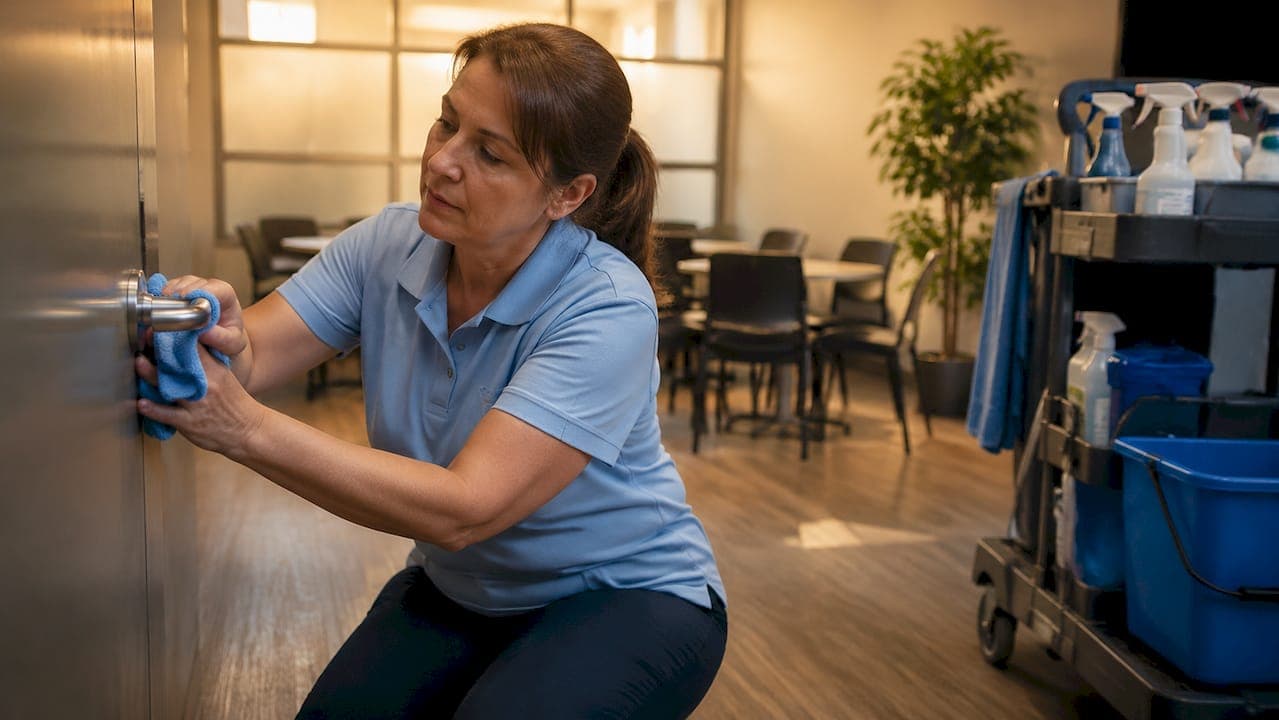
High-touch surface cleaning is the process of regularly cleaning and disinfecting surfaces that multiple people contact throughout the day to reduce pathogen transmission in commercial facilities. The industry term for this practice is "high-frequency contact surface sanitation," though facility managers and CDC guidance both use "high-touch surface cleaning" as the standard working phrase. 20–40% of healthcare-associated infections originate via contaminated hands or surfaces. That figure alone explains why facilities management professionals treat this as a non-negotiable operational priority, not a supplemental task.
What is high-touch surface cleaning and why does it matter?
High-touch surface cleaning targets surfaces that accumulate pathogens fastest because of repeated human contact. Door handles, elevator buttons, light switches, and shared equipment grips all fall into this category. Pathogens like MRSA, VRE, and C. difficile survive on these surfaces from hours to days, creating ongoing transmission risk between occupants. A surface can look clean and still carry a dangerous microbial load. That gap between appearance and actual safety is the core reason this practice demands a structured protocol, not a casual wipe-down.
The CDC and EPA both provide guidance that distinguishes cleaning from disinfecting, and both agencies treat high-touch surfaces as the primary intervention point for infection control in shared spaces. Facilities that skip structured high-touch protocols expose occupants to preventable illness and expose the organization to liability. For facility managers, understanding this practice at a technical level is the first step toward building a program that actually works.
What are common examples of high-touch surfaces in facilities?
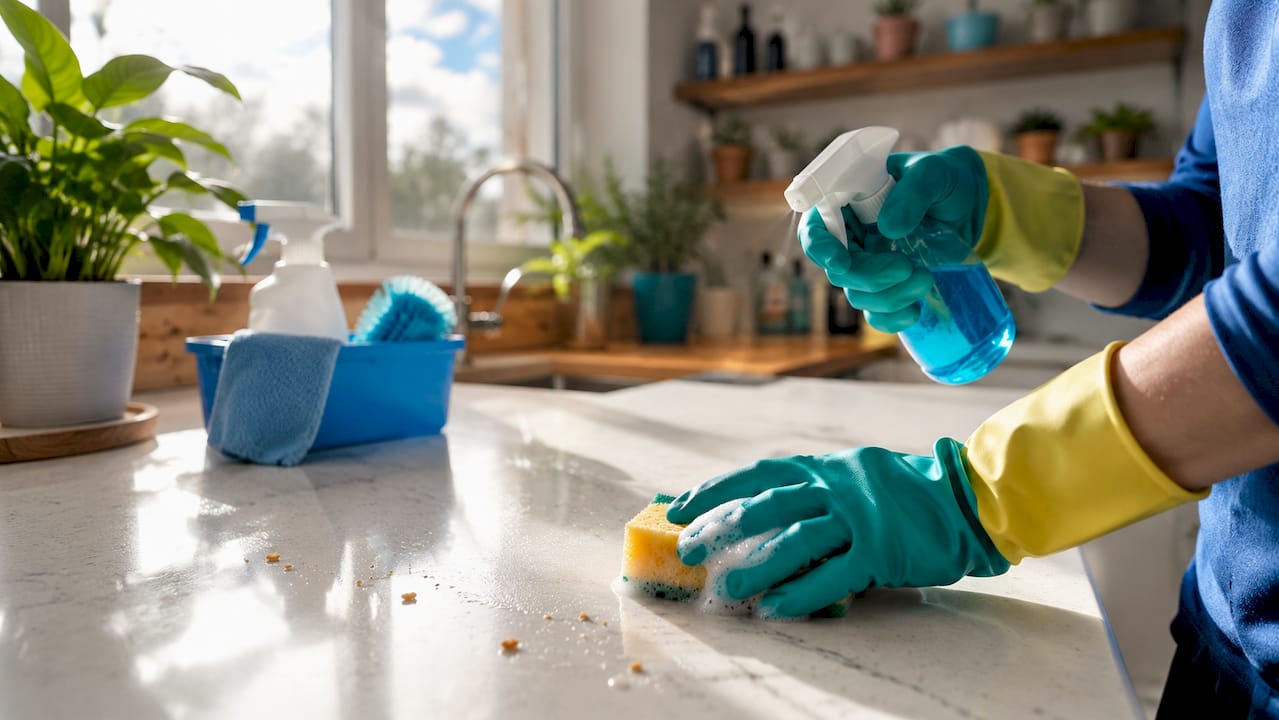
Pathogens survive on these surfaces from hours to days, which means any surface contacted repeatedly throughout a shift becomes a transmission vector. The surfaces that matter most in commercial environments include:
- Door handles and push plates on entry points, restrooms, and stairwells
- Elevator buttons and call panels, especially in multi-floor office buildings
- Light switches in shared rooms, break areas, and corridors
- Faucet handles and soap dispensers in restrooms and kitchens
- Handrails and grab bars on staircases and ramps
- Shared keyboards, mice, and touchscreens at reception desks or workstations
- Copier and printer control panels in shared office spaces
- Vending machine buttons and refrigerator handles in break rooms
- Chair armrests and table edges in conference rooms and waiting areas
The critical insight here is that appearance does not indicate cleanliness. A stainless steel door handle can look polished and still carry a significant pathogen load from the last 20 people who touched it. Facility managers who rely on visual inspection alone will consistently underestimate contamination risk on their highest-traffic surfaces. Pairing a routine facility cleaning process with a dedicated high-touch protocol closes that gap.
How to properly clean and disinfect high-touch surfaces
The three-step sequence of cleaning, sanitizing, and disinfecting is not interchangeable. Each step has a distinct purpose, and skipping the first one undermines the entire process.
-
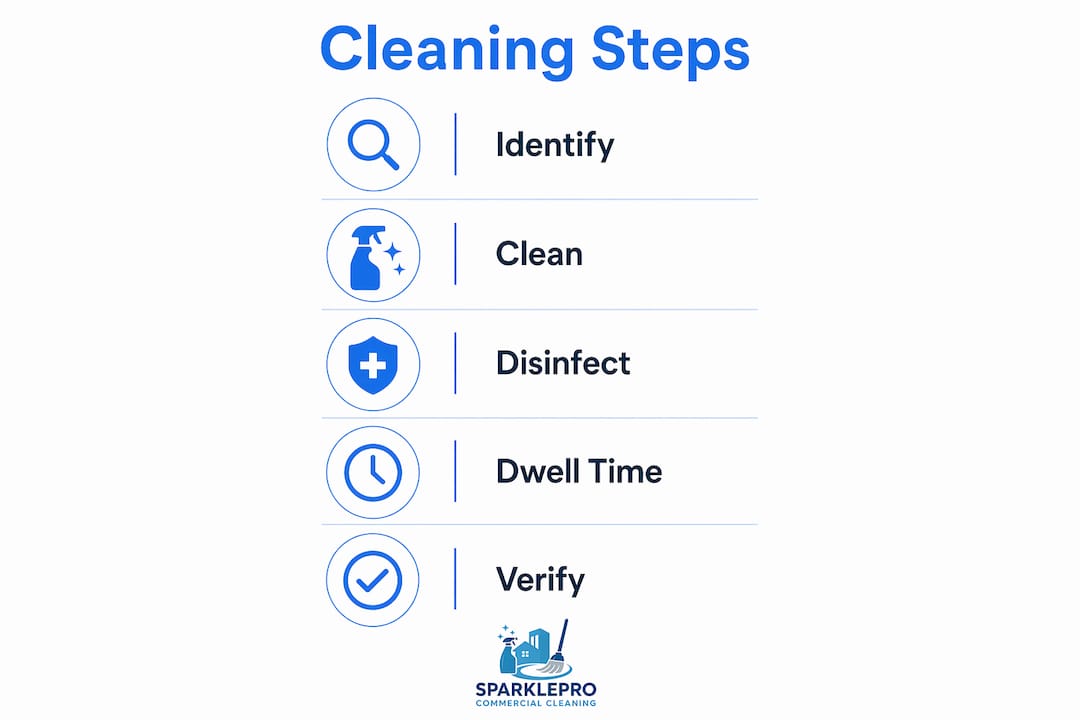
Clean first. Remove visible dirt, grease, and organic matter using soap or a general-purpose cleaner and a microfiber cloth. Organic residue protects microbes by shielding them from chemical disinfectants. A disinfectant applied to a dirty surface cannot reach the pathogens underneath.
-
Select the right disinfectant. Use an EPA-registered disinfectant appropriate for the surface type and the pathogens present in your facility. Healthcare environments require products with kill claims against MRSA and C. difficile. Office environments may use broader-spectrum products. Check the EPA's List N for products effective against specific pathogens.
-
Apply and maintain dwell time. Apply the disinfectant and allow it to remain wet on the surface for the full contact time listed on the label. EPA-listed dwell times typically range from 1 to 10 minutes. Wiping the surface dry before that window closes reduces efficacy by up to 90%. This is the single most common failure point in facility disinfection programs.
-
Handle electronics separately. Alcohol-based wipes with at least 70% alcohol are the recommended method for keyboards, touchscreens, and shared devices. Spray disinfectants applied directly to electronics cause damage. Apply the wipe to the surface, not the product to a towel, and allow the alcohol to evaporate fully.
-
Dispose of materials properly. Single-use cloths and wipes prevent cross-contamination between surfaces. Reusable microfiber cloths require laundering between uses at the correct temperature to kill pathogens.
Pro Tip: Label your disinfectant spray bottles with the required dwell time using a permanent marker. Staff who see "4 minutes" on the bottle are far less likely to wipe too soon than staff who have to recall the information from training.
The right disinfecting services guide for facilities covers product selection in more depth, including how to match EPA-registered products to specific surface materials and risk categories.
What are effective cleaning frequencies for high-touch surfaces?
Cleaning frequency should follow actual usage, not a fixed clock schedule. Mapping contact volume across your facility identifies which surfaces need attention multiple times per day and which need it once. A lobby door handle in a 500-person office building needs cleaning every two hours during peak traffic. A storage room door handle used twice a day does not.
Risk-based scheduling outperforms rigid interval cleaning for two reasons. First, it allocates staff time where contamination risk is actually highest. Second, it avoids over-cleaning low-risk surfaces while under-cleaning high-risk ones. The following factors should drive your frequency decisions:
- Occupant volume: Higher foot traffic means faster pathogen accumulation on shared surfaces.
- Occupant health status: Facilities serving vulnerable populations, such as healthcare clinics or senior centers, require more frequent disinfection than standard office buildings.
- Time of day: Morning arrival periods and post-lunch hours generate the highest contact volume in most commercial facilities.
- Active illness: When confirmed illness is present in the facility, disinfection frequency should increase immediately, not wait for the next scheduled cycle.
- Seasonal factors: Cold and flu season warrants elevated protocols across all high-touch surfaces regardless of reported illness.
Pro Tip: Walk your facility at peak occupancy and photograph the 10 surfaces that get touched most often. Use that map as the foundation of your high-touch cleaning schedule. Update it every quarter as occupancy patterns shift.
Facilities that track cleaning completion against a mapped schedule catch missed surfaces before they become transmission events. A building cleanliness improvement plan built around traffic data produces measurably better outcomes than one built around assumptions.
What tools and checklists help maintain consistency in cleaning programs?
Structured protocols and verification mechanisms are the difference between a cleaning program that works on paper and one that works in practice. Without accountability tools, staff will miss surfaces, skip dwell times, and revert to habits that feel efficient but are not effective.
A well-built high-touch surface cleaning program uses the following components:
- Facility-specific checklists that list every high-touch surface by zone, with columns for time completed and staff initials. Generic checklists miss facility-specific surfaces like badge readers or turnstiles.
- Dwell time reminders posted at supply stations or printed on checklist forms. Staff should not have to memorize contact times for multiple products.
- Supervisor spot checks conducted at random intervals, not announced in advance. Announced inspections produce compliance theater, not real compliance.
- Training records that document when each staff member received instruction on the two-step clean-then-disinfect sequence and dwell time requirements.
- Product rotation logs that track which EPA-registered disinfectants are in use and when they were last restocked.
The table below shows how checklist components map to compliance outcomes:
| Checklist Component | Primary Compliance Benefit |
|---|---|
| Zone-specific surface list | Prevents missed surfaces in complex facilities |
| Dwell time column | Reduces premature wiping and failed disinfection |
| Staff initials and timestamp | Creates accountability trail for each cleaning cycle |
| Supervisor verification field | Catches protocol gaps before they become patterns |
| Product name and EPA registration | Confirms correct product use for each surface type |
Facilities that align their checklists with CDC and EPA guidance can also use them as documentation during health inspections or regulatory audits. That documentation has real operational value beyond day-to-day hygiene. For industrial and large-scale environments, an industrial site cleaning plan provides a framework for scaling these tools across complex facilities. Flooring hygiene is also part of the overall picture, and spring cleaning tips for flooring offer practical guidance for maintaining floor surfaces alongside high-touch protocols.
Key Takeaways
Effective high-touch surface cleaning requires a two-step clean-then-disinfect sequence, full EPA-mandated dwell times, and a risk-based schedule tied to actual facility traffic patterns.
| Point | Details |
|---|---|
| Clean before disinfecting | Organic matter blocks disinfectants; always remove dirt first for full pathogen kill. |
| Respect dwell times | EPA-listed contact times range from 1 to 10 minutes; wiping early cuts efficacy by up to 90%. |
| Schedule by traffic, not clock | Map high-contact zones and clean based on actual usage volume, not fixed intervals. |
| Use facility-specific checklists | Generic checklists miss surfaces; build zone-by-zone lists with timestamps and staff initials. |
| Escalate during active illness | Increase disinfection frequency immediately when illness is confirmed, not at the next scheduled cycle. |
What facility managers get wrong about high-touch cleaning
The most persistent mistake I see in commercial facilities is treating high-touch cleaning as a frequency problem when it is actually a prioritization problem. Managers add more cleaning cycles to the schedule and wonder why infection rates do not drop. The real issue is that staff are cleaning the wrong surfaces at the wrong times, or they are wiping disinfectant off before it has done its job.
Dwell time is the most overlooked variable in this entire practice. I have walked facilities where staff apply a disinfectant spray and wipe it off in under 30 seconds. The label requires four minutes. That is not cleaning. That is moving contamination around with a damp cloth. Training staff to understand why dwell time matters, not just that it is required, produces far better compliance than posting a rule on a wall.
The other gap I consistently see is the absence of a clean-first step. Facilities skip straight to disinfection because it feels more thorough. It is not. A disinfectant applied over grease or organic residue cannot reach the pathogens underneath. The two-step sequence is not bureaucratic procedure. It is chemistry. Skipping it wastes product and labor while leaving surfaces contaminated.
Risk-based scheduling also gets underused. Managers default to hourly rounds across the entire facility when a targeted approach, cleaning the 15 highest-contact surfaces every two hours and lower-risk surfaces twice daily, would produce better outcomes with the same staff hours.
— Sales
How Sparkleprocommercialcleaning supports your facility's hygiene program
Sparkleprocommercialcleaning delivers commercial cleaning programs built around the risk-based, compliance-driven approach described throughout this guide. Every service engagement starts with a site assessment that maps your facility's highest-contact zones and matches cleaning frequency to actual traffic patterns, not generic schedules.
Sparkleprocommercialcleaning's teams are trained on EPA-registered product use, correct dwell times, and the two-step clean-then-disinfect sequence. Facilities in Delaware can access specialized commercial cleaning services with full compliance documentation. Facilities in Massachusetts can connect with professional hygiene services tailored to commercial environments. Contact Sparkleprocommercialcleaning to request a site assessment and a cleaning program designed around your facility's actual risk profile.
FAQ
What is the difference between cleaning and disinfecting?
Cleaning removes visible dirt and organic matter using soap or detergent. Disinfecting uses EPA-registered chemicals to kill pathogens on an already-clean surface.
How often should high-touch surfaces be cleaned in a commercial facility?
Frequency depends on traffic volume and occupant risk. High-contact surfaces in busy facilities typically require cleaning multiple times per day, with increased frequency during active illness.
Why does dwell time matter for disinfection?
EPA-listed dwell times specify how long a disinfectant must remain wet on a surface to kill pathogens. Wiping before that window closes reduces efficacy by up to 90%.
What surfaces count as high-touch in an office building?
Door handles, elevator buttons, light switches, shared keyboards, copier panels, faucet handles, and chair armrests are the most common high-touch surfaces in commercial office environments.
Do I need to disinfect high-touch surfaces every day?
Routine cleaning with soap and water is sufficient for low-risk settings. Disinfection is required when illness is present, when occupant risk is elevated, or when CDC and EPA guidance specifies it for your facility type.